
MundoDele Spanish Grammar
Spanish Adverbs of Frequency: Siempre, Nunca and A Veces
Learn how to say how often something happens with siempre, normalmente, generalmente, a menudo, frecuentemente, a veces, de vez en cuando, rara vez, casi nunca and nunca.
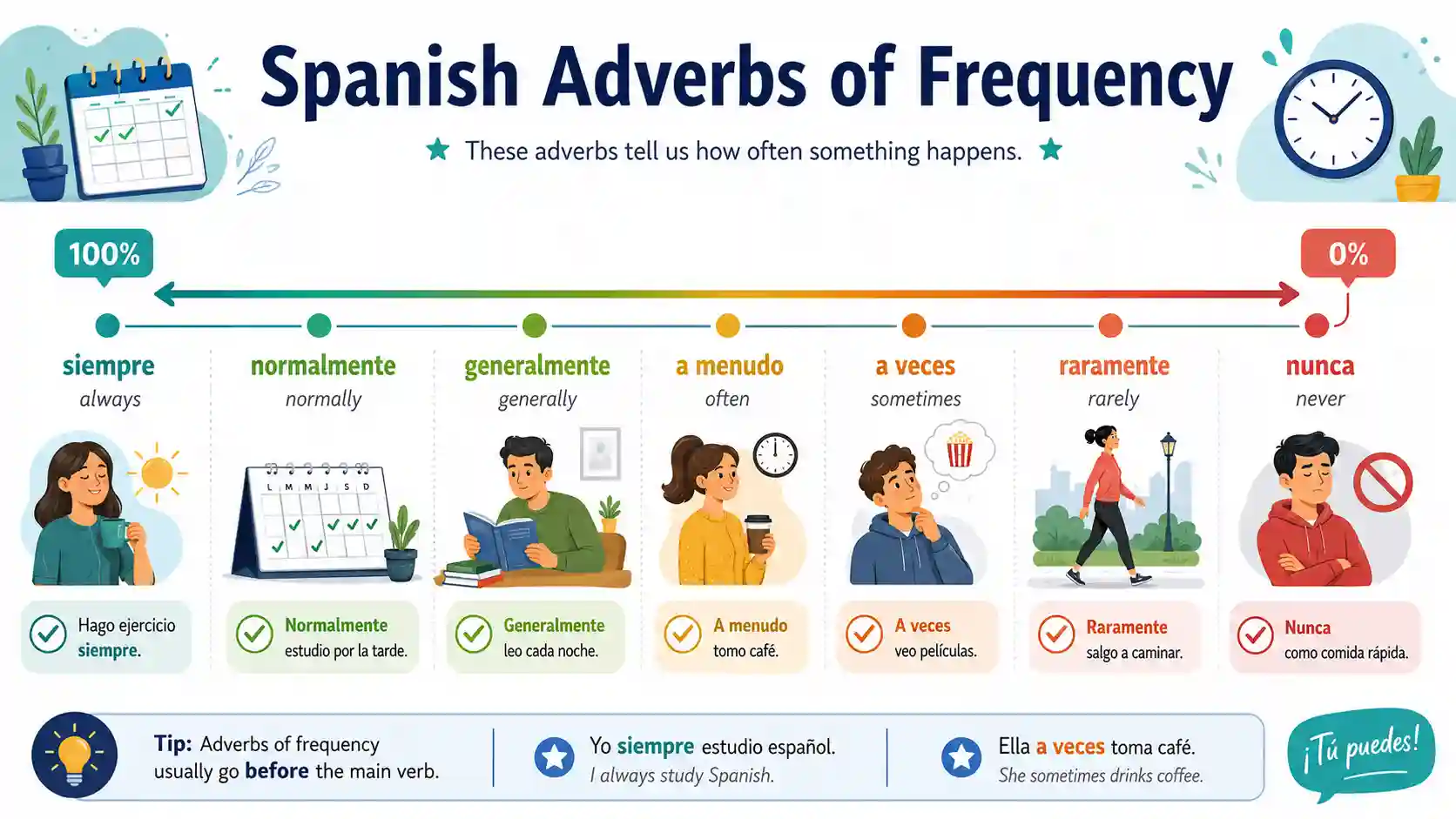
Definition
What are Spanish adverbs of frequency?
Spanish adverbs of frequency describe how often an action, event or situation happens. They can show that something happens always, regularly, sometimes, rarely or never.
Siempre estudio por la mañana.
I always study in the morning.
A veces cocinamos juntos.
Sometimes we cook together.
Nunca llega tarde.
He or she never arrives late.
Frequency adverbs do not change for gender or number: ella siempre trabaja and ellos siempre trabajan.
Overview
Spanish adverbs of frequency at a glance
| Adverb or expression | Meaning | Spanish example | English meaning | Approximate frequency |
|---|---|---|---|---|
| siempre | always | Siempre desayuna temprano. | He or she always has breakfast early. | Very high |
| casi siempre | almost always | Casi siempre voy en autobús. | I almost always go by bus. | Very high |
| normalmente | normally, usually | Normalmente trabajo en casa. | I normally work at home. | High |
| generalmente | generally, usually | Generalmente cenamos a las nueve. | We generally have dinner at nine. | High |
| a menudo | often | Voy a menudo al mercado. | I often go to the market. | Regular |
| frecuentemente | frequently | Viaja frecuentemente por trabajo. | He or she frequently travels for work. | Regular |
| a veces | sometimes | A veces estudio por la noche. | Sometimes I study at night. | Occasional |
| de vez en cuando | from time to time | Salimos de vez en cuando. | We go out from time to time. | Occasional |
| ocasionalmente | occasionally | Trabajo ocasionalmente los sábados. | I occasionally work on Saturdays. | Occasional |
| rara vez | rarely | Rara vez come carne. | He or she rarely eats meat. | Low |
| casi nunca | almost never | Casi nunca veo televisión. | I almost never watch television. | Very low |
| nunca | never | Nunca fuma. | He or she never smokes. | None |
Frequency scale
From always to never
Frequency words do not represent exact percentages in every situation. This scale shows their usual relative meaning.
Every time or as a general rule.
With only occasional exceptions.
Regularly in normal circumstances.
Many times, but not always.
On some occasions.
Only on a small number of occasions.
Not on any occasion.
High frequency
Siempre, casi siempre and normalmente
Siempre
Use siempre when something happens every time or is generally true.
Siempre llega temprano.
Siempre bebemos café después de comer.
Casi siempre
Use casi siempre when something normally happens but there are occasional exceptions.
Casi siempre voy caminando.
Casi siempre están en casa.
Normalmente
Use normalmente for a usual habit or normal situation.
Normalmente trabajo hasta las seis.
Normalmente comemos en casa.
In everyday conversation, it can also describe a strong habit: Siempre toma café por la mañana.
Low frequency
Rara vez, casi nunca and nunca
These expressions describe actions that happen infrequently or do not happen at all.
| Expression | Meaning | Spanish example | Frequency |
|---|---|---|---|
| rara vez | rarely | Rara vez sale por la noche. | Low |
| pocas veces | few times, rarely | Pocas veces comemos fuera. | Low |
| casi nunca | almost never | Casi nunca llega tarde. | Very low |
| nunca | never | Nunca bebe alcohol. | None |
| jamás | never, ever | Jamás lo olvidaré. | Strong or emphatic negation |
Nunca voy allí. — I never go there.
When nunca follows the verb, Spanish normally uses no: No voy allí nunca.
Regular schedules
Frequency expressions with days, weeks and months
Spanish also expresses frequency with phrases that indicate a repeated schedule or number of occasions.
| Expression | Meaning | Spanish example |
|---|---|---|
| todos los días | every day | Estudio español todos los días. |
| cada día | each day, every day | Aprendo algo nuevo cada día. |
| todas las semanas | every week | Tenemos clase todas las semanas. |
| una vez por semana | once a week | Voy al gimnasio una vez por semana. |
| dos veces al mes | twice a month | Viajamos dos veces al mes. |
| tres veces al año | three times a year | Visita España tres veces al año. |
| los lunes | on Mondays | Los lunes trabajo desde casa. |
| cada dos días | every two days | Toma la medicina cada dos días. |
El lunes usually means “on Monday”.
Los lunes means “on Mondays” or “every Monday”.
Word order
Where do Spanish adverbs of frequency go?
Spanish word order is flexible. Frequency adverbs can appear before the conjugated verb, after the verb or at the beginning or end of a sentence.
| Position | Spanish example | English meaning | Use |
|---|---|---|---|
| Before the verb | Siempre desayuno temprano. | I always have breakfast early. | Very common with short frequency adverbs |
| Before the verb | Nunca llega tarde. | He or she never arrives late. | Negative word before verb |
| After the verb | Voy a menudo al mercado. | I often go to the market. | Natural with multiword expressions |
| At the beginning | A veces, trabajo los sábados. | Sometimes I work on Saturdays. | Emphasises frequency |
| At the end | Trabajamos juntos de vez en cuando. | We work together from time to time. | Natural sentence-ending position |
| With a compound tense | Siempre he querido visitar México. | I have always wanted to visit Mexico. | Often before the auxiliary verb |
Spanish allows several natural positions. Choose the position that keeps the sentence clear and gives the desired emphasis.
Continue with Position of Adverbs in Spanish .
Important difference
Adverb of time or frequency?
Time adverbs answer “when?”. Frequency adverbs answer “how often?”. Some sentences contain both.
| Time expression | Frequency expression | Complete example |
|---|---|---|
| hoy — today | siempre — always | Hoy, como siempre, trabajo en casa. |
| por la mañana — in the morning | normalmente — normally | Normalmente estudio por la mañana. |
| los domingos — on Sundays | a veces — sometimes | A veces trabajo los domingos. |
| este mes — this month | frecuentemente — frequently | Este mes viajo frecuentemente. |
Review: Spanish Adverbs of Time .
Questions and answers
Asking how often in Spanish
Use ¿Con qué frecuencia...? or the more conversational ¿Cada cuánto...? to ask how often something happens.
| Question | Meaning | Possible answer |
|---|---|---|
| ¿Con qué frecuencia estudias español? | How often do you study Spanish? | Estudio todos los días. |
| ¿Cada cuánto vas al gimnasio? | How often do you go to the gym? | Voy tres veces por semana. |
| ¿A menudo trabajas desde casa? | Do you often work from home? | Sí, trabajo desde casa a menudo. |
| ¿Vas alguna vez a Madrid? | Do you ever go to Madrid? | Sí, voy de vez en cuando. |
Exercises
Practice Spanish adverbs of frequency
Choose the best expression
-
___ llego tarde. Soy muy puntual.
never -
___ estudio después de cenar.
sometimes -
Voy al gimnasio ___.
often -
___ trabajo los domingos.
almost never
Show answers
1. Nunca llego tarde.
2. A veces estudio después de cenar.
3. Voy al gimnasio a menudo.
4. Casi nunca trabajo los domingos.
Put the words in order
- siempre / temprano / llega
- a veces / cocinamos / juntos
- voy / nunca / allí
- al mercado / a menudo / vamos
Show answers
1. Siempre llega temprano.
2. A veces cocinamos juntos.
3. Nunca voy allí.
4. Vamos a menudo al mercado.
Complete the frequency scale
- siempre → casi siempre → ___
- a menudo → ___ → rara vez
- rara vez → casi nunca → ___
- ___ → a menudo → a veces
Show possible answers
1. normalmente
2. a veces
3. nunca
4. normalmente
Correct the sentence
- No nunca trabajo los domingos.
- Siempre ella llega temprano.
- Voy al gimnasio una vez la semana.
- El lunes trabajo en casa. — every Monday
Show answers
1. Nunca trabajo los domingos.
2. Ella siempre llega temprano.
3. Voy al gimnasio una vez por semana.
4. Los lunes trabajo en casa.
Time or frequency?
- hoy
- a menudo
- mañana
- casi nunca
- de vez en cuando
- ahora
Show answers
Time: hoy, mañana,
ahora.
Frequency: a menudo,
casi nunca,
de vez en cuando.
Answer the questions
- ¿Con qué frecuencia estudias español?
- ¿Cada cuánto haces deporte?
- ¿Trabajas alguna vez los domingos?
- ¿Con qué frecuencia viajas?
Show sample answers
1. Estudio español todos los días.
2. Hago deporte tres veces por semana.
3. Casi nunca trabajo los domingos.
4. Viajo de vez en cuando.
Continue learning
Related Spanish adverb lessons

Spanish Adverbs
Review adverbs of time, place, manner, quantity, frequency, doubt, affirmation and negation.
Open lesson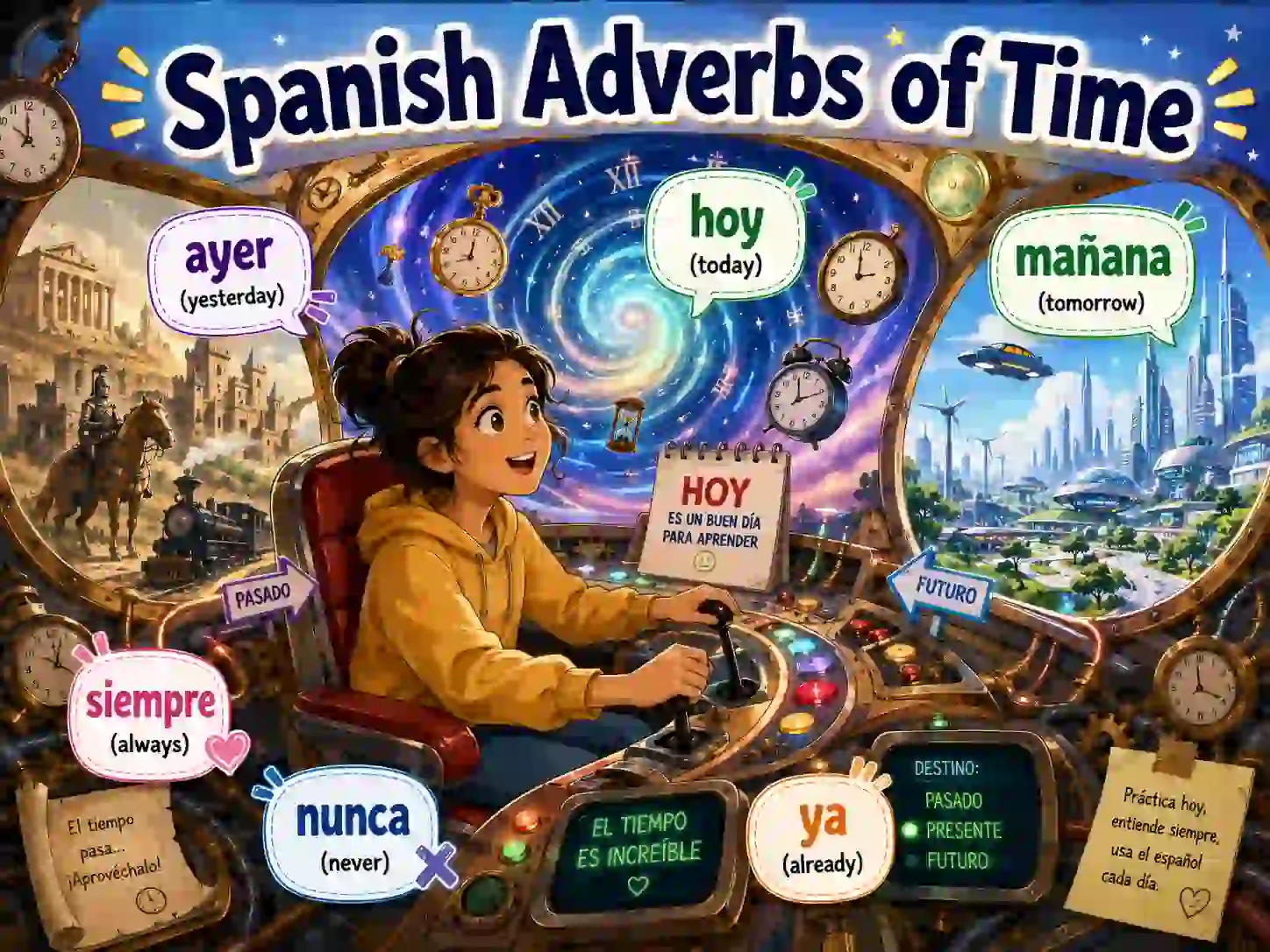
Adverbs of Time
Learn hoy, ayer, mañana, ahora, ya and todavía.
Open lesson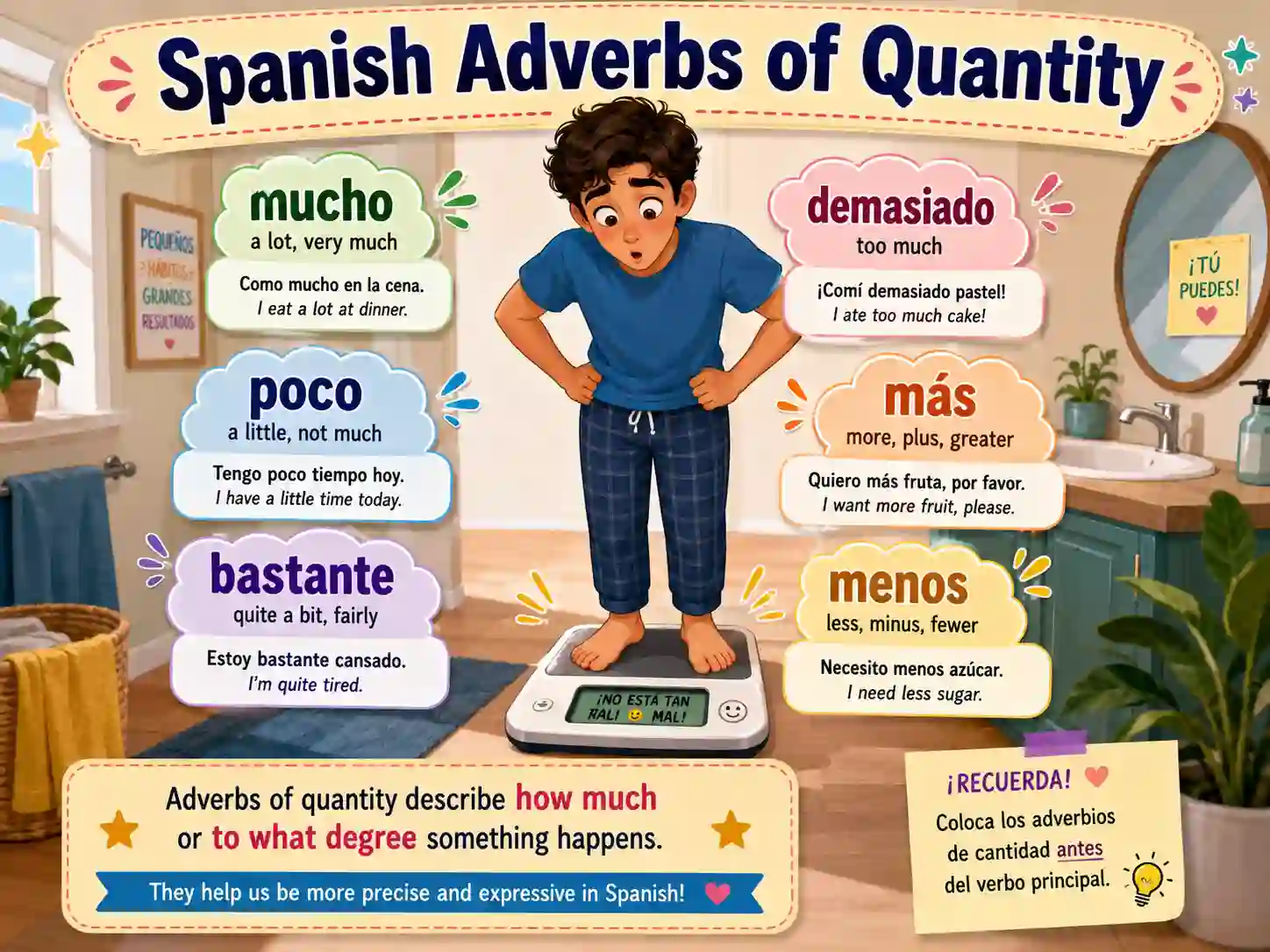
Adverbs of Quantity
Learn muy, mucho, poco, bastante, demasiado, más and menos.
Open lesson
Position of Adverbs
Learn when Spanish adverbs appear before the verb, after the verb or at the beginning or end of a sentence.
Open lessonCommon errors
Common mistakes with Spanish adverbs of frequency
- Using no before nunca when nunca already comes before the verb: say Nunca voy allí, not No nunca voy allí.
- Forgetting no when nunca follows the verb: say No voy allí nunca.
- Copying English word order too closely: Ella siempre llega temprano is more neutral than Siempre ella llega temprano.
- Confusing a veces with veces: “sometimes” is a veces, with the preposition a.
- Using de vez a cuando: the correct expression is de vez en cuando.
- Using el lunes for a repeated weekly habit: use los lunes for “on Mondays”.
- Forgetting por in frequency expressions: say dos veces por semana.
- Treating frequency words as exact percentages: their meaning depends on context and speaker intention.
Frequently asked questions
Questions about Spanish adverbs of frequency
What are Spanish adverbs of frequency?
They describe how often an action happens. Common examples are siempre, normalmente, a menudo, a veces, rara vez, casi nunca and nunca.
Where do Spanish adverbs of frequency go?
They can appear before or after the verb or at the beginning or end of the sentence: Siempre trabajo aquí, Voy a menudo al mercado and A veces cocino en casa.
What is the difference between siempre and todos los días?
Siempre means “always” and expresses general frequency. Todos los días means “every day” and identifies a repeated daily schedule.
What is the difference between a veces and de vez en cuando?
Both can mean “sometimes”. De vez en cuando often suggests a more occasional or less regular action.
How do you use nunca in Spanish?
Before the verb, use nunca without no: Nunca voy allí. After the verb, use no: No voy allí nunca.
Do frequency adverbs change for gender or number?
No. They remain unchanged: ella siempre trabaja and ellos siempre trabajan.
Practice and support
Practise Spanish frequency expressions in real sentences
Frequency adverbs become easier when you use them to describe your routine, work, studies, travel and everyday habits.
Spanish Tutoring
Work on frequency adverbs, negative sentences, word order and individual grammar difficulties.
Private Spanish Lessons
Practise habits and routines through conversation, writing and personalised exercises.
Intensive Spanish Course
Combine grammar with structured speaking, listening and sentence-building activities.

About MundoDele
Spanish learning for education, work and real communication
MundoDele connects online Spanish courses, DELE preparation, Business Spanish and cultural context into a personal Spanish learning platform.
The grammar guides explain Spanish with practical examples, clear comparisons and complete sentences.