
Spain · Castile and León · Segovia
Segovia Travel Guide: Roman Aqueduct, Alcázar and Old Town
Segovia's main landmarks form an unusually readable historical route: water arrived through a Roman aqueduct at the eastern end of town, the cathedral stands beside Plaza Mayor, and the royal Alcázar dominates the western cliff. Walking between them explains more about the city than visiting three unrelated monuments.
The route works in one day, but the Alcázar's tower and the cathedral's guided tower climb require separate ticket decisions.
Explore the walking routeFive detailed guides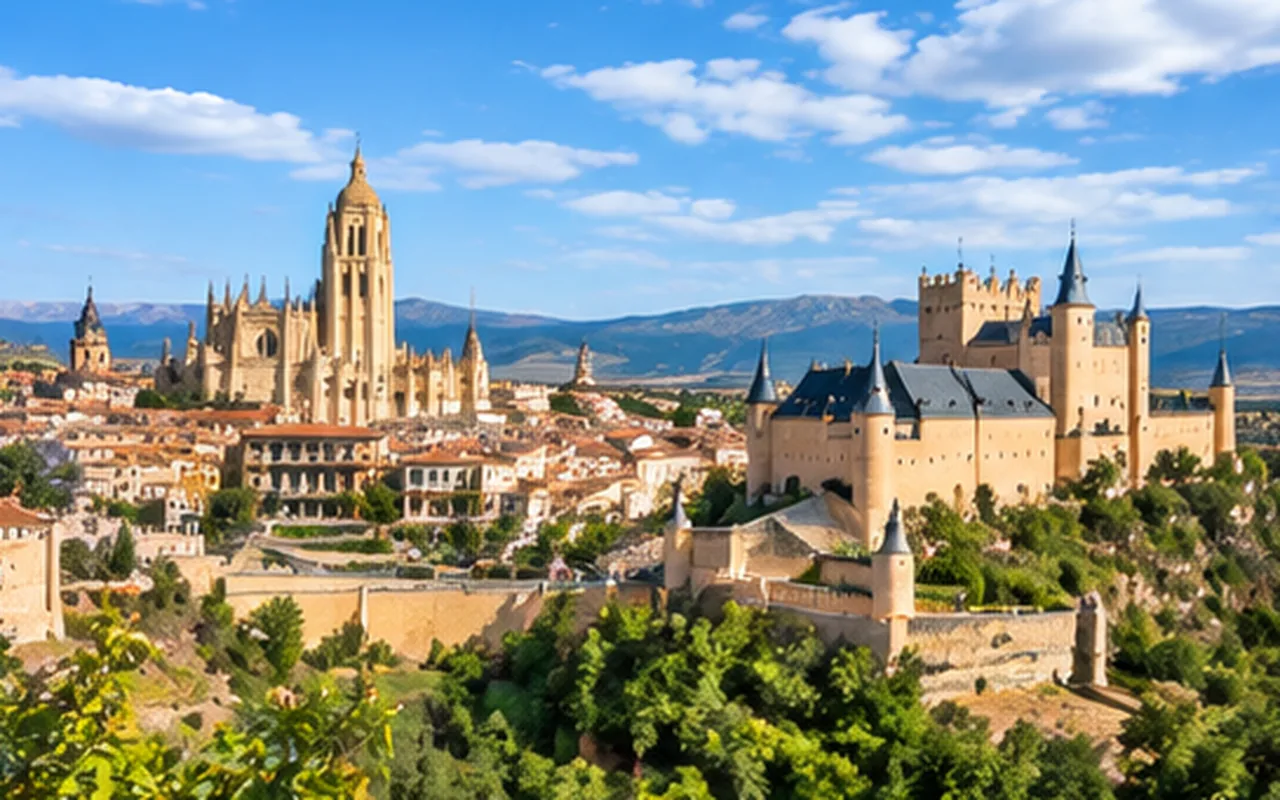
A city shaped by water, a ridge and royal power
Segovia stands on a rocky ridge between the Eresma and Clamores river valleys. Its UNESCO World Heritage designation covers both the aqueduct and the surrounding urban landscape. That combination is important: the aqueduct is not merely a freestanding landmark. It once delivered water into the urban distribution network; beyond the arches, a largely hidden channel carried it across the old town.
Dates for the Roman construction are not completely settled. Segovia's tourism authority places it near the end of Trajan's rule or early in Hadrian's, after AD 112; UNESCO's short description gives a substantially earlier approximate date. Both agree that the structure is Roman and that later societies maintained its water-supply function. The local authority documents 167 arches, granite blocks assembled without mortar, a maximum height of 28.1 m, and a full supply route of about 16 km.
In the medieval city, Jews, Christians and Muslims lived under changing institutions and legal conditions. Their physical imprint survives in churches, courtyard houses, narrow streets and the former synagogue. The Alcázar was a residence of Castilian rulers, while the cathedral now standing by Plaza Mayor was built from 1525, after the earlier cathedral near the fortress was damaged during the Comuneros conflict.
Walk Segovia from the Aqueduct to the Alcázar
Morning: Azoguejo, Calle Real and Plaza Mayor
Begin at Plaza del Azoguejo, below the highest arches of the aqueduct. Then climb towards the Postigo del Consuelo for an elevated view and to understand where the water route continued into the old town. The monument is outdoors and accessible without a ticket.
Follow Calle Real through the commercial historic streets, passing Plaza de Medina del Campo and the former Corpus Christi synagogue area. This is a useful transition from Roman civil engineering to the medieval city. Reach Plaza Mayor and decide whether to enter the Cathedral now or return after lunch.
Afternoon: Jewish Quarter and royal fortress
Take time around the Jewish Quarter. The Centro Didáctico de la Judería offers specific context on everyday life, the old main synagogue and Abraham Seneor, something ordinary street names cannot convey.
Continue west through the Canonjías district to the Alcázar. The route narrows towards the rocky promontory. Inside, the royal rooms and military collection tell a different story from the walls visible outside. Add the Tower of Juan II only if you have booked or confirmed the tower-access ticket.
Time budget: allow a full day for all three major areas plus lunch, more if you plan guided tower climbs or a long museum stop. A short Madrid excursion is better with one major paid monument and a complete town walk than with three rushed entries.
The five subjects worth exploring separately
Architecture, history and actual visitor decisions
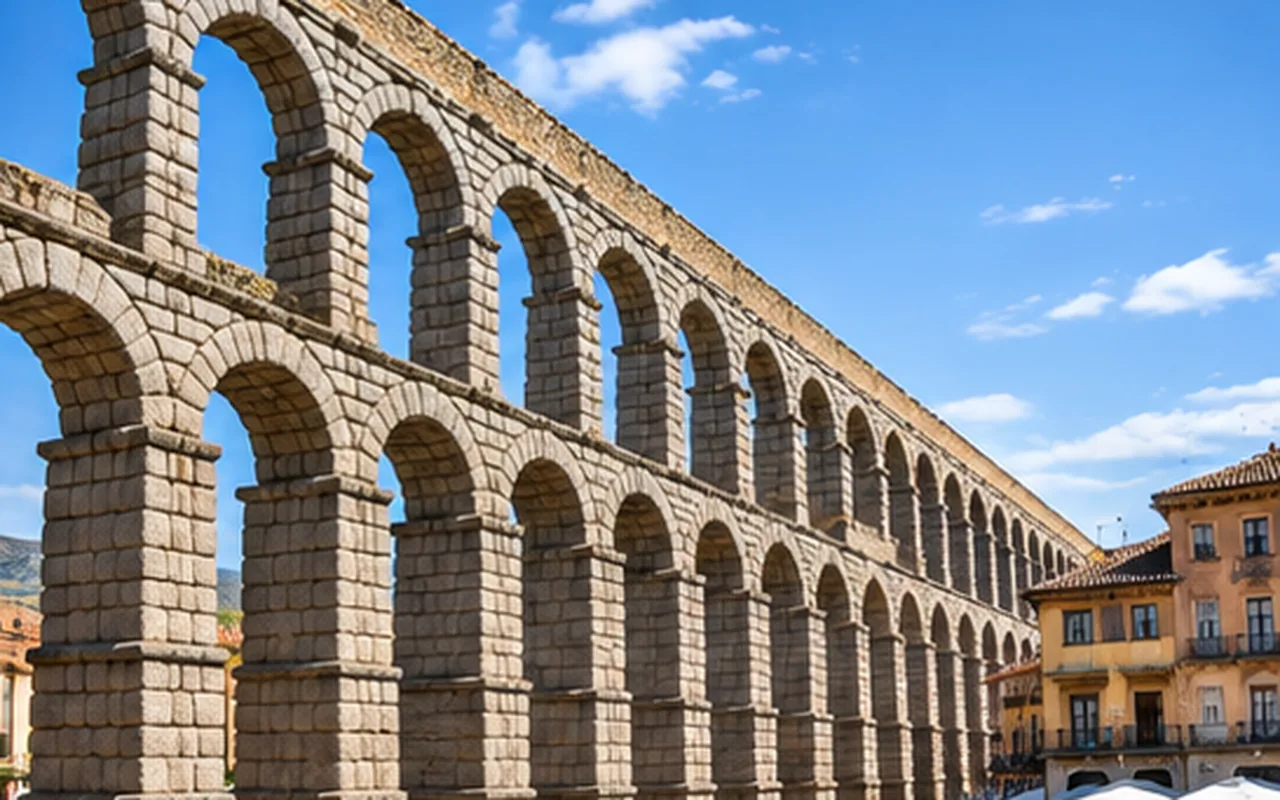 Roman AqueductWater travelled over 16 km before reaching the old town — the monumental arcades are only one section.
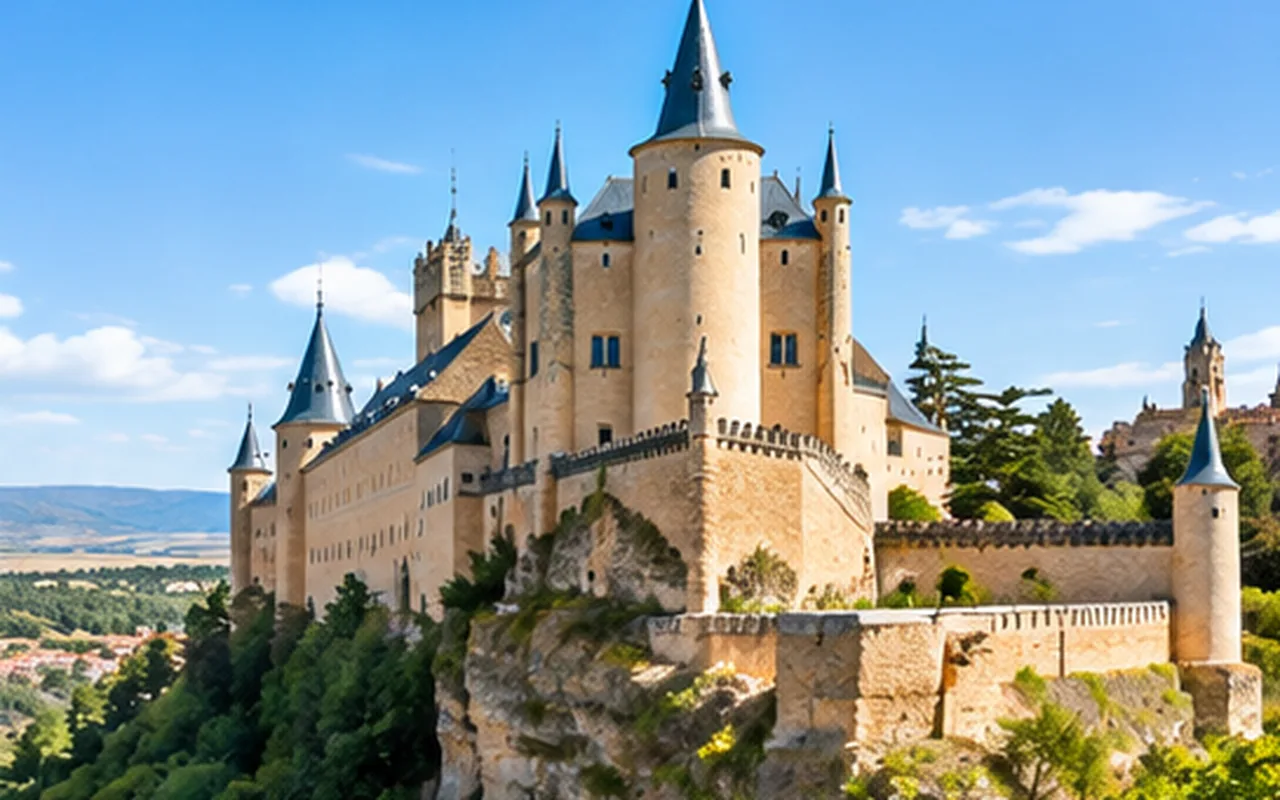 Alcázar of SegoviaA €7 palace ticket and a €10 palace-and-tower ticket are not the same visit.
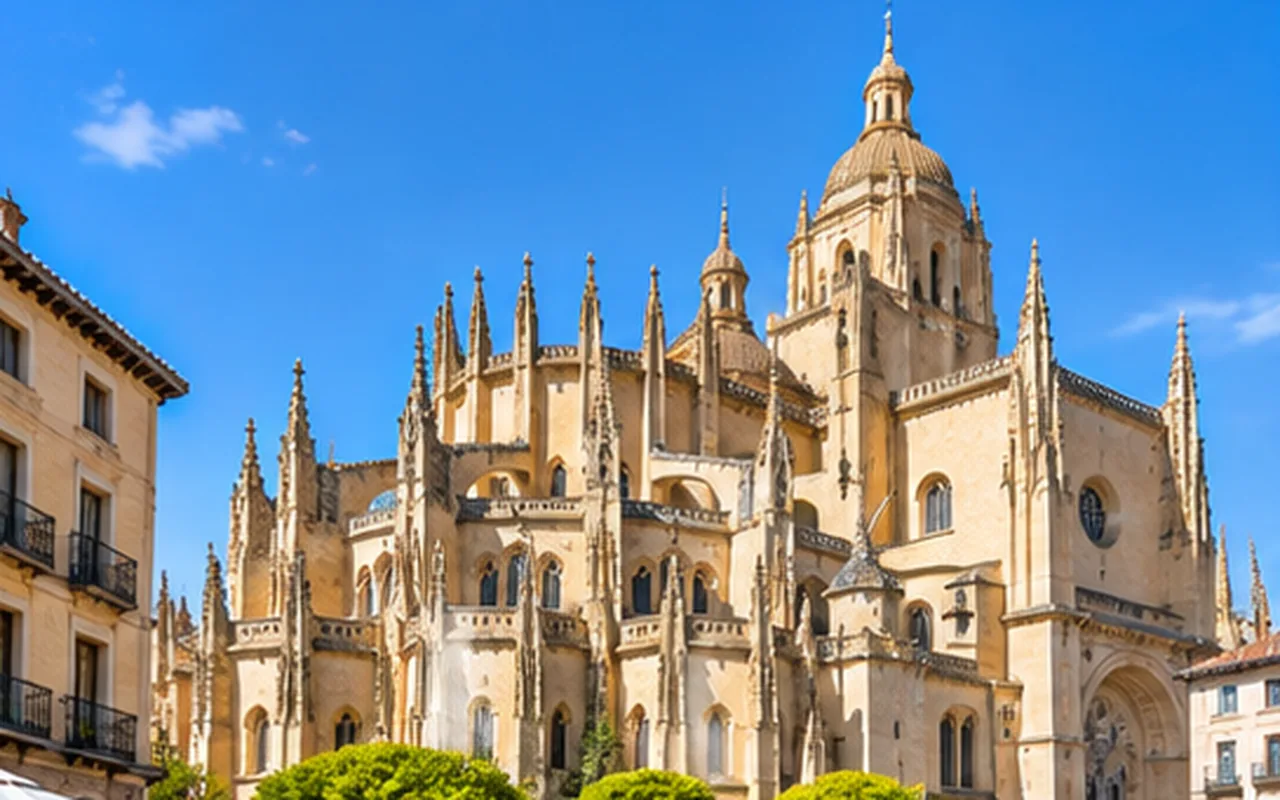 Segovia CathedralConstruction began in 1525; the medieval cloister was moved stone by stone.
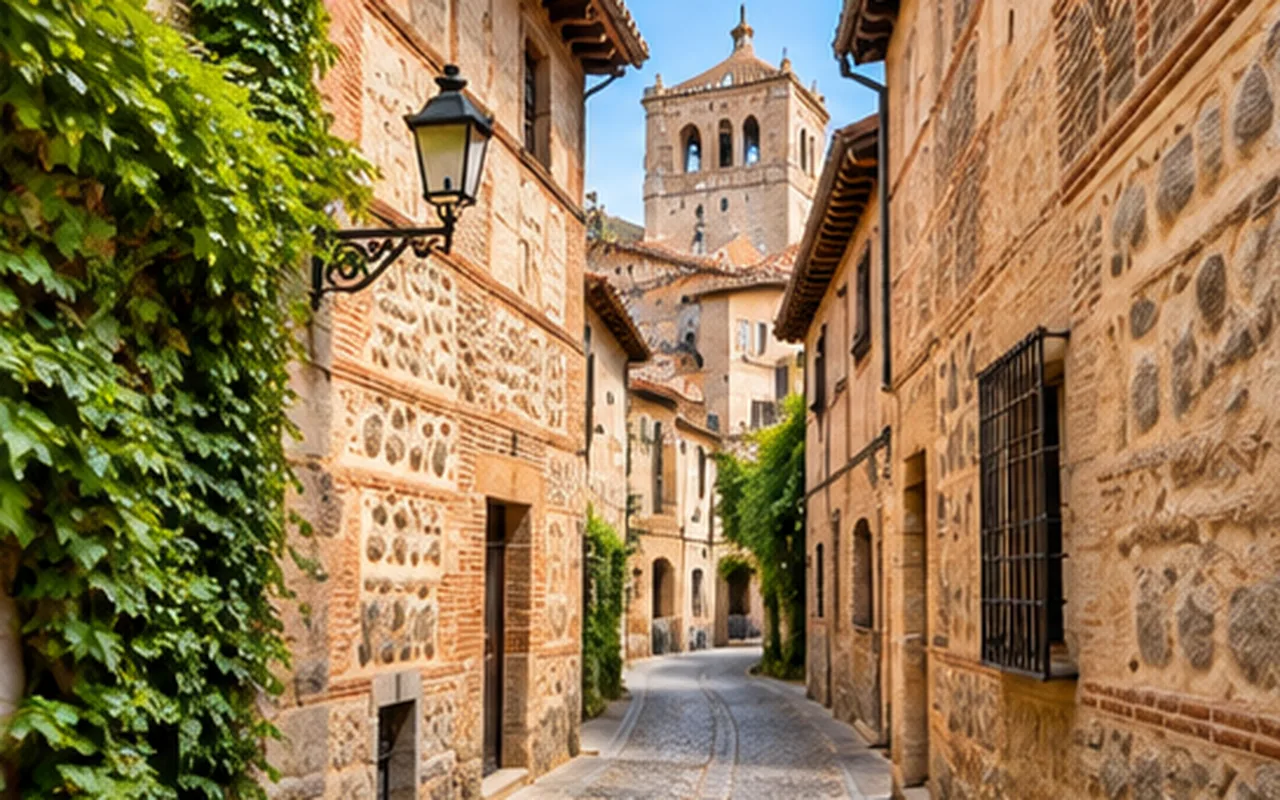 Segovia Jewish QuarterA €3 interpretation center introduces the community's social and religious history.
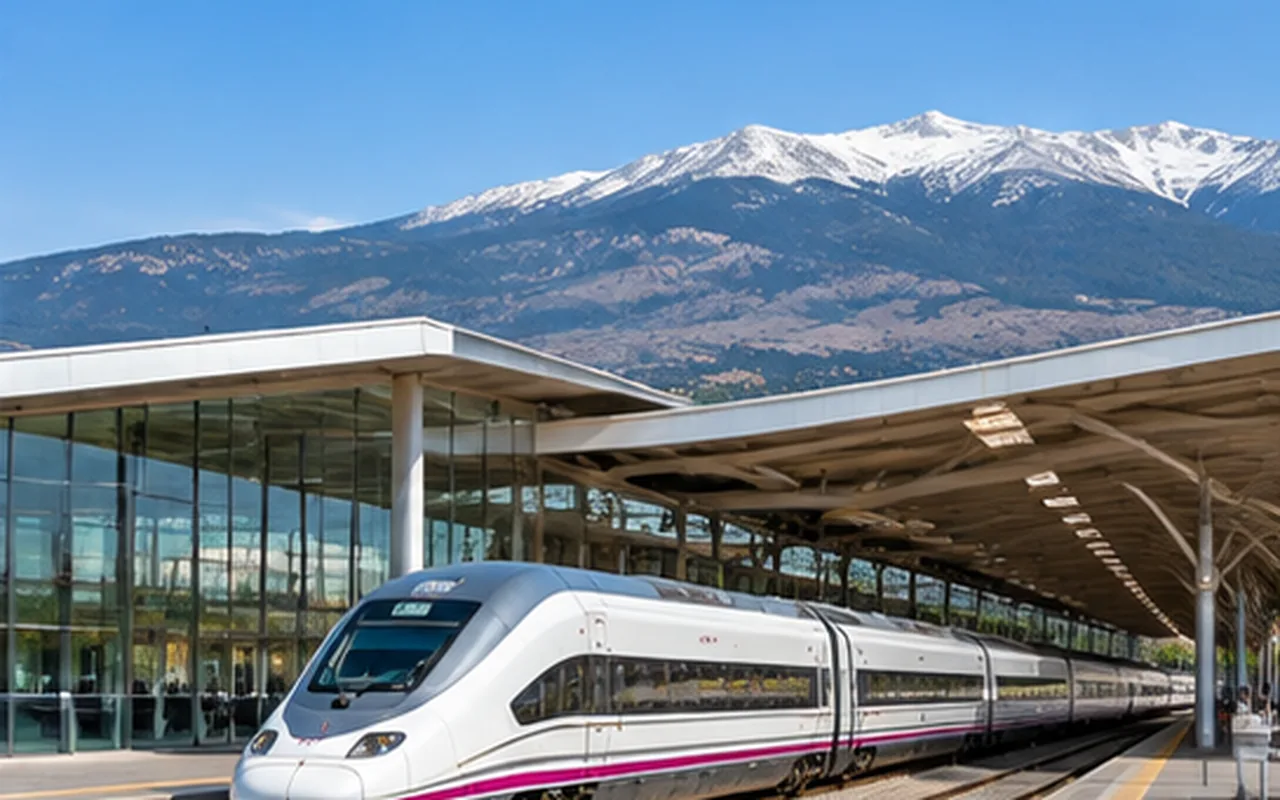 Madrid to SegoviaThe high-speed station is outside the old town: factor in the bus or taxi.
All thumbnails are photorealistic AI-generated illustrations. Verify architecture and access against official source links below.
Tickets and availability: three different choices
The Alcázar's official website recommends reserving ahead on busy dates, particularly for the Tower of Juan II. It estimates about 40–45 minutes for the palace and museum alone and limits the tower visit to around 25 minutes. Cathedral tower access is also a guided, separately priced experience. Read the ticket format before paying for a generic “Segovia tour.”
The Madrid train ends outside the historic center
Renfe's high-speed Madrid–Segovia services use Madrid Chamartín-Clara Campoamor and Segovia-Guiomar. Segovia-Guiomar is outside the compact old town. A local bus or taxi is needed to reach the aqueduct area conveniently, and its transfer time should be included when you compare the train with an organized coach excursion.
The older conventional Segovia railway station is a different place from Segovia-Guiomar. Do not navigate to the wrong station when checking an online itinerary. Read our Madrid–Segovia transport guide, or compare the existing Ávila and Segovia day trip and Segovia and Toledo combination from Madrid.
If your itinerary extends farther through Spain, return to the Madrid guide or the Spain destinations hub.
At the ticket counter: use the right Spanish words
Entrada al palacio means palace admission; subida a la torre means tower ascent. ¿La entrada incluye la torre? asks whether tower access is included. For train arrival, ¿Dónde sale el autobús al centro? asks where the bus into town departs.
Questions with dónde and qué are explained in MundoDELE's interrogative pronouns lesson.
Practice: How would you ask “Where is the entrance?”
¿Dónde está la entrada?
Guided visits and what a tour price means
At the aqueduct, a guide can explain gradient, water flow and the urban network that cannot be seen from one photograph. At the Alcázar, interpretation is useful for separating royal residential history from later military exhibitions. A guided day trip from Madrid often pays for transport and commentary, but does not necessarily include the Alcázar tower or cathedral tower.
Compare Segovia tours on GetYourGuideAffiliate disclosure: MundoDELE may earn a commission. Check the actual meeting point, admission inclusions, language and cancellation terms on your chosen departure.
Available GetYourGuide experiences
Verified options: a Segovia city walk, and a longer Segovia–Toledo excursion starting in Madrid.
Official sources for further reading
- UNESCO — Old Town of Segovia and its Aqueduct
- Segovia Tourism — Aqueduct dimensions and water supply
- Real Alcázar — official ticket guidance
- Cathedral — opening hours and admission
- Renfe — Madrid to Segovia train
Research check: November 2026. Prices and seasonal schedules may change; use the linked institution's booking page for your chosen date.