
MundoDele Spanish Grammar
Spanish Pronouns: Subject, Object, Reflexive and More
Learn the main types of Spanish pronouns and how they work in real sentences. This guide connects subject pronouns, personal pronouns, object pronouns, reflexive pronouns, prepositional pronouns, possessive pronouns, demonstrative pronouns, indefinite pronouns, interrogative pronouns and relative pronouns.
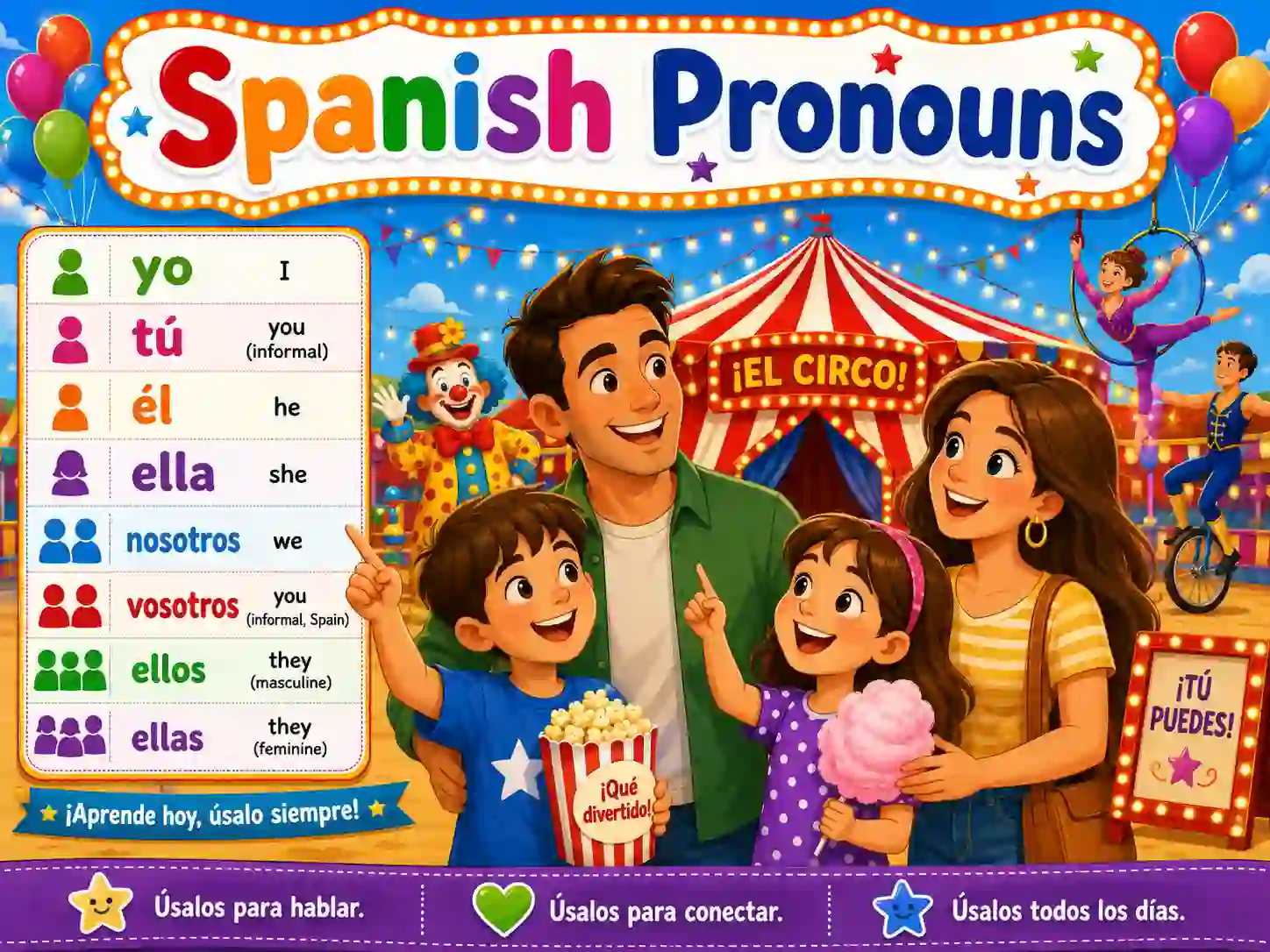
Definition
What are Spanish pronouns?
Spanish pronouns are words that replace or refer to nouns. They help speakers avoid repeating names and nouns, but they also show who performs an action, who receives it, who owns something or how two clauses are connected.
Spanish changes pronoun forms according to their grammatical function. The English idea “me”, for example, can require me, mí, conmigo, lo, la or le, depending on the sentence.
Yo estudio español.
The pronoun identifies who performs the action.
Lo veo.
The pronoun replaces the person or thing affected by the verb.
Es para mí.
Special pronoun forms appear after most prepositions.
Choose by function
Which Spanish pronoun do you need?
Start by identifying what the pronoun does in the sentence. This is more reliable than translating a single English word.
Subject pronouns
Use yo, tú, vos, él, ella, usted, nosotros, vosotros, ellos and ustedes.
Direct object pronouns
Use forms such as me, te, lo, la, nos, los and las.
Indirect object pronouns
Use forms such as me, te, le, nos, os and les.
Reflexive pronouns
Use me, te, se, nos and os with reflexive verbs.
Prepositional pronouns
Use forms such as mí, ti, él, ella, conmigo and contigo.
Reference pronouns
Continue with possessive, demonstrative, indefinite, interrogative and relative pronouns.
Pronoun table
Main types of Spanish pronouns
This table gives a practical overview of the principal Spanish pronoun groups, their common forms and their sentence functions.
| Pronoun type | Main forms | Example | Main function | Lesson |
|---|---|---|---|---|
| Subject pronouns | yo, tú, vos, él, ella, usted, nosotros, vosotros, ellos, ustedes | Ella trabaja. | Identifies who performs the action. | Subject Pronouns |
| Direct object pronouns | me, te, lo, la, nos, os, los, las | Lo conozco. | Replaces the person or thing directly affected. | Direct Object Pronouns |
| Indirect object pronouns | me, te, le, nos, os, les | Le escribo. | Shows to whom or for whom something happens. | Indirect Object Pronouns |
| Reflexive pronouns | me, te, se, nos, os, se | Me levanto. | Shows that the action returns to the subject. | Reflexive Pronouns |
| Prepositional pronouns | mí, ti, él, ella, nosotros, vosotros, ellos, conmigo, contigo | Es para mí. | Appears after a preposition. | Prepositional Pronouns |
| Possessive pronouns | mío, tuyo, suyo, nuestro, vuestro | El libro es mío. | Replaces a noun and expresses possession. | Possessive Pronouns |
| Demonstrative pronouns | este, ese, aquel, esto, eso, aquello | Prefiero este. | Points to a person, object or idea. | Demonstrative Pronouns |
| Indefinite pronouns | algo, nada, alguien, nadie, alguno, ninguno, todo | No veo nada. | Refers to non-specific people, things or quantities. | Indefinite Pronouns |
| Interrogative pronouns | qué, quién, cuál, cuánto | ¿Quién viene? | Replaces an unknown element in a question. | Interrogative Pronouns |
| Relative pronouns | que, quien, el que, el cual, cuyo | La casa que compré. | Connects clauses and refers back to a noun. | Relative Pronouns |
Core pronoun lessons
Start with these Spanish pronoun pages
These lessons form the central learning path from subject pronouns to object pronouns, sentence position and reflexive forms.
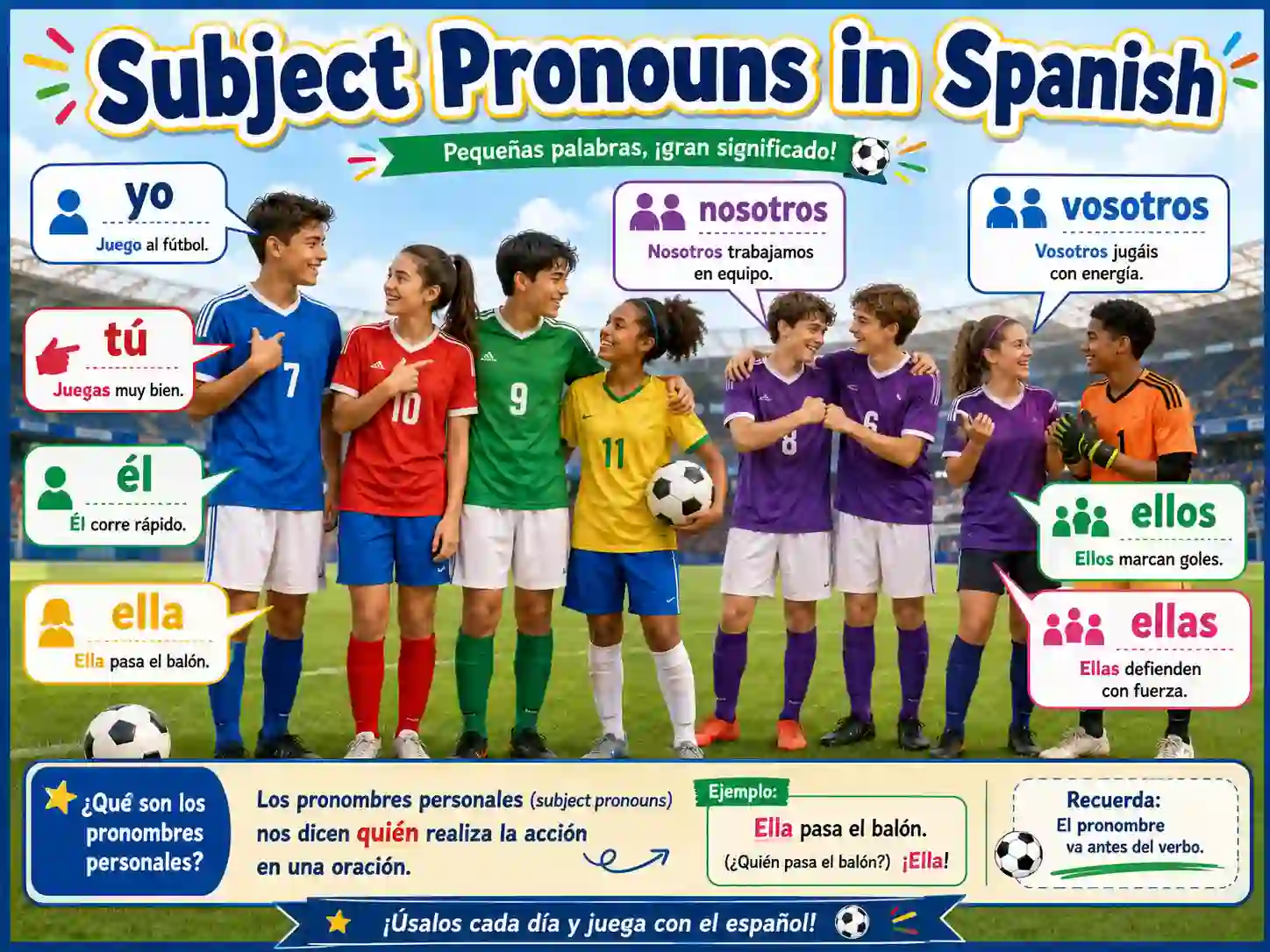
Spanish Subject Pronouns
Learn yo, tú, vos, usted, plural forms and when Spanish leaves the subject pronoun out.
Open lesson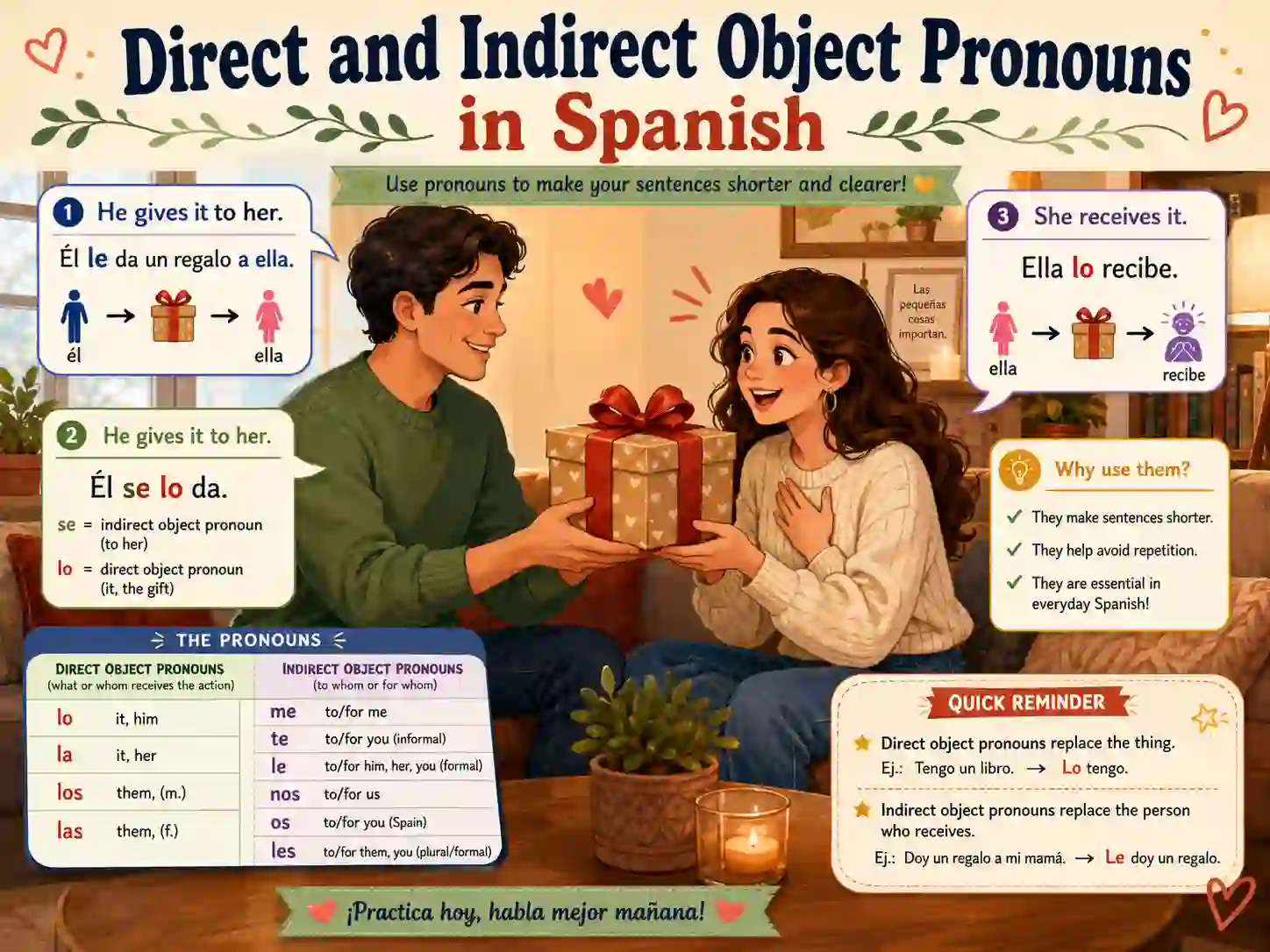
Direct and Indirect Object Pronouns
Compare lo, la, le, les and combinations such as se lo.
Open lesson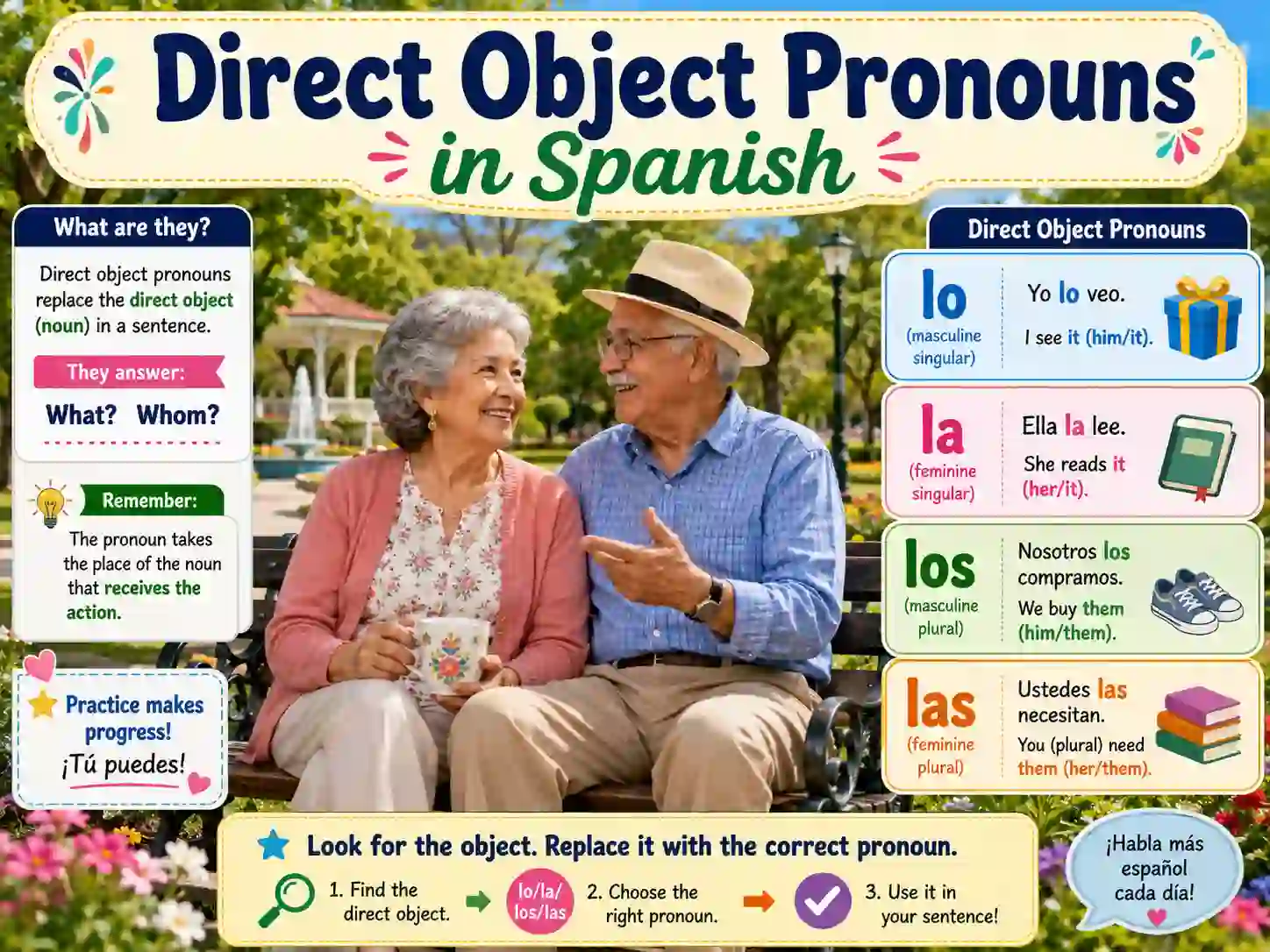
Spanish Direct Object Pronouns
Learn how lo, la, los and las replace people and things directly affected by a verb.
Open lesson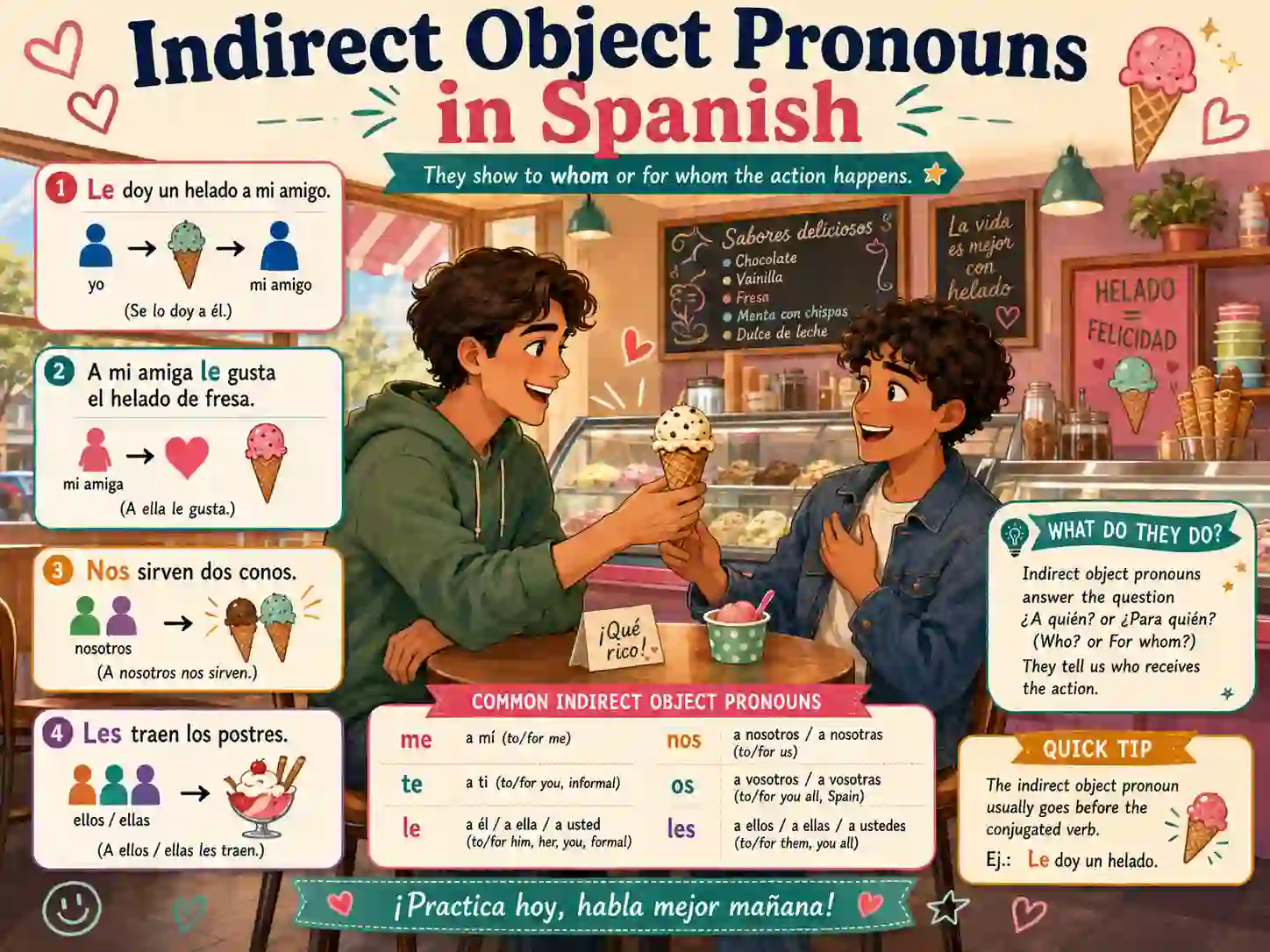
Spanish Indirect Object Pronouns
Learn me, te, le, nos, os and les for recipients and affected people.
Open lesson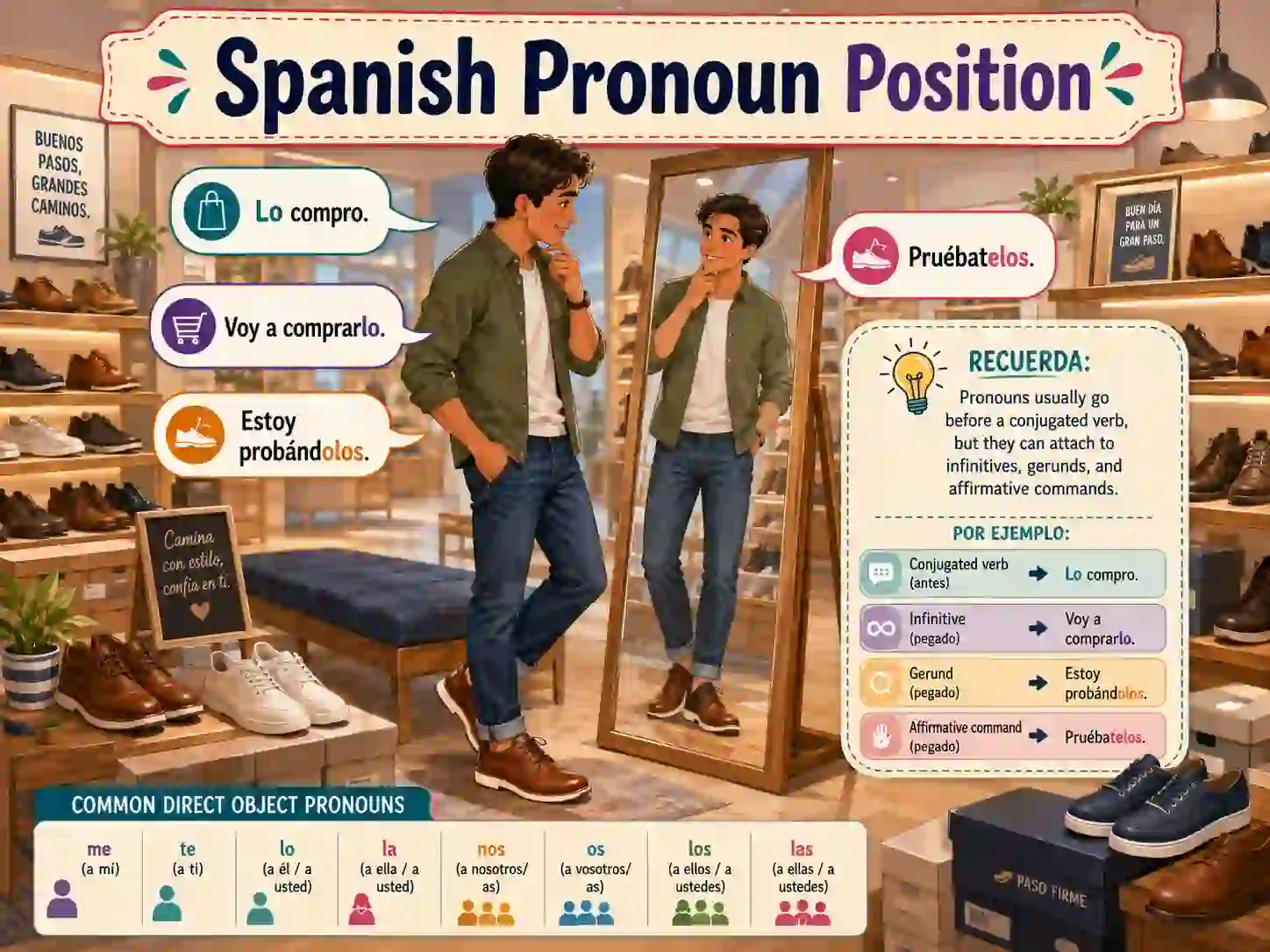
Spanish Pronoun Position
Learn why Spanish says lo veo, quiero verlo, estoy viéndolo and dímelo.
Open lesson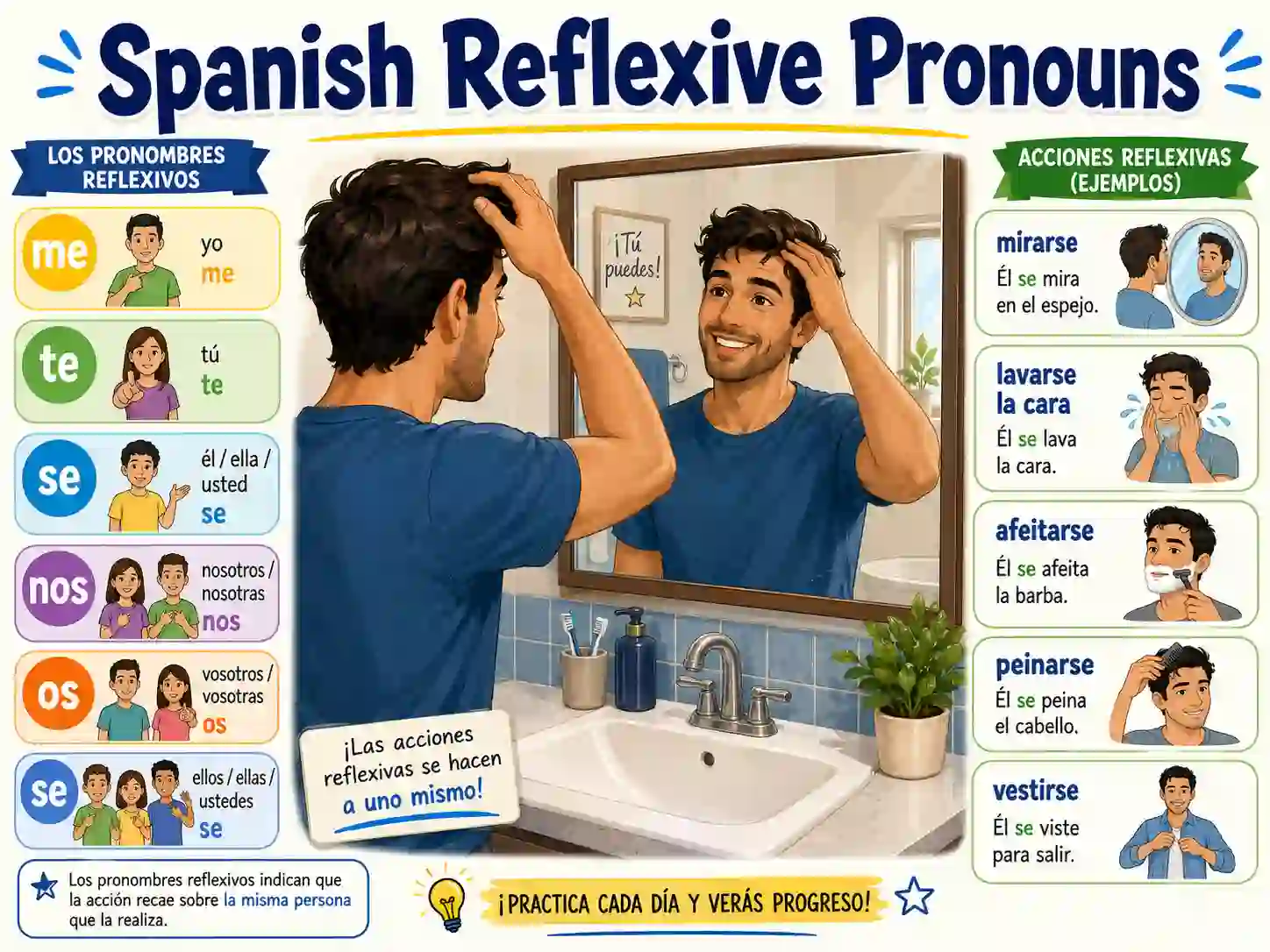
Spanish Reflexive Pronouns
Learn me, te, se, nos and os with verbs such as levantarse and lavarse.
Open lessonCore differences
Yo, me, mí, lo and le: why the form changes
Spanish pronoun forms cannot always be chosen by translating one English word. The correct form depends on its grammatical role.
I, me and after a preposition
yo · me · míYo is a subject, me is an object or reflexive pronoun, and mí follows most prepositions.
Yo estudio. Ana me ayuda. El regalo es para mí.
Direct and indirect objects
lo · la · leLo and la normally replace direct objects. Le normally replaces an indirect object.
Lo veo. La conozco. Le escribo.
Two object pronouns together
se lo · se laWhen le or les appears before lo, la, los or las, it changes to se.
Le doy el libro → Se lo doy.
Recommended order
How to learn Spanish pronouns step by step
This sequence moves from the basic personal system to object pronouns and more complex sentence structures.
Personal pronouns
Understand the complete personal system before comparing individual subject, object and prepositional forms.
Subject pronouns
Learn yo, tú, vos, usted, nosotros, vosotros and ustedes.
Direct and indirect object pronouns
Learn the difference between forms such as lo, la, le and les.
Pronoun position
Learn when pronouns appear before a verb and when they attach to infinitives, gerunds and commands.
Reflexive pronouns
Study forms such as me levanto, te llamas and se despierta.
Prepositional pronouns
Continue with forms such as para mí, de ti, conmigo and contigo.
Complete pronoun library
More Spanish pronoun topics
Continue with prepositional forms, object doubling, possession, distance, questions and clause connections.
Prepositional Pronouns
Learn mí, ti, conmigo, contigo and related forms.
Object Pronoun Doubling
Understand structures such as Le escribí a Ana and A mí me gusta.
Possessive Pronouns
Learn mío, tuyo, suyo, nuestro and related forms.
Demonstrative Pronouns
Learn este, ese, aquel, esto, eso and aquello.
Indefinite Pronouns
Learn algo, nada, alguien, nadie and related forms.
Interrogative Pronouns
Learn qué, quién, cuál and cuánto.
Relative Pronouns
Learn que, quien, el que, el cual and cuyo.
Common errors
Common mistakes with Spanish pronouns
- Using subject pronouns in every sentence: Spanish often omits them when the verb ending is clear.
- Confusing direct and indirect objects: Lo veo means “I see him or it”; le escribo means “I write to him or her”.
- Saying le lo: use se lo, se la, se los or se las.
- Using a subject form after a preposition: say para mí, not para yo.
- Forgetting written accents: él means “he”, while el means “the”; mí means “me”, while mi means “my”.
- Placing object pronouns incorrectly: compare lo veo, quiero verlo, dímelo and no me lo digas.
Frequently asked questions
Questions about Spanish pronouns
What are Spanish pronouns?
Spanish pronouns replace or refer to nouns. Their form often changes according to their function as a subject, object, reflexive form or prepositional form.
What are the main types of Spanish pronouns?
The main groups include subject, direct object, indirect object, reflexive, prepositional, possessive, demonstrative, indefinite, interrogative and relative pronouns.
What is the difference between yo, me and mí?
Yo is a subject pronoun: Yo estudio. Me is an object or reflexive form: Me ayudas. Mí follows most prepositions: Es para mí.
What is the difference between lo and le?
Lo normally replaces a masculine direct object. Le normally refers to an indirect object meaning “to him”, “to her” or “to you” in formal address.
Where do Spanish object pronouns go?
Object pronouns normally appear before a conjugated verb: Lo veo. They can attach to infinitives, gerunds and affirmative commands: verlo, viéndolo and dímelo.
Which Spanish pronouns should beginners learn first?
Start with subject pronouns, followed by direct and indirect object pronouns, pronoun position, reflexive pronouns and prepositional pronouns.
Practice and support
Practise Spanish pronouns in complete sentences
Pronoun charts help you recognise the forms. Personal correction and sentence practice help you use them correctly in conversation and writing.
Spanish Tutoring
Work on pronouns, homework, writing and individual grammar problems.
Private Spanish Lessons
Use Spanish pronouns in conversation and personalised exercises.
Spanish Grammar
Continue with verbs, tenses, prepositions and sentence structures.

About MundoDele
Spanish learning connected with culture and real life
MundoDele combines clear Spanish grammar explanations with private lessons, tutoring, DELE and SIELE preparation, Business Spanish, cultural context and travel experiences from the Spanish-speaking world.
The grammar guides are designed to help international learners understand how Spanish works in complete sentences. Tables, practical examples and connected lessons make it easier to move from individual rules to confident use.