
Formentera Travel Guide – Beaches, Routes & Quiet Days
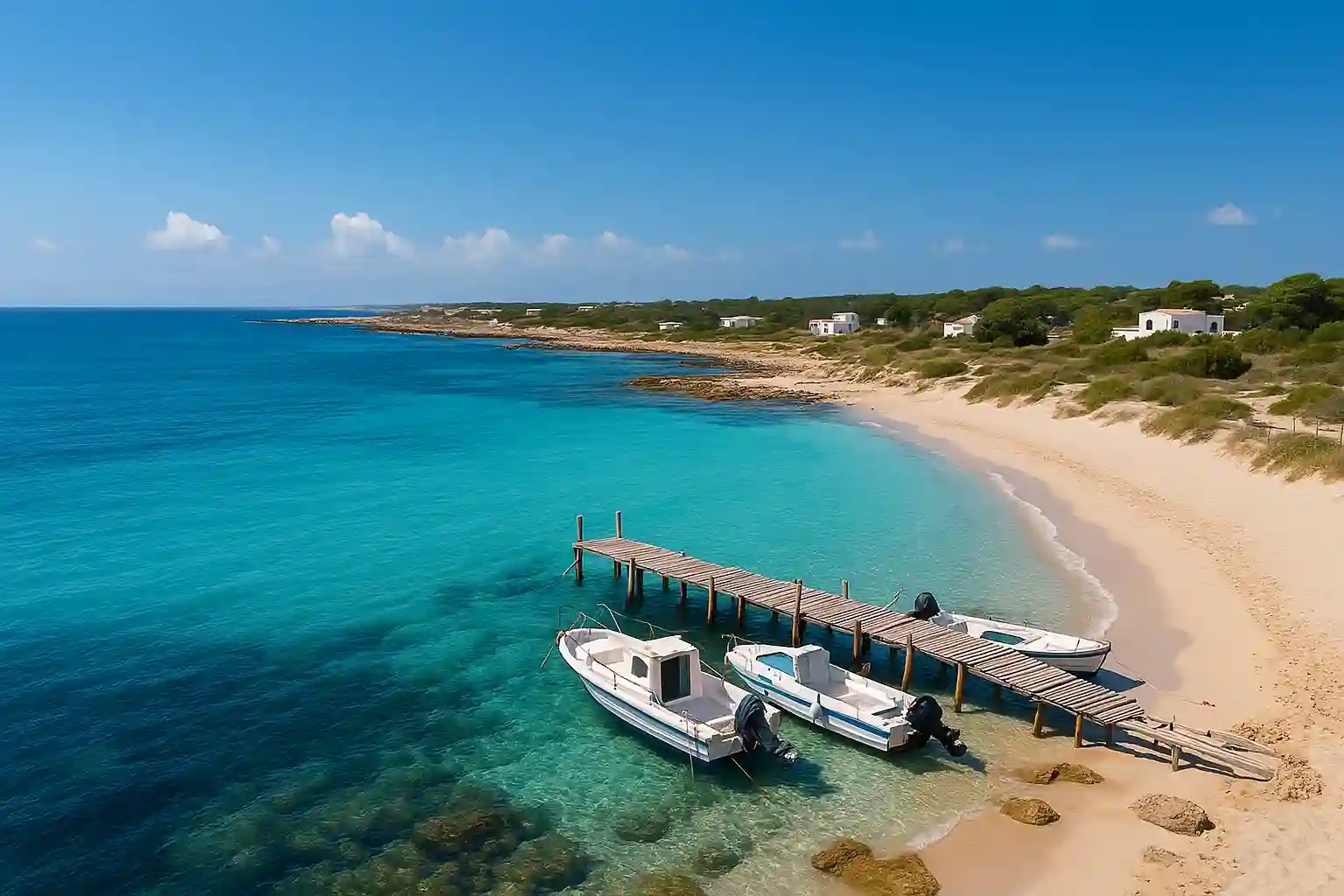
Formentera is small enough to understand in a day and generous enough to deserve more. Think of it in four lines: La Savina and the salt flats, Ses Illetes and the northern beaches, Migjorn's long south coast, and the La Mola plateau with its lighthouse and wind. Plan with wind in mind — north wind favors the south shore, south wind favors the north. The island is narrow enough that switching sides takes ten minutes by bike.
Places & Landmarks
- Ses Illetes · White sand and glassy shallows on a narrow spit. Walk both sides; the water color shifts with the sun angle. Ranked consistently among Europe's top beaches.
- Ses Salines & Salt Flats · Pink and silver mirrors just north of La Savina. Flamingos at dusk, quiet paths along the banks, a UNESCO World Heritage landscape shared with southern Ibiza.
- Far de la Mola Lighthouse · Edge-of-the-world feeling at the island's eastern tip. Cliffs, wind, and a horizon that cleans the head. Jules Verne set a scene here.
- Sant Francesc Xavier · Low houses, a shaded square, small shops for bread and fruit. The island's quiet capital — a good mid-day pause before the afternoon heat.
- Es Pujols Boardwalk · Evening stroll, simple bars, and the sound of plates rather than traffic. The most social spot on the island without being loud about it.
- Es Caló · Small fishing port on the north coast, wooden boat ramps, clear water for snorkeling on calm days, and honest food at the taverns alongside.
Start and end at La Savina (ferry port). Pick one coast per day to avoid backtracking. If wind rises, cross to the sheltered side — the island rewards flexibility more than plans. Bikes work for everything flat; scooters for La Mola.
Beaches & Routes
- Illetes Loop (Bike) · La Savina → Ses Salines salt flats → Ses Illetes → small coves on the western side of the spit → back via the flamingo path. Flat, easy, best light in the morning.
- Migjorn Drift · Park the scooter or bike at any access point, pick a wooden boardwalk over the dunes, follow the sound of the sea. Long shore, many quiet entries, fewer people than the north.
- La Mola Circuit · Scooter up the plateau road, short cliff-edge walk around the lighthouse, views south toward open water with nothing between you and the African coast. Go early or late — midday heat on exposed rock is real.
- Cala Saona · Small sheltered cove on the western coast with red-cliffed edges. One of the most photographed spots on the island. Calmer water than Migjorn in southerly wind.
Getting Around
Bike rental shops cluster around La Savina port — you can be cycling within ten minutes of disembarking. Standard bikes, electric bikes, tandems, and scooters are all available. Electric bikes are worth the extra cost if the La Mola climb is in the plan or if the mid-afternoon heat is a concern. The island's vies verdes — green cycling routes over former agricultural tracks — keep you off the main road for most of the day.
Cars feel heavy here. They make sense only with small children, significant gear, or mobility needs. Everyone else moves faster and better on two wheels.
Food: Bullit de Peix
Every island with a real food culture has one dish that belongs only to it. For Formentera it is bullit de peix — fresh fish simmered in broth with potatoes, garlic, and saffron, then served in two courses: first the fish and potatoes with alioli, then arroz a banda, rice cooked in the fish broth, intensely flavored and served on its own.
The best versions are on the Migjorn coast and near Es Pujols — beach-facing places with plastic chairs and fish that was swimming that morning. Walk-ins before 13:00 usually find space; after that, reservations take over. Avoid anything facing the La Savina dock directly.
If you're coming from Ibiza for the day, a pre-booked crossing saves you the port queue in peak season. The two-way ferry ticket lets you choose return times after you've seen how the day unfolds.
Season & Timing
- May–June · Clear water, wildflowers, quiet roads. The best overall balance.
- July–August · Full beaches, full ferries, full heat. Arrive at Ses Illetes before 10:00 or accept that it will be crowded. Everything still works; just plan earlier.
- September–October · Warm sea, softer light, slower evenings. The island's best-kept season.
- Winter · Few services open, wide skies, excellent walking weather. Not a beach trip.
Where to Stay
- La Savina · Best for early ferry access and easy bike pickup. Practical rather than atmospheric.
- Es Pujols · Evening life, cafés, simple hotels. Livelier than the rest but still human-scale.
- Migjorn · Long quiet shore, boardwalks over dunes, low light at sunset. Best for doing nothing well.
- Sant Francesc Xavier · Central base, calm square, quick reach to both coasts by bike.
Two Day Plans
Morning ferry → bikes to Ses Salines (flamingos) → Ses Illetes for a long swim → slow lunch in Sant Francesc Xavier → evening walk in Es Pujols → late return ferry.
Scooter to Migjorn boardwalk → swim, read, repeat → Es Caló for snorkeling → late afternoon at the La Mola lighthouse → quiet dinner near La Savina.
Small Notes
- Bring a refillable water bottle — wind cools fast after sunset and you'll want it warm too.
- Reef-safe sunscreen; the shallow, reflective water at Ses Illetes amplifies UV exposure significantly.
- Respect dunes and Posidonia seagrass — they keep the water clear and the beaches shaped.
- No glass at beach areas; transfer drinks to non-glass containers before the water.
- Card works in most places; keep a little cash for small cafés and market stalls.
- A small dry bag keeps phones safe on windy ferry decks.