
San Sebastián Travel Guide
La Concha, the Parte Vieja, and the best food city in Europe — everything to do in Donostia
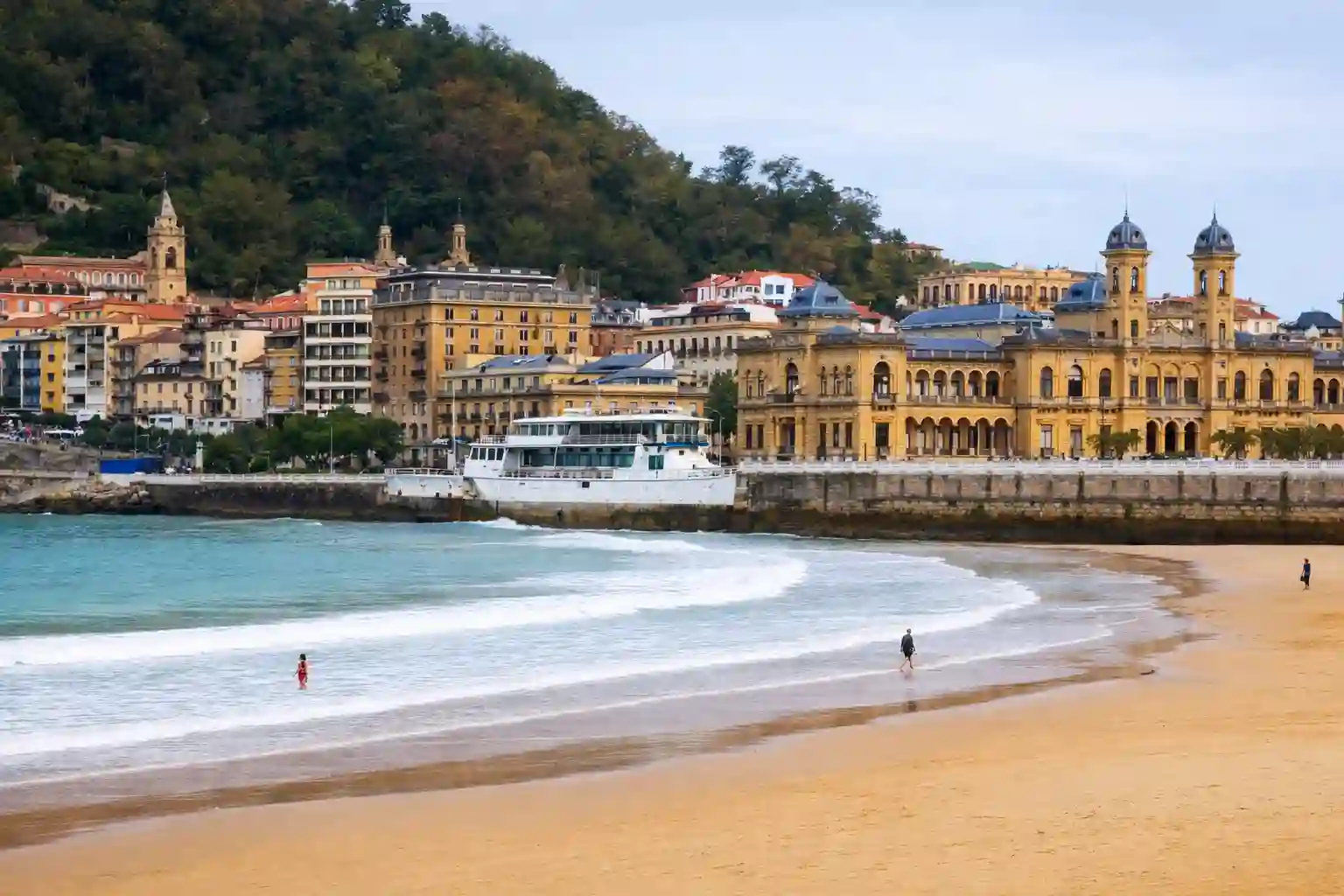
San Sebastián occupies a curve of the Cantabrian coast that most people, when they first see it, assume must have been designed. The bay of La Concha — symmetrical, sheltered, framed by two hills — is almost impossibly photogenic. The city knows this, and has built its identity around it: a resort town since the 19th century, when the Spanish royal family chose Donostia as their summer residence and the Belle Époque Ensanche was built to receive them.
What the postcard doesn't communicate is the food. San Sebastián has more Michelin-starred restaurants per capita than almost any city in the world. But the more important number is the one on the street: the bars of the Parte Vieja, the pintxos on the counter, the txotx call in the cider houses of Astigarraga. The city's obsession with food runs from three-star kitchens to the standing-room-only bar at 7pm.
The old town is compact, walkable, and dense. Two Gothic churches, the former bullfighting plaza at the Plaza de la Constitución, the covered market of La Bretxa, and hundreds of pintxos bars — all within a ten-minute walk of each other. A local guide turns what would otherwise be a pleasant wander into a structured understanding of the city's history, architecture, and food logic.
East of San Sebastián, the coast changes character. Hondarribia sits on the French border with its medieval walls intact. The Bay of Pasaia holds two villages — San Juan and San Pedro — facing each other across the narrowest of estuaries. The hills above are apple orchards, and in the farmhouses below them, Basque cider has been made and drunk in the same way for five centuries.
Tours & Experiences in San Sebastián
Cross La Concha Bay to San Sebastián's island — swim, walk the cliffs, and visit the Hondalea lighthouse sculpture by Cristina Iglesias. Audio guide in 4 languages included.
Walk the Old Town with a local guide — 5 pintxos, 4 regional wines, and Basque cider across San Sebastián's best bars. Includes access to Atari and Muxumartin.
2 hours, 15 landmarks — the Parte Vieja and the Belle Époque Ensanche with a local guide. Ends with a pintxo and drink at a traditional Old Town bar.
East along the Basque coast — medieval Hondarribia on the French border, the Jaizkibel viewpoint, and the Bay of Pasaia villages with a boat crossing. Hotel pickup included.
From the orchards to the barrel — guided sagardotegia tour from San Sebastián with return transport included. Walk the apple orchards, visit the cellar, taste cider straight from the kupela with the txotx ritual, and eat the four-course traditional menu: cod omelette, txuleta steak, Idiazabal cheese. Farmhouse with 500 years of cider-making history. Season: January–April (txotx) · tours year-round.
Read guide & book →About San Sebastián
San Sebastián sits at the western edge of the Pyrenees where the mountains meet the Atlantic — a geography that shapes everything from the climate to the food. The city's position on the Cantabrian coast gives it mild, wet winters and warm summers; the hills trap moisture and feed the apple orchards that produce Basque cider. The Bidasoa river, 20 kilometres to the east, marks the border with France, and the French Basque Country begins on the other side of the same cultural landscape.
The Basque Country is not like the rest of Spain. The language — Euskara — is one of the oldest in Europe and related to no other known tongue. The political history is complex and recent. The food is a point of regional pride that extends from the sagardotegia and the pintxos bar to restaurants that have held three Michelin stars for decades. Understanding San Sebastián means understanding that it is a Basque city first, and a Spanish city second.
The most important neighbourhoods for visitors are the Parte Vieja (the old town, east of the Boulevard), the Ensanche (the 19th-century expansion, west of the Boulevard and inland), and the waterfront along La Concha and Ondarreta. Mount Urgull overlooks the old town from the north; Mount Igeldo closes the western end of La Concha. The Santa Clara Island sits in the middle of the bay.
← Explore the full Basque Country guide