
Spanish culture guide
Spanish Culture in Everyday Life: Food, Music, Festivals and Language
Spanish-speaking cultures are shaped by regional identity, shared rituals, food, music, family life and language. This guide connects Spain and Latin America through practical cultural context for learners, travellers and curious readers.
Culture map
The fast way to understand Spanish-speaking culture
Culture is daily rhythm
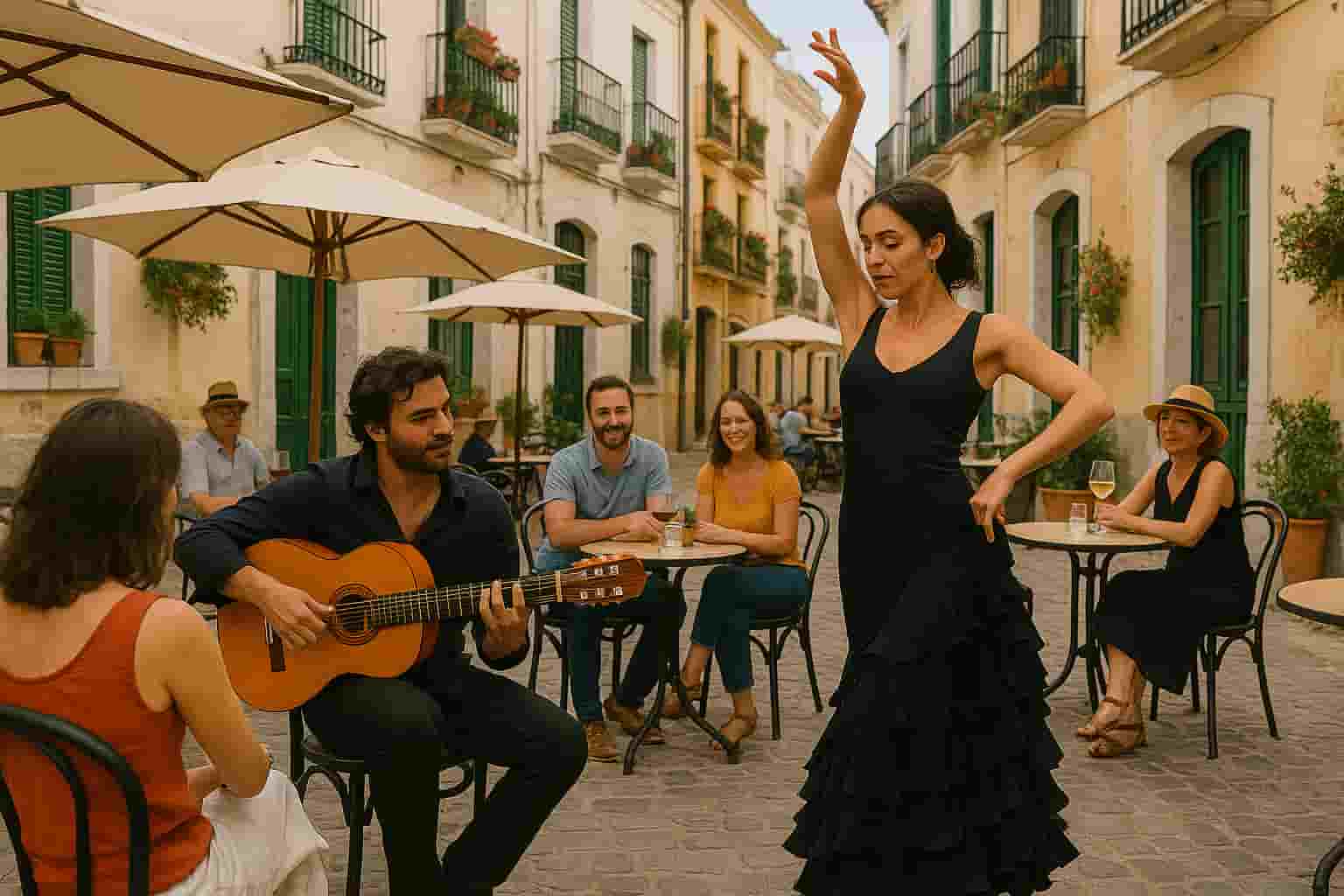
In Spain and Latin America, culture is not limited to monuments or tourist attractions. It appears in meal times, family gatherings, street life, local festivals, music, regional pride, humour, greetings and the words people choose.
For Spanish learners, this matters because language is full of cultural signals. A phrase can sound polite, warm, formal, distant or local depending on the country, region and situation.
Everyday culture
Culture in everyday life: where you actually notice it
The most memorable cultural moments often happen outside museums: in cafés, markets, family meals, neighbourhood festivals, street music, local jokes and short conversations with people.
Cuisine as identity
Food explains region, history and belonging. Tapas in Spain, mole in Mexico, ceviche in Peru, asado in Argentina and arepas in Venezuela all carry cultural meaning.
Rhythm and memory
Flamenco, tango, mariachi, cumbia and salsa are more than entertainment. They are connected to migration, community, emotion and place.
Shared celebration
Semana Santa, Feria de Abril, Día de los Muertos, Carnival and Inti Raymi show how communities express memory, faith, joy and identity.
Words with context
Greetings, politeness, humour and slang change by region. Cultural awareness helps you sound more natural and avoid misunderstandings.
Cultural comparison
Spain and Latin America: shared language, different cultural paths
Spain and Latin America share deep historical links, but their cultural identities developed through different geographies, social histories, languages, migrations and local traditions.
Spain
Spain is strongly regional. Andalusia, Catalonia, Galicia, the Basque Country, Castile and the Canary Islands each bring different languages, food, festivals, music and historical influences.
- Andalusia: flamenco, Semana Santa, Moorish heritage, patios and plazas.
- Catalonia: Catalan language, Gaudí, castells, Mediterranean identity.
- Galicia: pilgrimage culture, seafood, Celtic echoes and Atlantic landscape.
- Basque Country: Euskara, pintxos, rural sports and strong local identity.
Latin America
Latin America blends indigenous, European, African and later immigrant influences. Each country has its own cultural profile, from Mexico and Peru to Argentina, Colombia, Cuba and Chile.
- Mexico: Día de los Muertos, mariachi, tacos, mole and Mesoamerican roots.
- Argentina: tango, gaucho traditions, asado, football and literary cafés.
- Peru: Inca legacy, Inti Raymi, ceviche and Andean culture.
- Colombia: cumbia, carnival, coffee regions and Caribbean-Andean diversity.
“Language is a vessel for culture, memory and connection. To speak Spanish with context is to understand more than words.” — MundoDELE
Regional highlights
Cultural highlights across the Spanish-speaking world
These examples help you connect culture with real places, travel decisions and language learning topics.
Andalusia
Flamenco, Moorish architecture, Semana Santa and Seville’s Feria de Abril make Andalusia one of Spain’s strongest cultural regions.
Explore SevilleCatalonia
Catalonia connects Mediterranean life, Catalan identity, modernist architecture, Gaudí and coastal travel.
Explore Costa BravaMadrid and Castile
Central Spain offers royal history, museums, literature, plazas, tapas routes and strong Castilian language associations.
Explore MadridMexico
Día de los Muertos, indigenous heritage, mariachi and regional cuisine make Mexico a major cultural reference point.
Explore culture guidesArgentina and Uruguay
Tango, asado, Río de la Plata Spanish, cafés, football and literary culture create a distinct southern identity.
Learn regional SpanishPeru and the Andes
Inca history, Andean festivals, Quechua influence and food culture make Peru essential for understanding cultural layering.
Explore travel guidesLanguage history
How Spanish evolved across regions and continents
Spanish began as spoken Latin in the Iberian Peninsula and absorbed influences from Germanic languages, Arabic, regional Iberian languages and later indigenous languages across the Americas.
Vulgar Latin
Spanish developed from spoken Latin after Roman expansion into the Iberian Peninsula.
Arabic influence
Centuries of Muslim rule left many Arabic-origin words in Spanish, especially in food, science, architecture and daily life.
Atlantic expansion
Spanish crossed the Atlantic and developed differently across Mexico, the Caribbean, the Andes and the Southern Cone.
Regional varieties
Today’s Spanish includes Castilian, Andalusian, Canarian, Mexican, Colombian, Caribbean and Rioplatense varieties.
Useful language
Spanish phrases that help you enter the culture
Culture becomes easier when you can ask simple questions, react naturally and show interest in local customs.
Learn with culture
Learn Spanish through real cultural situations
Culture gives language a real setting. Instead of learning isolated words, you can connect grammar and vocabulary with food, music, festivals, travel, conversations, regional identity and everyday situations.
Practical conversations
Practice restaurants, transport, tickets, hotels, directions and small talk with cultural context.
Private Spanish lessonsGrammar with meaning
Use real situations to understand tenses, pronouns, commands, comparisons and everyday expressions.
Spanish grammarDELE and SIELE context
Cultural topics often appear in reading, listening, speaking and writing tasks.
DELE & SIELE preparationInternal guides
Continue with related MundoDELE guides
Use these pages to move from general culture into travel, language learning and specific Spanish destinations.
FAQ
FAQ: Spanish culture, Latin America and language
Why are there so many dialects in Spanish?
Spanish developed across multiple continents and was shaped by geography, indigenous languages, migration, social history and regional identity. That is why Spanish in Mexico, Spain, Colombia or Argentina can sound very different.
Is Latin American culture homogeneous?
Latin America is highly diverse. Each country has its own identity shaped by indigenous roots, colonial history, African influence, immigration, geography, food, music and local traditions.
What are the main cultural differences between Spain and Latin America?
Spain is strongly shaped by regional identities such as Andalusia, Catalonia, Galicia and the Basque Country. Latin America is shaped by national histories, indigenous cultures, colonial legacies, African influence and migration.
Why does culture matter when learning Spanish?
Culture helps you understand meaning, politeness, humour, rhythm, slang and regional differences. It makes Spanish more practical and more natural in real conversations.
Can MundoDELE help with regional Spanish varieties?
Yes. MundoDELE lessons can adapt to your goals: travel, work, exam preparation, Spain-focused Spanish, Latin American Spanish, conversation practice or cultural understanding.
About MundoDELE
Spanish learning with culture, travel and real context
MundoDELE connects Spanish learning with real-life situations, culture, travel and exam goals. Learn the language through context that helps you understand how people speak, live and connect.