
MundoDele Spanish Grammar
Spanish Comparisons: Más Que, Menos Que, Tan Como and Tanto Como
Learn how to compare qualities, actions, quantities and people with más que, menos que, tan como, tanto como, mejor, peor and Spanish superlatives.
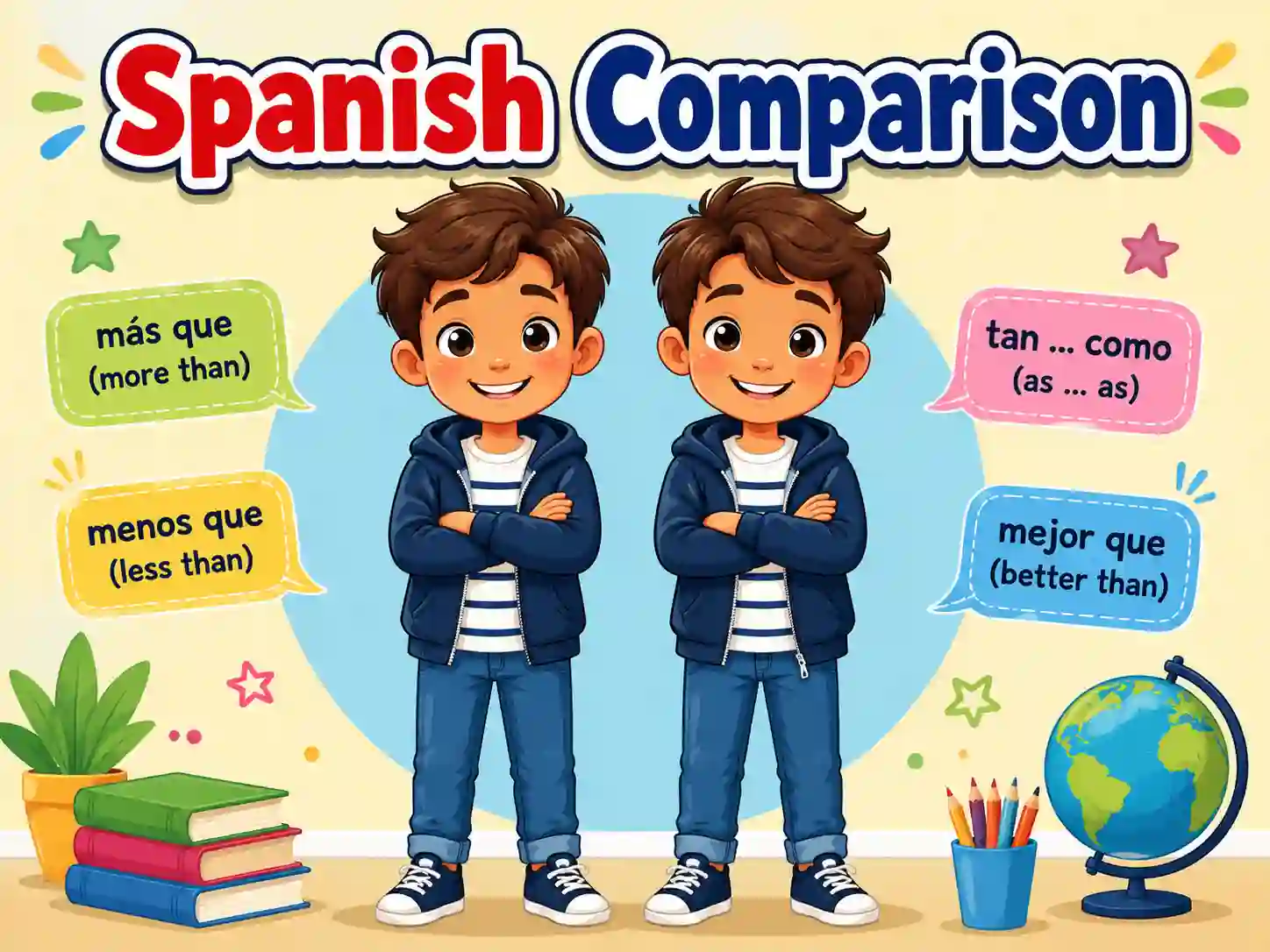
Definition
What is comparison in Spanish?
Spanish comparison shows whether a person, thing, action or quantity has more, less or the same degree of a particular quality. The grammatical pattern changes according to what is being compared.
Esta casa es más grande que aquella.
This house is bigger than that one.
Habla más claramente que yo.
He or she speaks more clearly than I do.
Tiene tantos libros como Ana.
He or she has as many books as Ana.
Overview
Spanish comparison at a glance
| Comparison | Pattern | Spanish example | English meaning |
|---|---|---|---|
| More with adjective | más + adjective + que | más alto que | taller than |
| More with adverb | más + adverb + que | más claramente que | more clearly than |
| More with noun | más + noun + que | más libros que | more books than |
| Less or fewer | menos + adjective/adverb/noun + que | menos caro que | less expensive than |
| Equality with adjective | tan + adjective + como | tan alto como | as tall as |
| Equality with adverb | tan + adverb + como | tan bien como | as well as |
| Equality with noun | tanto/a/os/as + noun + como | tantas preguntas como | as many questions as |
| Equality with verb | verb + tanto como | trabaja tanto como yo | works as much as I do |
| Relative superlative | article + más/menos + adjective | la más rápida | the fastest |
Superiority and inferiority
Más ... que and menos ... que
Use más ... que to express a greater degree or quantity. Use menos ... que to express a lower degree or quantity.
Compare qualities
Madrid es más grande que Sevilla.
Esta tarea es menos difícil que la otra.
Compare actions
Ella habla más rápido que yo.
Él trabaja menos cuidadosamente que Ana.
Compare quantities
Tengo más tiempo que antes.
Tenemos menos clases que ellos.
| Structure | Spanish example | English meaning |
|---|---|---|
| más + adjective + que | Este libro es más interesante que aquel. | This book is more interesting than that one. |
| menos + adjective + que | La casa es menos cara que el piso. | The house is less expensive than the apartment. |
| más + adverb + que | Habla más claramente que antes. | He or she speaks more clearly than before. |
| menos + adverb + que | Conduce menos rápido que su hermano. | He or she drives less fast than the brother. |
| más + noun + que | Tengo más libros que tú. | I have more books than you. |
| menos + noun + que | Ahora tengo menos trabajo que antes. | Now I have less work than before. |
| verb + más/menos + que | Ana estudia más que yo. | Ana studies more than I do. |
Él es más alto.
Ella es más alta.
Ellos son más altos.
Ellas son más altas.
Equality
Tan ... como and tanto ... como
Spanish uses two main equality patterns. The correct choice depends on whether the comparison contains an adjective, adverb, noun or verb.
Tan ... como
Use tan before adjectives and adverbs.
Es tan alto como su padre.
He is as tall as his father.
Habla tan bien como Ana.
He or she speaks as well as Ana.
Tanto ... como
Use the appropriate form of tanto before nouns and invariable tanto after verbs.
Tiene tantos libros como yo.
He or she has as many books as I do.
Trabaja tanto como Ana.
He or she works as much as Ana.
| Form | Used with | Spanish example | English meaning |
|---|---|---|---|
| tan | Adjective | tan importante como | as important as |
| tan | Adverb | tan rápidamente como | as quickly as |
| tanto | Masculine singular noun | tanto dinero como | as much money as |
| tanta | Feminine singular noun | tanta agua como | as much water as |
| tantos | Masculine plural noun | tantos libros como | as many books as |
| tantas | Feminine plural noun | tantas preguntas como | as many questions as |
| tanto como | After a verb | Estudia tanto como yo. | He or she studies as much as I do. |
tan does not agree · tanto agrees with a following noun · after a verb, use invariable tanto
Spanish can also use igual de + adjective/adverb + que:
Este ejercicio es igual de difícil que el anterior.
This exercise is just as difficult as the previous one.
Comparing actions
Comparison with Spanish adverbs
Adverbs describe how, when or how often an action happens. They do not change for gender or number inside comparison structures.
| Pattern | Spanish example | English meaning |
|---|---|---|
| más + adverb + que | Habla más claramente que antes. | He or she speaks more clearly than before. |
| menos + adverb + que | Trabaja menos cuidadosamente que Ana. | He or she works less carefully than Ana. |
| tan + adverb + como | Responde tan rápidamente como tú. | He or she answers as quickly as you. |
| mejor que | Canta mejor que yo. | He or she sings better than I do. |
| peor que | Ahora duerme peor que antes. | Now he or she sleeps worse than before. |
| mucho más + adverb | Ahora habla mucho más claramente. | Now he or she speaks much more clearly. |
Review: Spanish Adverbs .
Irregular and special forms
Mejor, peor, mayor and menor
Some common comparisons use special forms instead of a regular structure with más.
| Form | Meaning | Spanish example | Usage note |
|---|---|---|---|
| mejor | better | Esta opción es mejor que la otra. | Common comparative of bueno and bien. |
| peor | worse | El resultado es peor que antes. | Common comparative of malo and mal. |
| mayor | older, greater, higher | Mi hermana es mayor que yo. | Common for age and formal degrees or quantities. |
| menor | younger, lesser, lower | El riesgo es menor que antes. | Common for age and formal or abstract comparison. |
Correct:
Esta opción es mejor.
Incorrect:
Esta opción es más mejor.
mucho mejor — much better
mucho peor — much worse
mucho mayor — much greater or much older
mucho menor — much lower or much younger
For physical size, más grande is usually the clearest choice. Mayor is especially common for age, degree, importance, quantity and formal comparison.
Comparison connector
Que or de in Spanish comparisons?
Most direct comparisons use que. Use de before numbers and quantities, and in structures such as más de lo que.
Use que
Use que to compare two people, things, actions or situations.
Madrid es más grande que Sevilla.
Tengo más libros que tú.
Trabaja más que yo.
Use de
Use de before a number, amount or clause with lo que.
Hay más de veinte estudiantes.
Cuesta menos de cien euros.
Es más difícil de lo que parece.
| Context | Connector | Spanish example |
|---|---|---|
| Compare two nouns | que | Ana es más alta que María. |
| Compare two actions | que | Trabajo más que estudio. |
| Compare quantities held by people | que | Tengo más tiempo que tú. |
| Before a number | de | Hay más de treinta personas. |
| Before an amount | de | Cuesta menos de diez dólares. |
| More or less than expected | de lo que | Trabaja más de lo que parece. |
Highest and lowest degree
Relative Spanish superlatives
A relative superlative identifies the highest or lowest degree inside a group. Spanish uses a definite article and más or menos.
| Pattern | Spanish example | English meaning |
|---|---|---|
| article + noun + más + adjective | la ciudad más grande | the biggest city |
| article + noun + menos + adjective | la opción menos cara | the least expensive option |
| article + más + adjective | Es el más rápido. | He is the fastest. |
| article + menos + adjective | Es la menos complicada. | It is the least complicated one. |
| superlative + de + group | Es el más alto de la clase. | He is the tallest in the class. |
el estudiante más rápido
la estudiante más rápida
los estudiantes más rápidos
las estudiantes más rápidas
Absolute superlatives with muy and -ísimo
An absolute superlative expresses a very high degree without comparing something directly with a group.
| Neutral high degree | Absolute superlative | Meaning |
|---|---|---|
| muy claro | clarísimo | very clear, extremely clear |
| muy rápido | rapidísimo | very fast, extremely fast |
| muy fácil | facilísimo | very easy, extremely easy |
| muy importante | importantísimo | extremely important |
clarísimo, clarísima, clarísimos, clarísimas.
Changing relationships
Cuanto más..., más... and related patterns
Spanish uses proportional comparisons to show that one change develops together with another.
| Pattern | Spanish example | English meaning |
|---|---|---|
| cuanto más..., más... | Cuanto más estudias, más aprendes. | The more you study, the more you learn. |
| cuanto menos..., menos... | Cuanto menos duermo, menos rindo. | The less I sleep, the less I perform. |
| cuanto más..., menos... | Cuanto más trabajo, menos tiempo tengo. | The more I work, the less time I have. |
| cada vez más | Habla cada vez más claramente. | He or she speaks more and more clearly. |
| cada vez menos | Viajo cada vez menos. | I travel less and less. |
Exercises
Practice Spanish comparisons
Choose más, menos or tan
- Madrid es ___ grande que Toledo.
- Este curso es ___ caro que el otro.
- Ana es ___ alta como María.
- Habla ___ claramente que antes.
Show answers
1. más
2. menos
3. tan
4. más
Choose the correct form of tanto
- ___ dinero como
- ___ agua como
- ___ libros como
- ___ preguntas como
Show answers
1. tanto dinero como
2. tanta agua como
3. tantos libros como
4. tantas preguntas como
Choose que or de
- Es más alto ___ su hermano.
- Hay más ___ veinte estudiantes.
- Tengo más tiempo ___ tú.
- Es más difícil ___ lo que parece.
Show answers
1. que
2. de
3. que
4. de
Use the irregular comparative
- Esta opción es ___ que la otra. (good)
- El resultado es ___ que antes. (bad)
- Mi hermana es ___ que yo. (old)
- El riesgo es ___ ahora. (low)
Show answers
1. mejor
2. peor
3. mayor
4. menor
Correct the sentence
- Es más alto como yo.
- Es tan alto que su hermano.
- Tiene tanto preguntas como Ana.
- Esta opción es más mejor.
Show answers
1. Es más alto que yo.
2. Es tan alto como su hermano.
3. Tiene tantas preguntas como Ana.
4. Esta opción es mejor.
Translate into Spanish
- She speaks more clearly than I do.
- We have as much time as they do.
- This is the least expensive option.
- The more I study, the more I understand.
Show possible answers
1. Habla más claramente que yo.
2. Tenemos tanto tiempo como ellos.
3. Esta es la opción menos cara.
4. Cuanto más estudio, más entiendo.
Continue learning
Related Spanish adverb lessons
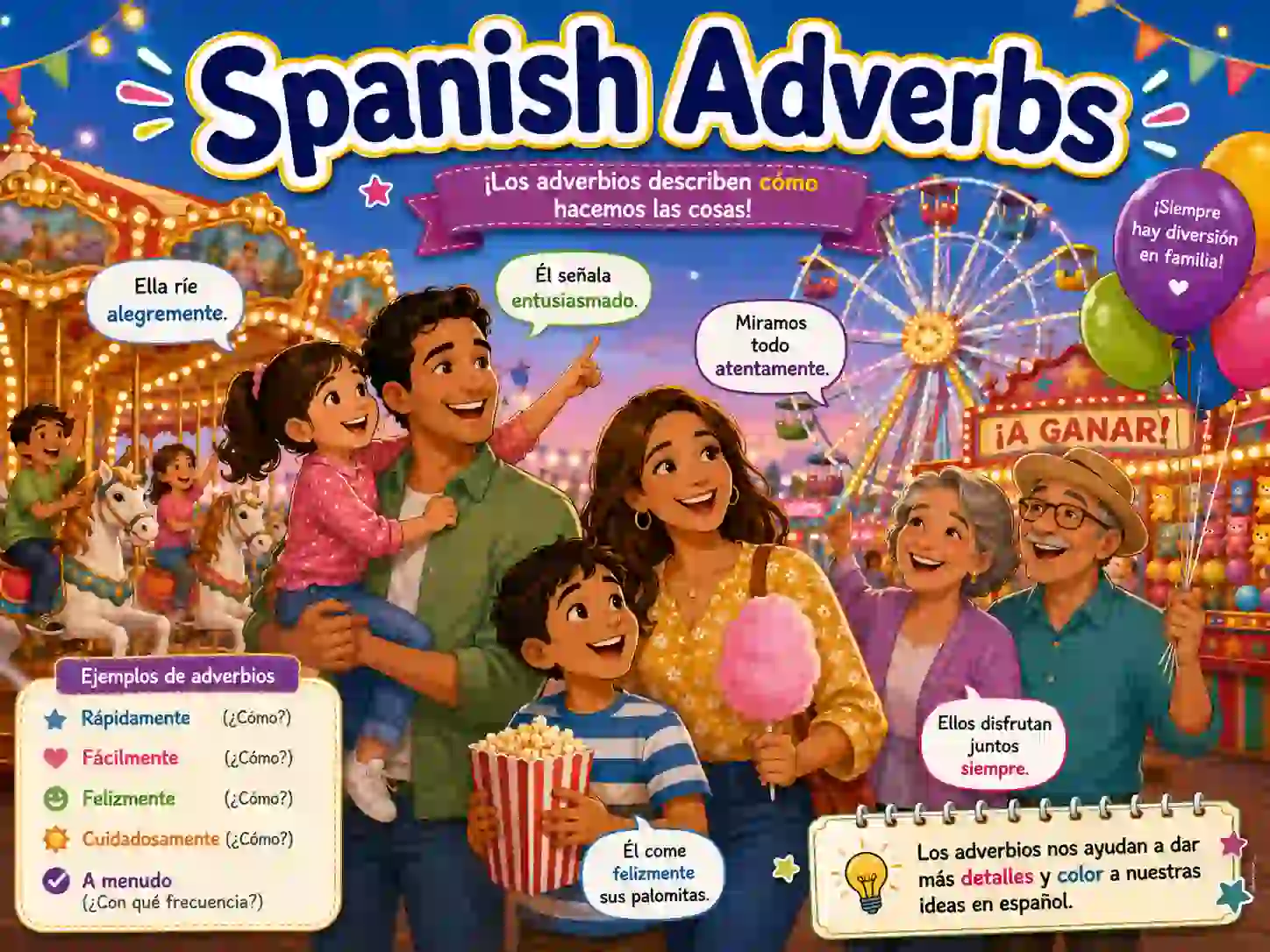
Spanish Adverbs
Review the main adverb types and how they modify actions, qualities and complete sentences.
Open lesson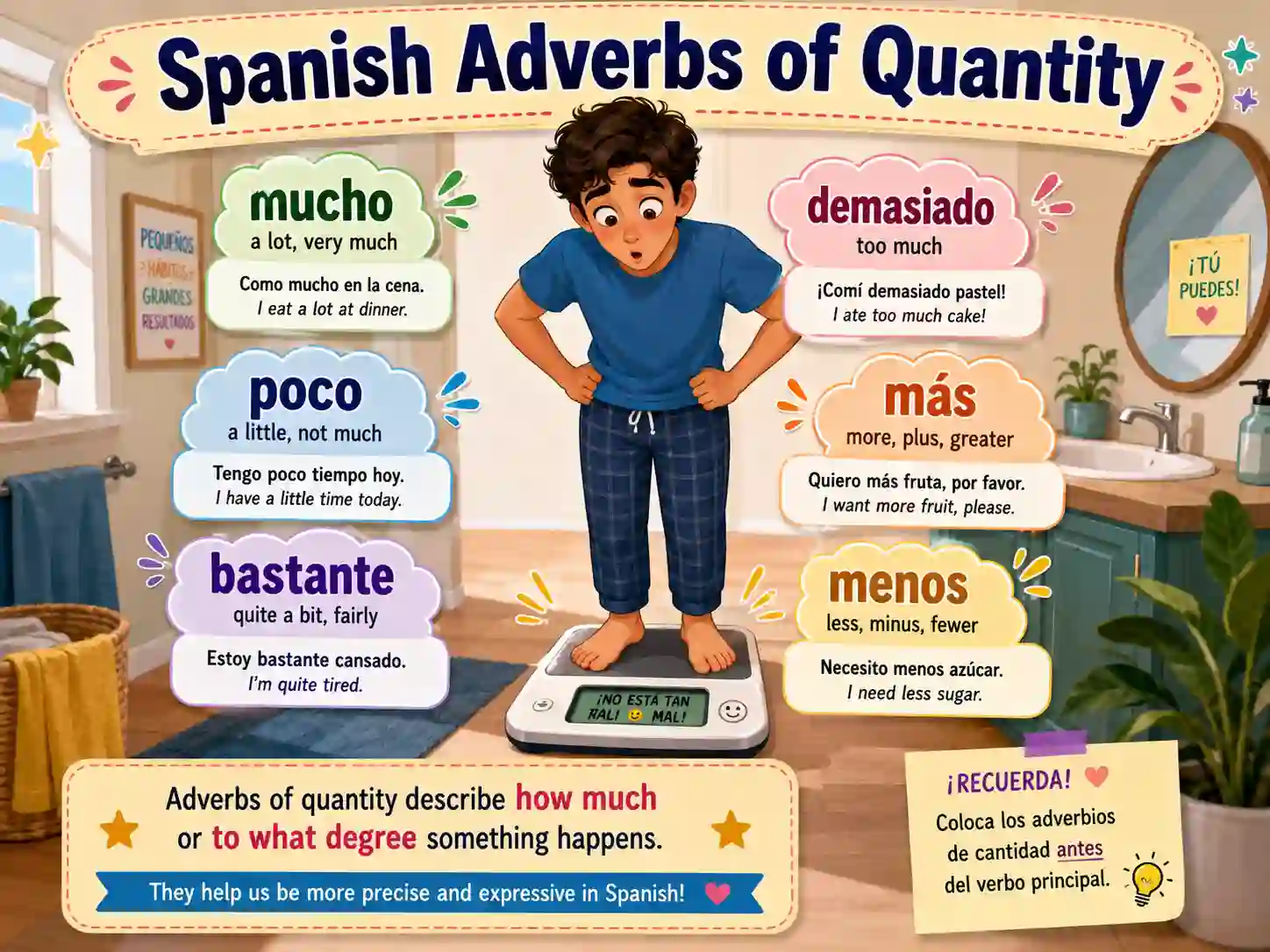
Adverbs of Quantity
Review más, menos, mucho, poco, bastante and demasiado.
Open lesson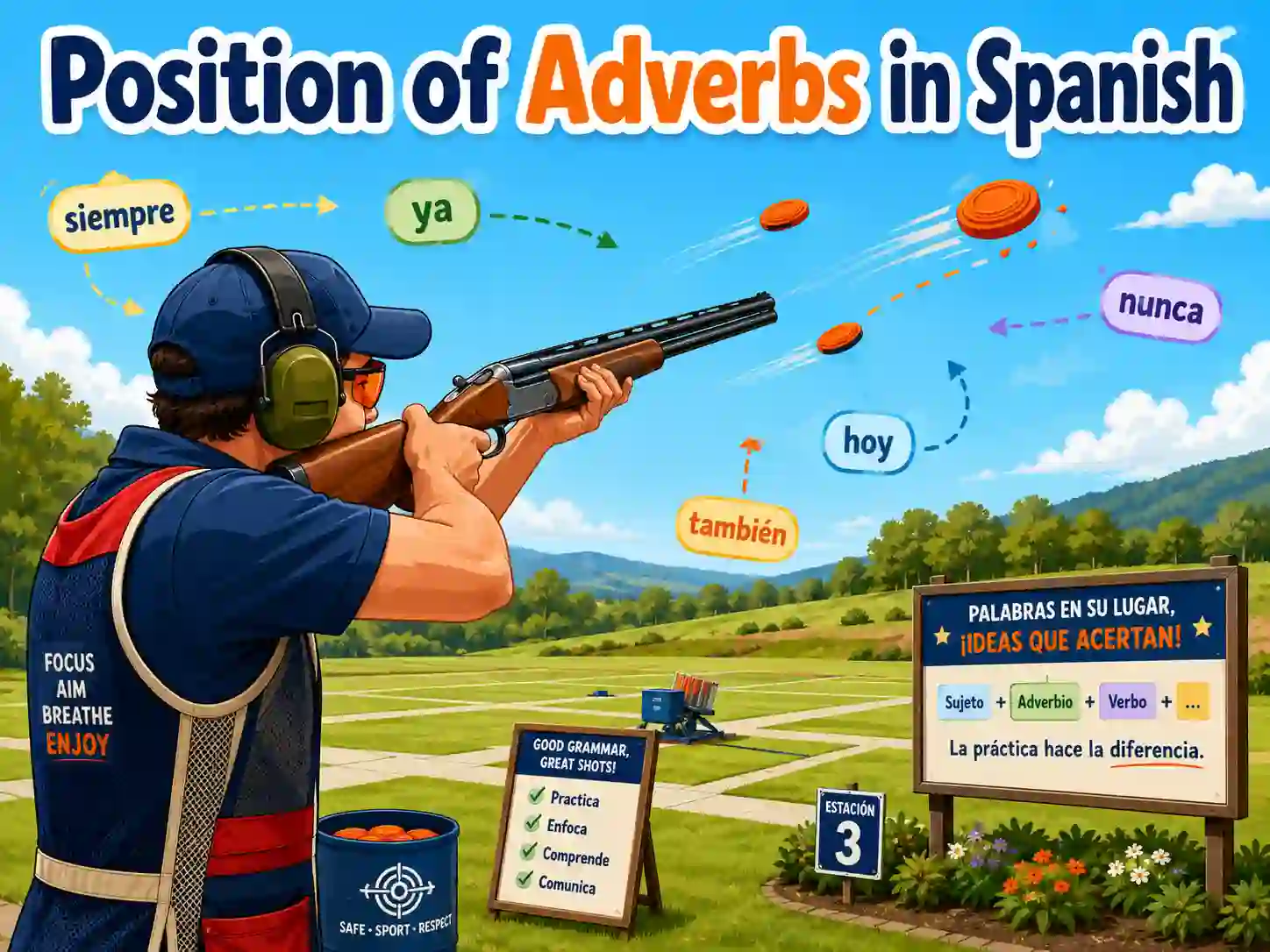
Position of Adverbs
Learn where comparison words and adverbs appear in complete Spanish sentences.
Open lesson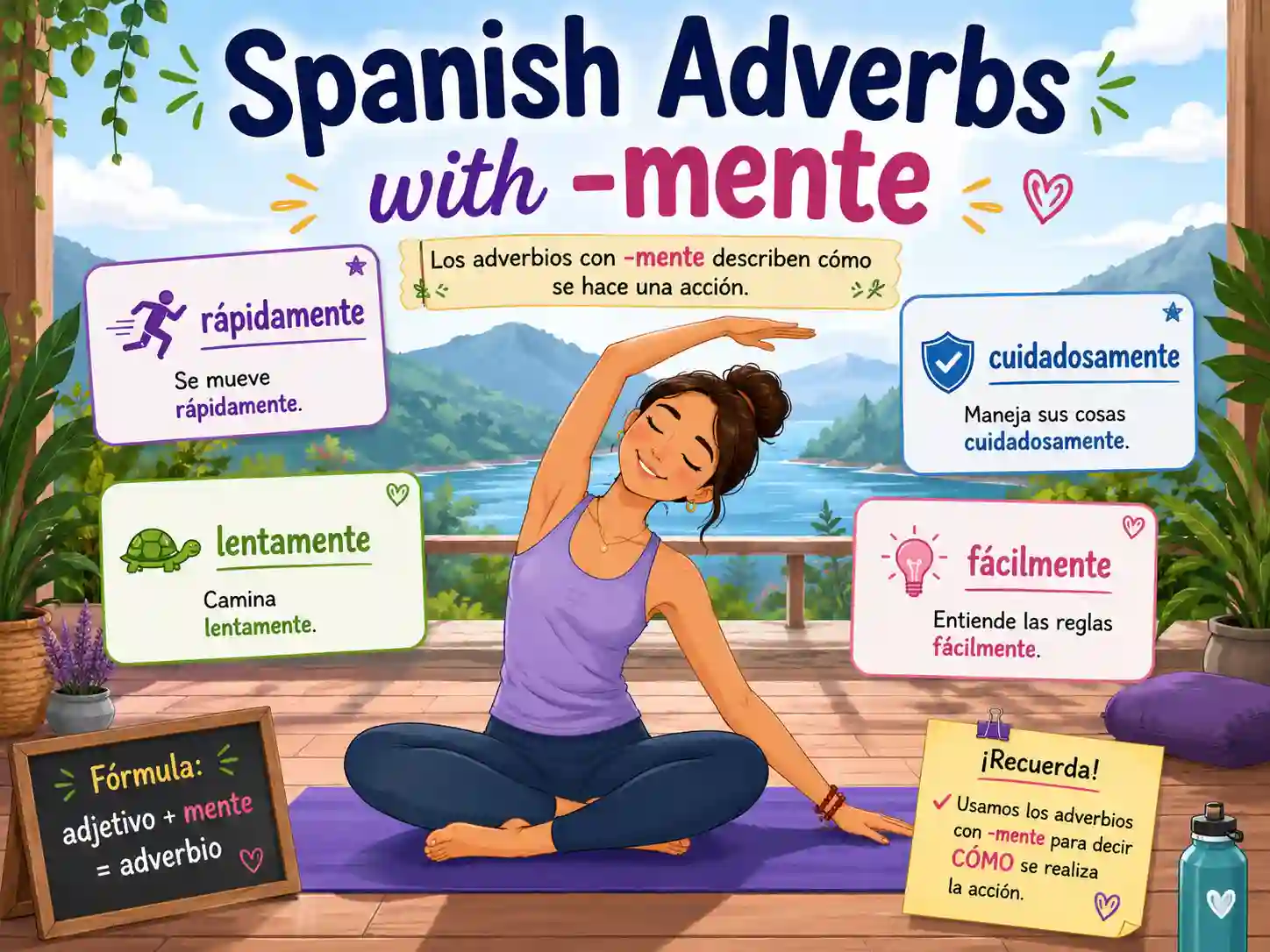
Adverbs with -mente
Form and compare adverbs such as claramente, rápidamente and cuidadosamente.
Open lessonCommon errors
Common mistakes with Spanish comparison
- Using como after más or menos: say más alto que, not más alto como.
- Using que after tan: say tan alto como, not tan alto que.
- Confusing tan and tanto: use tan with adjectives and adverbs, but tanto forms with nouns.
- Forgetting agreement: say tantas preguntas como, not tanto preguntas como.
- Making tanto agree after a verb: say ellas trabajan tanto como nosotros.
- Using más mejor or más peor: use mejor and peor by themselves.
- Using que before a number: say más de veinte personas.
- Forgetting the article in a relative superlative: say la opción más barata.
- Forgetting adjective agreement: use la más rápida and los más rápidos.
- Confusing mayor with physical size: use más grande when the main meaning is physically bigger.
Frequently asked questions
Questions about Spanish comparison
How do you say more than in Spanish?
Use más ... que: más alto que, más rápidamente que, más libros que and trabaja más que yo.
How do you say less than in Spanish?
Use menos ... que: menos caro que, menos claramente que and menos tiempo que.
What is the difference between tan and tanto?
Use tan with adjectives and adverbs: tan alto como and tan bien como. Use forms of tanto with nouns and invariable tanto after verbs.
What is the difference between que and de?
Use que for direct comparisons. Use de before numbers and quantities, and in expressions such as más de lo que.
What are mejor and peor?
Mejor means “better” and peor means “worse”. Do not normally add más before them.
How do Spanish superlatives work?
Relative superlatives use an article with más or menos: la ciudad más grande. Absolute superlatives can use muy or -ísimo: muy rápido or rapidísimo.
Practice and support
Practise Spanish comparisons in complete sentences
Comparison becomes easier when you practise adjectives, adverbs, quantities, irregular forms and superlatives inside real sentences.
Spanish Tutoring
Work on tan, tanto, adjective agreement, irregular forms and individual grammar difficulties.
Private Spanish Lessons
Practise comparisons through speaking, writing and personalised exercises.
Intensive Spanish Course
Combine comparison structures with vocabulary, conversation and sentence-building activities.

About MundoDele
Spanish learning for education, work and real communication
MundoDele connects online Spanish courses, DELE preparation, Business Spanish and cultural context into a personal Spanish learning platform.
The grammar guides explain Spanish with practical examples, clear comparisons and complete sentences.