
MundoDele Spanish Grammar
Spanish Sentence Structures: Word Order, Clauses and Patterns
Learn how Spanish sentences are built beyond single words and verb forms: basic word order, relative clauses, impersonal sentences, passive voice, reporting verbs, direct and indirect speech, and sentence patterns with que, si and se.
Why sentence structure matters
Spanish grammar becomes useful when it builds complete sentences
Spanish grammar is not only about conjugating verbs or memorising pronouns. Real Spanish depends on sentence structure: where the subject goes, how clauses connect, when Spanish uses que, how se changes meaning, and how direct speech becomes indirect speech.
Ana compra un libro. Subject, verb and object create the basic sentence.
El libro que compré. A clause adds information to a noun or idea.
Se publicaron los resultados. The result is more important than the agent.
Learning sequence
How to use this Spanish sentence structures guide
Use this page as the central entry point for Spanish sentence structure. Start with basic word order, then move into relative clauses, impersonal sentences, passive voice, reporting verbs and direct or indirect speech.
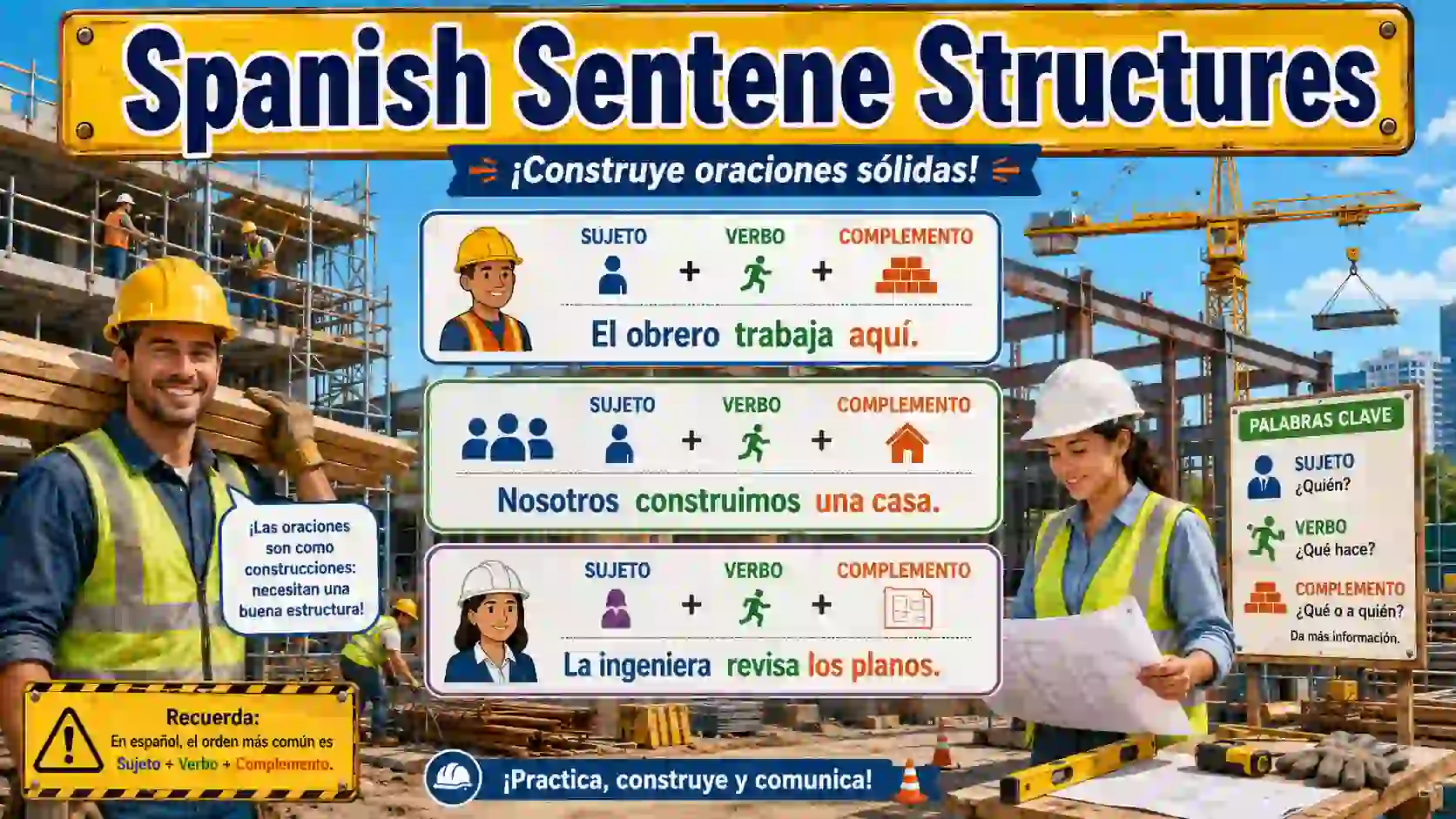
Start with subject, verb, object and basic word order: Ana compra un libro.
Use que, relative pronouns and connectors to add more information: el libro que compré.
Use passive, impersonal and reported structures to shift the focus: se publicaron los resultados.
Core idea
What are Spanish sentence structures?
Spanish sentence structures are the patterns used to organise words, verbs, pronouns and clauses into complete meaning. They include simple sentences, compound sentences, subordinate clauses, relative clauses, passive and impersonal structures, questions, reported speech and sentence patterns with que, si and se.
Structure table
Spanish sentence structures at a glance
This table gives a practical overview of the most important sentence structure types.
| Structure type | Spanish example | English meaning | What it shows | Detail page |
|---|---|---|---|---|
| Basic sentence | Ana estudia español. | Ana studies Spanish. | Subject + verb + object. | Word order |
| Relative clause | El libro que compré es bueno. | The book that I bought is good. | A clause gives more information about a noun. | Relative Clauses |
| Impersonal sentence | Hay mucha gente. | There are many people. | The sentence has no specific personal subject. | Impersonal Sentences |
| Passive voice | Se publicaron los resultados. | The results were published. | The result is more important than the agent. | Passive Voice |
| Reported speech | Dijo que estaba cansado. | He said he was tired. | One clause reports another clause. | Direct and Indirect Speech |
| Reported question | Preguntó si podía venir. | He asked if he could come. | A direct question becomes an indirect question. | Reporting Verbs |
Word order
Basic Spanish word order
The most basic Spanish sentence order is subject + verb + object. However, Spanish is flexible because verb endings already show person and number. This means the subject can sometimes be omitted or moved for emphasis.
| Pattern | Spanish example | English meaning | Comment |
|---|---|---|---|
| Subject + verb | Ana trabaja. | Ana works. | Simple subject and verb. |
| Subject + verb + object | Ana compra un libro. | Ana buys a book. | Common basic order. |
| Verb without explicit subject | Estudio español. | I study Spanish. | The verb ending shows the subject. |
| Emphasis | Español estudio, no francés. | Spanish is what I study, not French. | Marked order for emphasis. |
Related pages: Spanish Verbs, Subject Pronouns and Pronoun Position.
Relative clauses
Relative clauses in Spanish sentence structure
Relative clauses add information to a noun or idea. They often use que, quien, el que, lo que, cuyo or donde.
| Spanish example | Relative clause | English meaning | Structure |
|---|---|---|---|
| El libro que compré es bueno. | que compré | The book that I bought is good. | Noun + que + clause. |
| La persona que llamó es mi profesora. | que llamó | The person who called is my teacher. | Person + que + verb. |
| La ciudad donde vivo es grande. | donde vivo | The city where I live is large. | Place + donde + clause. |
| No entiendo lo que dices. | lo que dices | I do not understand what you are saying. | lo que refers to an idea. |
Continue here: Relative Clauses in Spanish Sentence Structure and Relative Pronouns.
Se structures
Impersonal sentences and passive voice in Spanish
Spanish often uses hay, impersonal se and passive se when the sentence has no specific person as subject or when the result matters more than the actor.
| Structure | Spanish example | English meaning | Use | Detail page |
|---|---|---|---|---|
| hay + noun | Hay una farmacia cerca. | There is a pharmacy nearby. | Existence. | Impersonal Sentences |
| Weather verb | Llueve mucho. | It rains a lot. | Weather. | Impersonal Sentences |
| Impersonal se | Se vive bien aquí. | People live well here. | General statement. | Impersonal Sentences |
| Passive se | Se venden casas. | Houses are for sale. | Passive-like structure. | Passive Voice |
| ser + participle | El libro fue escrito por Cervantes. | The book was written by Cervantes. | Formal passive with named agent. | Passive Voice |
| estar + participle | La puerta está cerrada. | The door is closed. | Resulting state. | Passive Voice |
Reported speech
Reporting verbs and direct or indirect speech
Reporting verbs introduce what someone says, asks, explains, answers, announces or denies. Direct speech repeats exact words. Indirect speech reports the meaning and often changes tense, pronouns and time expressions.
| Structure | Spanish example | English meaning | Pattern | Detail page |
|---|---|---|---|---|
| Reported statement | Dijo que estaba cansado. | He said he was tired. | decir que | Reporting Verbs |
| Reported yes/no question | Preguntó si podía venir. | He asked if he could come. | preguntar si | Direct and Indirect Speech |
| Reported information question | Preguntó dónde vivía. | He/she asked where I lived. | Question word remains. | Direct and Indirect Speech |
| Reported command | Pidió que viniera. | He/she asked me to come. | pedir que + subjunctive | Spanish Subjunctive |
Continue here: Reporting Verbs in Spanish and Direct and Indirect Speech in Spanish.
Small structure words
Three small words that shape Spanish sentence structure: que, si and se
Many Spanish sentence structures depend on small connector or structure words. Three of the most important are que, si and se.
| Word | Example | Function | Related topic |
|---|---|---|---|
| que | Dijo que estaba cansado. | Connects reported statements and subordinate clauses. | Conjunctions with Que |
| que | El libro que leí. | Introduces many relative clauses. | Relative Clauses |
| si | Preguntó si podía venir. | Introduces reported yes/no questions. | Direct and Indirect Speech |
| se | Se vive bien aquí. | Creates impersonal or passive-like structures. | Impersonal Sentences |
| se | Se venden casas. | Creates passive se with agreement. | Passive Voice |
Recommended order
Recommended learning order for Spanish sentence structures
Relative Clauses
Learn how Spanish adds information to nouns and ideas with que, quien, lo que and donde.
Impersonal Sentences
Understand hay, weather expressions, se vive and es importante que.
Passive Voice
Compare fue escrito, se publicaron los resultados and está cerrado.
Reporting Verbs
Study decir que, preguntar si, responder que and pedir que.
Direct and Indirect Speech
Learn how Spanish reports statements, questions, commands and requests.
Spanish Subjunctive
Connect sentence structure with mood choice in relative clauses, impersonal expressions and reported commands.
Practice
Practice: Spanish sentence structures
Try to answer before opening the solutions. These exercises review relative clauses, impersonal structures, passive se and indirect speech.
Exercise 1: identify the structure
- El libro que compré es interesante.
- Hay mucha gente en la plaza.
- Se venden casas.
- Dijo que estaba cansado.
Show answers
1. Relative clause
2. Impersonal sentence with hay
3. Passive se
4. Indirect speech / reported statement
Exercise 2: choose que, si or se
- Dijo ___ estaba ocupado.
- Preguntó ___ podía venir.
- ___ vive bien aquí.
- El libro ___ leí es bueno.
Show answers
1. que
2. si
3. Se
4. que
Exercise 3: build the structure
- There are many students.
- The book that I bought is good.
- The results were published.
- She asked if I had time.
Show answers
1. Hay muchos estudiantes.
2. El libro que compré es bueno.
3. Se publicaron los resultados.
4. Preguntó si tenía tiempo.
Typical mistakes
Typical mistakes with Spanish sentence structures
- Translating English word order too literally: Spanish often allows subject omission and different emphasis.
- Forgetting que in reported statements: say dijo que estaba cansado.
- Using que instead of si in reported yes/no questions: say preguntó si podía venir.
- Confusing impersonal se and passive se: se vive bien is impersonal; se venden casas is passive-like.
- Using ser + participle for every English passive: Spanish often prefers se or active voice.
- Placing relative clauses too far from the noun: keep que compré close to el libro.
- Learning structures separately from meaning: sentence structure should show what the speaker wants to emphasise.
Where to go next
Where to go next
If you are building this section step by step, continue with relative clauses first. Then move into impersonal sentences, passive voice and reported speech.
Relative Clauses
Learn que, quien, lo que, cuyo and donde.
Impersonal Sentences
Learn hay, weather expressions, se vive and impersonal evaluations.
Direct and Indirect Speech
Learn how Spanish reports statements, questions and commands.
When you need help
Practise Spanish sentence structures in real contexts
Spanish sentence structures help you move from isolated grammar rules to complete, natural sentences. Individual practice can help you understand how clauses connect, how meaning changes and how real Spanish sentences are built.
Spanish Tutoring
Useful if you need help with clauses, sentence patterns, homework or weak points.
Private Spanish Lessons
Use sentence structures in conversation, writing, explanations and personal practice.
Spanish Grammar
Return to the main grammar overview and choose another topic.
FAQ
FAQ: Spanish sentence structures
What are Spanish sentence structures?
Spanish sentence structures are the patterns used to organise words, verbs, pronouns and clauses into complete meaning. They include word order, relative clauses, passive voice, impersonal sentences and reported speech.
What is the basic word order in Spanish?
The basic word order is subject + verb + object, as in Ana compra un libro. Spanish is flexible because verb endings often show the subject.
What is a relative clause in Spanish?
A relative clause gives more information about a noun or idea: el libro que compré, la persona que llamó, lo que dices.
What is an impersonal sentence in Spanish?
An impersonal sentence does not name a specific subject: hay problemas, llueve, se vive bien aquí, es importante estudiar.
How does passive voice work in Spanish?
Spanish can use ser + past participle, as in el libro fue escrito, or passive se, as in se venden casas.
How does indirect speech work in Spanish?
Indirect speech reports what someone said or asked. Statements often use que, yes/no questions use si, and information questions keep the question word.
Which Spanish sentence structures should learners study first?
Learners should start with basic word order, then relative clauses, impersonal sentences, passive se, reporting verbs and direct and indirect speech.

About
About MundoDele
MundoDele connects online Spanish lessons, tutoring, intensive Spanish courses, DELE and SIELE preparation, Business Spanish, grammar resources and cultural context into one personal Spanish learning platform.
Grammar pages are designed to explain Spanish clearly, with practical examples, sentence logic and useful links to related learning support.