
MundoDele Spanish Grammar
If Clauses in Spanish Using the Subjunctive
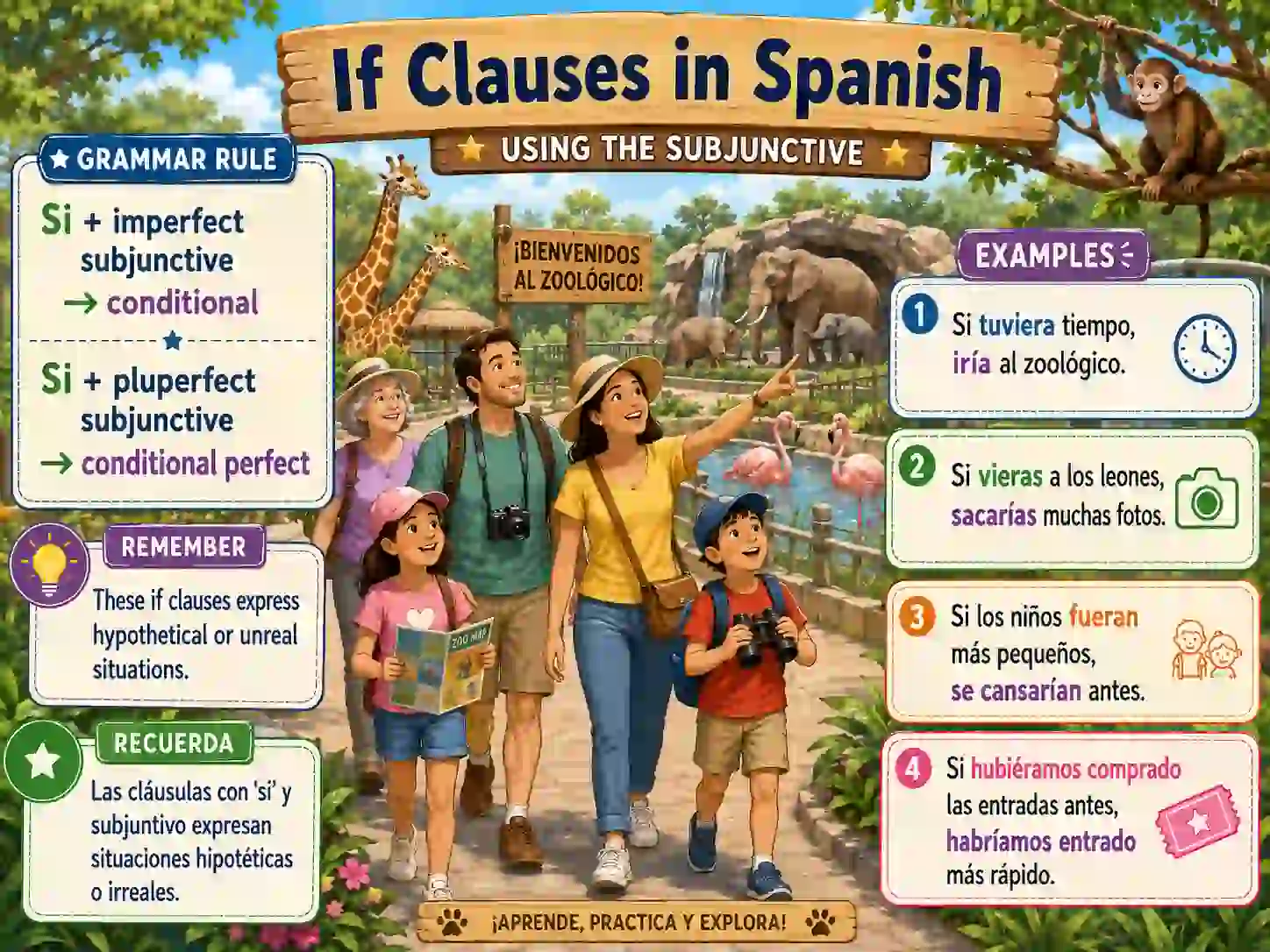
Learn how Spanish if clauses work with the indicative, the imperfect subjunctive and the pluperfect subjunctive. This guide explains real conditions with si tengo, hypothetical conditions with si tuviera, and unreal past conditions with si hubiera tenido.
Why this topic matters
Spanish if clauses are easier when you learn the condition type first
Spanish if clauses are not random tense combinations. MundoDele explains them through condition logic: real, hypothetical or unreal past. This makes the forms easier to remember and easier to use in speech and writing.
The key idea is simple: si tengo describes a real or possible condition, si tuviera imagines a hypothetical condition, and si hubiera tenido imagines a past condition that did not happen.
Si tengo tiempo, voy. The condition is possible or realistic.
Si tuviera tiempo, iría. The condition is imagined.
Si hubiera tenido tiempo, habría ido. The past condition did not happen.
Learning sequence
How to use this page
Use this page after learning the basic Spanish subjunctive and the conditional. First decide whether the condition is real, hypothetical or unreal in the past. Then choose the correct si-clause pattern.
Real condition
Use the indicative when the condition is real or possible: si tengo.
Hypothetical condition
Use the imperfect subjunctive with the conditional: si tuviera, iría.
Unreal past condition
Use the pluperfect subjunctive with the conditional perfect: si hubiera tenido, habría ido.
Main patterns
Main Spanish if-clause patterns
Spanish si-clauses follow clear patterns. The tense in the si-clause shows whether the condition is real, hypothetical or unreal in the past.
| Condition type | Spanish pattern | Example | English meaning |
|---|---|---|---|
| Real or possible | si + present indicative + present / future / imperative | Si tengo tiempo, voy. | If I have time, I go / will go. |
| Future real condition | si + present indicative + future | Si tengo tiempo, iré. | If I have time, I will go. |
| Hypothetical present or future | si + imperfect subjunctive + conditional | Si tuviera tiempo, iría. | If I had time, I would go. |
| Unreal past | si + pluperfect subjunctive + conditional perfect | Si hubiera tenido tiempo, habría ido. | If I had had time, I would have gone. |
| Mixed condition | si + pluperfect subjunctive + conditional | Si hubiera estudiado más, ahora sabría más. | If I had studied more, I would know more now. |
Real conditions
Real conditions: si + indicative
Real conditions use the indicative because the condition is possible, factual or presented as realistic. In this pattern, Spanish does not use the present subjunctive after si.
| Spanish example | English meaning | Pattern | Note |
|---|---|---|---|
| Si tengo tiempo, voy. | If I have time, I go / will go. | si + present indicative | Real or possible condition. |
| Si llueve, nos quedamos en casa. | If it rains, we stay at home. | si + present indicative | Possible situation. |
| Si llegas temprano, empezamos. | If you arrive early, we start. | si + present indicative | Real condition. |
| Si tienes dudas, pregúntame. | If you have questions, ask me. | si + present indicative + imperative | Instruction or advice. |
Hypothetical conditions
Hypothetical conditions: si + imperfect subjunctive + conditional
Use the imperfect subjunctive after si when the condition is hypothetical, unlikely or contrary to the present situation. The result clause usually uses the conditional.
| Spanish example | English meaning | Imperfect subjunctive | Conditional result |
|---|---|---|---|
| Si tuviera tiempo, iría. | If I had time, I would go. | tuviera | iría |
| Si fuera rico, viajaría más. | If I were rich, I would travel more. | fuera | viajaría |
| Si viviera en España, hablaría español todos los días. | If I lived in Spain, I would speak Spanish every day. | viviera | hablaría |
| Si supiera la respuesta, te la diría. | If I knew the answer, I would tell you. | supiera | diría |
| Si pudieras venir, sería perfecto. | If you could come, it would be perfect. | pudieras | sería |
Two imperfect subjunctive forms
Tuviera or tuviese?
Spanish has two forms of the imperfect subjunctive: the -ra form and the -se form. In most if clauses, both are grammatically correct. The -ra form is more common in everyday use.
| Infinitive | -ra form | -se form | Example |
|---|---|---|---|
| tener | tuviera | tuviese | Si tuviera / tuviese tiempo, iría. |
| ser | fuera | fuese | Si fuera / fuese posible, lo haría. |
| poder | pudiera | pudiese | Si pudiera / pudiese, viajaría más. |
| saber | supiera | supiese | Si supiera / supiese la verdad, te lo diría. |
Unreal past
Unreal past conditions: si + pluperfect subjunctive + conditional perfect
Use the pluperfect subjunctive after si when the condition refers to a past situation that did not happen. The result is usually expressed with the conditional perfect.
| Spanish example | English meaning | Pluperfect subjunctive | Conditional perfect |
|---|---|---|---|
| Si hubiera tenido tiempo, habría ido. | If I had had time, I would have gone. | hubiera tenido | habría ido |
| Si hubieras estudiado más, habrías aprobado. | If you had studied more, you would have passed. | hubieras estudiado | habrías aprobado |
| Si hubiera sabido la verdad, no habría venido. | If I had known the truth, I would not have come. | hubiera sabido | habría venido |
| Si hubiéramos salido antes, habríamos llegado a tiempo. | If we had left earlier, we would have arrived on time. | hubiéramos salido | habríamos llegado |
Two pluperfect subjunctive forms
Hubiera or hubiese?
The pluperfect subjunctive also has two forms: hubiera and hubiese. Both are correct in if clauses. The hubiera form is more common in everyday Spanish.
| Form | Spanish example | English meaning | Note |
|---|---|---|---|
| hubiera | Si hubiera estudiado, habría aprobado. | If I had studied, I would have passed. | Very common. |
| hubiese | Si hubiese estudiado, habría aprobado. | If I had studied, I would have passed. | Also correct. |
| hubiéramos | Si hubiéramos llegado antes, lo habríamos visto. | If we had arrived earlier, we would have seen it. | First-person plural. |
| hubiésemos | Si hubiésemos llegado antes, lo habríamos visto. | If we had arrived earlier, we would have seen it. | Alternative form. |
Mixed conditions
Mixed if clauses: past condition, present result
Sometimes the condition belongs to the past, but the result belongs to the present. In that case, Spanish can combine the pluperfect subjunctive with the conditional.
| Spanish example | English meaning | Past condition | Present result |
|---|---|---|---|
| Si hubiera estudiado más, ahora sabría más. | If I had studied more, I would know more now. | hubiera estudiado | sabría |
| Si hubieras aceptado el trabajo, ahora vivirías en Madrid. | If you had accepted the job, you would live in Madrid now. | hubieras aceptado | vivirías |
| Si no hubiéramos perdido el tren, ahora estaríamos allí. | If we had not missed the train, we would be there now. | hubiéramos perdido | estaríamos |
Common mistake
Why normal si clauses do not use the present subjunctive
A common learner mistake is to use the present subjunctive after si in normal conditional sentences. Standard Spanish normally uses the present indicative for real conditions.
| Incorrect | Correct | English meaning | Reason |
|---|---|---|---|
| Si tenga tiempo, voy. | Si tengo tiempo, voy. | If I have time, I go / will go. | Real condition uses indicative. |
| Si llueva, no salimos. | Si llueve, no salimos. | If it rains, we do not go out. | Possible real condition. |
| Si vengas, te ayudo. | Si vienes, te ayudo. | If you come, I help you. | Real condition. |
| Si pueda, voy. | Si puedo, voy. | If I can, I go / will go. | Use present indicative after si. |
Condition connectors
Si vs a menos que, con tal de que and en caso de que
Si behaves differently from many other conditional conjunctions. Normal real si-clauses use the indicative, while connectors such as a menos que, con tal de que and en caso de que commonly use the subjunctive.
| Connector | Spanish example | English meaning | Verb mood |
|---|---|---|---|
| si | Si tengo tiempo, voy. | If I have time, I go / will go. | Indicative. |
| a menos que | No salgo a menos que deje de llover. | I am not going out unless it stops raining. | Subjunctive. |
| con tal de que | Acepto con tal de que vengas. | I accept provided that you come. | Subjunctive. |
| en caso de que | Llama en caso de que necesites ayuda. | Call in case you need help. | Subjunctive. |
Related page: Conditional Conjunctions in Spanish.
Word order
Word order and commas in Spanish if clauses
The si-clause can come before or after the result clause. When the si-clause comes first, Spanish usually uses a comma before the result clause.
| Word order | Spanish example | English meaning | Comma note |
|---|---|---|---|
| Si-clause first | Si tengo tiempo, voy. | If I have time, I go / will go. | Comma after the si-clause. |
| Result clause first | Voy si tengo tiempo. | I go / will go if I have time. | No comma is usually needed. |
| Si-clause first | Si tuviera dinero, viajaría más. | If I had money, I would travel more. | Comma after the condition. |
| Result clause first | Viajaría más si tuviera dinero. | I would travel more if I had money. | No comma is usually needed. |
Recommended order
Recommended learning order for Spanish if clauses
Start with real conditions
Use si tengo, si llueve, si puedes.
Learn hypothetical conditions
Practise si tuviera, si fuera, si pudiera.
Recognise -ra and -se forms
Know that si tuviera and si tuviese are both correct.
Add unreal past conditions
Use si hubiera tenido with habría ido.
Learn mixed conditions
Connect an unreal past condition to a present result.
Compare conditional connectors
Separate si from a menos que and en caso de que.
Practice
Practice exercises: Spanish if clauses with the subjunctive
Try to answer before opening the solutions. These exercises focus on real conditions, hypothetical conditions and unreal past conditions.
Exercise 1: choose the correct form
- Si ___ tiempo, voy. tener
- Si ___ tiempo, iría. tener
- Si ___ rico, viajaría más. ser
- Si ___ la respuesta, te la diría. saber
Show answers
1. tengo
2. tuviera
3. fuera
4. supiera
Exercise 2: complete the unreal past condition
- Si hubiera estudiado, ___ aprobado. haber
- Si hubieras venido, te ___ visto. haber
- Si hubiéramos salido antes, ___ llegado a tiempo. haber
- Si hubiera sabido la verdad, no ___ venido. haber
Show answers
1. habría
2. habría
3. habríamos
4. habría
Exercise 3: translate into English
- Si tengo tiempo, voy.
- Si tuviera tiempo, iría.
- Si hubiera tenido tiempo, habría ido.
- Si hubieras estudiado más, ahora sabrías más.
Show answers
1. If I have time, I go / will go.
2. If I had time, I would go.
3. If I had had time, I would have gone.
4. If you had studied more, you would know more now.
Typical mistakes
Typical mistakes with Spanish if clauses
- Using present subjunctive after normal si-clauses: say si tengo tiempo, not si tenga tiempo.
- Using conditional directly after si in standard hypothetical clauses: say si tuviera tiempo, not si tendría tiempo.
- Forgetting the conditional in the result clause: si tuviera tiempo, iría.
- Confusing real and hypothetical conditions: si tengo is real or possible; si tuviera is hypothetical.
- Confusing imperfect subjunctive and pluperfect subjunctive: si tuviera refers to hypothetical present/future; si hubiera tenido refers to unreal past.
- Forgetting that -ra and -se forms are both possible: si tuviera and si tuviese are both correct.
Where to go next
Where to go next
After Spanish if clauses, continue with the imperfect subjunctive, the pluperfect subjunctive and the conditional tense. These topics explain the forms used in si tuviera tiempo, iría and si hubiera tenido tiempo, habría ido.
Imperfect Subjunctive
Learn tuviera, fuera, pudiera and supiera.
Pluperfect Subjunctive
Learn hubiera tenido, hubiera sabido and unreal past conditions.
Spanish Conditional
Study iría, sería, haría and podría.
Related guides
Continue with related Spanish subjunctive topics
These guides connect directly with if clauses: the imperfect subjunctive for hypothetical conditions, the pluperfect subjunctive for unreal past conditions and the basic contrast between indicative and subjunctive.
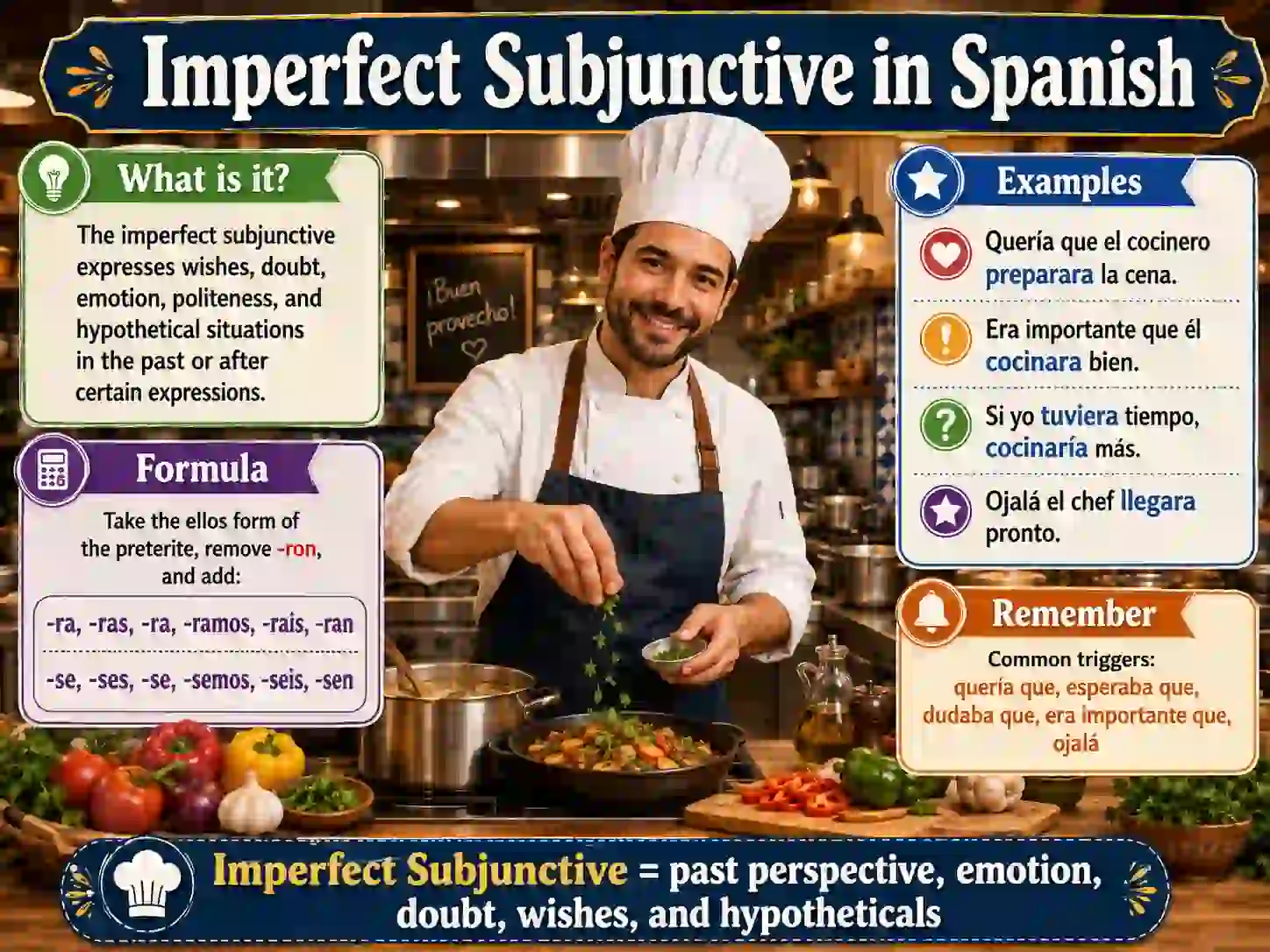
Imperfect Subjunctive
Review tuviera, fuera, pudiera and hypothetical conditions.
Open guide →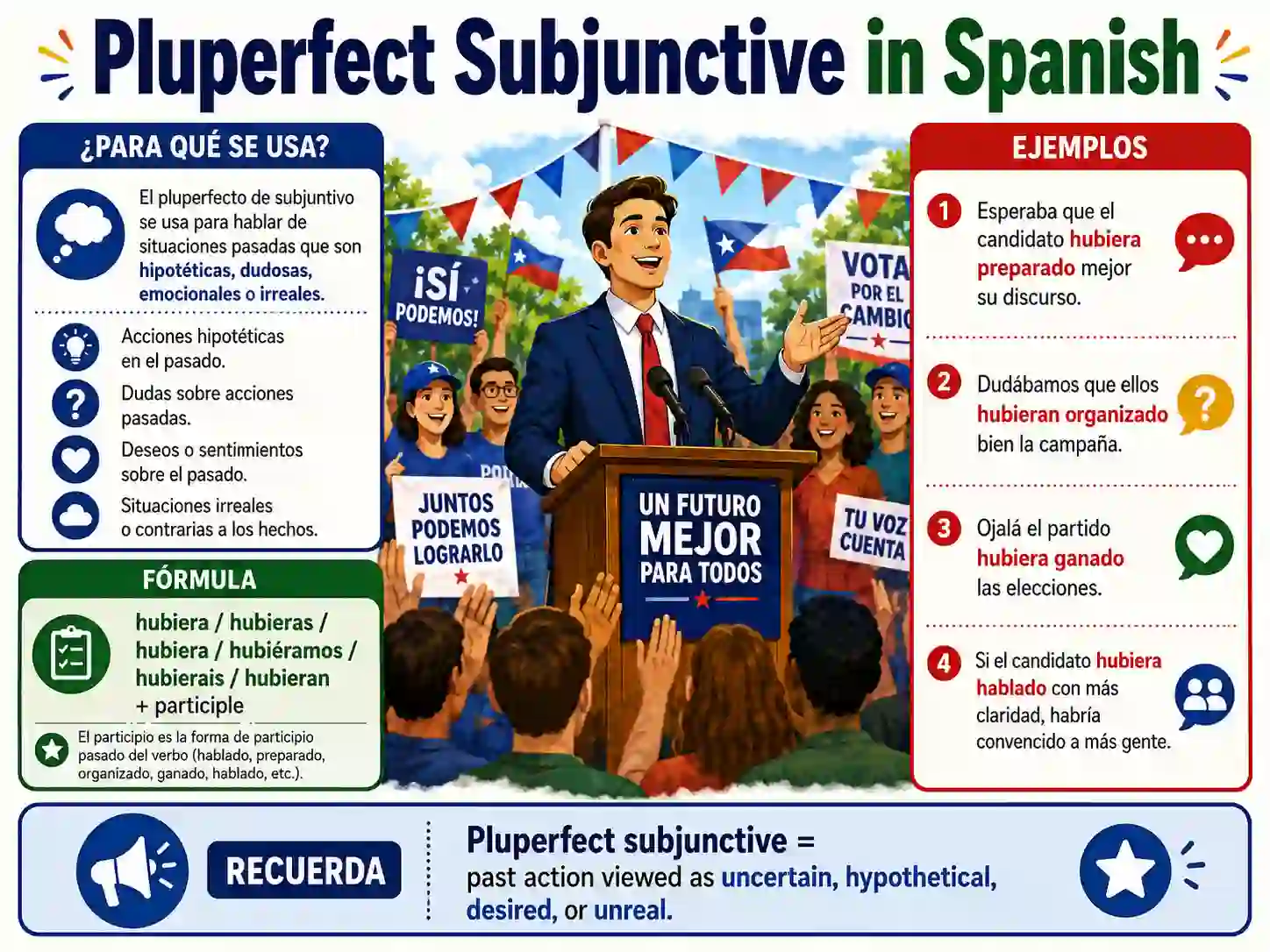
Pluperfect Subjunctive
Learn hubiera tenido, hubiera sabido and unreal past sentence patterns.
Open guide →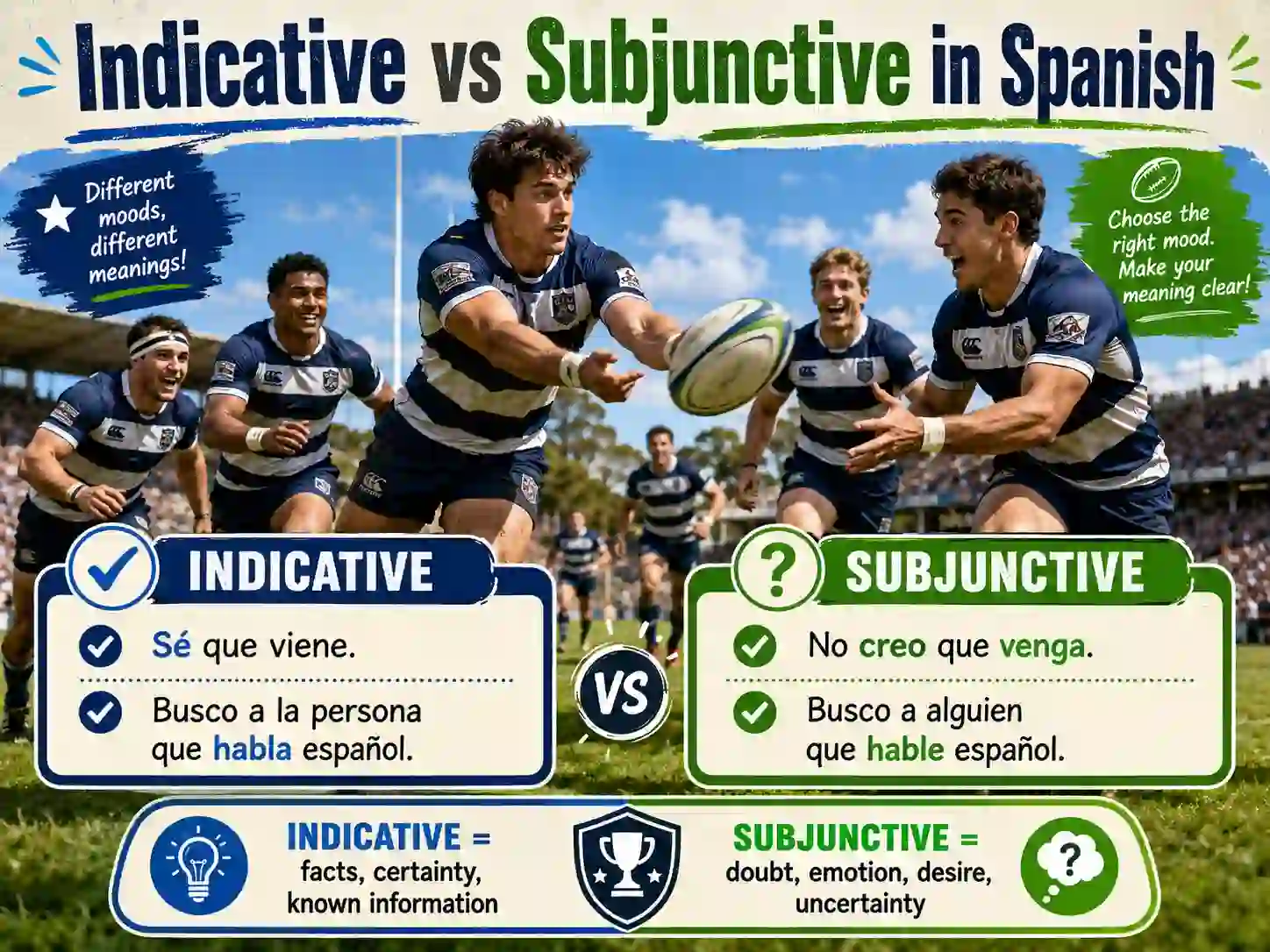
Indicative vs Subjunctive
Compare real, hypothetical, factual and non-factual meanings in Spanish clauses.
Open guide →When you need help
Learn Spanish if clauses with MundoDele
If Spanish if clauses feel confusing, this lesson can help you practise si tengo, si tuviera, si fuera, si hubiera tenido, conditional results and real Spanish sentence patterns in a clear and structured way.
Spanish Tutoring
Useful if you need help with if clauses, subjunctive forms or exercises.
Private Spanish Lessons
Practise condition sentences in conversation, writing and personal learning.
Intensive Spanish Course
Work through grammar, speaking and sentence structure in a focused format.
FAQ
FAQ: if clauses in Spanish using the subjunctive
Do Spanish if clauses use the subjunctive?
Some do. Real conditions use the indicative: si tengo tiempo. Hypothetical conditions use the imperfect subjunctive: si tuviera tiempo. Unreal past conditions use the pluperfect subjunctive: si hubiera tenido tiempo.
Can you use the present subjunctive after si?
Not in normal real if clauses. Say si tengo tiempo, not si tenga tiempo.
What is the pattern for hypothetical if clauses in Spanish?
The main pattern is si + imperfect subjunctive + conditional: si tuviera tiempo, iría.
What is the pattern for unreal past if clauses?
The main pattern is si + pluperfect subjunctive + conditional perfect: si hubiera tenido tiempo, habría ido.
What is the difference between si tengo and si tuviera?
Si tengo is a real or possible condition. Si tuviera is a hypothetical condition.
Is si tuviese the same as si tuviera?
Yes. Si tuviera and si tuviese are both imperfect subjunctive forms. The -ra form is more common in everyday use.

About
About MundoDele
MundoDele connects online Spanish lessons, tutoring, intensive Spanish courses, DELE and SIELE preparation, Business Spanish, grammar resources and cultural context into one personal Spanish learning platform.
Grammar pages are designed to explain Spanish clearly, with practical examples, sentence logic and useful links to related learning support.