
MundoDele Spanish Grammar
Present Perfect Subjunctive in Spanish
Learn the Spanish present perfect subjunctive with forms such as haya hablado, hayas comido, haya vivido, hayamos visto and hayan hecho. This guide explains how to form it with haya + past participle, when to use it after wishes, doubts, emotions and uncertainty, and how it differs from the present perfect indicative.
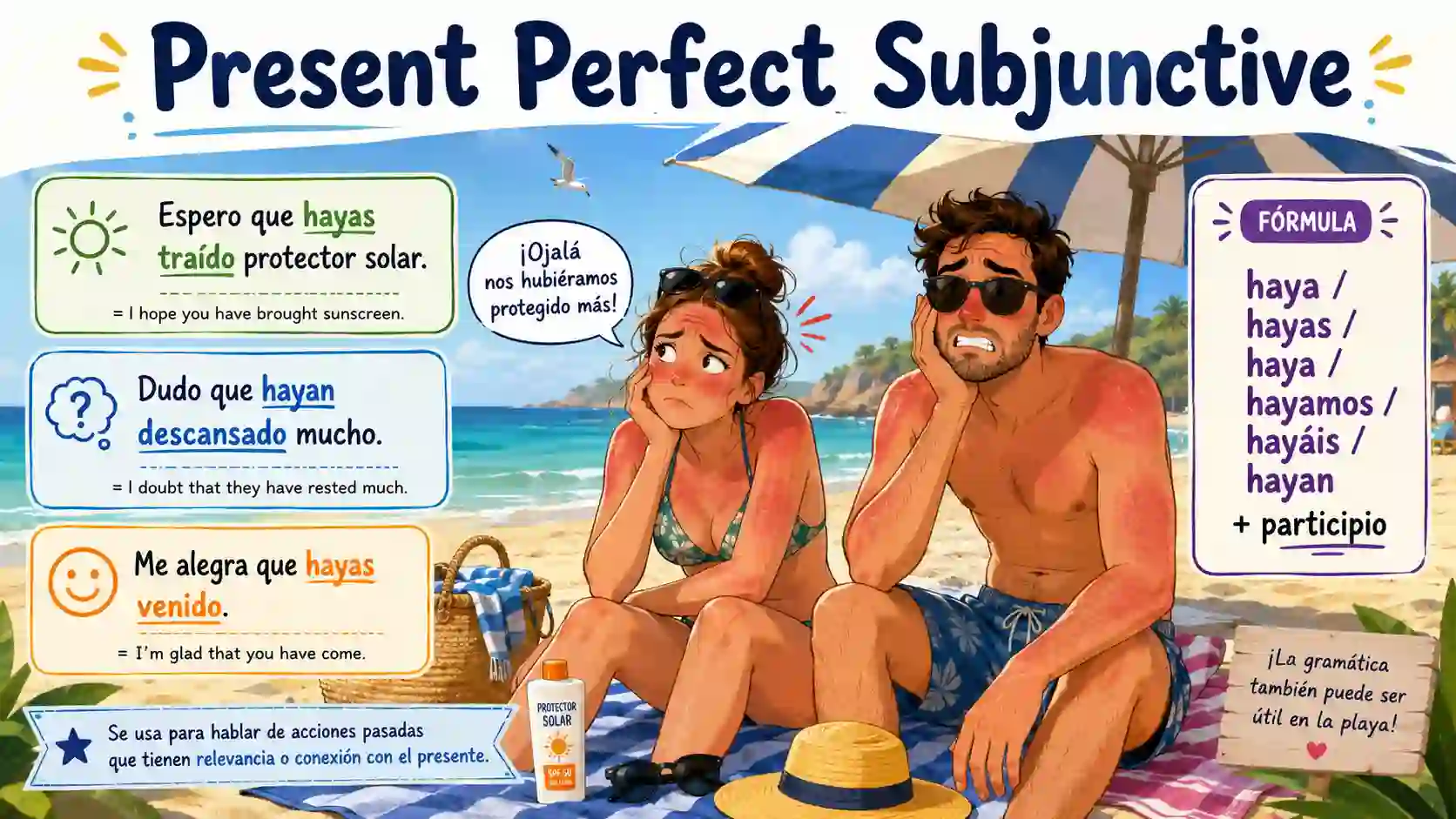
Why this form matters
The present perfect subjunctive combines completion with uncertainty, hope or emotion
The present perfect subjunctive is easier to understand when it is connected to meaning. MundoDele explains it as the form Spanish uses when a completed action is not presented as simple fact, but as something wished for, doubted, uncertain or emotionally evaluated.
The central contrast is simple: has entendido presents the completed action as information, while espero que hayas entendido presents it through hope or expectation.
Has entendido. The completed action is presented as information.
Espero que hayas entendido. The completed action is viewed through hope.
No creo que haya terminado. The completed action is not accepted as fact.
Learning sequence
How to use this present perfect subjunctive guide
Use this page after learning the present subjunctive and the past participle. First learn the form haya + past participle. Then compare it with the present perfect indicative: he hablado vs haya hablado.
Build the form
Use haya, hayas, haya, hayamos, hayáis, hayan plus a participle.
Add participles
Use regular participles such as hablado, comido and vivido.
Compare meaning
Separate factual ha terminado from subjunctive haya terminado.
Core idea
What is the present perfect subjunctive in Spanish?
The present perfect subjunctive is a compound subjunctive form. It refers to a completed action that is connected to the present or to the main clause, but the speaker presents that action through wish, doubt, uncertainty, emotion, evaluation or non-factual meaning.
| Use | Spanish example | English meaning | Why subjunctive? |
|---|---|---|---|
| Hope about a completed action | Espero que hayas entendido. | I hope you have understood. | The action is viewed through hope. |
| Doubt about a completed action | No creo que haya terminado. | I do not think he/she has finished. | The action is not accepted as fact. |
| Emotion about a completed action | Me alegra que hayas venido. | I am glad that you have come. | The speaker reacts emotionally. |
| Uncertainty about a completed action | Es posible que hayan salido. | It is possible that they have left. | The action is uncertain. |
Formation
How to form the present perfect subjunctive
The present perfect subjunctive is formed with the present subjunctive of haber plus the past participle of the main verb.
| Subject | Haber in present subjunctive | Example with hablar | English meaning |
|---|---|---|---|
| yo | haya | haya hablado | I have spoken / may have spoken |
| tú | hayas | hayas hablado | you have spoken / may have spoken |
| él, ella, usted | haya | haya hablado | he/she/you have spoken / may have spoken |
| nosotros/as | hayamos | hayamos hablado | we have spoken / may have spoken |
| vosotros/as | hayáis | hayáis hablado | you all have spoken / may have spoken |
| ellos, ellas, ustedes | hayan | hayan hablado | they/you all have spoken / may have spoken |
Regular participles
Regular past participles
Regular past participles end in -ado for -ar verbs and -ido for -er and -ir verbs.
| Infinitive | Past participle | Present perfect subjunctive | Example |
|---|---|---|---|
| hablar | hablado | haya hablado | Espero que haya hablado contigo. |
| estudiar | estudiado | haya estudiado | Me alegra que hayas estudiado. |
| comer | comido | haya comido | No creo que haya comido ya. |
| entender | entendido | haya entendido | Espero que hayas entendido. |
| vivir | vivido | haya vivido | Dudo que haya vivido allí. |
| salir | salido | haya salido | Es posible que hayan salido. |
Irregular participles
Common irregular past participles
Many frequent Spanish verbs have irregular past participles. These irregular participles are used in the present perfect subjunctive in the same way as regular participles.
| Infinitive | Past participle | Present perfect subjunctive | Example |
|---|---|---|---|
| hacer | hecho | haya hecho | No creo que lo haya hecho. |
| decir | dicho | haya dicho | Me sorprende que hayas dicho eso. |
| ver | visto | haya visto | Dudo que lo haya visto. |
| poner | puesto | haya puesto | Espero que hayan puesto la mesa. |
| escribir | escrito | haya escrito | No parece que haya escrito mucho. |
| abrir | abierto | haya abierto | Es posible que hayan abierto ya. |
| volver | vuelto | haya vuelto | No creo que haya vuelto. |
| morir | muerto | haya muerto | No creo que haya muerto. |
Related page: Past Participle in Spanish.
Main use
Wishes, doubts and emotions with the present perfect subjunctive
Use the present perfect subjunctive after present trigger expressions when the subordinate action is already completed or may be completed by the time the speaker evaluates it.
| Trigger | Spanish example | English meaning | Completed action |
|---|---|---|---|
| espero que | Espero que hayas entendido. | I hope you have understood. | hayas entendido |
| no creo que | No creo que haya terminado. | I do not think he/she has finished. | haya terminado |
| me alegra que | Me alegra que hayas venido. | I am glad you have come. | hayas venido |
| me sorprende que | Me sorprende que hayan aceptado. | It surprises me that they have accepted. | hayan aceptado |
| es posible que | Es posible que se haya perdido. | It is possible that he/she has got lost. | se haya perdido |
Related page: Wishes, Doubts and Emotions in Spanish.
Core contrast
Present perfect indicative vs present perfect subjunctive
The present perfect indicative uses he / has / ha + participle and presents a completed action as information. The present perfect subjunctive uses haya / hayas / haya + participle and presents the completed action through doubt, wish, emotion or uncertainty.
| Present perfect indicative | Present perfect subjunctive | Difference |
|---|---|---|
| Has entendido. You have understood. |
Espero que hayas entendido. I hope you have understood. |
Information vs hope. |
| Ha terminado. He/she has finished. |
No creo que haya terminado. I do not think he/she has finished. |
Fact-like statement vs doubt or denial. |
| Has venido. You have come. |
Me alegra que hayas venido. I am glad you have come. |
Information vs emotional reaction. |
| Han salido. They have left. |
Es posible que hayan salido. It is possible that they have left. |
Statement vs possibility. |
Related pages: Present Perfect in Spanish and Indicative vs Subjunctive in Spanish.
Simple or completed
Present subjunctive vs present perfect subjunctive
The present subjunctive often refers to an action that is not completed or is viewed generally. The present perfect subjunctive refers to an action that is completed before the reference point.
| Present subjunctive | Present perfect subjunctive | Difference |
|---|---|---|
| Espero que vengas. I hope you come. |
Espero que hayas venido. I hope you have come. |
Coming as an expected action vs completed arrival. |
| No creo que termine. I do not think he/she will finish. |
No creo que haya terminado. I do not think he/she has finished. |
Future or ongoing action vs completed action. |
| Me alegra que estudies. I am glad you study. |
Me alegra que hayas estudiado. I am glad you have studied. |
General or ongoing action vs completed action. |
| Es posible que llueva. It may rain. |
Es posible que haya llovido. It may have rained. |
Possible future/present event vs possible completed event. |
Related page: Present Subjunctive in Spanish.
Future-completed action
Temporal clauses: cuando hayas terminado
The present perfect subjunctive can appear in future-oriented time clauses when the action must be completed before another action happens.
| Connector | Spanish example | English meaning | Meaning |
|---|---|---|---|
| cuando | Cuando hayas terminado, avísame. | When you have finished, let me know. | The finishing must be completed first. |
| después de que | Hablaremos después de que hayas leído el texto. | We will talk after you have read the text. | The reading is completed before the conversation. |
| en cuanto | Te llamo en cuanto haya llegado. | I will call you as soon as I have arrived. | The arrival comes first. |
| tan pronto como | Te aviso tan pronto como lo haya hecho. | I will let you know as soon as I have done it. | The action is completed before the notification. |
Relative clauses
Relative clauses with completed actions
The present perfect subjunctive can also appear in relative clauses when the person, object or place is unknown, non-specific or not yet identified, and the relative clause refers to a completed action.
| Spanish example | English meaning | Subjunctive form | Reason |
|---|---|---|---|
| Busco a alguien que haya vivido en México. | I am looking for someone who has lived in Mexico. | haya vivido | The person is not identified yet. |
| Necesito un libro que haya explicado este tema claramente. | I need a book that has explained this topic clearly. | haya explicado | The book is only described as a requirement. |
| No conozco a nadie que haya trabajado allí. | I do not know anyone who has worked there. | haya trabajado | Negative or non-existent antecedent. |
| ¿Hay alguien que haya visto esta película? | Is there anyone who has seen this film? | haya visto | The speaker does not know whether such a person exists. |
Related page: Relative Clauses in Spanish Using the Subjunctive.
Present or past frame
Present perfect subjunctive vs pluperfect subjunctive
The present perfect subjunctive uses haya + participle and belongs to a present or future-oriented frame. The pluperfect subjunctive uses hubiera / hubiese + participle and belongs to a past or unreal past frame.
| Present perfect subjunctive | Pluperfect subjunctive | Difference |
|---|---|---|
| Espero que hayas venido. I hope you have come. |
Esperaba que hubieras venido. I hoped you had come. |
Present trigger vs past trigger. |
| No creo que haya terminado. I do not think he/she has finished. |
No creía que hubiera terminado. I did not think he/she had finished. |
Present doubt vs past doubt. |
| Me alegra que hayas venido. I am glad you have come. |
Me alegró que hubieras venido. I was glad you had come. |
Present emotional reaction vs past emotional reaction. |
| Cuando hayas terminado, avísame. When you have finished, let me know. |
Si hubieras terminado, habrías salido. If you had finished, you would have left. |
Future-completed action vs unreal past condition. |
Related page: Pluperfect Subjunctive in Spanish.
Useful expressions
Useful expressions with the present perfect subjunctive
These expressions often introduce the present perfect subjunctive when they refer to a completed action.
| Expression | Spanish example | English meaning | Meaning type |
|---|---|---|---|
| espero que | Espero que hayas llegado bien. | I hope you arrived well. | Hope. |
| no creo que | No creo que hayan entendido. | I do not think they have understood. | Doubt or denial. |
| me alegra que | Me alegra que hayamos hablado. | I am glad we have talked. | Emotion. |
| es posible que | Es posible que haya cambiado. | It is possible that it has changed. | Uncertainty. |
| dudo que | Dudo que lo haya hecho. | I doubt that he/she has done it. | Doubt. |
| cuando | Cuando hayas terminado, seguimos. | When you have finished, we continue. | Future-completed time clause. |
Recommended order
Recommended learning order for the present perfect subjunctive
Learn the haber forms
Practise haya, hayas, haya, hayamos, hayáis and hayan.
Add regular participles
Build forms such as haya hablado, haya comido and haya vivido.
Learn irregular participles
Practise haya hecho, haya dicho, haya visto and haya puesto.
Connect form and meaning
Use the form after hope, doubt, emotion and uncertainty.
Compare ha and haya
Separate factual ha terminado from subjunctive haya terminado.
Move to pluperfect
Compare haya hablado with hubiera hablado.
Practice
Practice exercises: present perfect subjunctive
Try to answer before opening the solutions. These exercises focus on formation, indicative-subjunctive contrast and completed-action meaning.
Exercise 1: form the present perfect subjunctive
- yo / hablar
- tú / comer
- él / vivir
- nosotros / hacer
Show answers
1. haya hablado
2. hayas comido
3. haya vivido
4. hayamos hecho
Exercise 2: choose indicative or subjunctive
- Sé que tú ___ entendido. haber
- Espero que tú ___ entendido. haber
- Creo que Ana ___ terminado. haber
- No creo que Ana ___ terminado. haber
Show answers
1. has
2. hayas
3. ha
4. haya
Exercise 3: translate into English
- Espero que hayas llegado bien.
- No creo que haya terminado.
- Me alegra que hayas venido.
- Cuando hayas terminado, avísame.
Show answers
1. I hope you arrived well / have arrived well.
2. I do not think he/she has finished.
3. I am glad you have come.
4. When you have finished, let me know.
Typical mistakes
Typical mistakes with the Spanish present perfect subjunctive
- Confusing ha and haya: ha terminado is indicative; haya terminado is subjunctive.
- Forgetting the past participle: say haya hablado, not haya hablar.
- Using present subjunctive when the action is completed: compare espero que vengas with espero que hayas venido.
- Using present perfect subjunctive for every completed action: use it when the completed action is inside a subjunctive context.
- Confusing it with the pluperfect subjunctive: haya hablado belongs to a present-oriented frame; hubiera hablado belongs to a past or unreal past frame.
- Forgetting irregular participles: haya hecho, haya dicho, haya visto, haya puesto, haya escrito.
Where to go next
Where to go next
After the present perfect subjunctive, continue with the pluperfect subjunctive and the past participle. This helps you separate haya hablado, hubiera hablado and the participle forms that build both.
Present Subjunctive
Review haya, hayas and hayamos as forms of haber.
Pluperfect Subjunctive
Compare haya hablado with hubiera hablado.
Past Participle
Review hablado, comido, hecho, dicho and visto.
Related guides
Continue with related Spanish subjunctive topics
These guides connect directly with the present perfect subjunctive: the simple present subjunctive, the past-frame compound subjunctive and the past participles used to build compound forms.
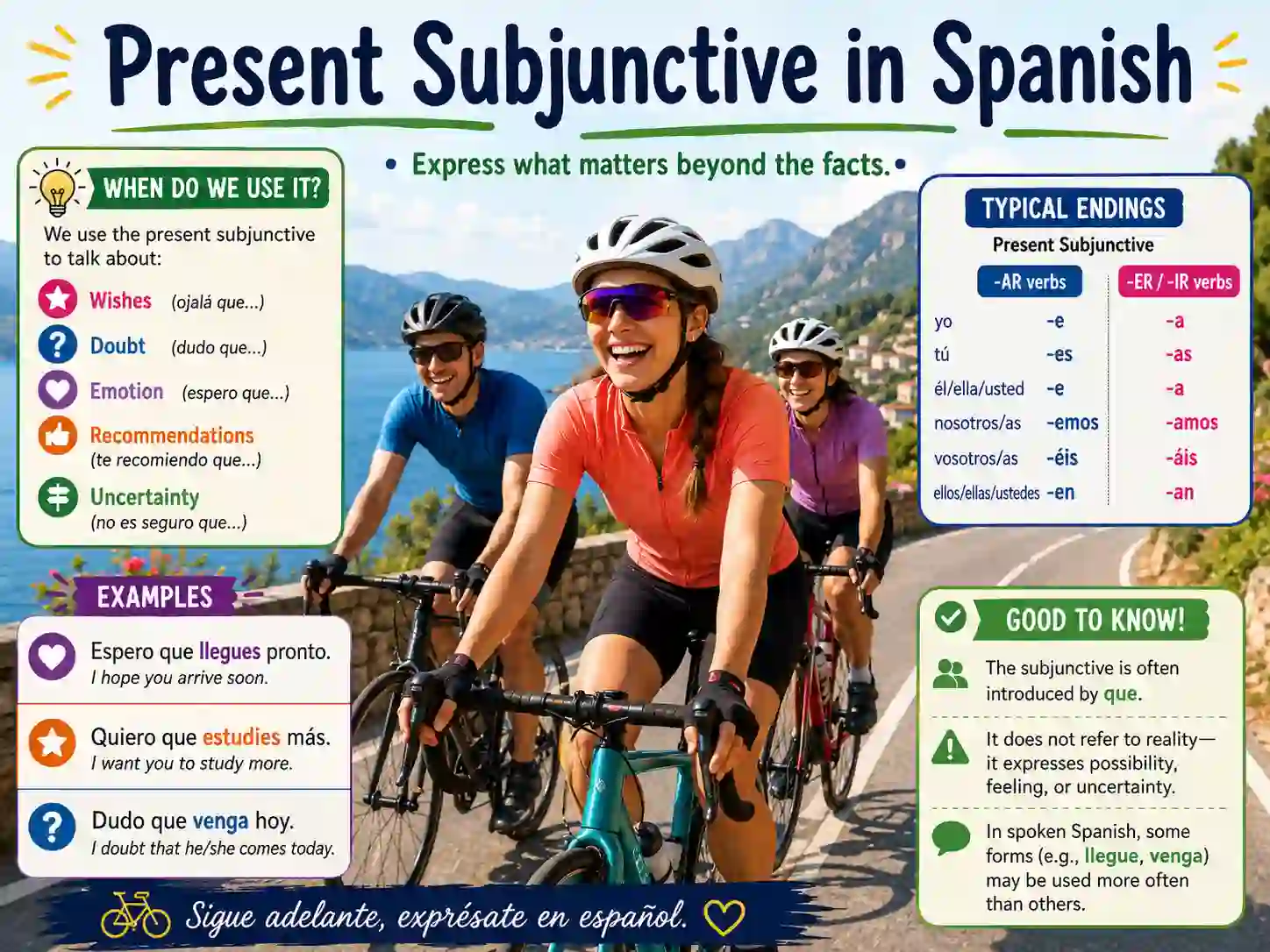
Present Subjunctive
Review haya, hayas, hayamos and the present subjunctive system.
Open guide →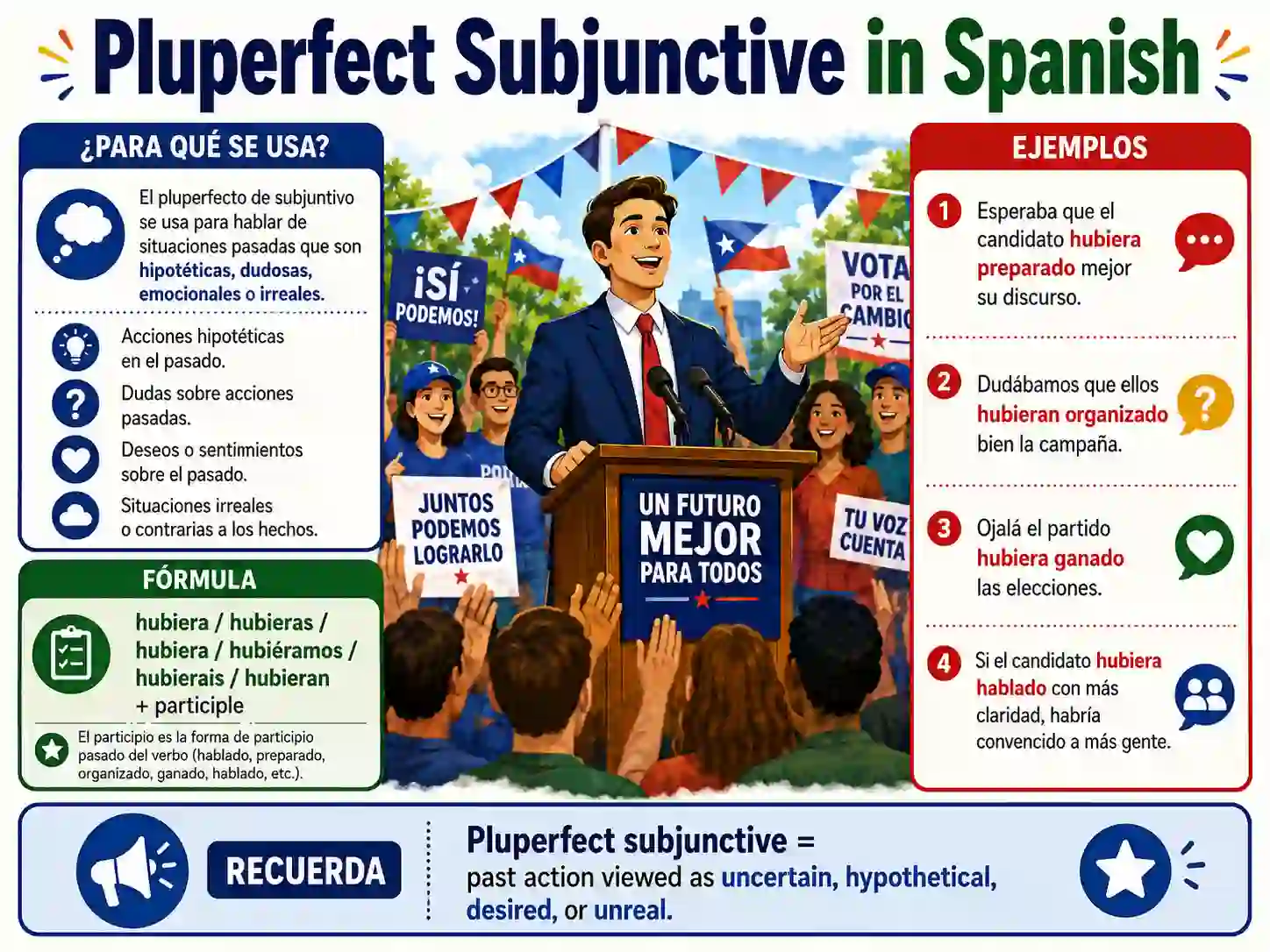
Pluperfect Subjunctive
Compare haya hablado with hubiera hablado in past and unreal past contexts.
Open guide →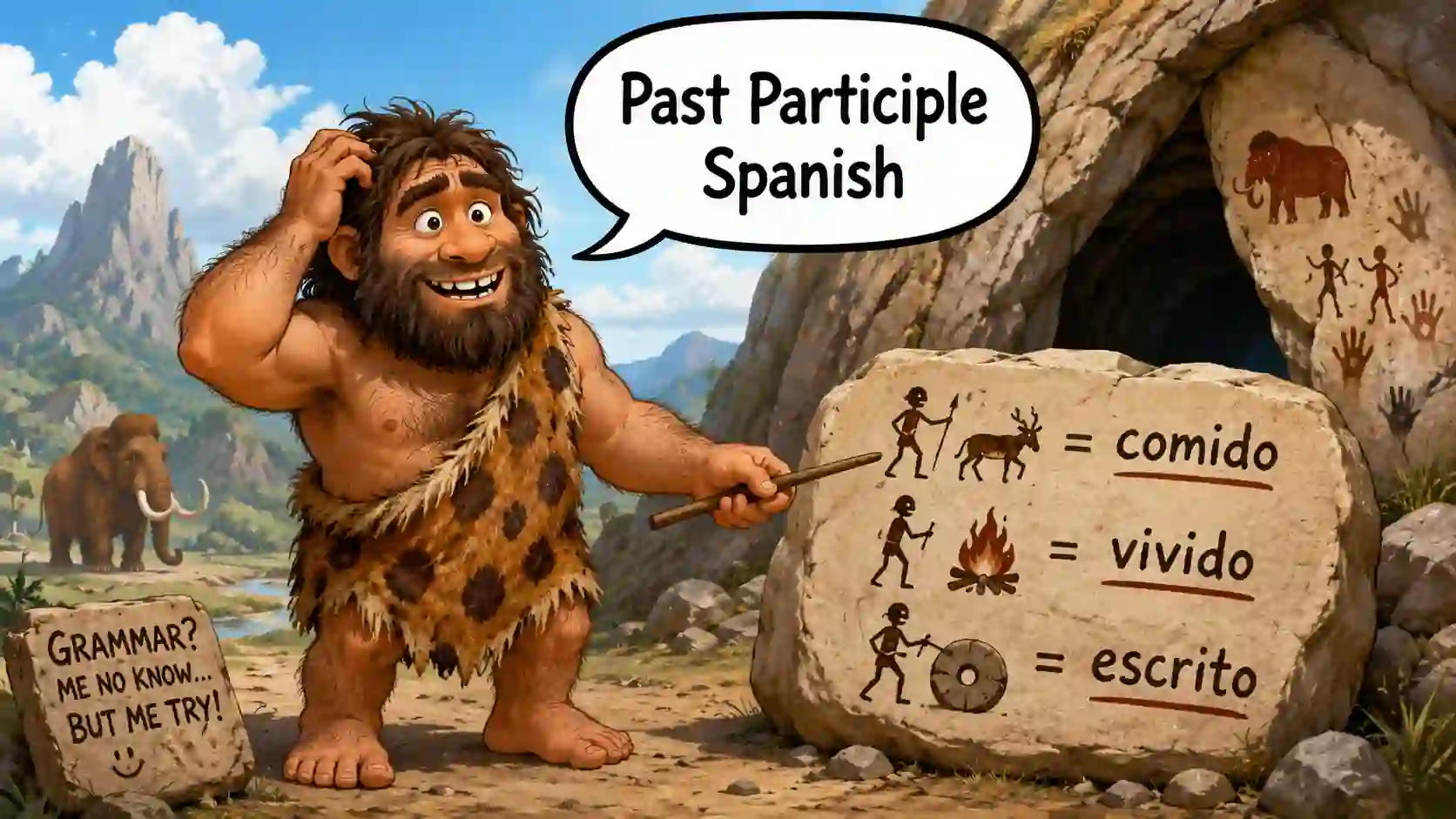
Past Participle
Review regular and irregular participles such as hablado, comido, hecho and dicho.
Open guide →When you need help
Learn the present perfect subjunctive with MundoDele
If the Spanish present perfect subjunctive feels confusing, this lesson can help you practise haya hablado, hayas entendido, haya terminado, wishes, doubts, emotions and real Spanish sentence patterns in a clear and structured way.
Spanish Tutoring
Useful if you need help with subjunctive forms, participles or exercises.
Private Spanish Lessons
Practise compound subjunctive forms in conversation, writing and personal learning.
Intensive Spanish Course
Work through grammar, speaking and sentence structure in a focused format.
FAQ
FAQ: present perfect subjunctive in Spanish
What is the present perfect subjunctive in Spanish?
The present perfect subjunctive is a compound subjunctive form built with haya plus a past participle, as in haya hablado, hayas comido or haya vivido.
How do you form the present perfect subjunctive?
Use the present subjunctive of haber plus the past participle: haya hablado, hayas comido, hayamos vivido.
When do you use the present perfect subjunctive?
Use it when a completed action is wished for, doubted, uncertain or emotionally evaluated: espero que hayas entendido, no creo que haya terminado.
What is the difference between ha terminado and haya terminado?
Ha terminado is present perfect indicative and presents the action as information. Haya terminado is present perfect subjunctive and appears after triggers such as doubt, hope, emotion or uncertainty.
What is the difference between present subjunctive and present perfect subjunctive?
The present subjunctive often refers to an action as incomplete, future or general: espero que vengas. The present perfect subjunctive refers to a completed action: espero que hayas venido.
What is the difference between haya hablado and hubiera hablado?
Haya hablado belongs to a present or future-oriented frame. Hubiera hablado belongs to a past or unreal past frame.

About
About MundoDele
MundoDele connects online Spanish lessons, tutoring, intensive Spanish courses, DELE and SIELE preparation, Business Spanish, grammar resources and cultural context into one personal Spanish learning platform.
Grammar pages are designed to explain Spanish clearly, with practical examples, sentence logic and useful links to related learning support.