
MundoDele Spanish Grammar
Pluperfect Subjunctive in Spanish
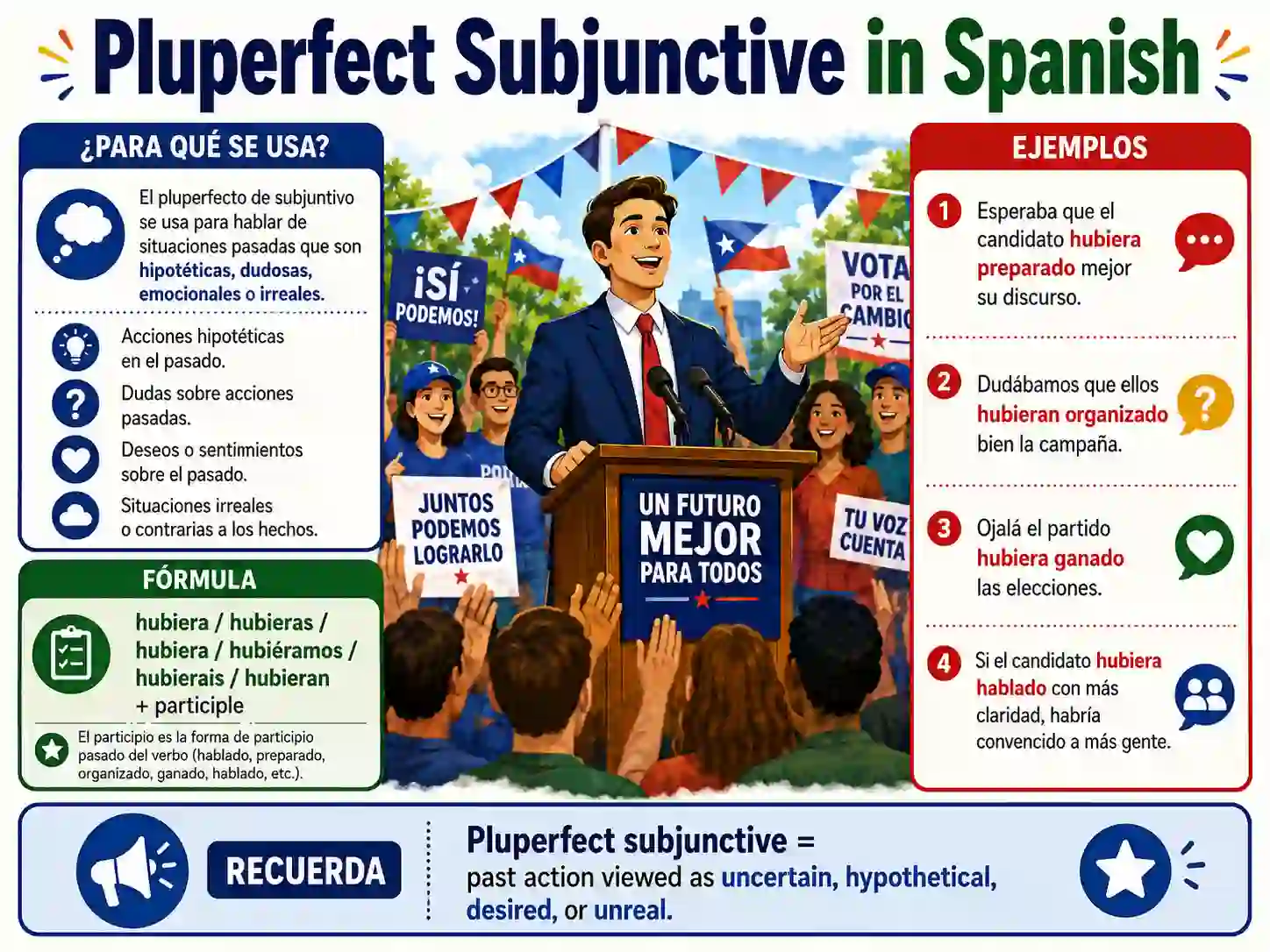
Learn how the Spanish pluperfect subjunctive works with hubiera and hubiese. This guide explains forms such as hubiera hablado, hubieras tenido, hubiese sido and hubiéramos venido, and shows how they are used in unreal past conditions, wishes, regrets, doubts, emotions and hypothetical past situations.
Why this form matters
The pluperfect subjunctive looks back at a past that is imagined, doubted or regretted
The pluperfect subjunctive is easier to understand when it is connected to meaning. MundoDele explains it as the form Spanish uses when a past action is imagined, doubted, regretted, wished for or placed inside an unreal past condition.
The key contrast is simple: había estudiado presents a past-before-past action as factual, while hubiera estudiado presents it as hypothetical, unreal, doubted or emotionally framed.
Había estudiado. The action is presented as completed information.
Si hubiera estudiado, habría aprobado. The condition did not happen.
Ojalá hubiera sabido la verdad. The speaker wishes the past had been different.
Learning sequence
How to use this pluperfect subjunctive guide
Use this page after learning the present subjunctive, imperfect subjunctive and conditional perfect. First learn the form hubiera / hubiese + past participle. Then study the main uses: unreal past conditions, past regrets, doubts about past actions and emotional reactions to past events.
Build the form
Use hubiera or hubiese plus the past participle.
Use unreal past if clauses
Practise si hubiera estudiado, habría aprobado.
Compare with factual past
Separate había hablado from hubiera hablado.
Core idea
What is the pluperfect subjunctive in Spanish?
The pluperfect subjunctive is a compound subjunctive tense. It refers to a past action that happened before another past reference point, but presents that action as hypothetical, unreal, doubted, wished for or emotionally evaluated.
| Use | Spanish example | English meaning | Why pluperfect subjunctive? |
|---|---|---|---|
| Unreal past condition | Si hubiera estudiado, habría aprobado. | If I had studied, I would have passed. | The past condition did not happen. |
| Past wish or regret | Ojalá hubiera sabido la verdad. | I wish I had known the truth. | The speaker wishes the past had been different. |
| Past doubt | No creía que hubieras llegado. | I did not think you had arrived. | The past action was not accepted as fact. |
| Emotional reaction | Me alegró que hubieras venido. | I was glad that you had come. | The speaker reacts emotionally to a past action. |
Formation
How to form the Spanish pluperfect subjunctive
The pluperfect subjunctive is formed with the imperfect subjunctive of haber plus the past participle of the main verb. Spanish has two correct forms: hubiera and hubiese.
| Subject | Hubiera form | Hubiese form | Example with hablar |
|---|---|---|---|
| yo | hubiera | hubiese | hubiera / hubiese hablado |
| tú | hubieras | hubieses | hubieras / hubieses hablado |
| él, ella, usted | hubiera | hubiese | hubiera / hubiese hablado |
| nosotros/as | hubiéramos | hubiésemos | hubiéramos / hubiésemos hablado |
| vosotros/as | hubierais | hubieseis | hubierais / hubieseis hablado |
| ellos, ellas, ustedes | hubieran | hubiesen | hubieran / hubiesen hablado |
Past participles
Past participles with the pluperfect subjunctive
The second part of the pluperfect subjunctive is the past participle. Regular participles end in -ado for -ar verbs and -ido for -er and -ir verbs. Some frequent verbs have irregular participles.
| Infinitive | Past participle | Pluperfect subjunctive example | English meaning |
|---|---|---|---|
| hablar | hablado | hubiera hablado | had spoken |
| comer | comido | hubiera comido | had eaten |
| vivir | vivido | hubiera vivido | had lived |
| hacer | hecho | hubiera hecho | had done / had made |
| ver | visto | hubiera visto | had seen |
| decir | dicho | hubiera dicho | had said |
| poner | puesto | hubiera puesto | had put |
| escribir | escrito | hubiera escrito | had written |
Related page: Past Participle in Spanish.
Two correct forms
Hubiera or hubiese?
Hubiera and hubiese are both correct forms of the pluperfect subjunctive. In many contexts they are interchangeable. The hubiera form is more common in everyday Spanish, while hubiese can sound more formal, literary or careful in some regions.
| Hubiera form | Hubiese form | English meaning | Note |
|---|---|---|---|
| Si hubiera estudiado, habría aprobado. | Si hubiese estudiado, habría aprobado. | If I had studied, I would have passed. | Both are correct. |
| Ojalá hubiera venido. | Ojalá hubiese venido. | I wish he/she had come. | Both are possible. |
| No creía que hubieras llamado. | No creía que hubieses llamado. | I did not think you had called. | Same meaning. |
Unreal past
Unreal past if clauses: si hubiera + conditional perfect
One of the most important uses of the pluperfect subjunctive is in unreal past if clauses. These sentences describe a past condition that did not happen and a result that therefore did not happen.
| Spanish pattern | Spanish example | English meaning | Grammar logic |
|---|---|---|---|
| si + pluperfect subjunctive + conditional perfect | Si hubiera estudiado, habría aprobado. | If I had studied, I would have passed. | Past condition and past result did not happen. |
| si + hubiera + participle | Si hubieras venido, te habría visto. | If you had come, I would have seen you. | Imagined past condition. |
| si + hubiera + participle | Si hubiéramos salido antes, habríamos llegado a tiempo. | If we had left earlier, we would have arrived on time. | Unreal past sequence. |
| si + hubiera + participle | Si hubiera sabido la verdad, no habría venido. | If I had known the truth, I would not have come. | Past condition contrary to fact. |
Related page: If Clauses in Spanish Using the Subjunctive.
Result clause
Pluperfect subjunctive vs conditional perfect
In unreal past if clauses, the pluperfect subjunctive usually appears in the condition clause, while the conditional perfect usually appears in the result clause.
| Part of the sentence | Spanish form | Example | Function |
|---|---|---|---|
| Condition | hubiera estudiado | Si hubiera estudiado... | Imagined past condition. |
| Result | habría aprobado | ...habría aprobado. | Imagined past result. |
| Condition | hubieras llamado | Si hubieras llamado... | Unreal past condition. |
| Result | habría ido | ...habría ido. | Result that did not happen. |
Related page: Conditional Perfect in Spanish.
Past wishes
Past wishes and regrets: ojalá hubiera
The pluperfect subjunctive is common with ojalá when the speaker wishes the past had been different. In English, this often corresponds to “I wish I had...” or “if only...”.
| Spanish example | English meaning | Pluperfect subjunctive | Meaning |
|---|---|---|---|
| Ojalá hubiera estudiado más. | I wish I had studied more. | hubiera estudiado | Regret about the past. |
| Ojalá hubieras venido. | I wish you had come. | hubieras venido | Desired past event did not happen. |
| Ojalá no hubiera dicho eso. | I wish I had not said that. | hubiera dicho | Regret about something said. |
| Ojalá lo hubiéramos sabido antes. | I wish we had known it earlier. | hubiéramos sabido | Past information was missing. |
Past doubt and emotion
Past doubts and emotions
The pluperfect subjunctive can appear after past expressions of doubt, denial, emotion or evaluation. The main expression is in the past, and the subordinate clause refers to an earlier past action.
| Trigger | Spanish example | English meaning | Why pluperfect subjunctive? |
|---|---|---|---|
| no creía que | No creía que hubieras llegado. | I did not think you had arrived. | Past doubt about an earlier past action. |
| dudaba que | Dudaba que hubieran entendido. | I doubted that they had understood. | Doubt about a completed past action. |
| me sorprendió que | Me sorprendió que hubieras aceptado. | It surprised me that you had accepted. | Emotional reaction to an earlier event. |
| me alegró que | Me alegró que hubiéramos ganado. | I was glad that we had won. | Emotion about a completed event. |
| era posible que | Era posible que se hubieran perdido. | It was possible that they had got lost. | Past uncertainty about an earlier action. |
Related page: Wishes, Doubts and Emotions in Spanish.
Como si
Como si + pluperfect subjunctive
Spanish often uses the pluperfect subjunctive after como si when comparing something to an unreal or imagined past situation.
| Spanish example | English meaning | Pluperfect subjunctive | Meaning |
|---|---|---|---|
| Hablaba como si hubiera visto un fantasma. | He/she spoke as if he/she had seen a ghost. | hubiera visto | Imagined comparison. |
| Actuó como si no hubiera pasado nada. | He/she acted as if nothing had happened. | hubiera pasado | Unreal or imagined past situation. |
| Me miró como si me hubiera conocido de antes. | He/she looked at me as if he/she had known me before. | hubiera conocido | Hypothetical past comparison. |
Core contrast
Pluperfect indicative vs pluperfect subjunctive
The pluperfect indicative uses había + participle and presents a past-before-past action as factual. The pluperfect subjunctive uses hubiera / hubiese + participle and presents the past action as hypothetical, doubted, wished for or emotionally framed.
| Pluperfect indicative | Pluperfect subjunctive | Difference |
|---|---|---|
| Había estudiado antes del examen. I had studied before the exam. |
Ojalá hubiera estudiado antes del examen. I wish I had studied before the exam. |
Fact vs regret. |
| Sabía que habías llegado. I knew you had arrived. |
No creía que hubieras llegado. I did not think you had arrived. |
Knowledge vs doubt. |
| Habíamos salido temprano. We had left early. |
Si hubiéramos salido temprano, habríamos llegado. If we had left early, we would have arrived. |
Factual past vs unreal condition. |
Related page: Pluperfect in Spanish.
Mixed conditions
Mixed conditions with the pluperfect subjunctive
Sometimes the condition belongs to the past, but the result belongs to the present. In this case, Spanish can combine the pluperfect subjunctive with the conditional.
| Spanish example | English meaning | Past condition | Present result |
|---|---|---|---|
| Si hubiera estudiado más, ahora sabría más. | If I had studied more, I would know more now. | hubiera estudiado | sabría |
| Si hubieras aceptado el trabajo, ahora vivirías en Madrid. | If you had accepted the job, you would live in Madrid now. | hubieras aceptado | vivirías |
| Si no hubiéramos perdido el tren, ahora estaríamos allí. | If we had not missed the train, we would be there now. | hubiéramos perdido | estaríamos |
Recommended order
Recommended learning order for the pluperfect subjunctive
Learn the haber forms
Practise hubiera, hubieras, hubiéramos and hubieran.
Add past participles
Build forms such as hubiera hablado, hubiera visto and hubiera dicho.
Recognise hubiese
Know that hubiese hablado is also correct.
Practise unreal past if clauses
Use si hubiera estudiado, habría aprobado.
Add wishes and regrets
Use ojalá hubiera for past wishes and regrets.
Compare with había
Separate factual había estudiado from subjunctive hubiera estudiado.
Practice
Practice exercises: pluperfect subjunctive
Try to answer before opening the solutions. These exercises focus on forms, unreal past conditions and indicative-subjunctive contrast.
Exercise 1: form the pluperfect subjunctive
- yo / estudiar
- tú / venir
- nosotros / salir
- ellos / entender
Show answers
1. hubiera estudiado
2. hubieras venido
3. hubiéramos salido
4. hubieran entendido
Exercise 2: complete the if clause
- Si ___ más, habría aprobado. estudiar
- Si hubieras venido, te ___ visto. haber
- Si ___ antes, habríamos llegado a tiempo. salir
- Si hubiera sabido la verdad, no ___ venido. haber
Show answers
1. hubiera estudiado
2. habría
3. hubiéramos salido
4. habría
Exercise 3: indicative or subjunctive?
- Sabía que tú ___ llegado. haber
- No creía que tú ___ llegado. haber
- Ojalá yo ___ estudiado más. haber
- Me alegró que ustedes ___ venido. haber
Show answers
1. habías
2. hubieras
3. hubiera
4. hubieran
Typical mistakes
Typical mistakes with the Spanish pluperfect subjunctive
- Confusing había and hubiera: había estudiado is factual; hubiera estudiado is subjunctive or hypothetical.
- Forgetting the past participle: say hubiera hablado, not hubiera hablar.
- Using conditional perfect in the si-clause: say si hubiera estudiado, not si habría estudiado.
- Forgetting the result clause: si hubiera estudiado, habría aprobado.
- Thinking hubiese is wrong: hubiese hablado is also correct, although hubiera hablado is more common.
- Using the pluperfect subjunctive for every past action: use it when the past action is hypothetical, doubted, wished for or emotionally evaluated.
Where to go next
Where to go next
After the pluperfect subjunctive, continue with if clauses and the conditional perfect. These two pages explain the full unreal past pattern: si hubiera estudiado, habría aprobado.
If Clauses
Learn real, hypothetical and unreal past conditions.
Conditional Perfect
Learn habría ido, habría hecho and imagined past results.
Pluperfect
Compare factual había hablado with subjunctive hubiera hablado.
Related guides
Continue with related Spanish grammar topics
These guides connect directly with the pluperfect subjunctive: the imperfect subjunctive as the base form, the past participle as the building block, and the contrast between factual and non-factual meanings.
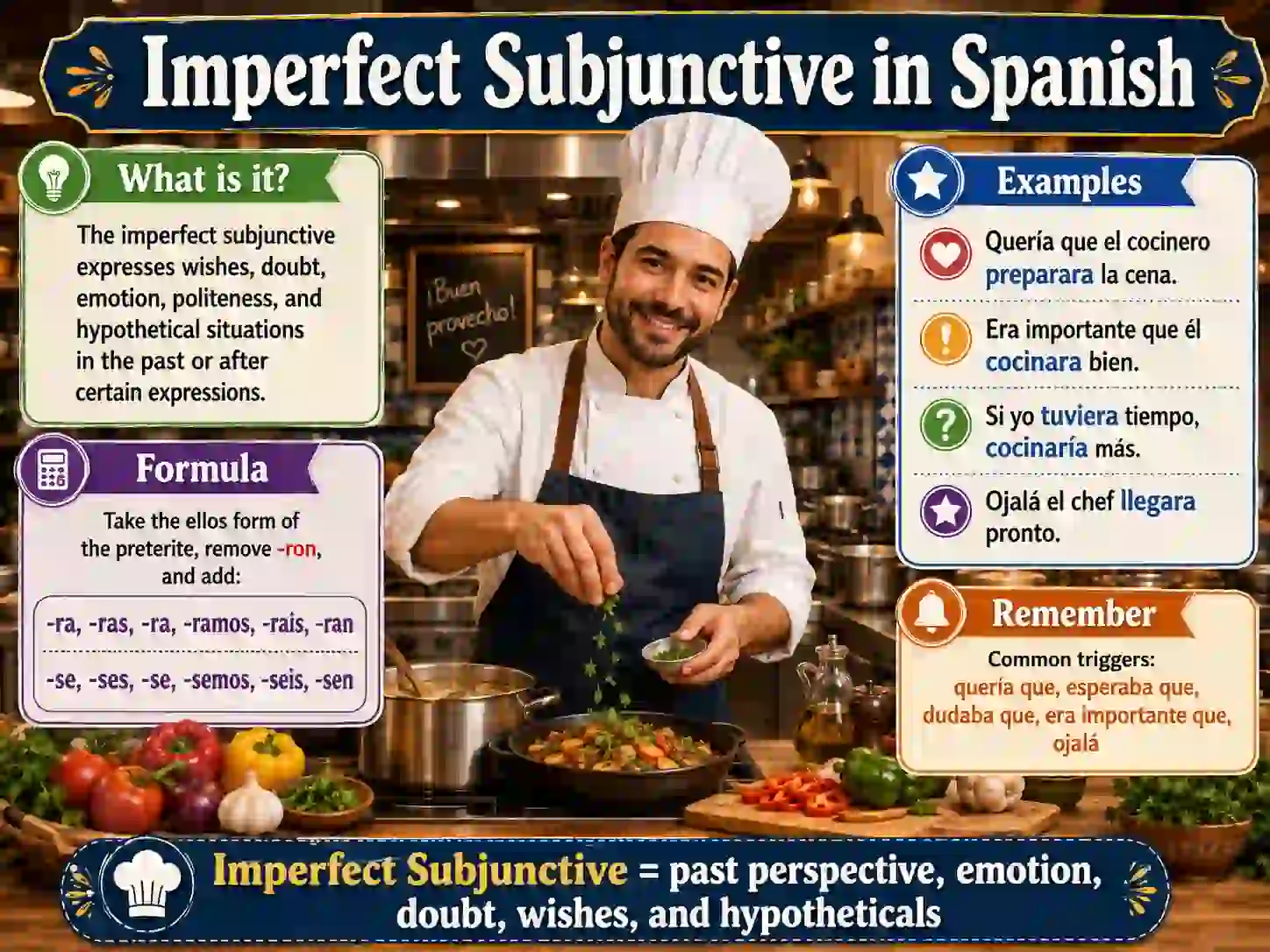
Imperfect Subjunctive
Review hubiera and hubiese as imperfect subjunctive forms of haber.
Open guide →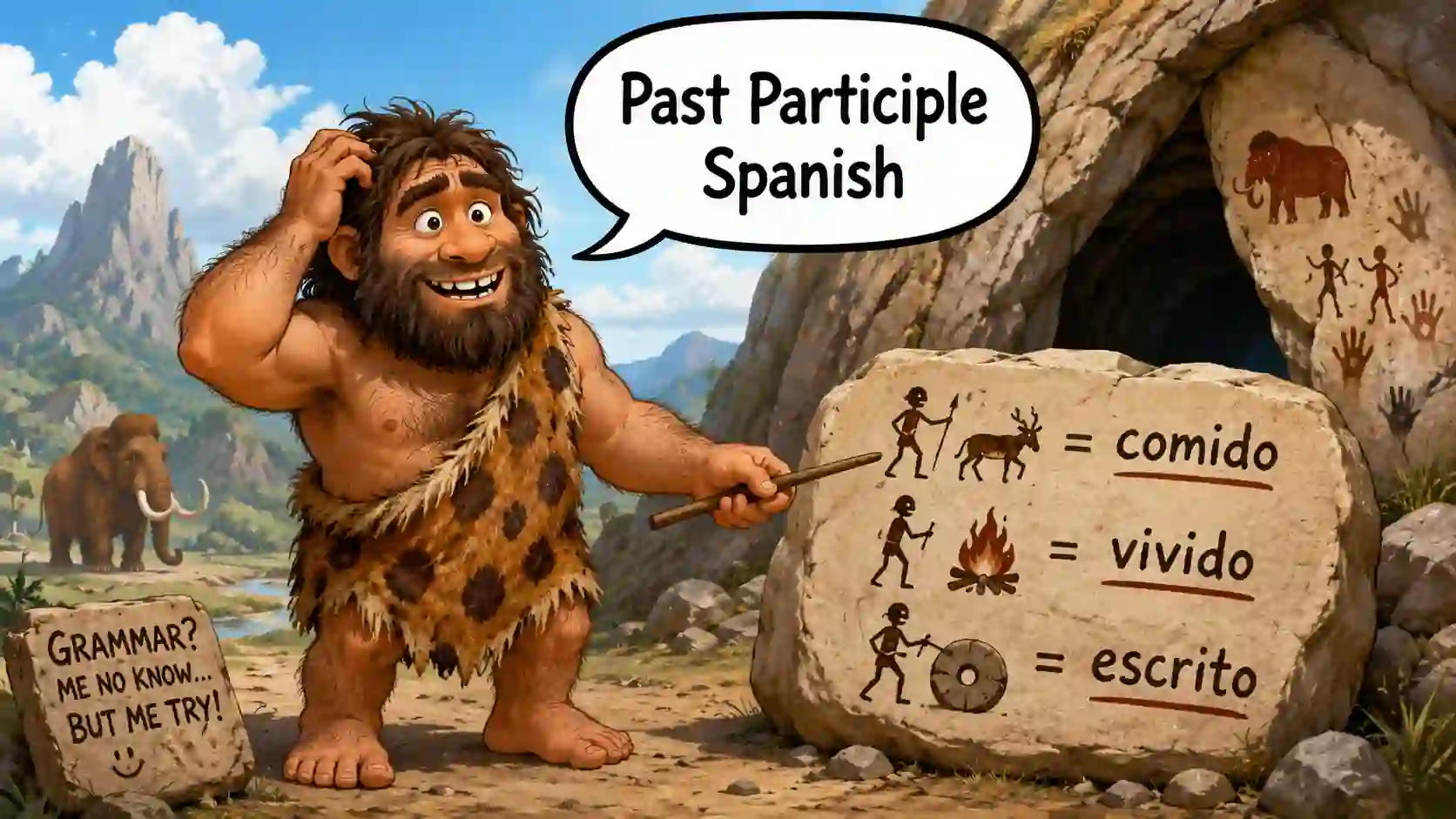
Past Participle
Review hablado, comido, hecho, dicho, visto and escrito.
Open guide →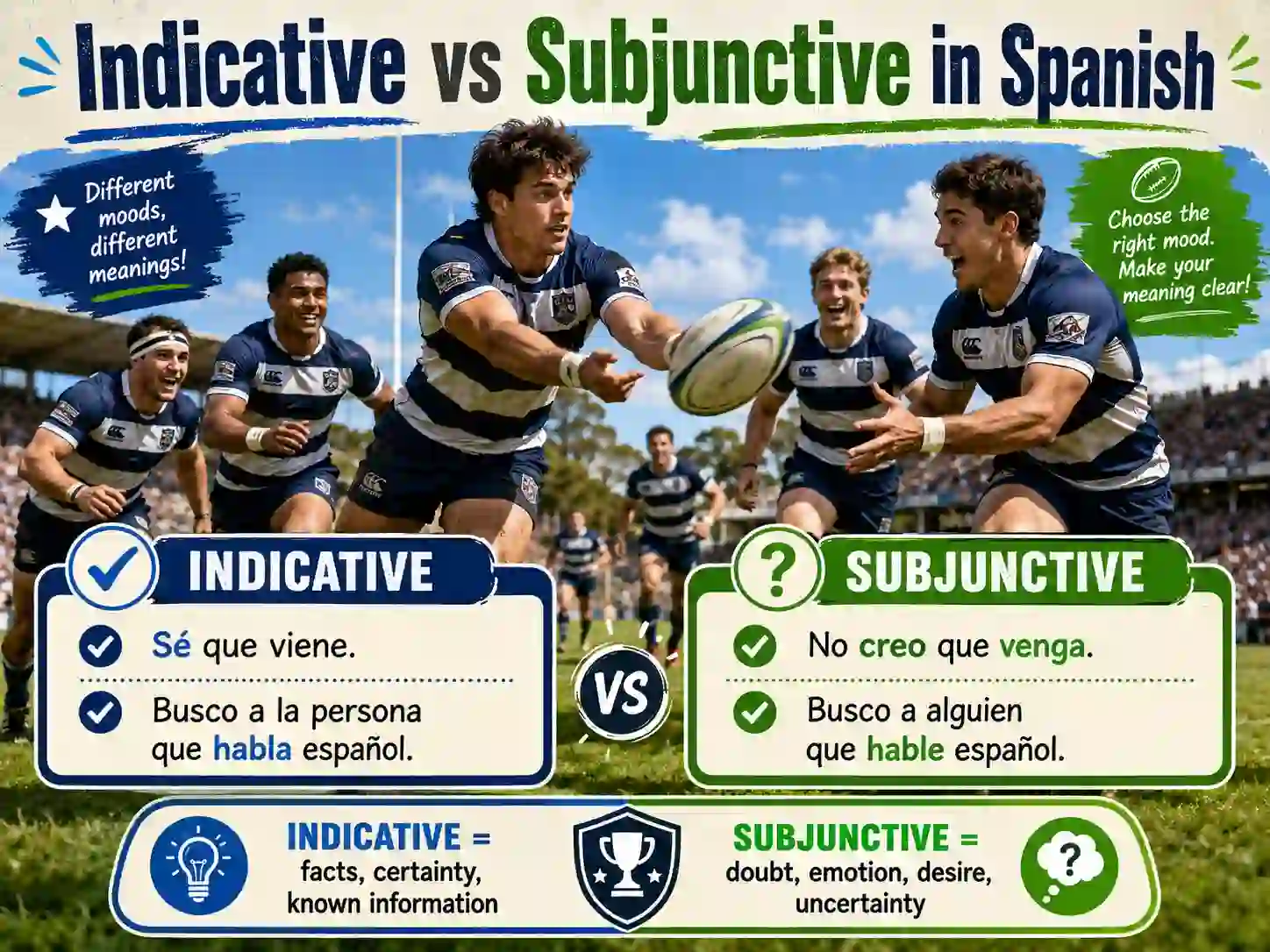
Indicative vs Subjunctive
Review how Spanish separates fact, certainty, doubt, wish, emotion and hypothesis.
Open guide →When you need help
Learn the pluperfect subjunctive with MundoDele
If the Spanish pluperfect subjunctive feels confusing, this lesson can help you practise hubiera, hubiese, unreal past conditions, past regrets, doubts and real Spanish sentence patterns in a clear and structured way.
Spanish Tutoring
Useful if you need help with subjunctive forms, if clauses or exercises.
Private Spanish Lessons
Practise the pluperfect subjunctive in conversation, writing and personal learning.
Intensive Spanish Course
Work through grammar, speaking and sentence structure in a focused format.
FAQ
FAQ: pluperfect subjunctive in Spanish
What is the pluperfect subjunctive in Spanish?
The pluperfect subjunctive is a compound subjunctive tense formed with hubiera or hubiese plus a past participle, as in hubiera hablado.
How do you form the pluperfect subjunctive?
Use the imperfect subjunctive of haber plus the past participle: hubiera hablado, hubieras comido, hubiéramos vivido.
What is the difference between hubiera and hubiese?
Hubiera and hubiese are both correct pluperfect subjunctive forms. Hubiera is more common in everyday Spanish.
When do you use the pluperfect subjunctive?
Use it for unreal past conditions, past wishes, regrets, doubts and emotional reactions: si hubiera estudiado, ojalá hubiera sabido, no creía que hubieras llegado.
What is the pattern with si hubiera?
The common unreal past pattern is si + pluperfect subjunctive + conditional perfect: si hubiera estudiado, habría aprobado.
What is the difference between había hablado and hubiera hablado?
Había hablado is pluperfect indicative and presents the action as factual. Hubiera hablado is pluperfect subjunctive and often presents the action as hypothetical, doubted, wished for or unreal.

About
About MundoDele
MundoDele connects online Spanish lessons, tutoring, intensive Spanish courses, DELE and SIELE preparation, Business Spanish, grammar resources and cultural context into one personal Spanish learning platform.
Grammar pages are designed to explain Spanish clearly, with practical examples, sentence logic and useful links to related learning support.