
MundoDele Spanish Grammar
Imperfect Subjunctive in Spanish
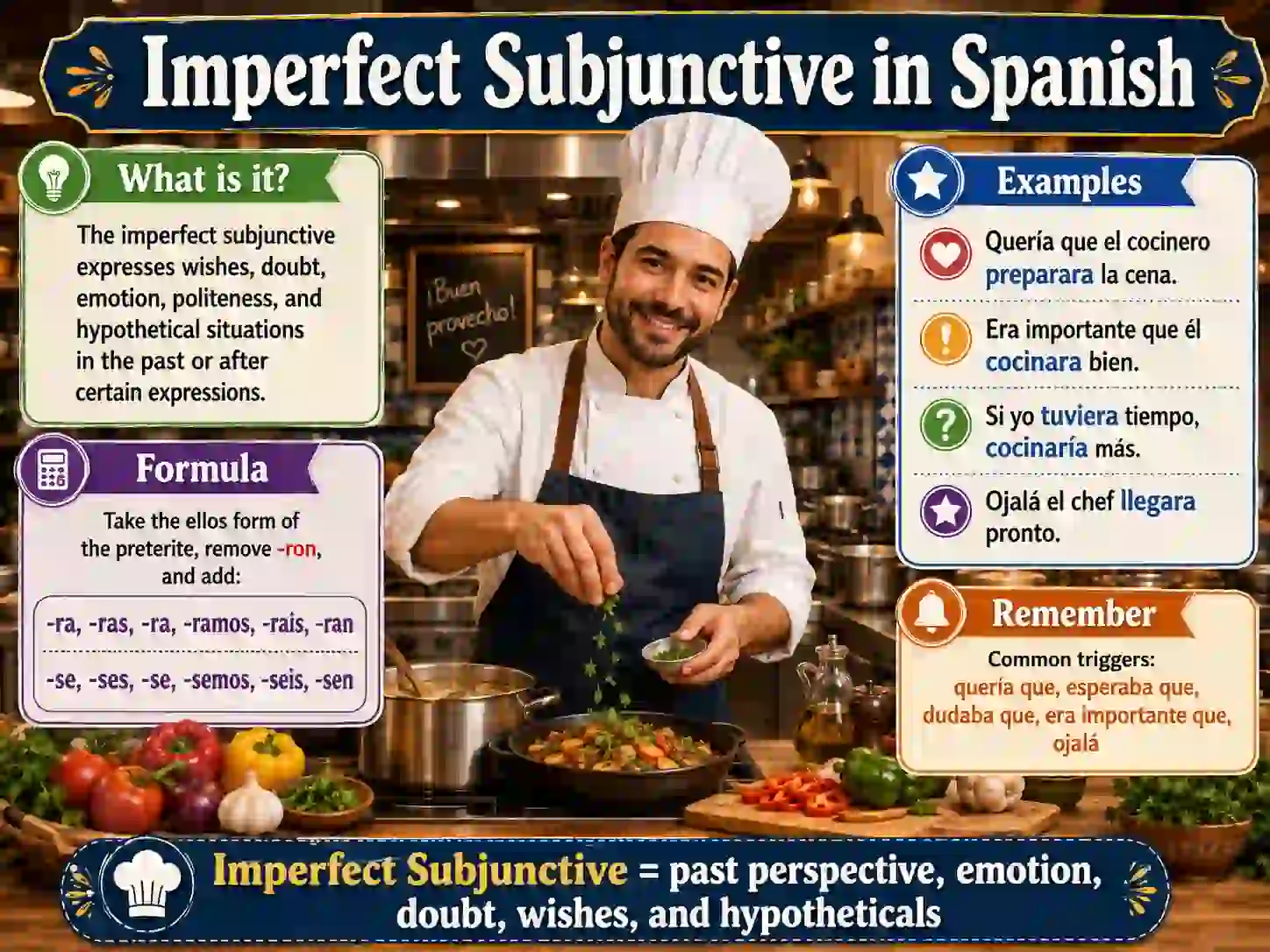
Learn the Spanish imperfect subjunctive with forms such as hablara, comiera, viviera, fuera, tuviera, pudiera and supiera. This guide explains both -ra and -se forms, how to form them from the preterite, and how to use them in hypothetical if clauses, wishes, doubts, emotions and past subjunctive contexts.
Why this form matters
The imperfect subjunctive moves Spanish into a past, hypothetical or unreal frame
The imperfect subjunctive is easier to understand when it is connected to sentence meaning. MundoDele explains it as the form Spanish uses for past wishes, past doubts, emotional reactions in the past, hypothetical conditions and unreal situations.
The central idea is simple: tengo is real present, tenga is present subjunctive, and tuviera is used when the sentence moves into a past, hypothetical or unreal frame.
Tengo tiempo. The speaker presents the situation as real information.
Quiero que tengas tiempo. The action is wanted or desired.
Si tuviera tiempo, iría. The condition is imagined.
Learning sequence
How to use this imperfect subjunctive guide
Use this page after learning the present subjunctive and before working deeply with if clauses and the pluperfect subjunctive. First learn how the form is built from the preterite. Then study the main uses: hypothetical conditions, past trigger expressions, ojalá, como si and unreal situations.
Build the form
Start from the third-person plural preterite, remove -ron, and add the endings.
Use if clauses
Practise si tuviera tiempo, iría and similar patterns.
Use past triggers
Connect the form with quería que, no creía que and me alegró que.
Core idea
What is the imperfect subjunctive in Spanish?
The imperfect subjunctive is a past or hypothetical subjunctive form. It is used when the sentence expresses wish, doubt, emotion, uncertainty, purpose or hypothesis from a past or unreal perspective.
| Use | Spanish example | English meaning | Why imperfect subjunctive? |
|---|---|---|---|
| Hypothetical condition | Si tuviera tiempo, iría. | If I had time, I would go. | The condition is imagined, not real. |
| Past wish | Quería que vinieras. | I wanted you to come. | The trigger is in the past. |
| Past doubt | No creía que fuera verdad. | I did not think it was true. | The statement was doubted in the past. |
| Past emotion | Me alegró que estuvieras allí. | I was glad that you were there. | Emotional reaction in the past. |
| Wish or impossible desire | Ojalá pudiera ayudarte. | I wish I could help you. | The wish is unreal or unlikely. |
Formation
How to form the imperfect subjunctive
To form the imperfect subjunctive, take the third-person plural preterite form, remove -ron, and add the imperfect subjunctive endings. This works for regular and irregular verbs.
| Step | Example: hablar | Example: tener | Example: decir |
|---|---|---|---|
| Third-person plural preterite | hablaron | tuvieron | dijeron |
| Remove -ron | habla- | tuvie- | dije- |
| Add -ra endings | hablara | tuviera | dijera |
| Add -se endings | hablase | tuviese | dijese |
-ra forms
The -ra forms: hablara, comiera, viviera
The -ra forms are the most common imperfect subjunctive forms in everyday Spanish.
| Subject | Hablar | Comer | Vivir |
|---|---|---|---|
| yo | hablara | comiera | viviera |
| tú | hablaras | comieras | vivieras |
| él, ella, usted | hablara | comiera | viviera |
| nosotros/as | habláramos | comiéramos | viviéramos |
| vosotros/as | hablarais | comierais | vivierais |
| ellos, ellas, ustedes | hablaran | comieran | vivieran |
-se forms
The -se forms: hablase, comiese, viviese
Spanish also has -se forms of the imperfect subjunctive. They are grammatically correct and often interchangeable with the -ra forms, but they can sound more formal, literary or regional.
| Subject | Hablar | Comer | Vivir |
|---|---|---|---|
| yo | hablase | comiese | viviese |
| tú | hablases | comieses | vivieses |
| él, ella, usted | hablase | comiese | viviese |
| nosotros/as | hablásemos | comiésemos | viviésemos |
| vosotros/as | hablaseis | comieseis | vivieseis |
| ellos, ellas, ustedes | hablasen | comiesen | viviesen |
Irregular stems
Common irregular imperfect subjunctive forms
Irregular imperfect subjunctive forms come from irregular preterite stems. If the preterite is irregular, the imperfect subjunctive keeps that irregular stem.
| Infinitive | Preterite base | -ra form | -se form | Example |
|---|---|---|---|---|
| ser / ir | fueron → fue- | fuera | fuese | Si fuera posible, lo haría. |
| tener | tuvieron → tuvie- | tuviera | tuviese | Si tuviera tiempo, iría. |
| estar | estuvieron → estuvie- | estuviera | estuviese | Me alegró que estuvieras allí. |
| poder | pudieron → pudie- | pudiera | pudiese | Ojalá pudiera ayudarte. |
| saber | supieron → supie- | supiera | supiese | Si supiera la respuesta, te la diría. |
| venir | vinieron → vinie- | viniera | viniese | Quería que vinieras. |
| hacer | hicieron → hicie- | hiciera | hiciese | Prefería que lo hicieras tú. |
| decir | dijeron → dije- | dijera | dijese | No quería que dijeras eso. |
Hypothetical conditions
Imperfect subjunctive in if clauses
One of the most important uses of the imperfect subjunctive is in hypothetical si-clauses. The usual pattern is si + imperfect subjunctive + conditional.
| Spanish pattern | Spanish example | English meaning | Grammar logic |
|---|---|---|---|
| si + imperfect subjunctive + conditional | Si tuviera tiempo, iría. | If I had time, I would go. | Hypothetical condition. |
| si + fuera + conditional | Si fuera rico, viajaría más. | If I were rich, I would travel more. | Unreal present situation. |
| si + pudiera + conditional | Si pudiera, te ayudaría. | If I could, I would help you. | Imagined possibility. |
| si + supiera + conditional | Si supiera la respuesta, te la diría. | If I knew the answer, I would tell you. | Hypothetical knowledge. |
Related page: If Clauses in Spanish Using the Subjunctive.
Past triggers
Past wishes, doubts and emotions
The imperfect subjunctive often appears when the main trigger expression is in a past tense. The trigger changes the perspective of the sentence.
| Trigger | Spanish example | English meaning | Imperfect subjunctive |
|---|---|---|---|
| quería que | Quería que vinieras. | I wanted you to come. | vinieras |
| esperaba que | Esperaba que todo saliera bien. | I hoped everything would go well. | saliera |
| no creía que | No creía que fuera verdad. | I did not think it was true. | fuera |
| me alegró que | Me alegró que estuvieras allí. | I was glad that you were there. | estuvieras |
| era importante que | Era importante que lo hicieras. | It was important that you did it. | hicieras |
Related page: Wishes, Doubts and Emotions in Spanish.
Ojalá
Ojalá + imperfect subjunctive
Ojalá with the imperfect subjunctive often expresses an unreal, unlikely or difficult wish. In English, it often corresponds to “I wish...” or “if only...”.
| Spanish example | English meaning | Imperfect subjunctive | Meaning |
|---|---|---|---|
| Ojalá pudiera ayudarte. | I wish I could help you. | pudiera | Unreal or difficult wish. |
| Ojalá tuviera más tiempo. | I wish I had more time. | tuviera | Wish contrary to reality. |
| Ojalá fuera más fácil. | I wish it were easier. | fuera | Unreal evaluation. |
| Ojalá vinieras conmigo. | I wish you came / would come with me. | vinieras | Desired situation. |
Como si
Como si + imperfect subjunctive
Spanish commonly uses the imperfect subjunctive after como si when the comparison is hypothetical or unreal.
| Spanish example | English meaning | Imperfect subjunctive | Meaning |
|---|---|---|---|
| Habla como si supiera todo. | He/she speaks as if he/she knew everything. | supiera | Hypothetical comparison. |
| Actúa como si fuera el jefe. | He/she acts as if he/she were the boss. | fuera | Unreal comparison. |
| Me mira como si no me conociera. | He/she looks at me as if he/she did not know me. | conociera | Imagined situation. |
Polite forms
Quisiera, pudiera and debiera as polite forms
Some imperfect subjunctive forms can also be used politely or softly. Quisiera is especially common as a polite alternative to quiero.
| Form | Spanish example | English meaning | Use |
|---|---|---|---|
| quisiera | Quisiera una mesa para dos. | I would like a table for two. | Polite request. |
| quisiera | Quisiera hablar con usted. | I would like to speak with you. | Formal or polite tone. |
| pudiera | Si pudiera ayudarme, se lo agradecería. | If you could help me, I would appreciate it. | Polite conditional request. |
| debiera | Debiera ser más cuidadoso. | He should be more careful. | Formal or softened recommendation. |
Present or past frame
Present subjunctive vs imperfect subjunctive
The present subjunctive is usually used after present or future-oriented trigger expressions. The imperfect subjunctive is usually used after past trigger expressions or in hypothetical conditions.
| Present subjunctive | Imperfect subjunctive | Difference |
|---|---|---|
| Quiero que vengas. I want you to come. |
Quería que vinieras. I wanted you to come. |
Present trigger vs past trigger. |
| No creo que sea verdad. I do not think it is true. |
No creía que fuera verdad. I did not think it was true. |
Present doubt vs past doubt. |
| Es importante que estudies. It is important that you study. |
Era importante que estudiaras. It was important that you studied. |
Present evaluation vs past evaluation. |
| Ojalá puedas venir. I hope you can come. |
Ojalá pudieras venir. I wish you could come. |
Possible wish vs more unreal or difficult wish. |
Related page: Present Subjunctive in Spanish.
Simple or completed past
Imperfect subjunctive vs pluperfect subjunctive
The imperfect subjunctive refers to a past, hypothetical or unreal situation. The pluperfect subjunctive refers to an earlier completed past action that is imagined, doubted, regretted or unreal.
| Imperfect subjunctive | Pluperfect subjunctive | Difference |
|---|---|---|
| Si tuviera tiempo, iría. | Si hubiera tenido tiempo, habría ido. | Hypothetical present/future vs unreal past. |
| Ojalá pudiera ayudarte. | Ojalá hubiera podido ayudarte. | I wish I could help vs I wish I had been able to help. |
| No creía que fuera verdad. | No creía que hubiera sido verdad. | Past doubt vs doubt about an earlier past event. |
Related page: Pluperfect Subjunctive in Spanish.
Recommended order
Recommended learning order for the imperfect subjunctive
Learn the preterite base
Use the third-person plural preterite: hablaron, tuvieron, dijeron.
Learn the -ra forms
Practise hablara, comiera, viviera, tuviera and fuera.
Recognise the -se forms
Know that hablase, tuviese and fuese are also correct.
Practise if clauses
Use si tuviera tiempo, iría and similar hypothetical patterns.
Add past triggers
Use quería que, esperaba que, no creía que and me alegró que.
Compare with pluperfect
Separate si tuviera from si hubiera tenido.
Practice
Practice exercises: imperfect subjunctive
Try to answer before opening the solutions. These exercises focus on form, hypothetical if clauses and past trigger expressions.
Exercise 1: form the -ra form
- hablar / yo
- tener / tú
- ser / él
- venir / nosotros
Show answers
1. hablara
2. tuvieras
3. fuera
4. viniéramos
Exercise 2: complete the if clause
- Si ___ tiempo, iría. tener
- Si ___ rico, viajaría más. ser
- Si ___ la respuesta, te la diría. saber
- Si ___ venir, sería perfecto. poder
Show answers
1. tuviera
2. fuera
3. supiera
4. pudieras
Exercise 3: present or imperfect subjunctive?
- Quiero que tú ___. venir
- Quería que tú ___. venir
- No creo que ___ verdad. ser
- No creía que ___ verdad. ser
Show answers
1. vengas
2. vinieras
3. sea
4. fuera
Typical mistakes
Typical mistakes with the Spanish imperfect subjunctive
- Using the conditional after si in standard hypothetical clauses: say si tuviera tiempo, not si tendría tiempo.
- Using present subjunctive for past triggers: say quería que vinieras, not quería que vengas.
- Forgetting irregular preterite stems: tener → tuvieron → tuviera, ser/ir → fueron → fuera.
- Thinking the -se forms are wrong: tuviese, fuese and hablase are correct, but often less common.
- Confusing imperfect subjunctive and pluperfect subjunctive: si tuviera is hypothetical present/future; si hubiera tenido is unreal past.
- Learning only endings: learn the sentence pattern and the meaning together.
Where to go next
Where to go next
After the imperfect subjunctive, continue with if clauses and the pluperfect subjunctive. These pages show how tuviera and hubiera tenido work in real sentence patterns.
If Clauses
Study si tengo, si tuviera and si hubiera tenido.
Pluperfect Subjunctive
Learn hubiera hablado, hubiese tenido and unreal past conditions.
Spanish Conditional
Learn iría, sería, haría and podría.
Related guides
Continue with related Spanish subjunctive topics
These guides connect directly with the imperfect subjunctive: the present subjunctive as the earlier stage, the pluperfect subjunctive as the compound past form, and the core contrast between indicative and subjunctive.
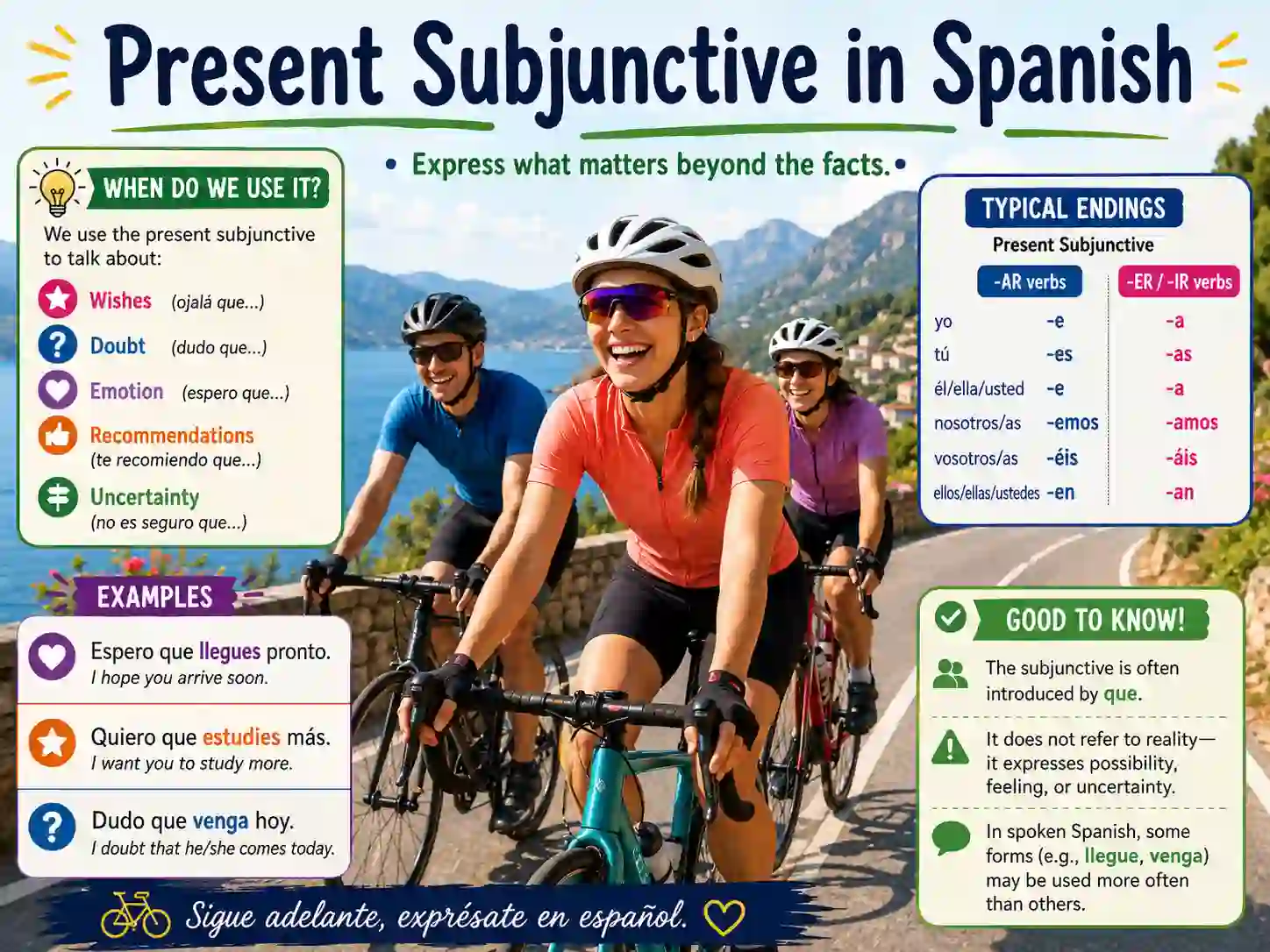
Present Subjunctive
Review venga, sea, tenga, pueda and other present subjunctive forms.
Open guide →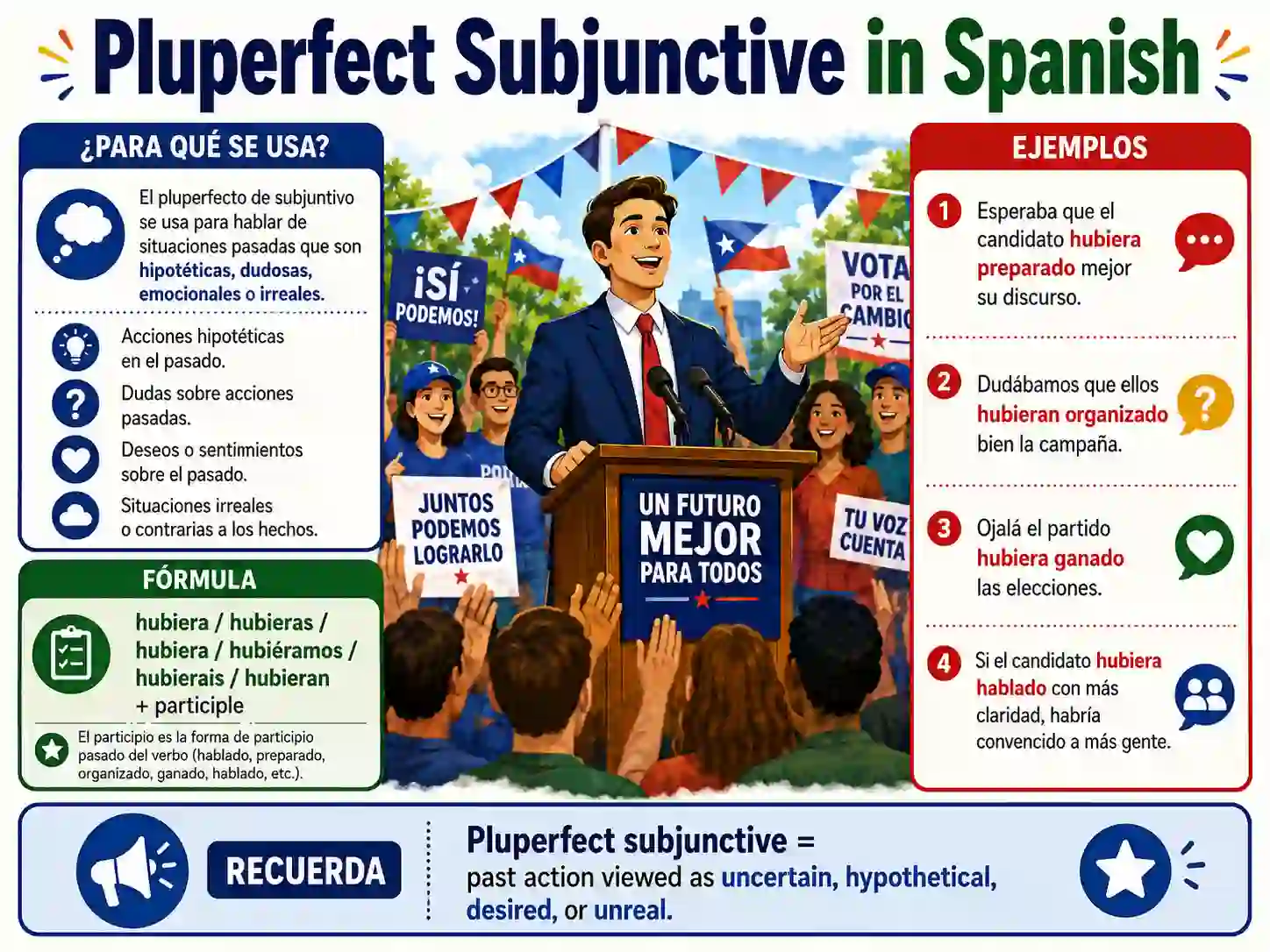
Pluperfect Subjunctive
Learn hubiera hablado, hubiese tenido and unreal past conditions.
Open guide →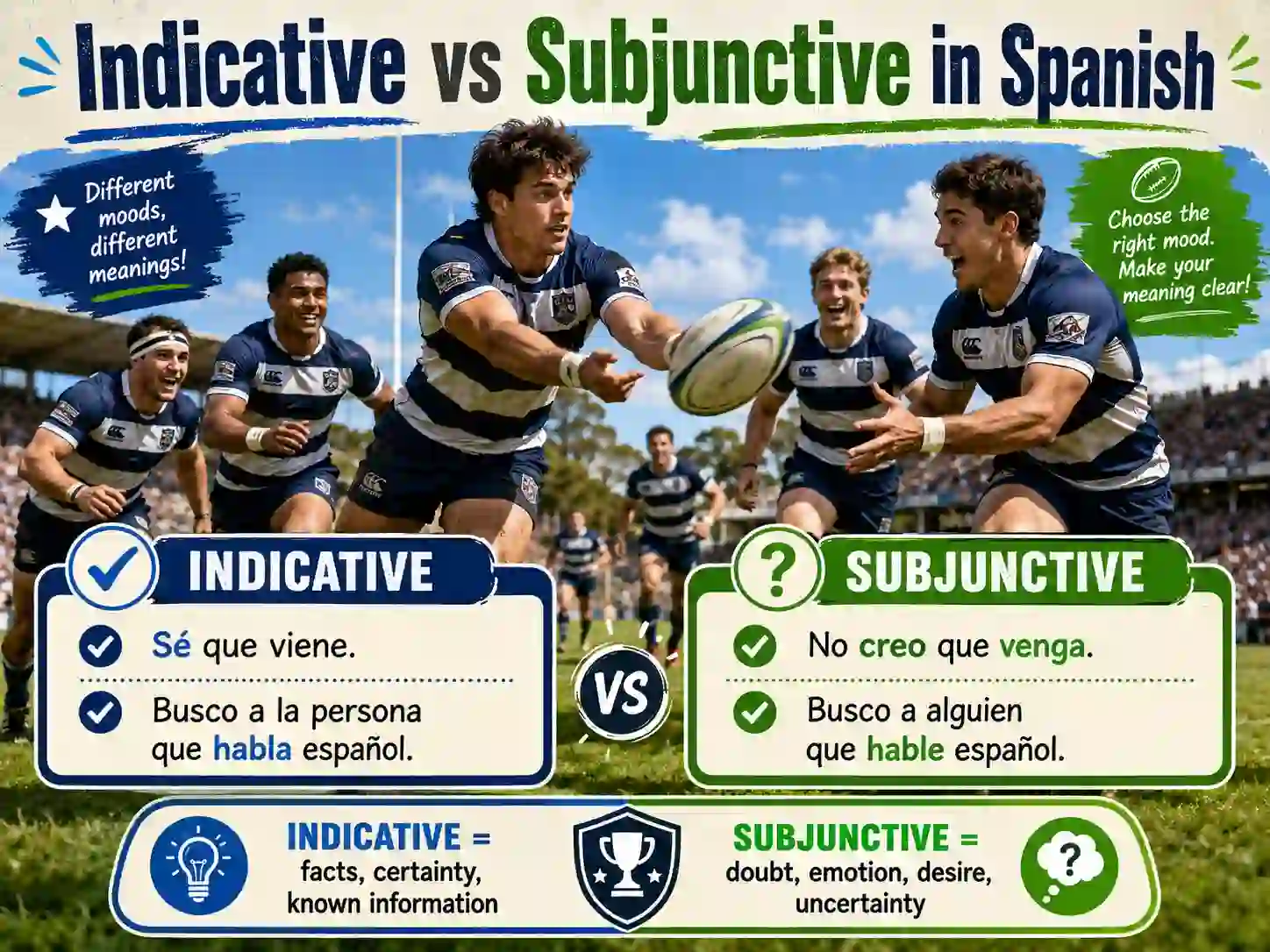
Indicative vs Subjunctive
Review fact, certainty, doubt, wish, emotion and hypothesis in Spanish sentence structure.
Open guide →When you need help
Learn the imperfect subjunctive with MundoDele
If the Spanish imperfect subjunctive feels confusing, this lesson can help you practise hablara, tuviera, fuera, pudiera, hypothetical conditions, past triggers and real Spanish sentence patterns in a clear and structured way.
Spanish Tutoring
Useful if you need help with subjunctive forms, if clauses or exercises.
Private Spanish Lessons
Practise the imperfect subjunctive in conversation, writing and personal learning.
Intensive Spanish Course
Work through grammar, speaking and sentence structure in a focused format.
FAQ
FAQ: imperfect subjunctive in Spanish
What is the imperfect subjunctive in Spanish?
The imperfect subjunctive is a past or hypothetical subjunctive form used after past triggers, in hypothetical if clauses and in unreal or unlikely situations.
How do you form the imperfect subjunctive?
Take the third-person plural preterite form, remove -ron, and add the imperfect subjunctive endings: hablaron → hablara, tuvieron → tuviera.
What is the difference between -ra and -se forms?
Both forms are correct: hablara and hablase, tuviera and tuviese. The -ra form is more common in everyday Spanish.
When do you use the imperfect subjunctive after si?
Use it for hypothetical conditions: si tuviera tiempo, iría. Do not use the conditional directly after si in this standard pattern.
What are common imperfect subjunctive forms?
Common forms include fuera, tuviera, pudiera, supiera, viniera, hiciera, hablara, comiera and viviera.
What is the difference between present and imperfect subjunctive?
The present subjunctive often follows present triggers: quiero que vengas. The imperfect subjunctive often follows past triggers or hypothetical conditions: quería que vinieras, si tuviera tiempo.

About
About MundoDele
MundoDele connects online Spanish lessons, tutoring, intensive Spanish courses, DELE and SIELE preparation, Business Spanish, grammar resources and cultural context into one personal Spanish learning platform.
Grammar pages are designed to explain Spanish clearly, with practical examples, sentence logic and useful links to related learning support.