
MundoDele Spanish Grammar
Spanish Possessive Pronouns: Mío, Tuyo, Suyo and Nuestro
Learn how Spanish expresses “mine”, “yours”, “his”, “hers”, “ours” and “theirs” without repeating the noun. This guide explains mío, tuyo, suyo, nuestro and vuestro, including gender and number agreement, article use and the difference between mi libro, el mío and el libro es mío.
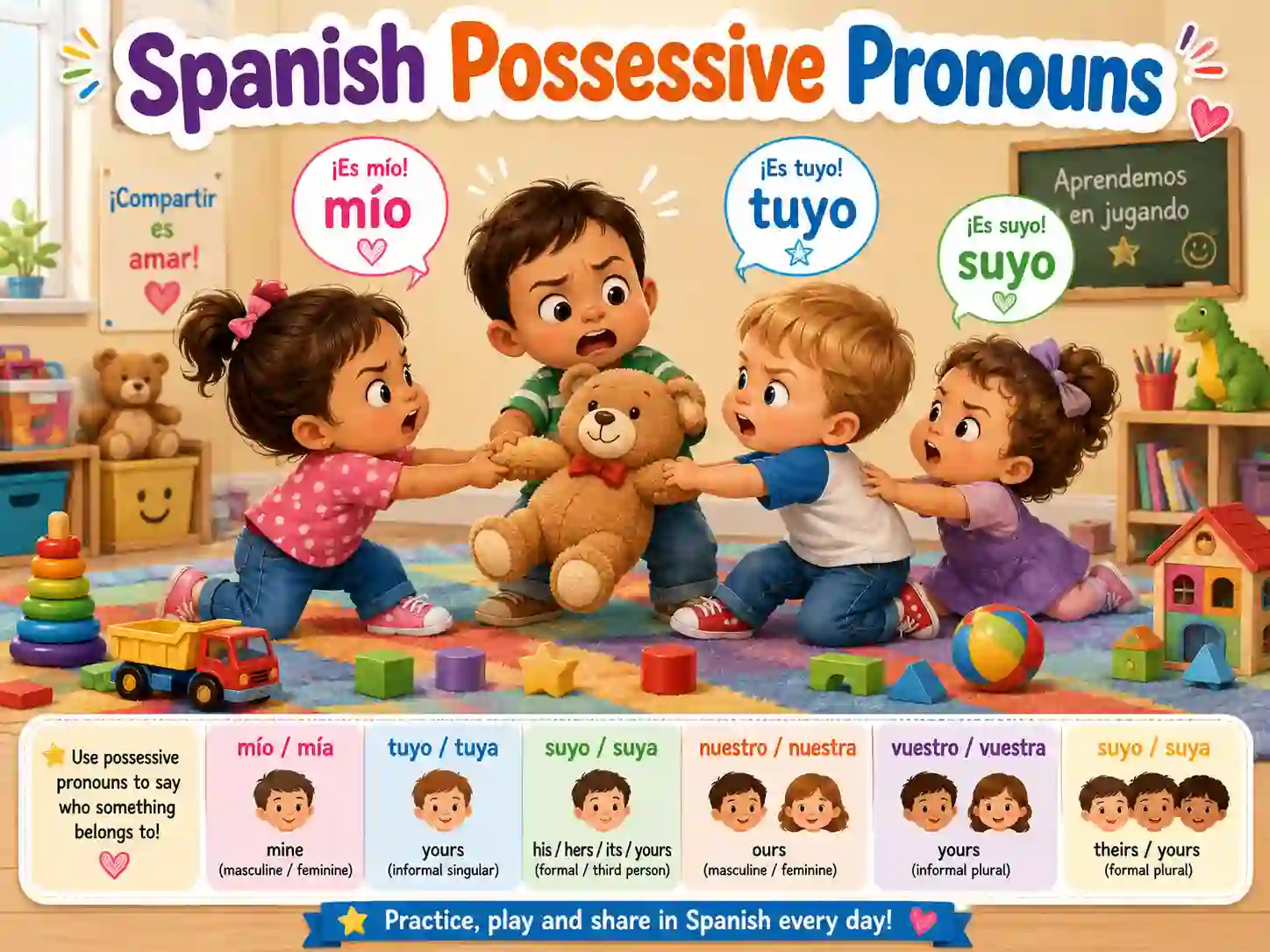
Definition
What are Spanish possessive pronouns?
Possessive pronouns replace a noun that is already known from the context and express possession, association or belonging.
Mi libro está aquí. El mío está abierto.
My book is here. Mine is open.
Mi casa es pequeña; la tuya es grande.
My house is small; yours is large.
Su proyecto está listo; el nuestro no.
Their project is ready; ours is not.
The forms mío, tuyo, suyo, nuestro and vuestro are also called strong or stressed possessives. Their exact function depends on how they appear in the sentence.
Pronoun table
Spanish possessive pronouns at a glance
| Owner | Masculine singular | Feminine singular | Masculine plural | Feminine plural | Meaning |
|---|---|---|---|---|---|
| yo | el mío | la mía | los míos | las mías | mine |
| tú | el tuyo | la tuya | los tuyos | las tuyas | yours, informal singular |
|
él, ella, usted, ellos, ellas, ustedes |
el suyo | la suya | los suyos | las suyas | his, hers, yours formal or theirs |
| nosotros / nosotras | el nuestro | la nuestra | los nuestros | las nuestras | ours |
| vosotros / vosotras | el vuestro | la vuestra | los vuestros | las vuestras | yours, informal plural in Spain |
Three possessive structures
Mi libro, el mío and el libro es mío
Spanish uses different possessive structures depending on whether the noun is stated, replaced or described after the verb ser.
| Structure | Spanish example | English meaning | Function |
|---|---|---|---|
| Possessive before a noun | mi libro | my book | Mi accompanies the noun. |
| Possessive pronoun | el mío | mine | The noun is understood and replaced. |
| Predicative possessive | El libro es mío. | The book is mine. | The strong possessive follows ser. |
| Possessive after a noun | un amigo mío | a friend of mine | The strong possessive follows the noun. |
Mi libro
Use the unstressed possessive determiner when the noun follows directly.
Esta es mi casa.
El mío
Use the article and strong possessive when the noun is understood.
La tuya es más grande.
Es mío
Use the strong possessive without an article to state who something belongs to.
El coche es nuestro.
Study the forms used before nouns on the Spanish Possessive Determiners page.
Gender and number
Agreement with the thing possessed
Possessive pronouns agree with the noun they replace. They do not agree with the gender or number of the owner.
| Possessed noun | Pronoun | Spanish example | Reason |
|---|---|---|---|
| el libro | el suyo | Este libro es el suyo. | Libro is masculine singular. |
| la mochila | la suya | Esta mochila es la suya. | Mochila is feminine singular. |
| los documentos | los suyos | Estos documentos son los suyos. | Documentos is masculine plural. |
| las llaves | las suyas | Estas llaves son las suyas. | Llaves is feminine plural. |
La casa es suya can mean that the house is his, hers, yours or theirs. Suya is feminine because casa is feminine.
Complete forms
Mío, tuyo, suyo, nuestro and vuestro
Mío, mía, míos, mías
Este cuaderno es mío.
La mía está aquí.
Tuyo, tuya, tuyos, tuyas
El tuyo está en la mesa.
Estas llaves son tuyas.
Suyo, suya, suyos, suyas
La casa es suya.
Los suyos están fuera.
Nuestro, nuestra, nuestros, nuestras
El proyecto es nuestro.
La nuestra es diferente.
Vuestro, vuestra, vuestros, vuestras
Este coche es vuestro.
Las vuestras están aquí.
Los míos and los nuestros
In some contexts, plural possessive pronouns can refer to family members, friends or people belonging to a group.
Voy a pasar el día con los míos.
Article use
El mío, la tuya and es nuestro
When a possessive pronoun replaces a noun and functions as a subject or object, it normally uses a definite article. After ser, the article is normally omitted when simply stating possession.
| Use | Spanish example | English meaning | Article rule |
|---|---|---|---|
| Subject | El mío está aquí. | Mine is here. | The article is normally required. |
| Direct object | Prefiero el tuyo. | I prefer yours. | The article is normally required. |
| Possession after ser | Este libro es mío. | This book is mine. | The article is normally omitted. |
| Identification or contrast | Este libro es el mío. | This book is the one that is mine. | The article identifies one item among alternatives. |
Ambiguous ownership
Why suyo can mean his, hers, yours or theirs
The forms suyo, suya, suyos and suyas can refer to several possible owners.
| Sentence | Possible meaning | Clearer alternative |
|---|---|---|
| El libro es suyo. | The book is his. | El libro es de él. |
| La casa es suya. | The house is hers. | La casa es de ella. |
| El coche es suyo. | The car is yours, formal. | El coche es de usted. |
| Las llaves son suyas. | The keys are theirs. | Las llaves son de ellos. |
Common clarifying forms include de él, de ella, de usted, de ellos, de ellas and de ustedes.
Regional Spanish
Vuestro in Spain and suyo in Latin America
Vuestro, vuestra, vuestros and vuestras belong to the vosotros system and are mainly used in Spain.
| Region | Informal plural subject | Possessive example | English meaning |
|---|---|---|---|
| Spain | vosotros | Este coche es vuestro. | This car is yours. |
| Most of Latin America | ustedes | Este coche es suyo. | This car is yours. |
| Spain | vosotras | Estas mochilas son vuestras. | These backpacks are yours. |
| Most of Latin America | ustedes | Estas mochilas son suyas. | These backpacks are yours. |
Mini practice
Practice Spanish possessive pronouns
Complete each exercise before opening the answer.
Exercise 1: replace the noun
- mi libro
- tu casa
- nuestros documentos
- sus llaves
Show answers
1. el mío
2. la tuya
3. los nuestros
4. las suyas
Exercise 2: choose gender and number
- La mochila es ___. — mine
- Los libros son ___. — yours
- Las ideas son ___. — ours
- El coche es ___. — theirs
Show answers
1. La mochila es mía.
2. Los libros son tuyos.
3. Las ideas son nuestras.
4. El coche es suyo.
Exercise 3: article or no article?
- ___ mío está aquí.
- Este cuaderno es ___.
- Prefiero ___ tuyo.
- La casa es ___. — ours
Show answers
1. El mío está aquí.
2. Este cuaderno es mío.
3. Prefiero el tuyo.
4. La casa es nuestra.
Connected lessons
Continue with these Spanish pronoun pages
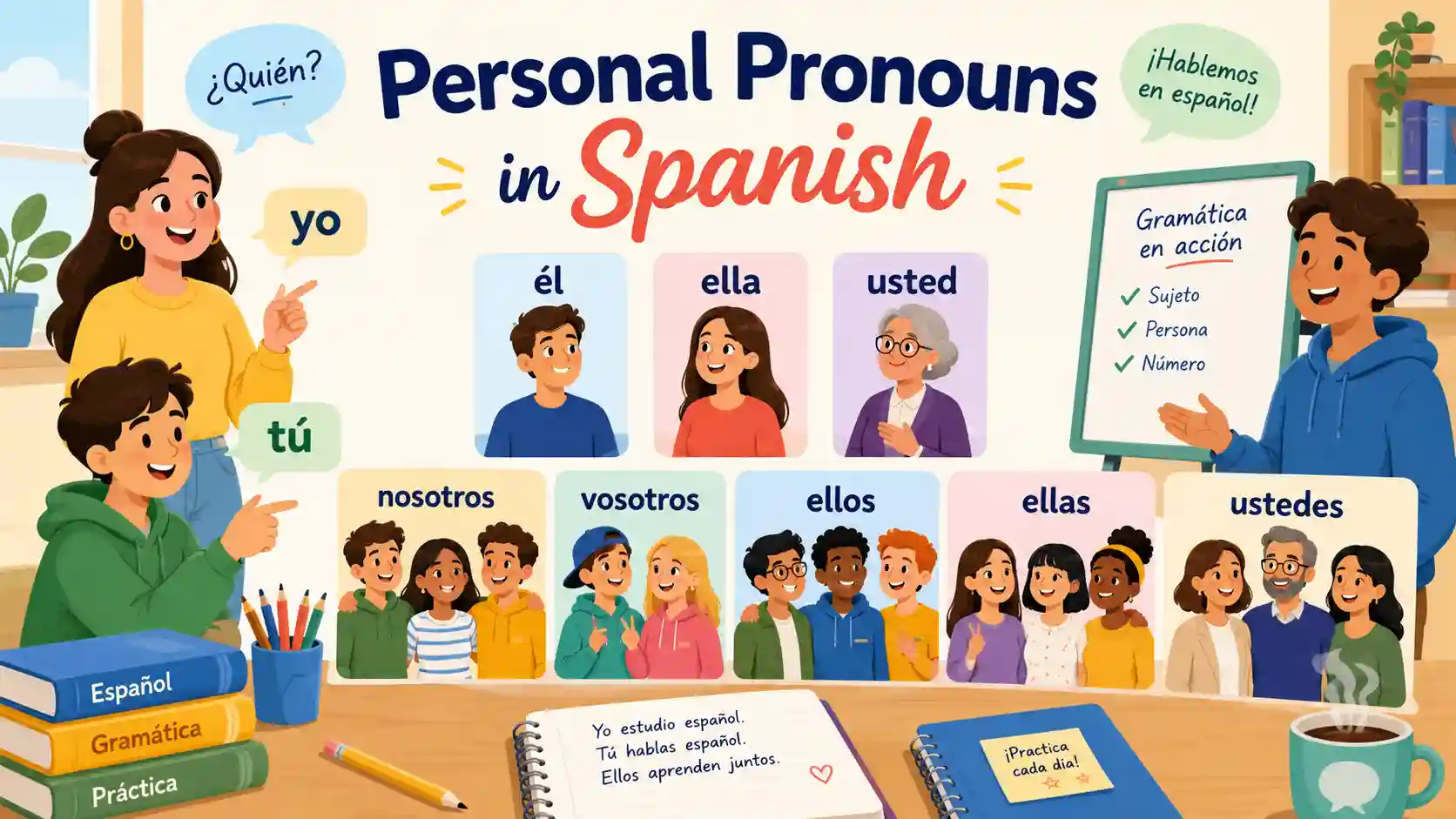
Spanish Personal Pronouns
Connect possessive forms with yo, tú, él, ella, nosotros and ellos.
Open lesson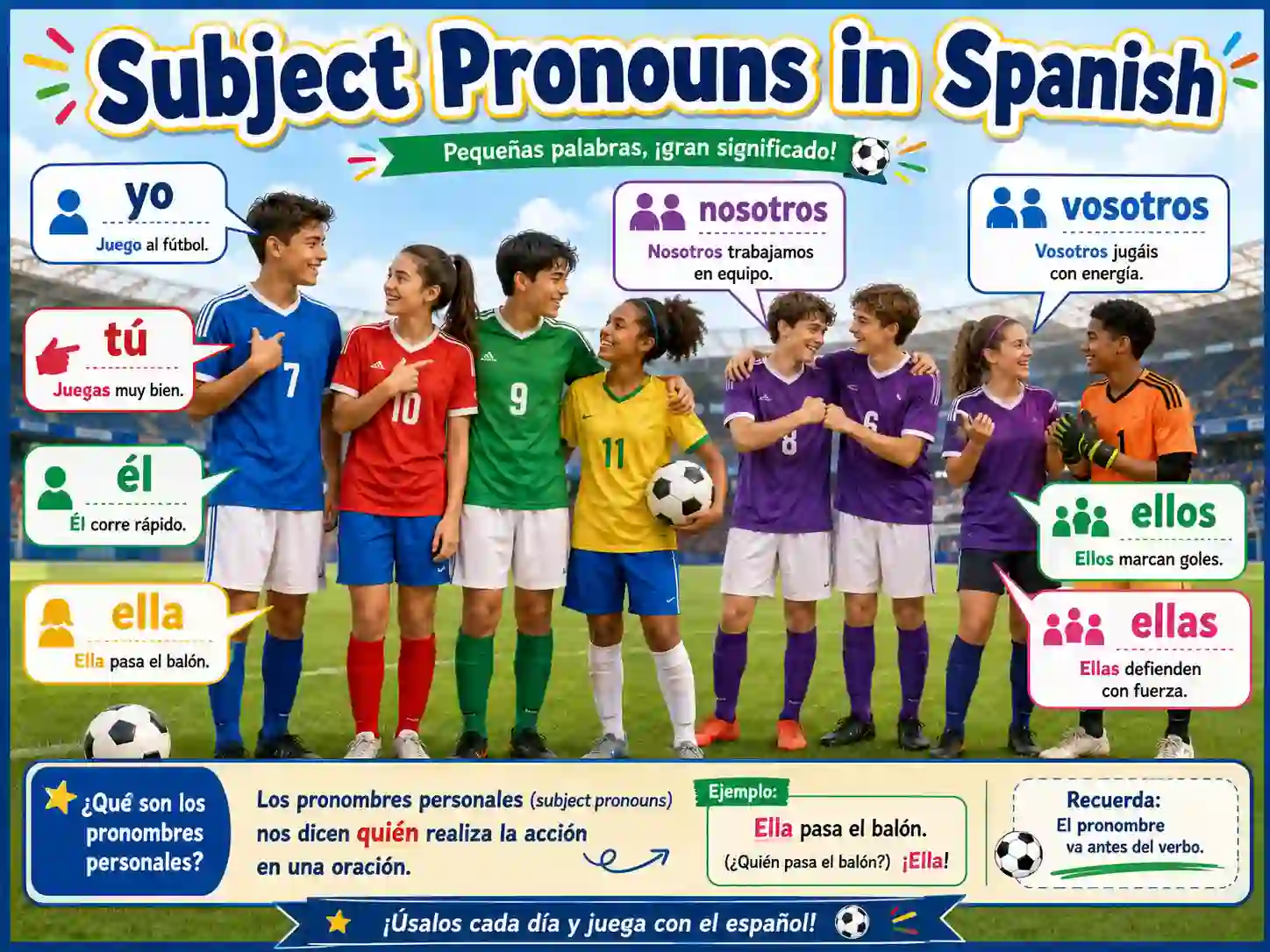
Spanish Subject Pronouns
Review the subject forms behind possessive meanings: yo → mío, tú → tuyo, nosotros → nuestro.
Open lesson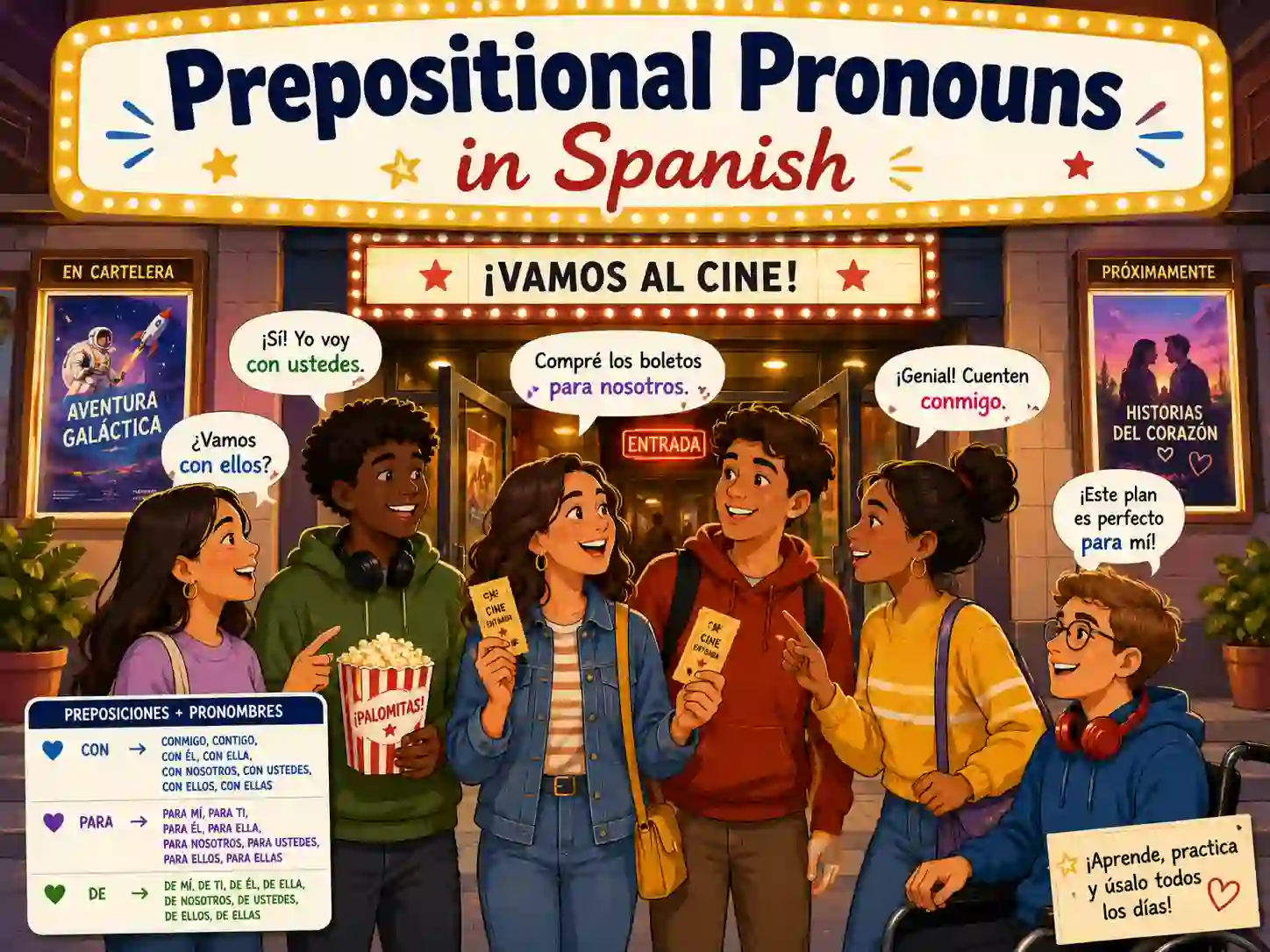
Spanish Prepositional Pronouns
Learn the forms used to clarify possession: de él, de ella, de usted and de ellos.
Open lesson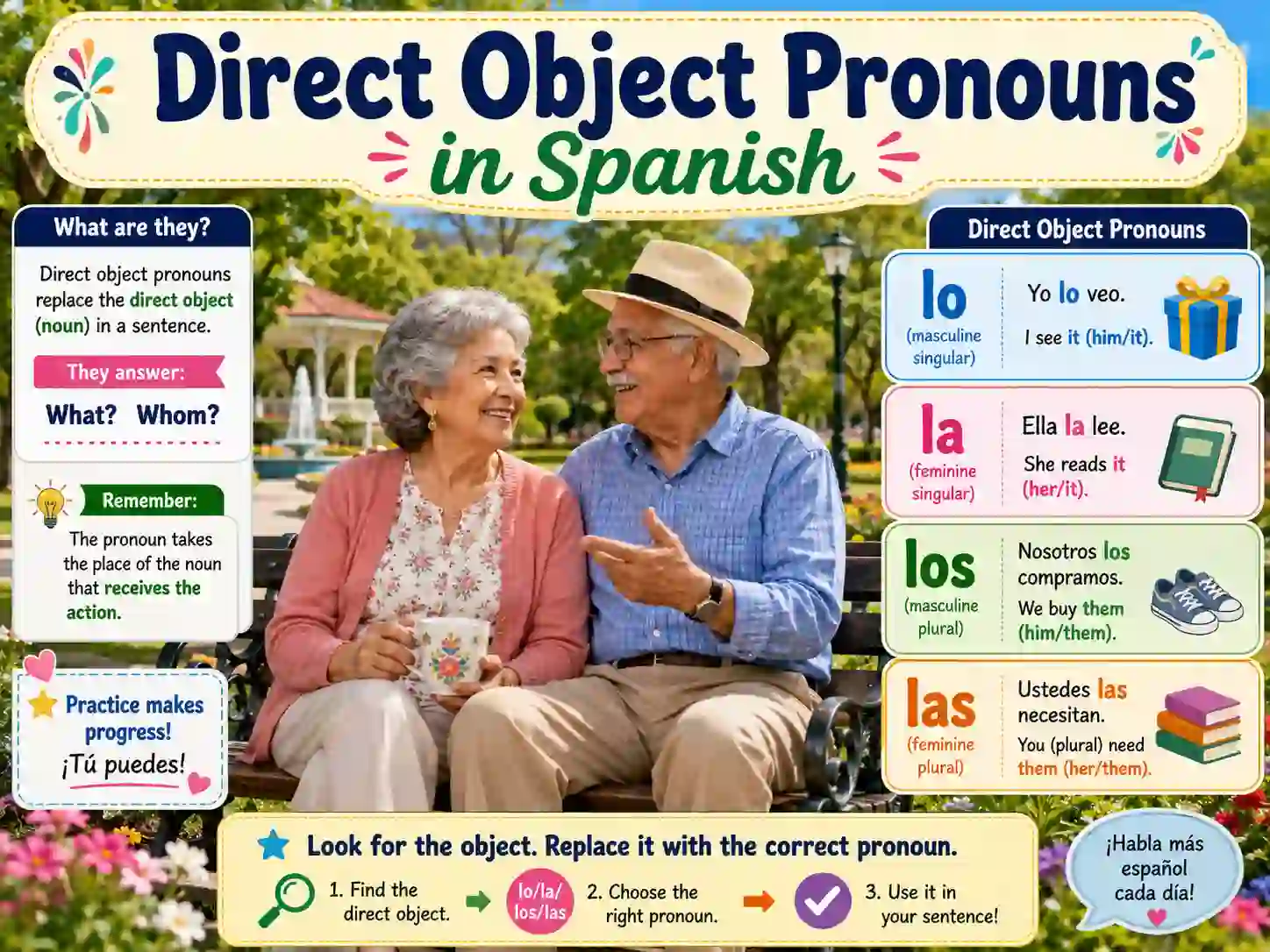
Spanish Direct Object Pronouns
Compare possessive pronouns such as el mío with object pronouns such as lo, la and los.
Open lesson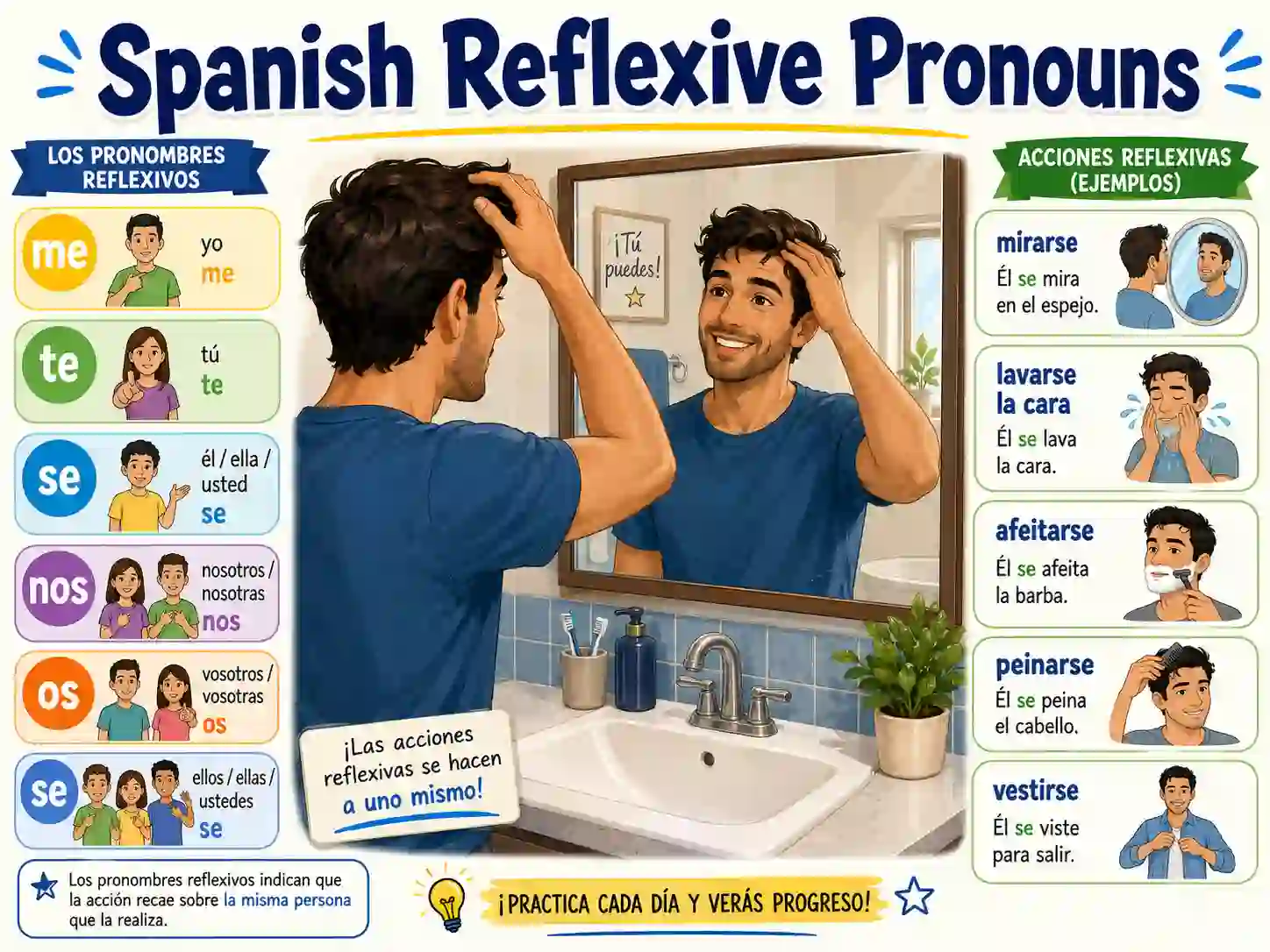
Spanish Reflexive Pronouns
Compare possession with reflexive reference: mi casa, la mía and me lavo.
Open lesson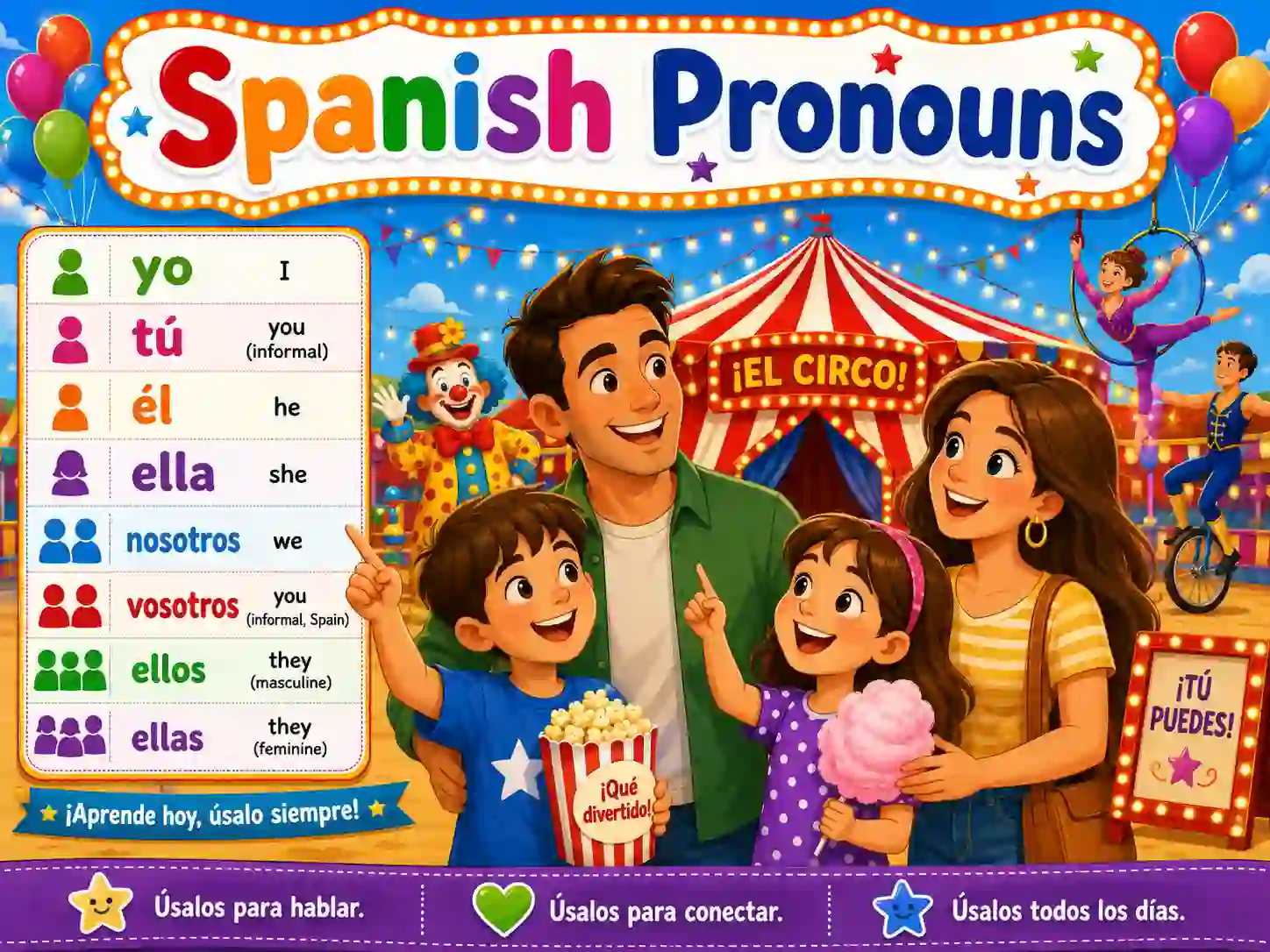
Spanish Pronouns
Return to the complete overview of subject, object, reflexive, possessive and relative pronouns.
Open overviewCommon errors
Common mistakes with Spanish possessive pronouns
- Agreeing with the owner: the pronoun agrees with the possessed noun: la casa es suya.
- Confusing mi and mío: use mi libro but el mío or es mío.
- Dropping the article when the pronoun replaces the noun: say El mío está aquí, not normally Mío está aquí.
- Adding the article automatically after ser: simple possession normally uses Este libro es mío.
- Assuming suyo has only one owner: it can mean his, hers, yours or theirs.
- Using vuestro throughout Latin America: most Latin American varieties use ustedes and suyo.
Frequently asked questions
Questions about Spanish possessive pronouns
What are Spanish possessive pronouns?
They replace a previously mentioned noun and express possession. Examples include el mío, la tuya, los nuestros and las suyas.
What is the difference between mi and mío?
Mi normally appears before a noun: mi libro. Mío appears in structures such as el mío, un amigo mío and el libro es mío.
Do possessive pronouns agree with the owner?
No. They agree with the gender and number of the noun they replace.
Do possessive pronouns need an article?
They normally use a definite article when replacing a noun: el mío, la tuya. After ser, simple possession normally has no article: El libro es mío.
Why is suyo ambiguous?
Suyo can refer to él, ella, usted, ellos, ellas or ustedes. Use de él, de ella or another clear phrase when necessary.
Is vuestro used in Latin America?
Vuestro belongs to the vosotros system and is mainly used in Spain. Most Latin American varieties use suyo forms for plural “you”.
Practice and support
Practise possessive pronouns in complete sentences
Possessive pronouns become easier when you practise gender, number, article use, comparisons and the difference between mi libro, el mío and el libro es mío.
Spanish Tutoring
Work on possessives, noun agreement, sentence correction and individual grammar problems.
Private Spanish Lessons
Practise el mío, la tuya, es nuestro and natural ownership comparisons.
Spanish Grammar
Continue with pronouns, determiners, nouns, adjectives and sentence structures.

About MundoDele
Spanish learning connected with culture and real life
MundoDele combines clear Spanish grammar explanations with private lessons, tutoring, DELE and SIELE preparation, Business Spanish, cultural context and travel experiences from the Spanish-speaking world.
The grammar guides use practical examples, connected lessons and clear sentence logic to help international learners move from individual rules to confident Spanish use.