
MundoDele Spanish Grammar
Spanish Reflexive Pronouns: Me, Te, Se, Nos and Os
Learn how Spanish reflexive pronouns connect an action to the person performing it. This guide explains me, te, se, nos and os, reflexive verbs, daily routines, pronoun position, commands and important meaning changes such as ir versus irse.
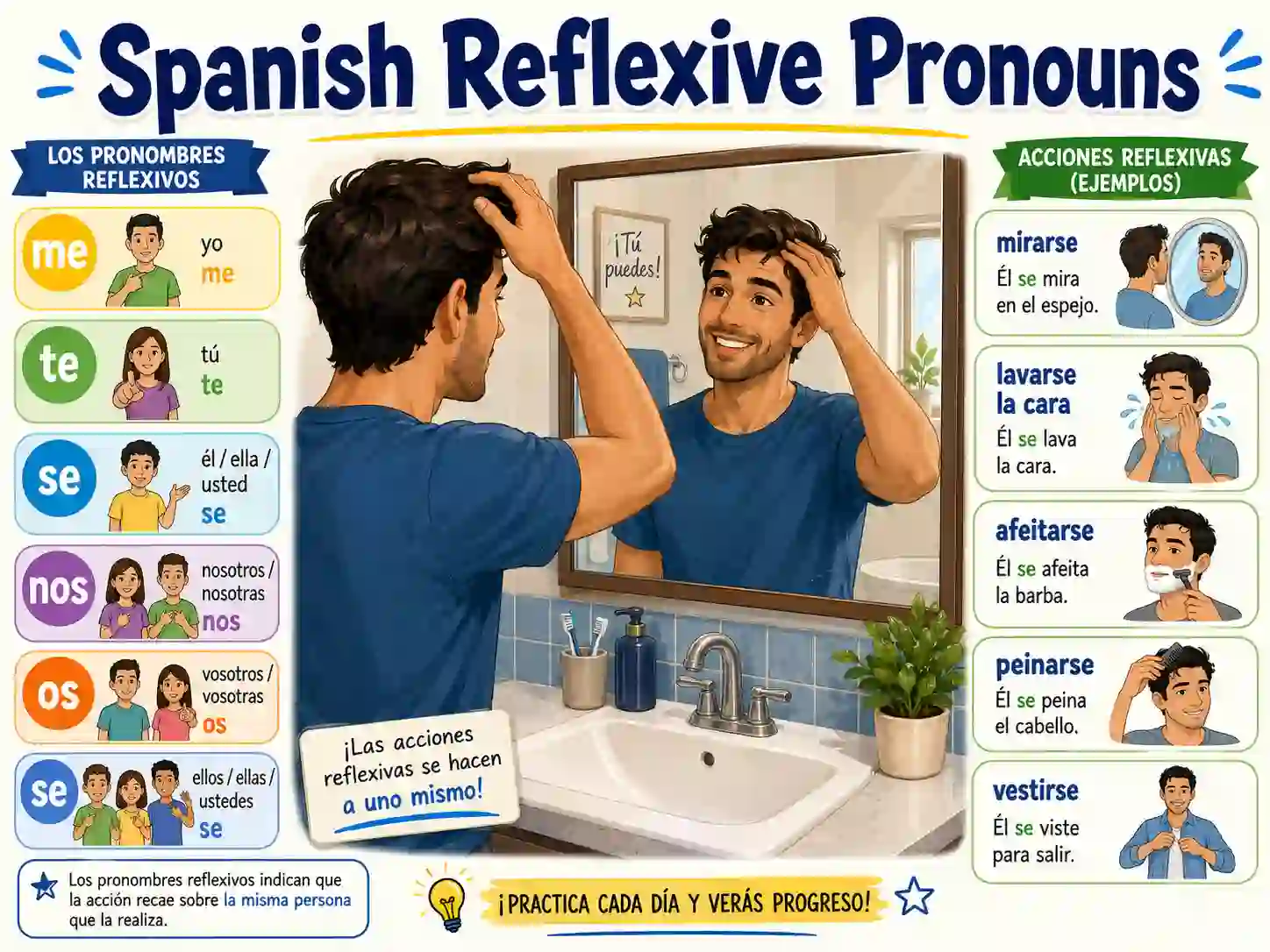
Definition
What are reflexive pronouns in Spanish?
Reflexive pronouns normally show that the subject and the object refer to the same person or group. The person performing the action also receives or experiences it.
Me lavo.
I wash myself.
Te levantas temprano.
You get up early.
Se llama Ana.
Her name is Ana.
Not every verb with a reflexive pronoun describes a literal action on the body. Some reflexive forms express a routine, a change of state or a different lexical meaning.
Pronoun table
Spanish reflexive pronouns at a glance
The reflexive pronoun must match the grammatical subject.
| Subject | Reflexive pronoun | Example with lavarse | English meaning | Usage note |
|---|---|---|---|---|
| yo | me | Me lavo. | I wash myself. | First-person singular. |
| tú | te | Te lavas. | You wash yourself. | Informal singular. |
| él / ella / usted | se | Se lava. | He, she or you washes himself, herself or yourself. | Third person or formal singular. |
| nosotros / nosotras | nos | Nos lavamos. | We wash ourselves. | First-person plural. |
| vosotros / vosotras | os | Os laváis. | You all wash yourselves. | Mainly used in Spain. |
| ellos / ellas / ustedes | se | Se lavan. | They or you all wash themselves or yourselves. | Third-person plural or ustedes. |
Verb system
Reflexive pronouns with reflexive verbs
Spanish dictionaries show reflexive verbs with -se attached to the infinitive: lavarse, levantarse, ducharse, vestirse and acostarse.
When the verb is conjugated, remove the infinitive ending, conjugate the verb and select the reflexive pronoun that matches the subject.
Start with the infinitive
levantarse
Match the pronoun
yo → me
Conjugate the verb
Me levanto.
| Infinitive | Conjugated example | English meaning |
|---|---|---|
| levantarse | Me levanto temprano. | I get up early. |
| ducharse | Te duchas por la mañana. | You shower in the morning. |
| llamarse | Se llama Ana. | Her name is Ana. |
| acostarse | Nos acostamos tarde. | We go to bed late. |
| vestirse | Se visten rápidamente. | They get dressed quickly. |
Continue with: Spanish Reflexive Verbs .
Word position
Where do reflexive pronouns go?
Reflexive pronouns follow the same basic placement rules as Spanish object pronouns.
| Verb form | Pronoun position | Spanish example | English meaning |
|---|---|---|---|
| Conjugated verb | Before the verb | Me levanto temprano. | I get up early. |
| Compound tense | Before the auxiliary | Me he levantado. | I have gotten up. |
| Infinitive | Attached or before the conjugated verb |
Voy a levantarme. Me voy a levantar. |
I am going to get up. |
| Gerund | Attached or before the conjugated verb |
Estoy lavándome. Me estoy lavando. |
I am washing myself. |
| Affirmative command | Attached | Levántate. | Get up. |
| Negative command | Before the verb | No te levantes. | Do not get up. |
Commands
Reflexive pronouns with affirmative and negative commands
Affirmative commands attach the reflexive pronoun to the end of the verb. Negative commands place it before the verb.
| Verb | Affirmative command | Negative command | English meaning |
|---|---|---|---|
| levantarse | Levántate. | No te levantes. | Get up. / Do not get up. |
| sentarse | Siéntate. | No te sientes. | Sit down. / Do not sit down. |
| prepararse | Prepárate. | No te prepares todavía. | Get ready. / Do not get ready yet. |
| irse | Vete. | No te vayas. | Leave. / Do not leave. |
Everyday Spanish
Reflexive pronouns for daily routines
Reflexive verbs are especially common when describing routines, personal care and movements during the day.
despertarse
Me despierto a las siete.
levantarse
Me levanto inmediatamente.
ducharse
Me ducho por la mañana.
vestirse
Me visto rápidamente.
prepararse
Me preparo para trabajar.
acostarse
Me acuesto a las once.
Body parts and clothing
Why Spanish says me lavo las manos
Spanish often uses a reflexive pronoun plus a definite article with body parts and clothing. English often uses a possessive adjective instead.
| Spanish example | Natural English | Structure |
|---|---|---|
| Me lavo las manos. | I wash my hands. | me + las manos |
| Te cepillas los dientes. | You brush your teeth. | te + los dientes |
| Se pone la chaqueta. | He or she puts on a jacket. | se + la chaqueta |
| Nos quitamos los zapatos. | We take off our shoes. | nos + los zapatos |
The reflexive pronoun already identifies whose body part or clothing is involved.
Meaning changes
Reflexive and non-reflexive verb meanings
Some verbs can appear with or without a reflexive pronoun. The reflexive form may indicate that the action returns to the subject, but it can also create a different meaning.
| Non-reflexive form | Reflexive form | Meaning difference |
|---|---|---|
| Lavo el coche. | Me lavo. | I wash the car. / I wash myself. |
| Duermo ocho horas. | Me duermo. | I sleep for eight hours. / I fall asleep. |
| Voy al trabajo. | Me voy. | I go to work. / I leave. |
| Llamo a mi amigo. | Me llamo Marcos. | I call my friend. / My name is Marcos. |
| Pongo el libro en la mesa. | Me pongo la chaqueta. | I put the book on the table. / I put on the jacket. |
| Quedo con Ana. | Me quedo en casa. | I meet Ana. / I stay at home. |
Plural meaning
Reflexive pronouns and reciprocal meaning
With plural subjects, nos and se can sometimes mean “each other” rather than “ourselves” or “themselves”.
| Sentence | Possible meaning | Clarifying expression |
|---|---|---|
| Nos vemos. | We see ourselves or each other. | Nos vemos el uno al otro. |
| Se ayudan. | They help themselves or each other. | Se ayudan entre sí. |
| Nos escribimos. | We write to each other. | Context normally clarifies the meaning. |
| Se conocen. | They know each other. | Se conocen mutuamente. |
Important distinction
Reflexive se and other uses of se
Se can be a reflexive pronoun, but not every occurrence of se has reflexive meaning.
| Use | Spanish example | Meaning | Reflexive? |
|---|---|---|---|
| Reflexive | Se lava. | He or she washes himself or herself. | Yes. |
| Reciprocal | Se ayudan. | They help each other. | Not strictly reflexive. |
| Impersonal | Se vive bien aquí. | People live well here. | No. |
| Passive-like | Se venden libros. | Books are sold. | No. |
| Replacement for le or les | Se lo doy. | I give it to him, her or them. | No. |
Se lava. — reflexive: he or she washes himself
or herself.
Se lo doy. — object-pronoun combination:
I give it to him, her or them.
Mini practice
Practice Spanish reflexive pronouns
Complete each exercise before opening the answer.
Exercise 1: choose the pronoun
- Yo ___ levanto temprano.
- Tú ___ duchas por la mañana.
- Ella ___ llama Marta.
- Nosotros ___ acostamos tarde.
Show answers
1. Yo me levanto temprano.
2. Tú te duchas por la mañana.
3. Ella se llama Marta.
4. Nosotros nos acostamos tarde.
Exercise 2: choose the position
- Voy a levantar temprano.
- Estoy lavando las manos.
- Levanta. — reflexive command
- No levantes. — reflexive command
Show answers
1. Voy a levantarme temprano or
Me voy a levantar temprano.
2. Estoy lavándome las manos or
Me estoy lavando las manos.
3. Levántate.
4. No te levantes.
Exercise 3: reflexive or non-reflexive?
- Lavo el coche.
- Me lavo las manos.
- Voy al centro.
- Me voy ahora.
Show answers
1. Non-reflexive: I wash the car.
2. Reflexive: I wash my hands.
3. Non-reflexive: I go downtown.
4. Reflexive or pronominal form:
I am leaving now.
Connected lessons
Continue with these Spanish pronoun pages
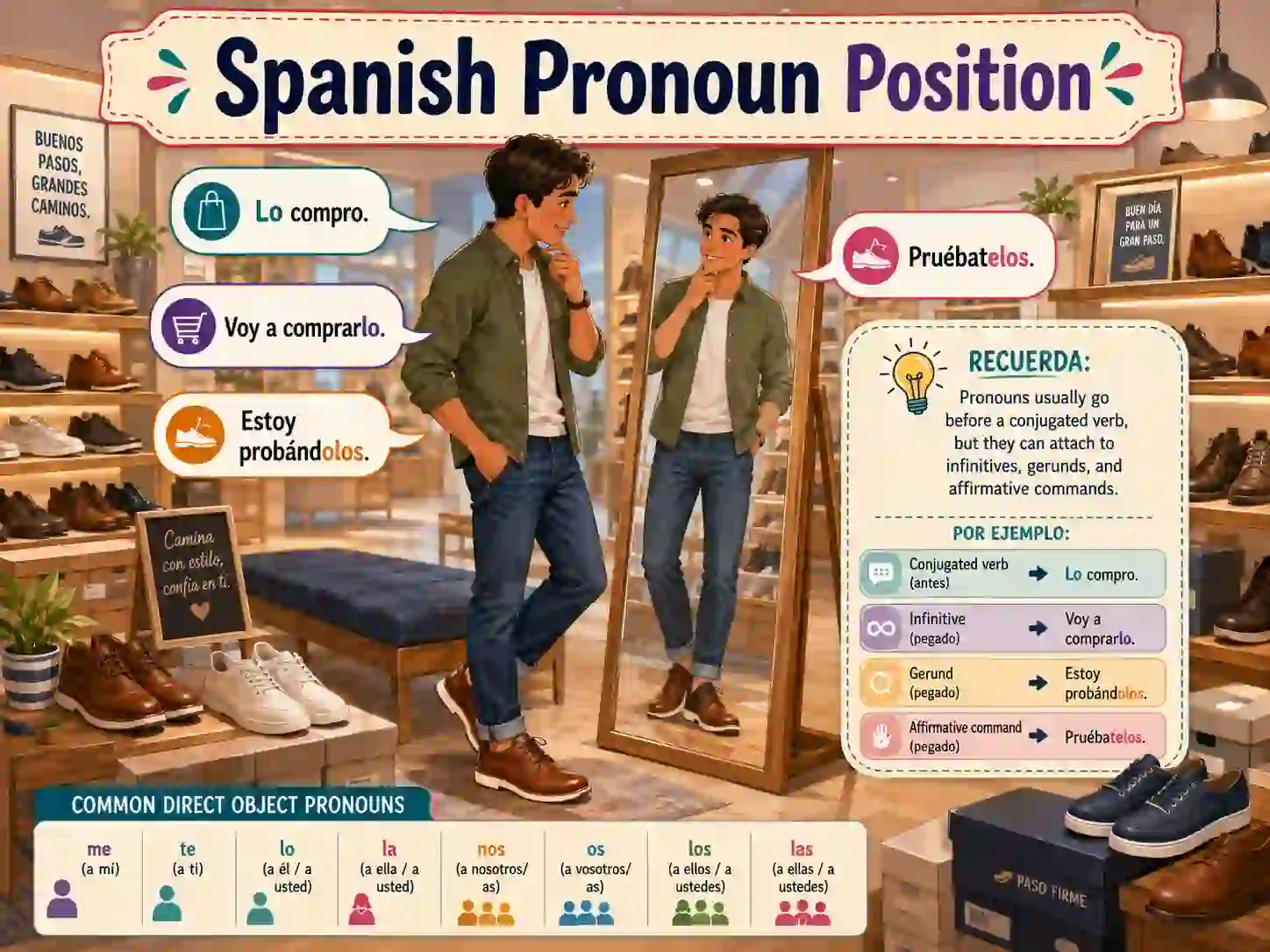
Spanish Pronoun Position
Learn where reflexive and object pronouns go with conjugated verbs, infinitives, gerunds and commands.
Open lesson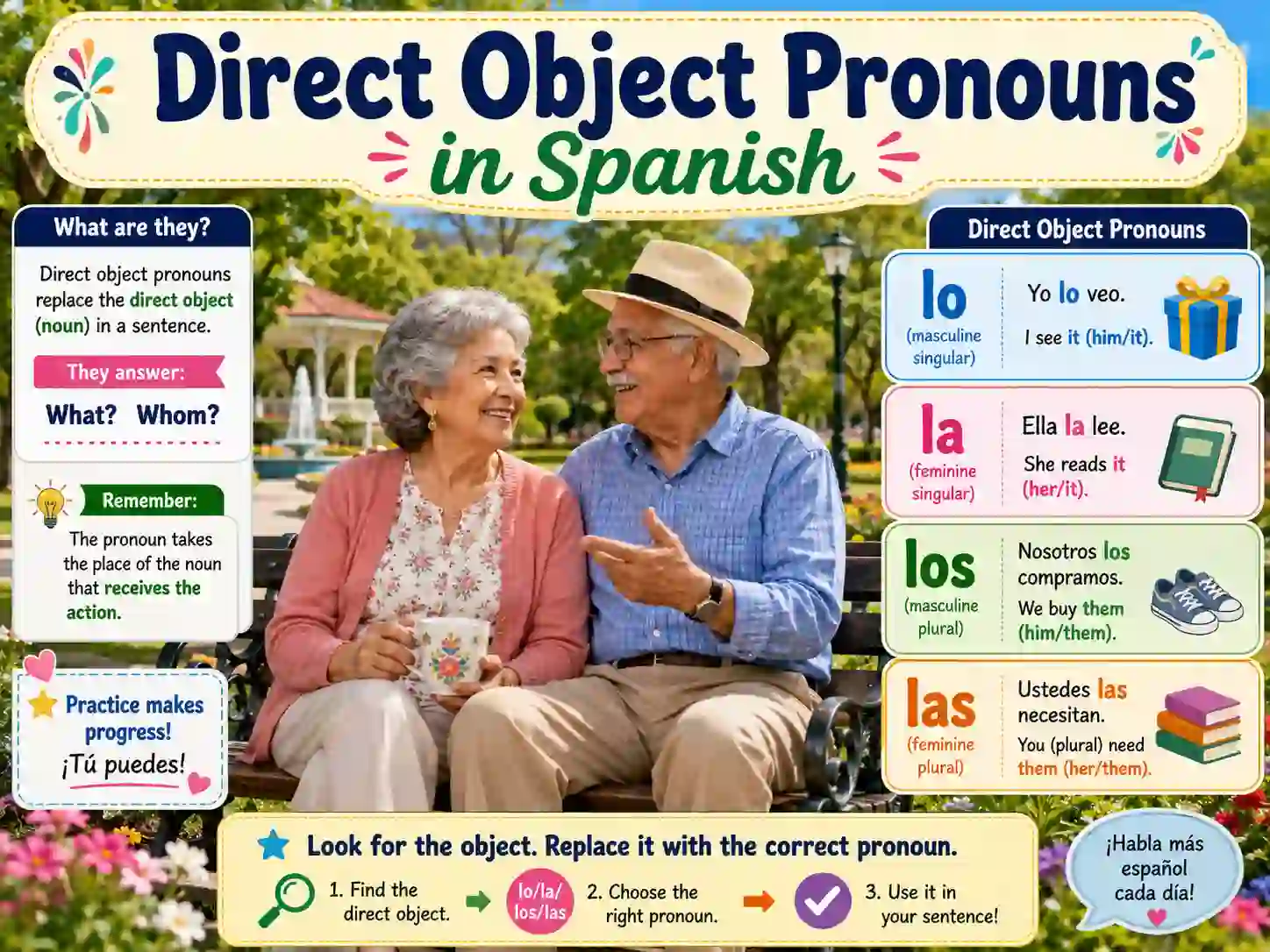
Spanish Direct Object Pronouns
Compare reflexive forms with direct-object me, te, lo, la, los and las.
Open lesson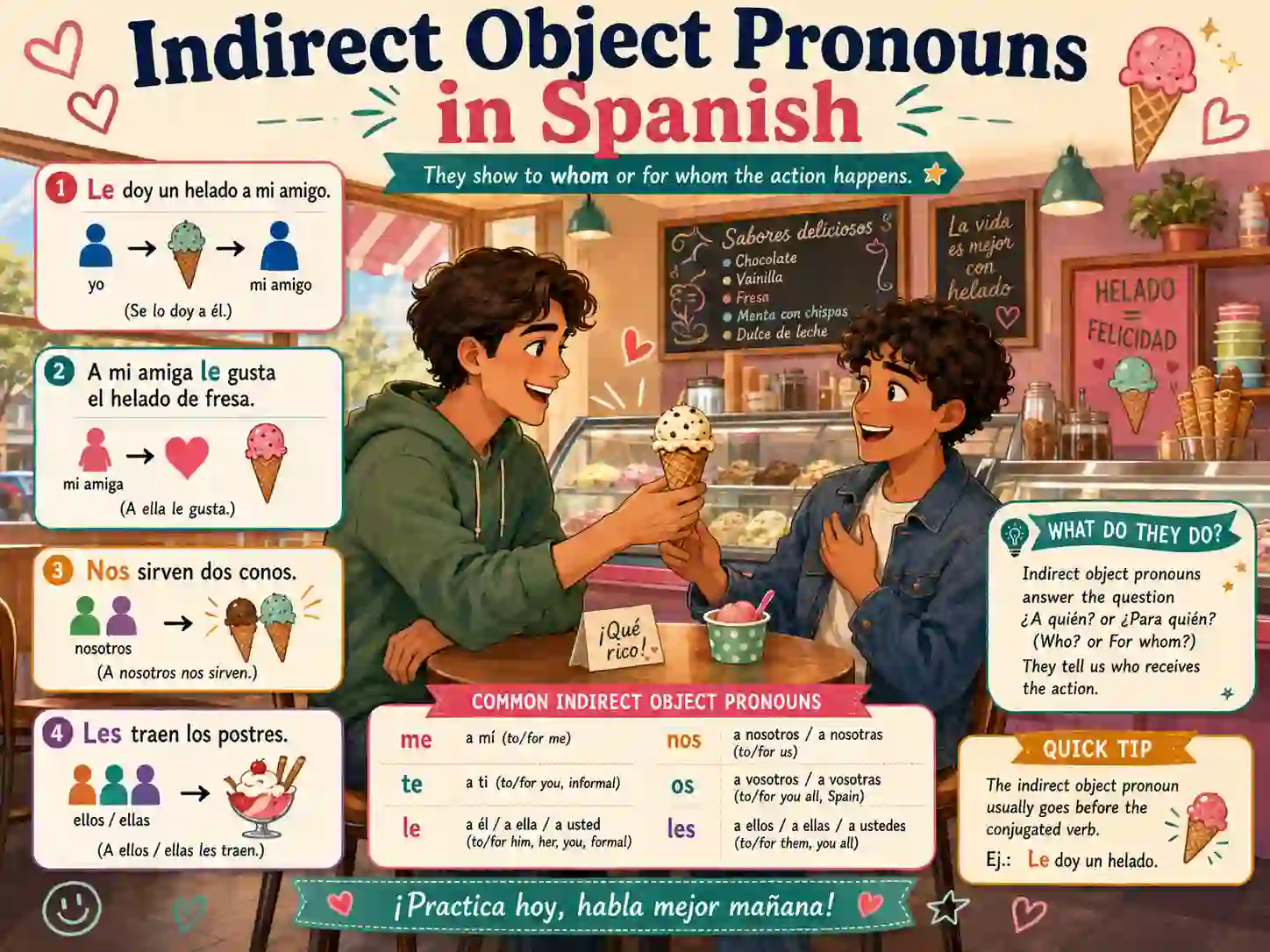
Spanish Indirect Object Pronouns
Compare reflexive pronouns with recipients, le, les and gustar-type structures.
Open lesson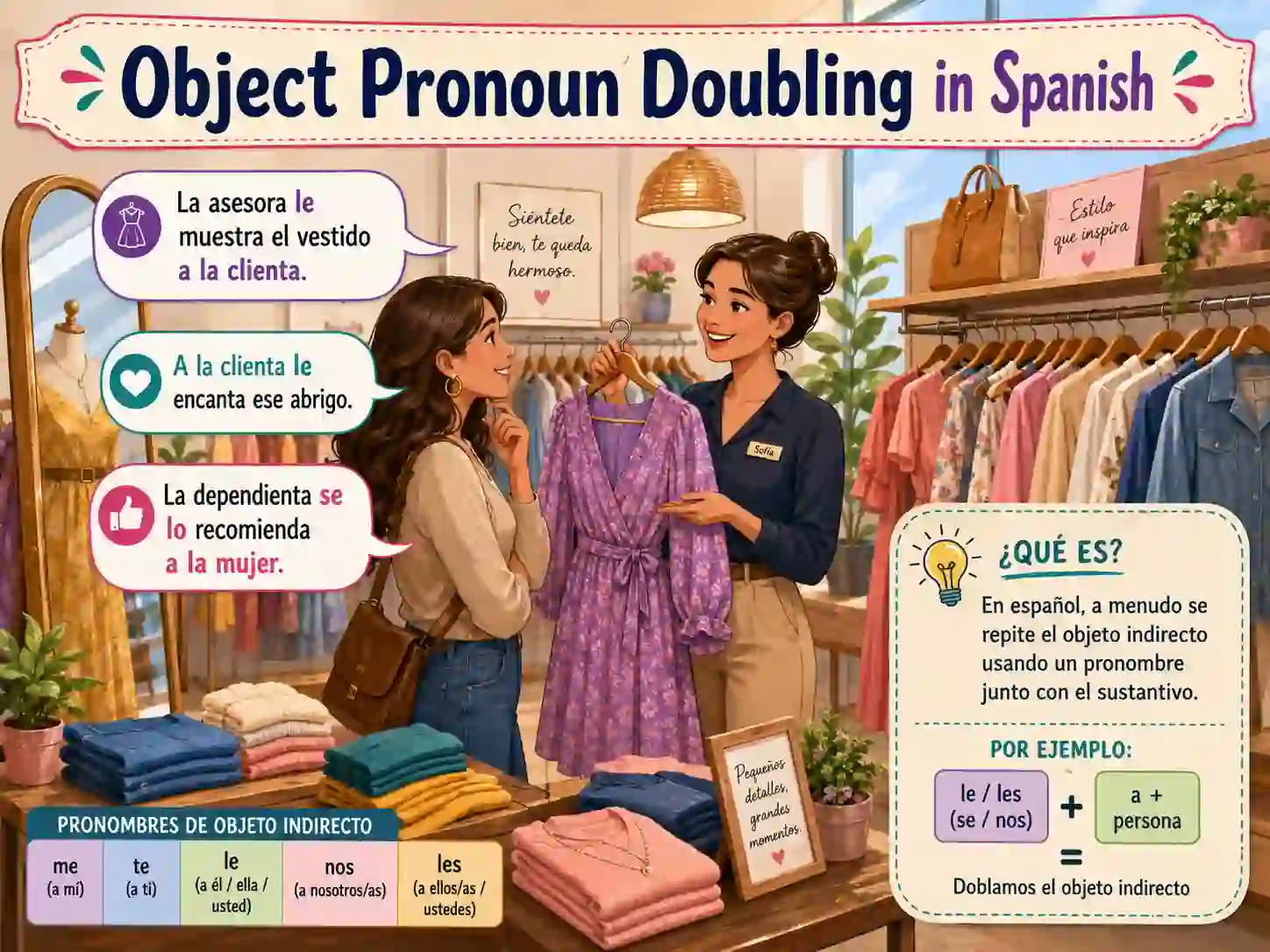
Object Pronoun Doubling
Distinguish reflexive se from se lo, indirect objects and doubled phrases.
Open lesson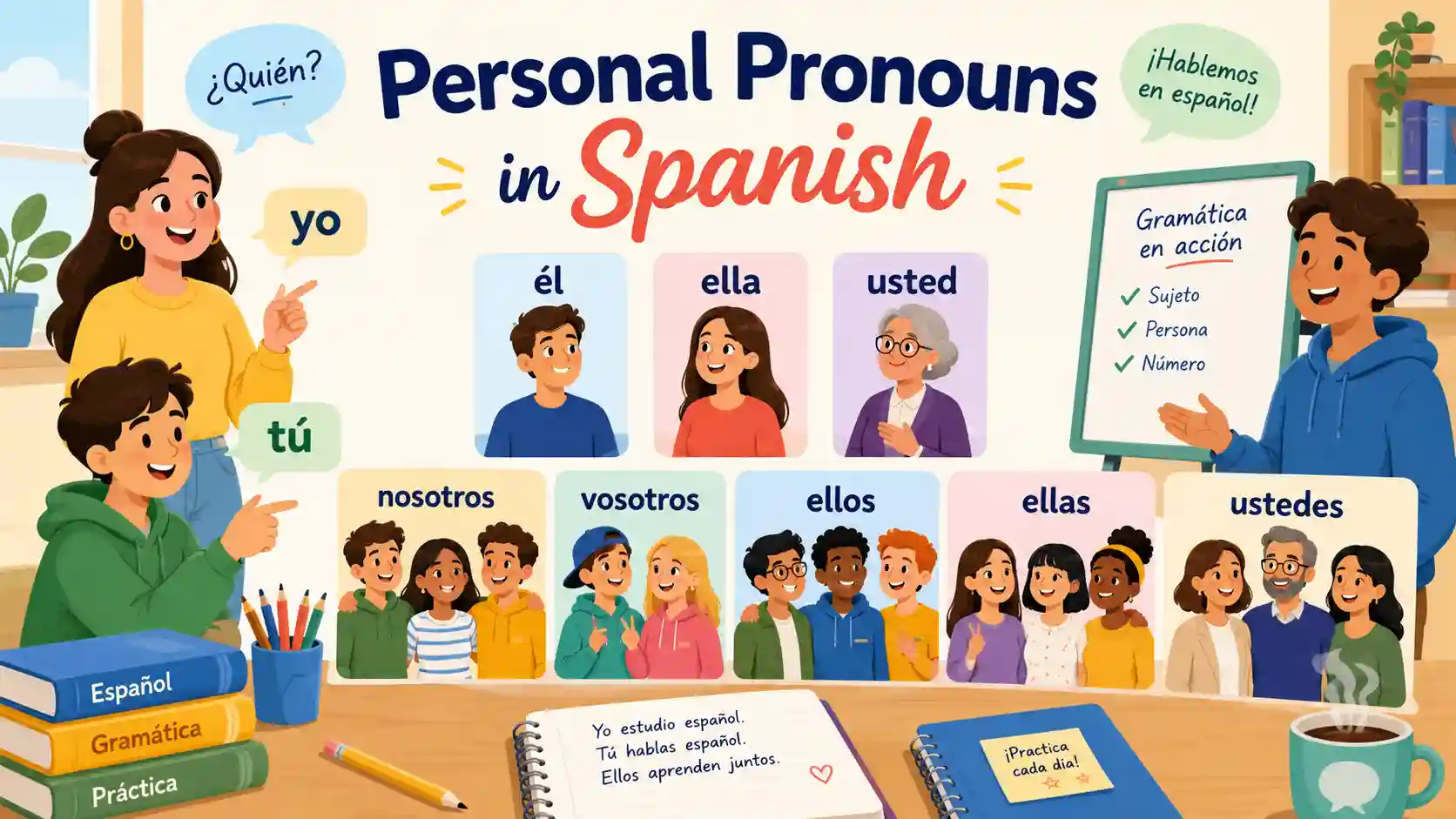
Spanish Personal Pronouns
Compare subject, object, reflexive and prepositional pronoun forms.
Open lesson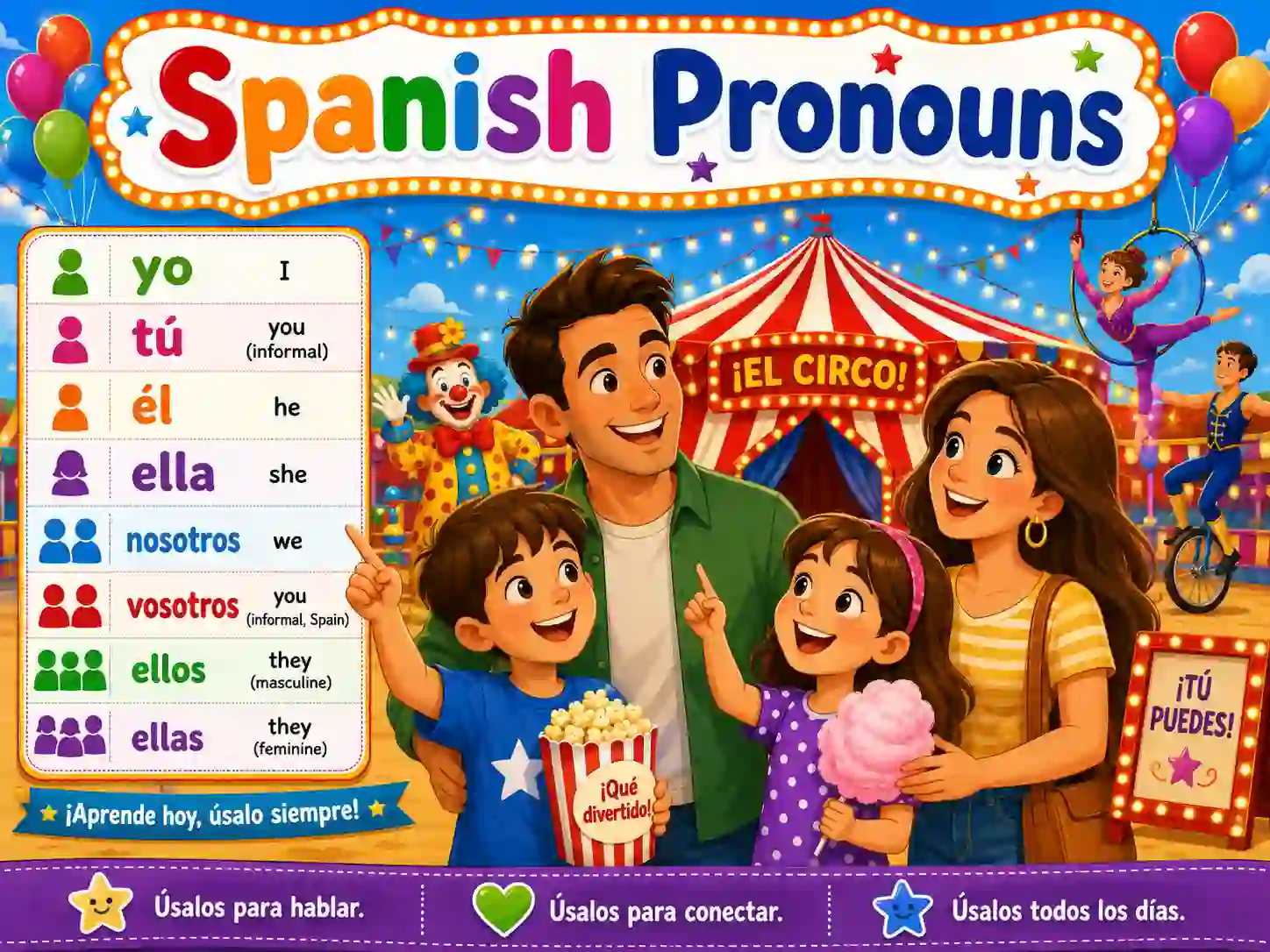
Spanish Pronouns
Return to the complete overview of subject, object, reflexive and other Spanish pronouns.
Open overviewCommon errors
Common mistakes with Spanish reflexive pronouns
- Using the wrong pronoun: say yo me levanto, tú te levantas and ella se levanta.
- Forgetting the reflexive pronoun: say Me llamo Ana, not Llamo Ana.
- Putting the pronoun after a conjugated verb: say Me levanto, not Levanto me.
- Using the wrong command structure: say Levántate but No te levantes.
- Ignoring meaning changes: ir means “to go”, while irse normally means “to leave”.
- Overusing possessive adjectives with body parts: Spanish normally says Me lavo las manos.
- Assuming every se is reflexive: Se lo doy is not a reflexive structure.
Frequently asked questions
Questions about Spanish reflexive pronouns
What are Spanish reflexive pronouns?
They are me, te, se, nos, os and se. They normally show that the subject performs an action on itself.
Where do reflexive pronouns go?
They normally go before a conjugated verb. They attach to infinitives, gerunds and affirmative commands.
What is the difference between lavar and lavarse?
Lavar means to wash another person or thing. Lavarse means to wash oneself or part of one’s own body.
Why does Spanish say me lavo las manos?
The reflexive pronoun me identifies whose hands are involved, so Spanish normally uses the definite article las rather than a possessive adjective.
Does se always mean himself or herself?
No. Se can be reflexive, reciprocal, impersonal, passive-like or a replacement for le and les before a direct-object pronoun.
What is the difference between ir and irse?
Ir normally means to go to a destination. Irse normally means to leave or go away.
Practice and support
Practise reflexive pronouns in complete sentences
Reflexive pronouns become easier when you practise daily routines, pronoun position, commands, body parts and meaning changes in real Spanish sentences.
Spanish Tutoring
Work on reflexive pronouns, homework, sentence correction and individual grammar problems.
Private Spanish Lessons
Practise me levanto, quiero levantarme, levántate and natural daily routines.
Spanish Grammar
Continue with verbs, tenses, pronouns, commands and sentence structures.

About MundoDele
Spanish learning connected with culture and real life
MundoDele combines clear Spanish grammar explanations with private lessons, tutoring, DELE and SIELE preparation, Business Spanish, cultural context and travel experiences from the Spanish-speaking world.
The grammar guides use practical examples, connected lessons and clear sentence logic to help international learners move from individual rules to confident Spanish use.