
Learn Spanish Adjectives: Agreement, Position, Ser/Estar & More
Learn how Spanish adjectives describe people, places and things — with gender and number agreement, position before or after the noun, ser/estar meaning changes, intensifiers and adverbial uses.
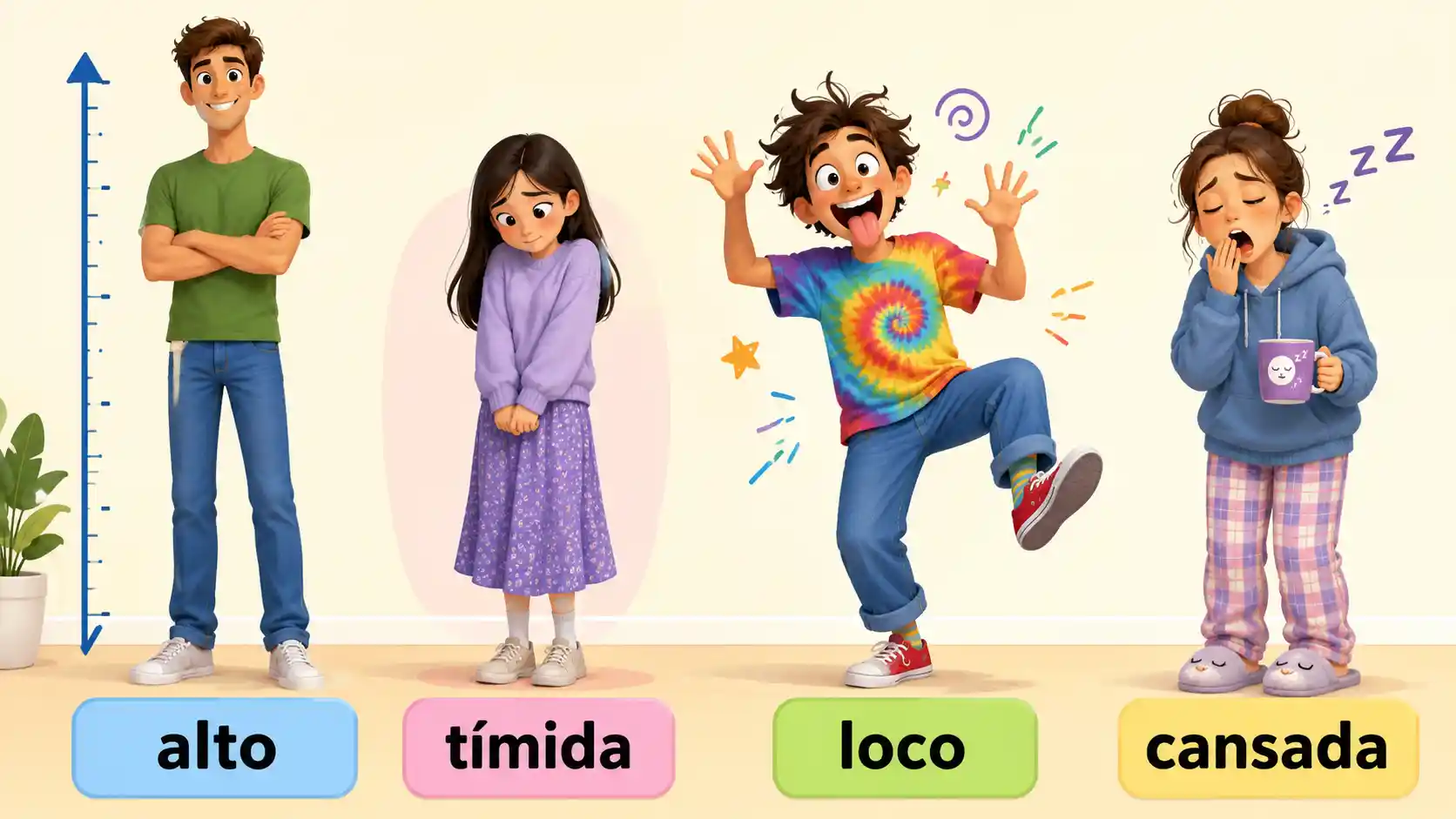
Why learn Spanish adjectives with MundoDele?
MundoDele teaches adjectives as meaning tools. You learn how Spanish speakers describe objectively, add emotion, change meaning through word order, choose between ser and estar, and adjust tone with intensifiers.
How to use this Spanish adjectives section
Start with the general adjective system, then move into position, meaning changes and special uses. This order helps you understand adjectives as part of real sentences, not as isolated vocabulary.
Learn how adjectives change with masculine, feminine, singular and plural nouns.
Understand why adjectives often come after the noun and when they come before it.
Use ser/estar, intensifiers and adverbial forms to describe more naturally.
Core rules for Spanish adjectives
Agreement
Most adjectives agree with the noun in gender and number.
un coche rojo · una casa roja · unos coches rojos
Position
Many adjectives come after the noun, especially concrete descriptions.
una camisa azul · un problema económico
Meaning
Some adjectives change meaning depending on position or verb choice.
un viejo amigo · estar listo · ser listo
Spanish adjectives topics
Position of Spanish Adjectives
Learn when adjectives come before or after the noun and how position changes meaning.
Ser or Estar with Adjectives
Understand identity, state, condition, result and meaning changes with adjectives.
Adjectives as Adverbs
See how expressions such as hablar claro and trabajar duro work.
Spanish Intensifiers
Use muy, tan, demasiado, bastante, un poco and súper.
Where to go next after Spanish adjectives
After the adjective section, continue with comparison, superlatives and the noun rules that support adjective agreement.
Want personal guidance?
If adjective agreement, position or ser/estar choices feel confusing, individual guidance can help you use Spanish descriptions naturally in speaking and writing.
FAQ: Spanish adjectives
Do Spanish adjectives agree with nouns?
Yes. Most Spanish adjectives agree with the noun in gender and number, for example una casa bonita and unas casas bonitas.
Do Spanish adjectives go before or after the noun?
Many Spanish adjectives come after the noun, especially concrete descriptions such as color, nationality, shape or category.
Can adjective position change meaning?
Yes. For example, un viejo amigo means an old-time friend, while un amigo viejo means an elderly friend.
Why do ser and estar matter with adjectives?
Ser often describes identity or character, while estar often describes state, condition, result or current impression.
What should I learn after Spanish adjectives?
After adjectives, continue with comparatives, superlatives, noun gender, noun plural and adverbs.

MundoDele – Spanish learning for education, work and intercultural understanding
MundoDele connects online Spanish courses, DELE preparation, Business Spanish and cultural context into a personal Spanish learning platform.
Travel and culture content help you understand Spanish not as abstract grammar, but as language used in real situations, conversations and written communication.