
MundoDele Spanish Grammar
Spanish Pronoun Position: Before Verbs, Infinitives and Commands
Learn where Spanish object and reflexive pronouns go in a sentence. This guide explains pronoun position before conjugated verbs, with compound tenses, attached to infinitives and gerunds, and with affirmative and negative commands.
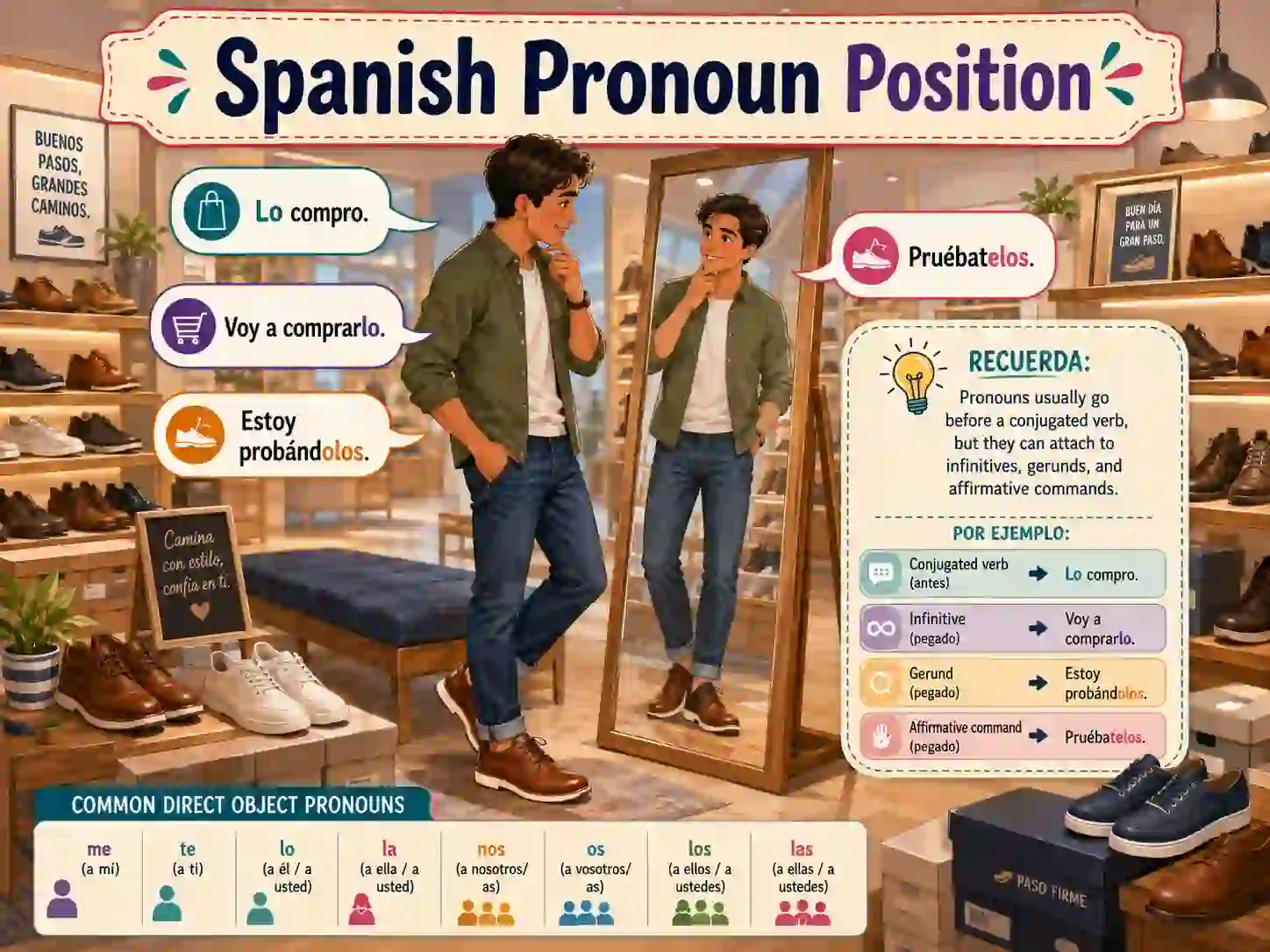
Basic placement rule
The core rule: pronouns go before or attach
Spanish object and reflexive pronouns are short grammatical forms that stay closely connected to the verb. Their position depends on whether the verb is conjugated, an infinitive, a gerund or a command.
Lo veo.
Le escribo.
Me levanto.
verlo
escribiéndole
levantarme
Dímelo.
No me lo digas.
Position table
Spanish pronoun position at a glance
| Verb form | Pronoun position | Spanish example | English meaning | Main rule |
|---|---|---|---|---|
| Conjugated verb | Before the verb | Lo veo. | I see it or him. | Normal position with one conjugated verb. |
| Compound tense | Before the auxiliary | Lo he visto. | I have seen it or him. | Place the pronoun before haber. |
| Infinitive | Attached or before the conjugated verb | Quiero verlo. / Lo quiero ver. | I want to see it. | Both positions are possible in many verb phrases. |
| Gerund | Attached or before the conjugated verb | Estoy viéndolo. / Lo estoy viendo. | I am seeing it. | The attached form often requires an accent. |
| Affirmative command | Attached | Dímelo. | Tell it to me. | Pronouns attach to the command. |
| Negative command | Before the verb | No me lo digas. | Do not tell it to me. | Pronouns do not attach. |
Conjugated verbs
Pronouns before conjugated verbs
With a simple conjugated verb, the object or reflexive pronoun normally appears immediately before the verb.
| Pronoun type | Spanish example | English meaning | Pronoun |
|---|---|---|---|
| Direct object | Lo veo. | I see it or him. | lo |
| Direct object | La conozco. | I know her. | la |
| Indirect object | Le escribo. | I write to him or her. | le |
| Reflexive | Me levanto. | I get up. | me |
| Two pronouns | Me lo dice. | He or she tells it to me. | me lo |
Correct: Lo veo.
Incorrect: Veo lo.
Compound tenses
Pronouns before the auxiliary haber
In compound tenses, the pronoun goes before the conjugated form of haber. It does not appear between the auxiliary and the past participle.
| Correct | Incorrect | English meaning |
|---|---|---|
| Lo he visto. | He lo visto. | I have seen it or him. |
| La hemos comprado. | Hemos la comprado. | We have bought it. |
| Me he levantado. | He me levantado. | I have gotten up. |
| Se lo he dicho. | He se lo dicho. | I have told it to him or her. |
Infinitives
Pronouns with Spanish infinitives
Pronouns can attach directly to an infinitive. In many verb phrases, they can alternatively appear before the conjugated verb.
| Before the conjugated verb | Attached to the infinitive | English meaning |
|---|---|---|
| Lo quiero ver. | Quiero verlo. | I want to see it or him. |
| Le voy a escribir. | Voy a escribirle. | I am going to write to him or her. |
| Me quiero levantar. | Quiero levantarme. | I want to get up. |
| Se lo voy a dar. | Voy a dárselo. | I am going to give it to him or her. |
Gerunds
Pronouns with Spanish gerunds
A pronoun can attach to a gerund or appear before the conjugated verb. Attached forms often need an accent mark to preserve the original stress.
| Before the conjugated verb | Attached to the gerund | English meaning | Accent |
|---|---|---|---|
| Lo estoy viendo. | Estoy viéndolo. | I am seeing it. | viéndolo |
| Le estoy escribiendo. | Estoy escribiéndole. | I am writing to him or her. | escribiéndole |
| Me estoy levantando. | Estoy levantándome. | I am getting up. | levantándome |
| Se lo estoy diciendo. | Estoy diciéndoselo. | I am telling it to him or her. | diciéndoselo |
Commands
Pronoun position with affirmative and negative commands
Affirmative commands attach pronouns to the end of the verb. Negative commands place the pronouns before the verb.
| Verb and pronouns | Affirmative command | Negative command | English meaning |
|---|---|---|---|
| decir + me + lo | Dímelo. | No me lo digas. | Tell it to me. / Do not tell it to me. |
| dar + se + lo | Dáselo. | No se lo des. | Give it to him or her. / Do not give it. |
| levantar + te | Levántate. | No te levantes. | Get up. / Do not get up. |
| comprar + la | Cómprala. | No la compres. | Buy it. / Do not buy it. |
Two pronouns
Position and order with two pronouns
When two pronouns appear together, the indirect-object or reflexive pronoun comes first. The direct-object pronoun comes second.
me lo
Me lo explica.
te la
Te la compro.
se lo
Se lo doy.
| Pronoun order | Spanish example | English meaning |
|---|---|---|
| me + lo | Me lo dice. | He or she tells it to me. |
| te + la | Te la compro. | I buy it for you. |
| nos + los | Nos los mandan. | They send them to us. |
| se + las | Se las explico. | I explain them to him, her or them. |
Le and les become se
Why Spanish uses se lo instead of le lo
Spanish changes le and les to se before lo, la, los and las.
| Underlying combination | Correct form | Incorrect form |
|---|---|---|
| le + lo | Se lo doy. | Le lo doy. |
| le + la | Se la mando. | Le la mando. |
| les + los | Se los explico. | Les los explico. |
| les + las | Se las doy. | Les las doy. |
It replaces le or les before a third-person direct-object pronoun.
Negation
Pronoun position in negative sentences
In a normal negative sentence, no comes first, followed by the pronoun and then the conjugated verb.
| Affirmative | Negative | Pattern |
|---|---|---|
| Lo veo. | No lo veo. | no + pronoun + verb |
| Le escribo. | No le escribo. | Pronoun remains before the verb. |
| Me levanto. | No me levanto. | Reflexive pronoun before the verb. |
| Se lo digo. | No se lo digo. | The two pronouns remain together. |
Written accents
Accent marks with attached pronouns
Attached pronouns can change the written stress pattern. Spanish often adds an accent mark to preserve the original pronunciation.
| Base form | Attached form | English meaning |
|---|---|---|
| viendo | viéndolo | seeing it or him |
| lavando | lavándome | washing myself |
| di | dímelo | tell it to me |
| compra | cómpralo | buy it |
Mini practice
Practice Spanish pronoun position
Answer each exercise before opening the solution.
Exercise 1: place the pronoun
- Veo el libro.
- Escribo a Ana.
- Me levanto temprano.
- Digo la verdad a Luis.
Show answers
1. Lo veo.
2. Le escribo.
3. Me levanto temprano.
4. Se la digo.
Exercise 2: use the infinitive or gerund
- Quiero ver el libro.
- Voy a escribir a Ana.
- Estoy leyendo la carta.
- Estoy explicando la regla a ellos.
Show answers
1. Quiero verlo or Lo quiero ver.
2. Voy a escribirle or Le voy a escribir.
3. Estoy leyéndola or La estoy leyendo.
4. Estoy explicándosela or Se la estoy explicando.
Exercise 3: commands
- Decir + me + lo — affirmative
- Decir + me + lo — negative
- Comprar + la — affirmative
- Comprar + la — negative
Show answers
1. Dímelo.
2. No me lo digas.
3. Cómprala.
4. No la compres.
Connected lessons
Continue with these Spanish pronoun pages
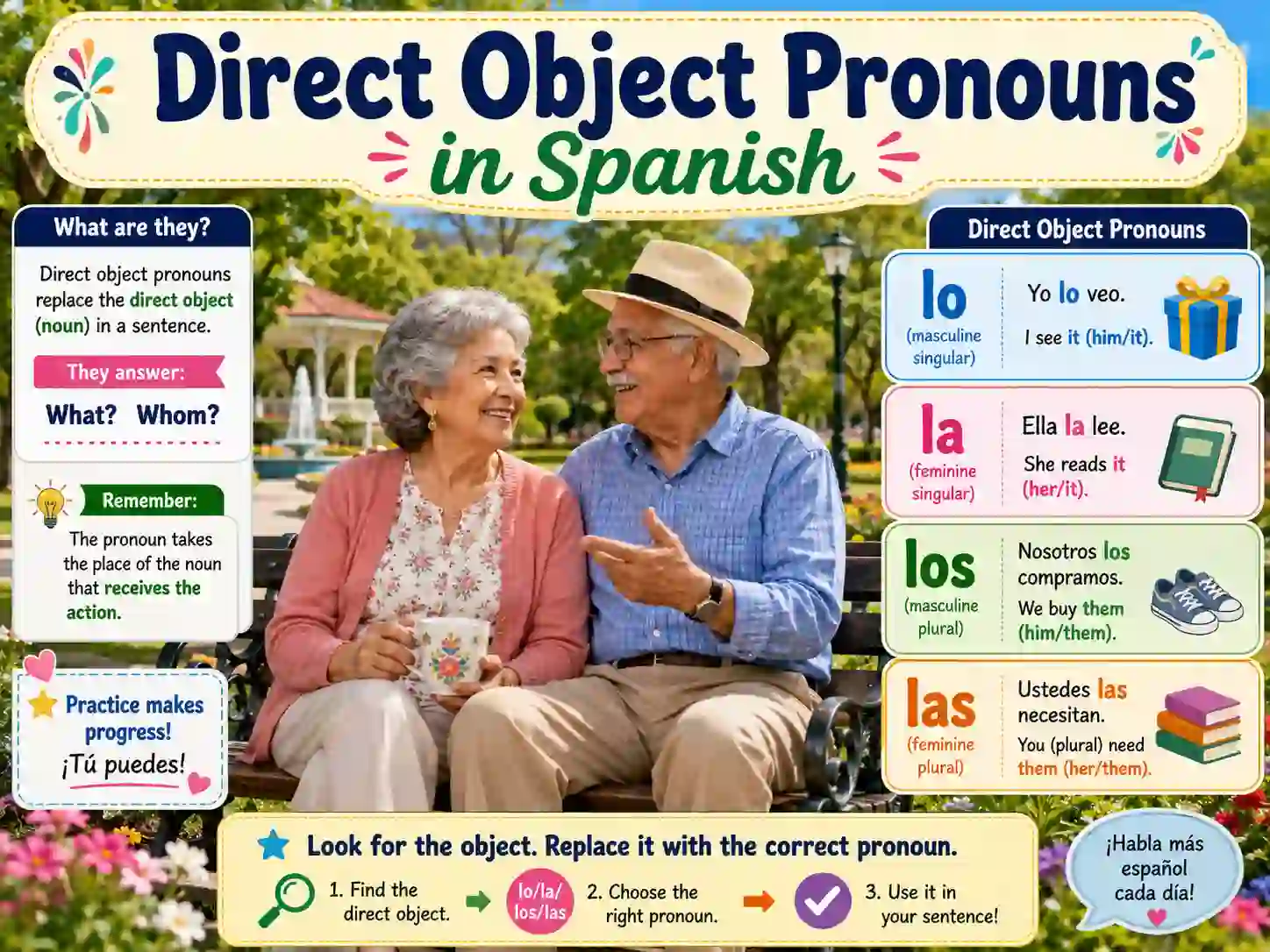
Spanish Direct Object Pronouns
Learn me, te, lo, la, nos, os, los and las.
Open lesson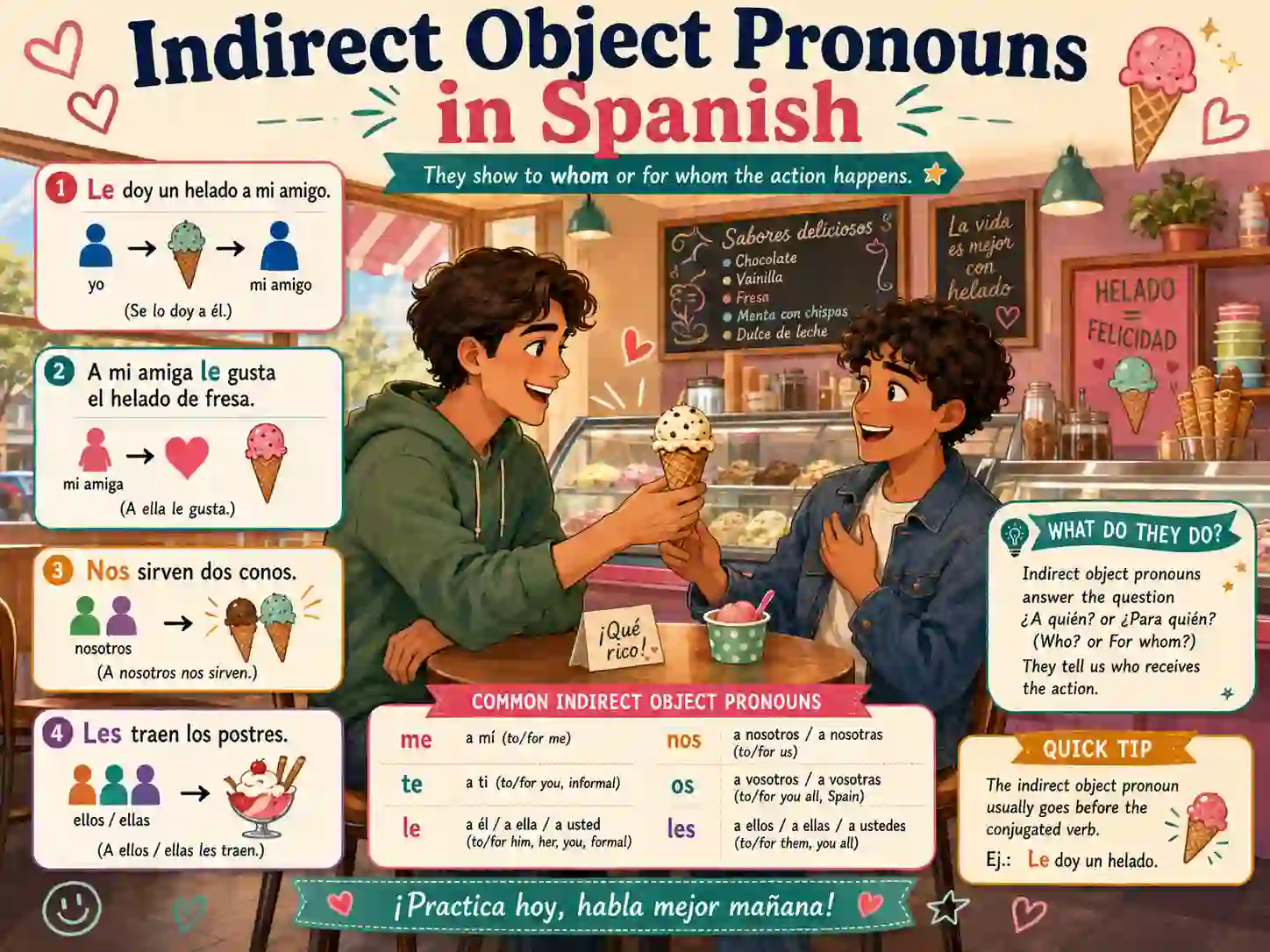
Spanish Indirect Object Pronouns
Learn recipients, le, les, gustar structures and se lo.
Open lesson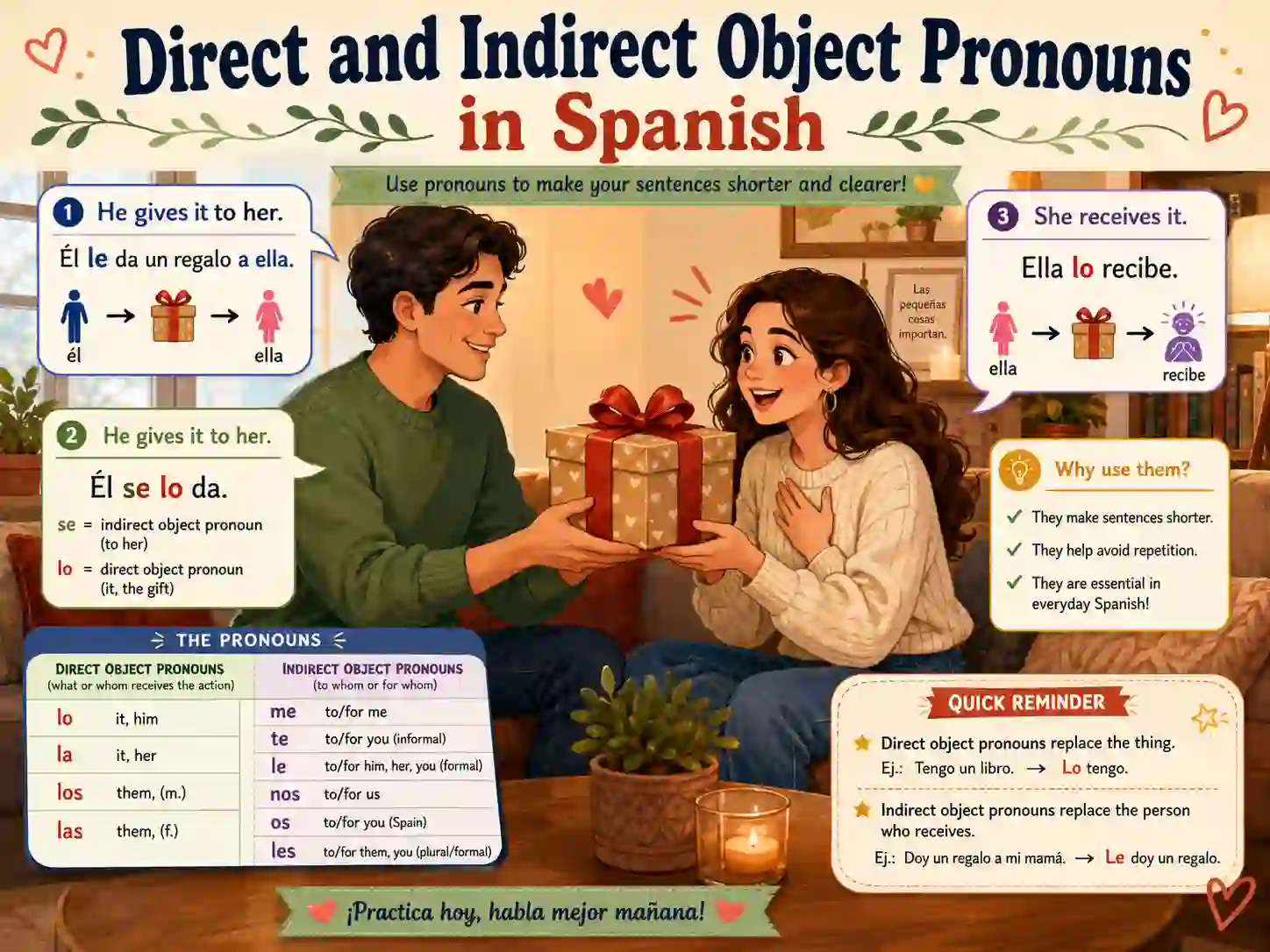
Direct and Indirect Object Pronouns
Compare direct and indirect objects and practise combinations such as me lo and se la.
Open lesson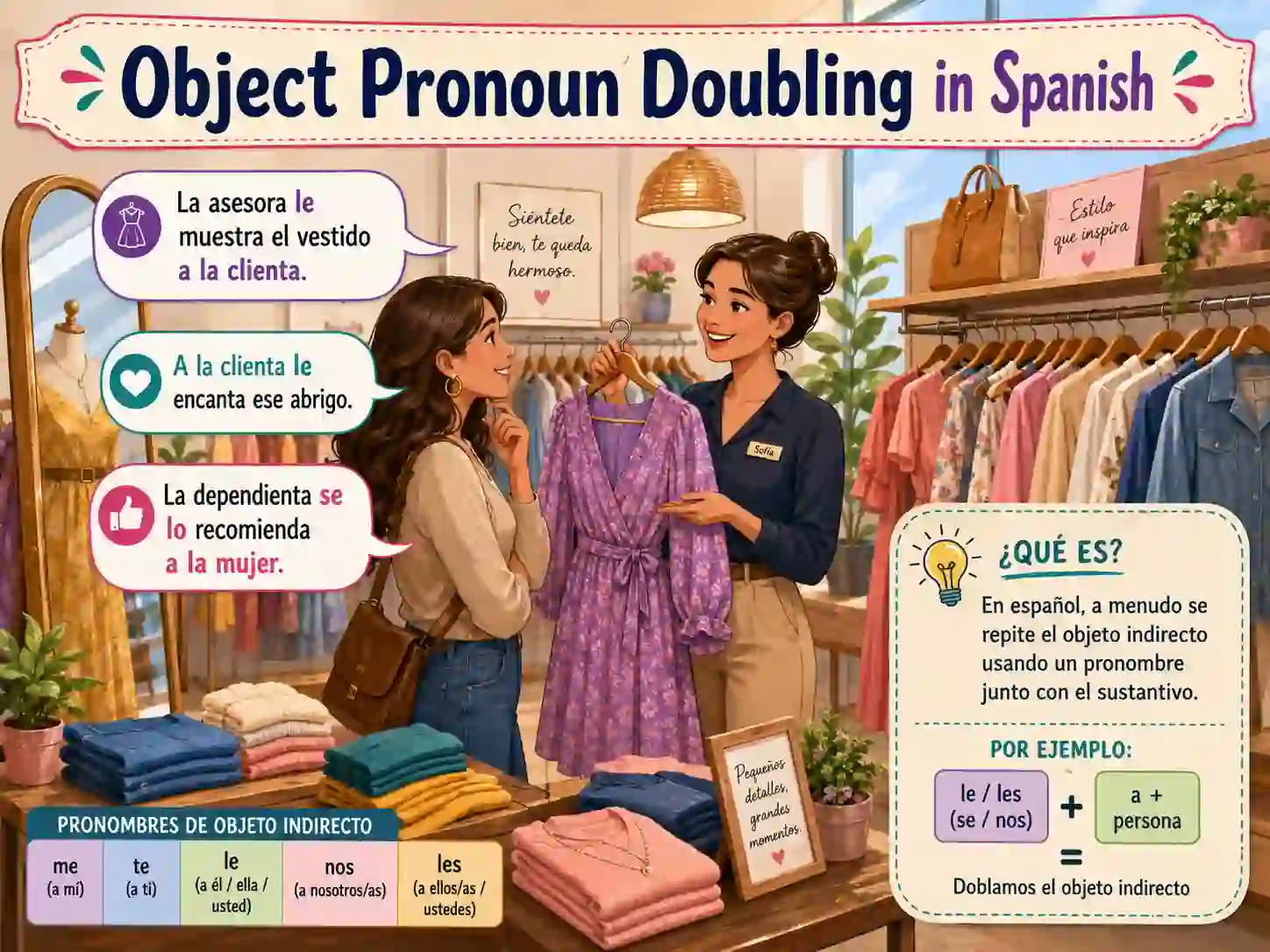
Object Pronoun Doubling
Understand Le escribí a Ana, A Juan lo vi and A mí me gusta.
Open lesson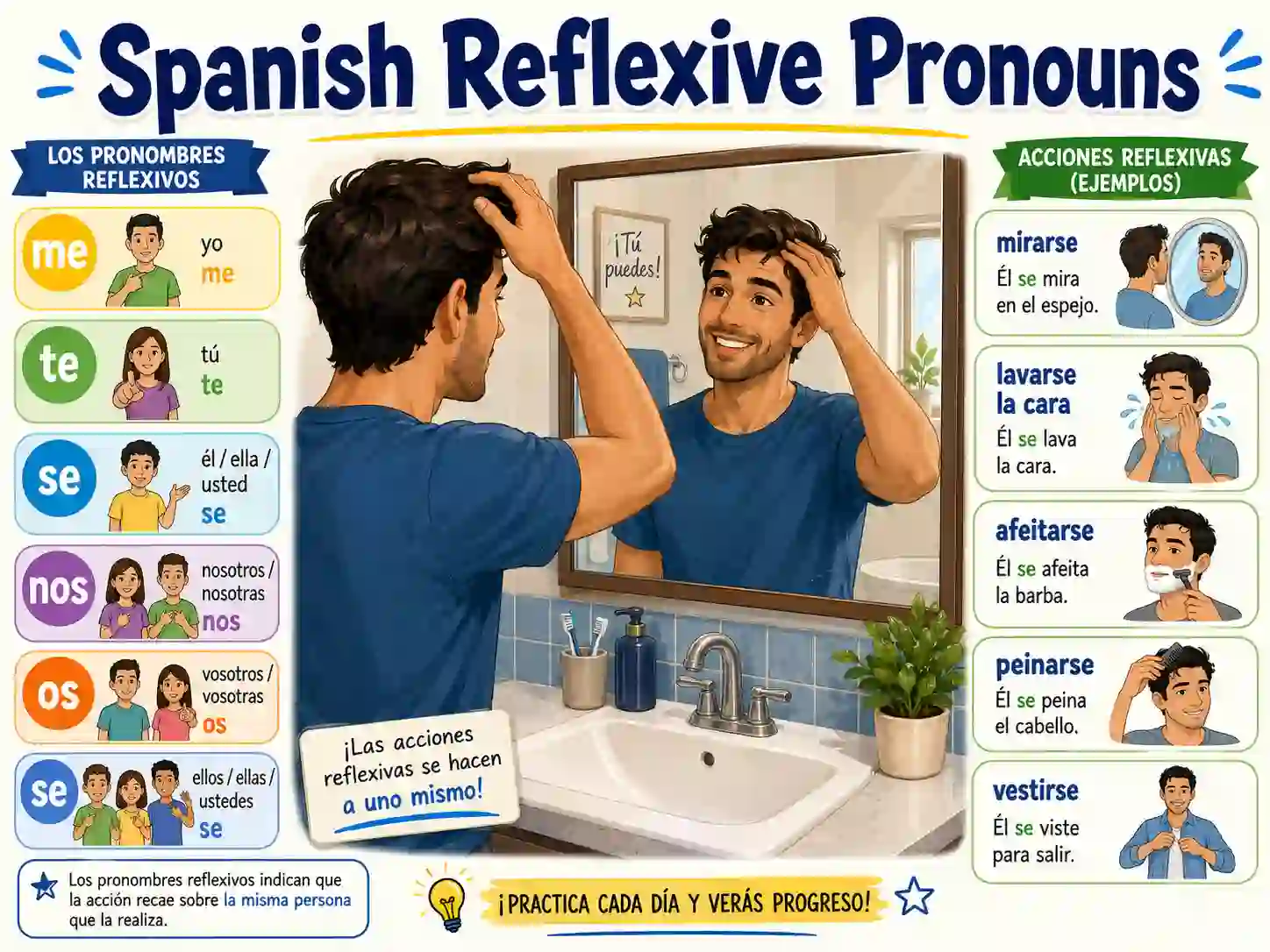
Spanish Reflexive Pronouns
Learn me levanto, quiero levantarme and levántate.
Open lesson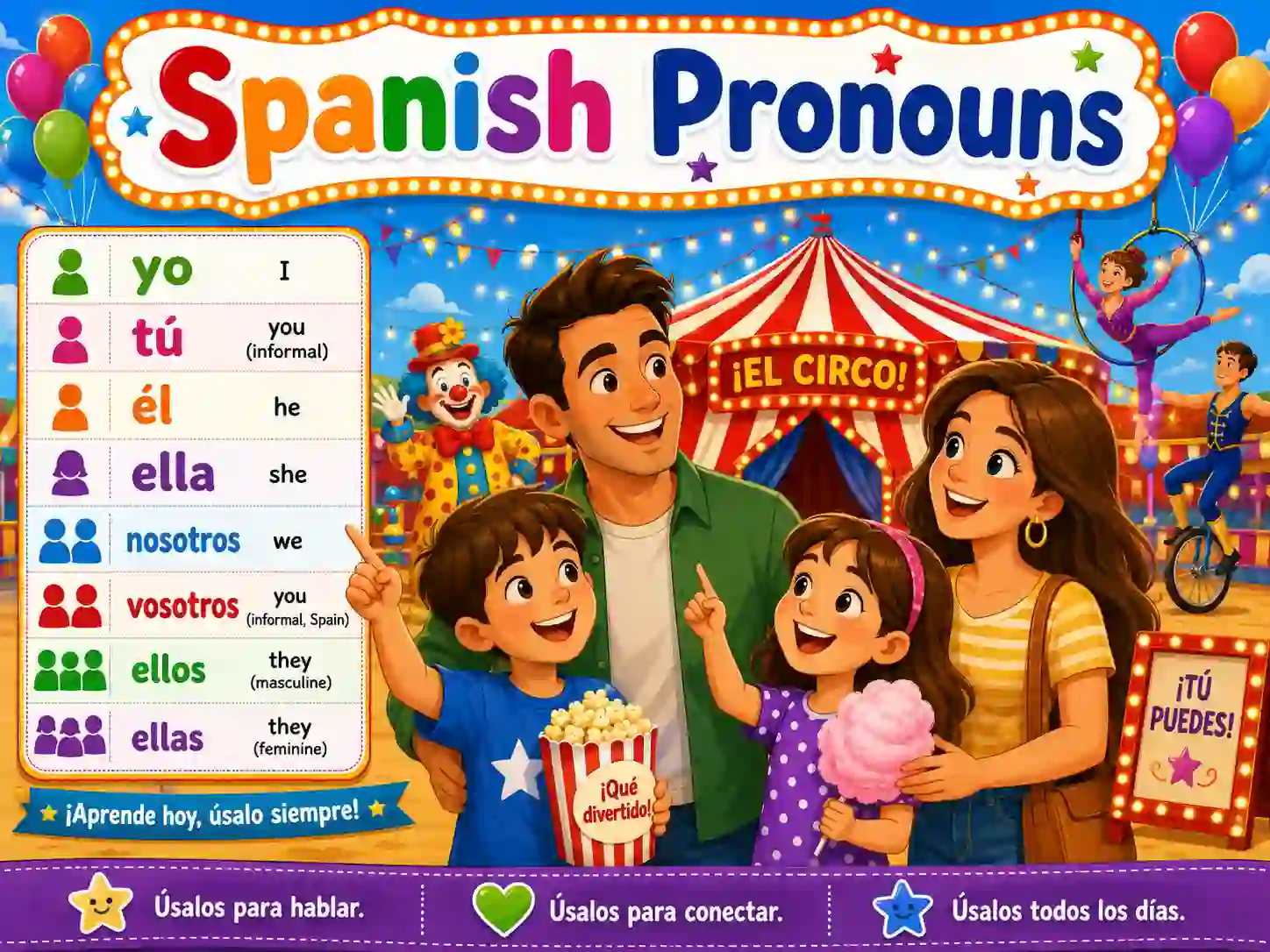
Spanish Pronouns
Return to the complete overview of subject, object, reflexive and other Spanish pronouns.
Open overviewCommon errors
Common mistakes with Spanish pronoun position
- Putting the pronoun after a conjugated verb: say Lo veo, not Veo lo.
- Putting the pronoun between haber and the participle: say Lo he visto, not He lo visto.
- Attaching pronouns to negative commands: say No me lo digas, not No dímelo.
- Forgetting accents: write viéndolo, dímelo and levántate.
- Using the wrong order: use me lo and te la, not lo me or la te.
- Using le lo: change le or les to se: se lo.
Frequently asked questions
Questions about Spanish pronoun position
Where do object pronouns go in Spanish?
They normally go before a conjugated verb. They can attach to infinitives, gerunds and affirmative commands.
Can Spanish pronouns attach to infinitives?
Yes. Examples include quiero verlo, voy a escribirle and quiero levantarme.
Can Spanish pronouns attach to gerunds?
Yes. Examples include estoy viéndolo and estoy levantándome. Attached forms often require a written accent.
Where do pronouns go with commands?
They attach to affirmative commands but go before negative commands: dímelo and no me lo digas.
What is the order of two object pronouns?
The indirect-object or reflexive pronoun comes first. The direct-object pronoun comes second: me lo, te la, se los.
Why does le lo become se lo?
Le and les change to se before lo, la, los and las.
Practice and support
Practise Spanish pronoun position in complete sentences
Pronoun placement becomes easier when you practise conjugated verbs, infinitives, gerunds, commands, negation and double-pronoun combinations in context.
Spanish Tutoring
Work on pronouns, sentence correction and individual grammar problems.
Private Spanish Lessons
Practise lo veo, quiero verlo, dímelo and se lo doy.
Spanish Grammar
Continue with verbs, tenses, pronouns, prepositions and sentence structures.

About MundoDele
Spanish learning connected with culture and real life
MundoDele combines clear Spanish grammar explanations with private lessons, tutoring, DELE and SIELE preparation, Business Spanish, cultural context and travel experiences from the Spanish-speaking world.
The grammar guides use practical examples, connected lessons and clear sentence logic to help international learners move from individual rules to confident Spanish use.