
MundoDele Spanish Grammar
Spanish Prepositional Pronouns: Mí, Ti, Conmigo and Contigo
Learn which Spanish pronouns appear after prepositions such as para, de, por, sin, con, sobre and entre. This guide explains mí, ti, él, ella, nosotros, ellos and the special forms conmigo, contigo and consigo.
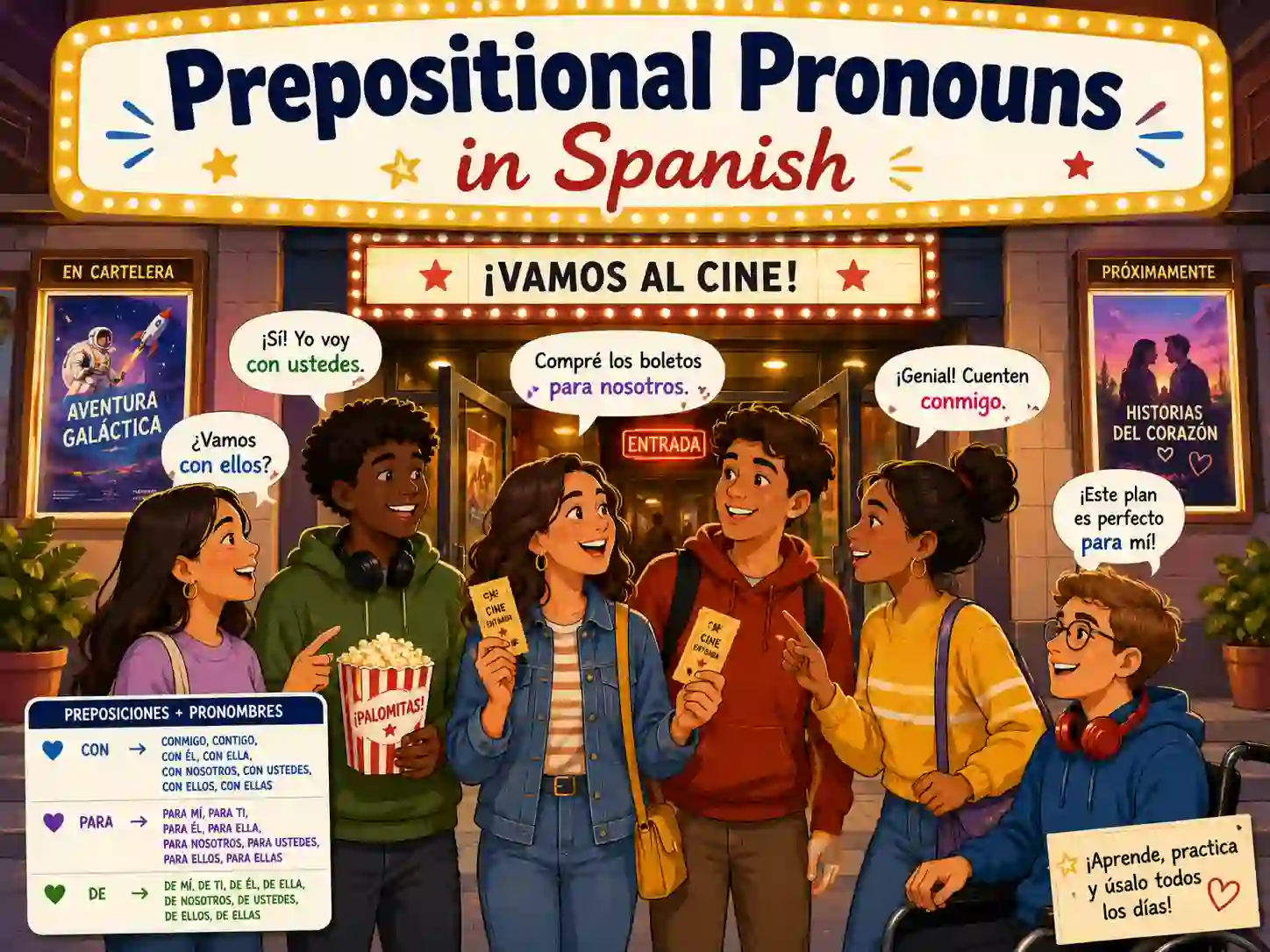
Definition
What are Spanish prepositional pronouns?
Prepositional pronouns are the forms used after prepositions. They identify the person or group connected to meanings such as “for”, “about”, “with”, “without” or “between”.
Este regalo es para mí.
This gift is for me.
Hablan de ti.
They talk about you.
Trabajo con ella.
I work with her.
Most forms look like the corresponding subject pronouns. The most important changes are yo → mí and tú → ti.
Pronoun table
Spanish prepositional pronouns at a glance
| Subject pronoun | Prepositional form | Spanish example | English meaning | Usage note |
|---|---|---|---|---|
| yo | mí | para mí | for me | Mí has a written accent. |
| tú | ti | para ti | for you | Ti has no written accent. |
| él | él | sin él | without him | Same form as the subject pronoun. |
| ella | ella | con ella | with her | Same form as the subject pronoun. |
| usted | usted | para usted | for you | Formal singular. |
| nosotros / nosotras | nosotros / nosotras | con nosotros | with us | Gender distinction remains. |
| vosotros / vosotras | vosotros / vosotras | sin vosotros | without you all | Mainly used in Spain. |
| ellos / ellas | ellos / ellas | para ellos | for them | Use ellas for an all-female group. |
| ustedes | ustedes | con ustedes | with you all | Standard plural you in Latin America. |
Common combinations
Common prepositions with pronouns
| Preposition | Spanish example | English meaning | Pronoun form |
|---|---|---|---|
| para | Este regalo es para mí. | This gift is for me. | mí |
| de | Hablan de ti. | They talk about you. | ti |
| por | Lo hago por ella. | I do it for her. | ella |
| sin | No puedo hacerlo sin él. | I cannot do it without him. | él |
| sobre | El artículo es sobre nosotros. | The article is about us. | nosotros |
| entre | Esto queda entre tú y yo. | This stays between you and me. | Special coordinated pattern. |
Core contrast
Mí and ti after prepositions
The two forms learners need to remember most carefully are mí and ti. They replace yo and tú after most prepositions.
Yo becomes mí
para mí · sin mí · de mí
Tú becomes ti
para ti · por ti · de ti
Mí has an accent; ti does not
para mí · para ti
| Meaning | Correct form | Incorrect form |
|---|---|---|
| for me | para mí | para yo |
| without me | sin mí | sin yo |
| for you | para ti | para tú |
| about you | de ti | de tú |
Mí is a pronoun:
Este regalo es para mí.
Mi is a possessive adjective:
Esta es mi casa.
Special forms with con
Conmigo, contigo and consigo
Spanish combines con with certain pronouns. Do not use the literal forms con mí or con ti.
| Meaning | Correct form | Incorrect literal form | Spanish example |
|---|---|---|---|
| with me | conmigo | con mí | Ven conmigo. |
| with you | contigo | con ti | Quiero hablar contigo. |
| with himself, herself or themselves | consigo | con sí | Siempre lleva dinero consigo. |
With other pronouns, use the normal separate construction: con él, con ella, con nosotros, con ustedes.
Reflexive reference
Sí as a reflexive prepositional pronoun
After a preposition, sí can refer back to a third-person subject. It can mean himself, herself, itself, themselves, yourself or yourselves.
| Spanish example | English meaning | Grammar note |
|---|---|---|
| Habla de sí mismo. | He talks about himself. | Sí refers back to the subject. |
| Ella piensa en sí misma. | She thinks about herself. | Misma clarifies the feminine reference. |
| Ellos confían en sí mismos. | They trust themselves. | Plural reflexive reference. |
| Lleva los documentos consigo. | He or she carries the documents with him or her. | Consigo is the special form with con. |
Special patterns
Entre tú y yo and según yo
Some constructions use subject-pronoun forms rather than the normal mí and ti forms.
| Meaning | Common Spanish form | Usage note |
|---|---|---|
| between you and me | entre tú y yo | Common coordinated expression. |
| according to me | según yo | Often means “in my view”. |
| according to you | según tú | Common in conversation. |
The common expression is entre tú y yo, not entre ti y mí.
Pronoun comparison
Subject, object and prepositional pronouns
Spanish changes the pronoun form according to its grammatical role in the sentence.
| Person | Subject | Object | After a preposition |
|---|---|---|---|
| First-person singular | Yo estudio. | Me ves. | Hablas de mí. |
| Second-person singular | Tú estudias. | Te llamo. | Pienso en ti. |
| Third-person masculine | Él trabaja. | Lo veo. | Voy con él. |
| Third-person feminine | Ella trabaja. | La veo. | Es para ella. |
| First-person plural | Nosotros estudiamos. | Nos ayudan. | Hablan de nosotros. |
Mini practice
Practice Spanish prepositional pronouns
Complete each exercise before opening the answer.
Exercise 1: choose the correct form
- Este regalo es para ___. — I
- Hablan de ___. — you
- No puedo ir sin ___. — he
- Trabajo con ___. — she
Show answers
1. Este regalo es para mí.
2. Hablan de ti.
3. No puedo ir sin él.
4. Trabajo con ella.
Exercise 2: use conmigo or contigo
- Ven con ___. — me
- Quiero hablar con ___. — you
- ¿Vienes con ___? — me
- Siempre estudio con ___. — you
Show answers
1. Ven conmigo.
2. Quiero hablar contigo.
3. ¿Vienes conmigo?
4. Siempre estudio contigo.
Exercise 3: correct the mistake
- para yo
- con ti
- sin tú
- entre ti y mí
Show answers
1. para mí
2. contigo
3. sin ti
4. entre tú y yo
Connected lessons
Continue with these Spanish pronoun pages
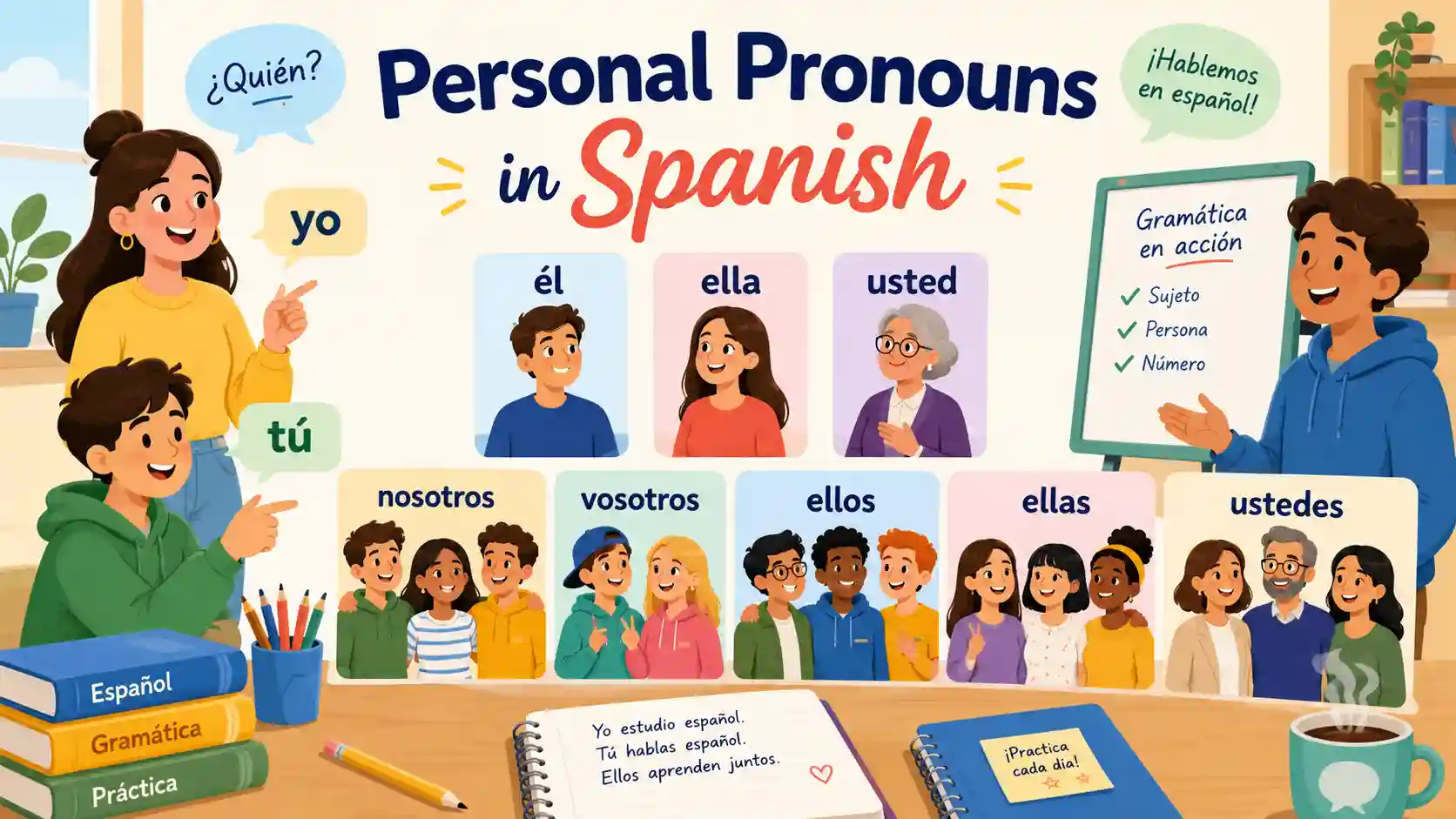
Spanish Personal Pronouns
Compare subject, object, reflexive and prepositional pronoun forms in one overview.
Open lesson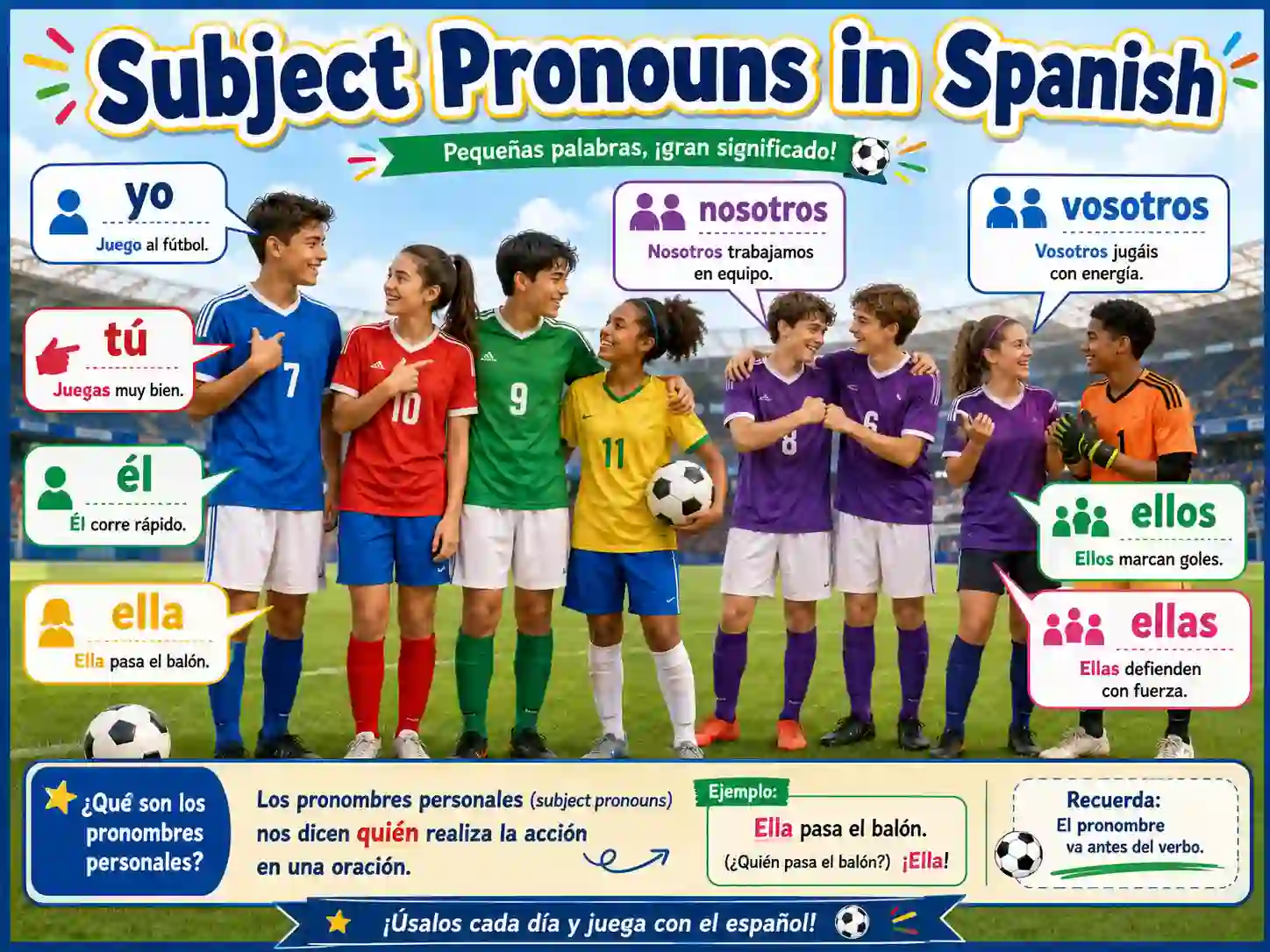
Spanish Subject Pronouns
Compare yo and tú with prepositional mí and ti.
Open lesson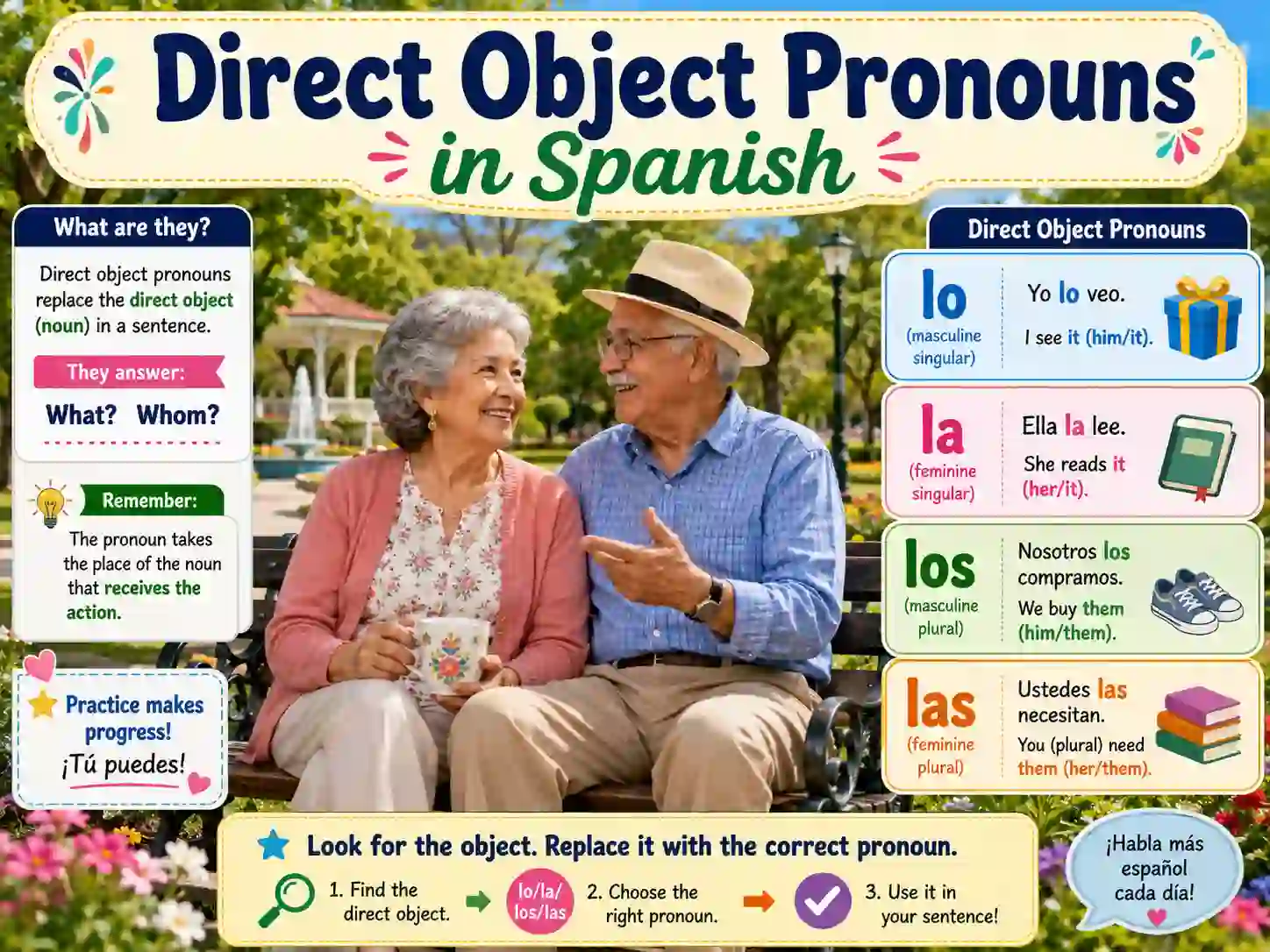
Spanish Direct Object Pronouns
Compare me ves with hablas de mí and te llamo with pienso en ti.
Open lesson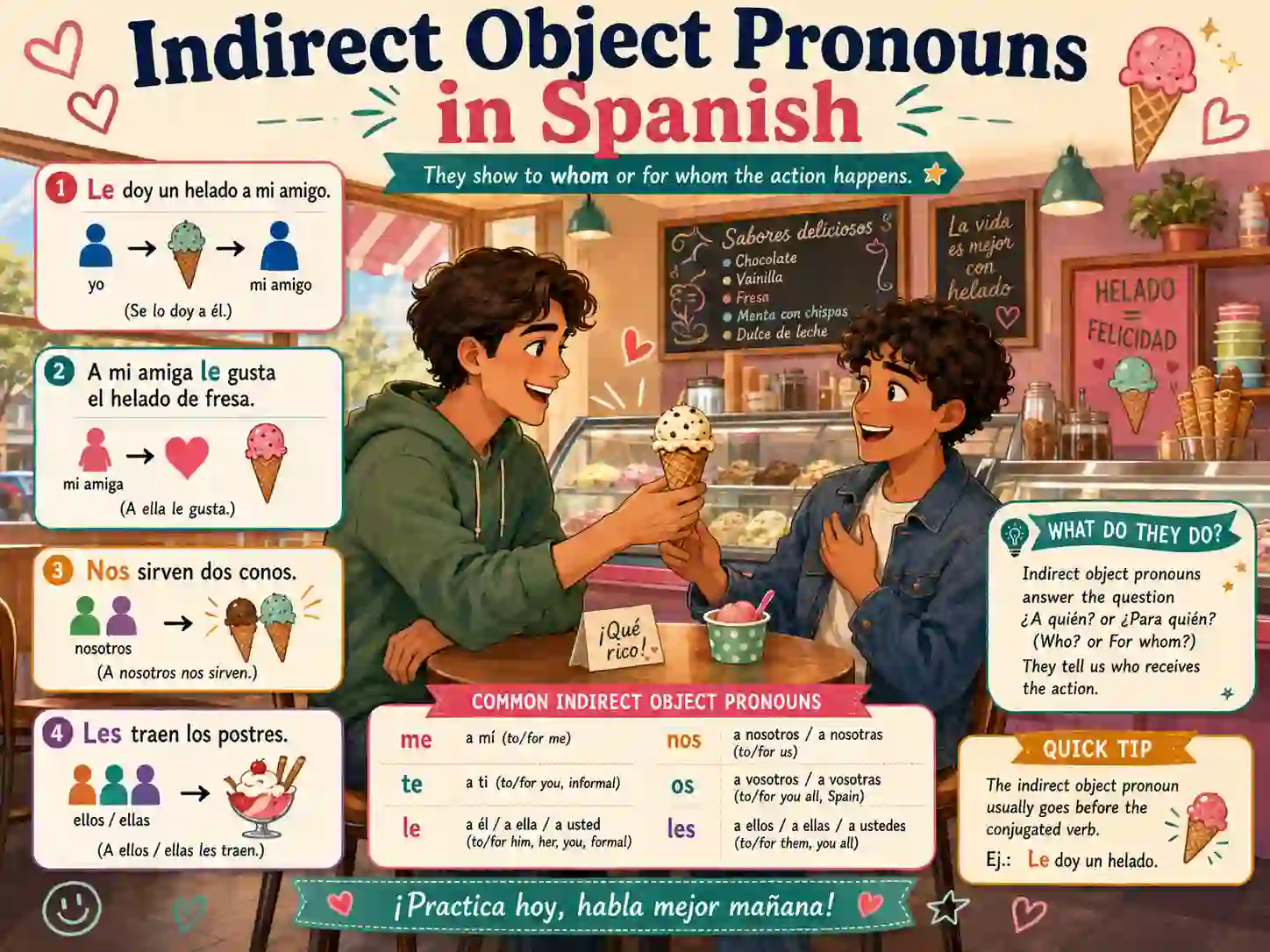
Spanish Indirect Object Pronouns
Compare le escribo with prepositional expressions such as hablo con ella.
Open lesson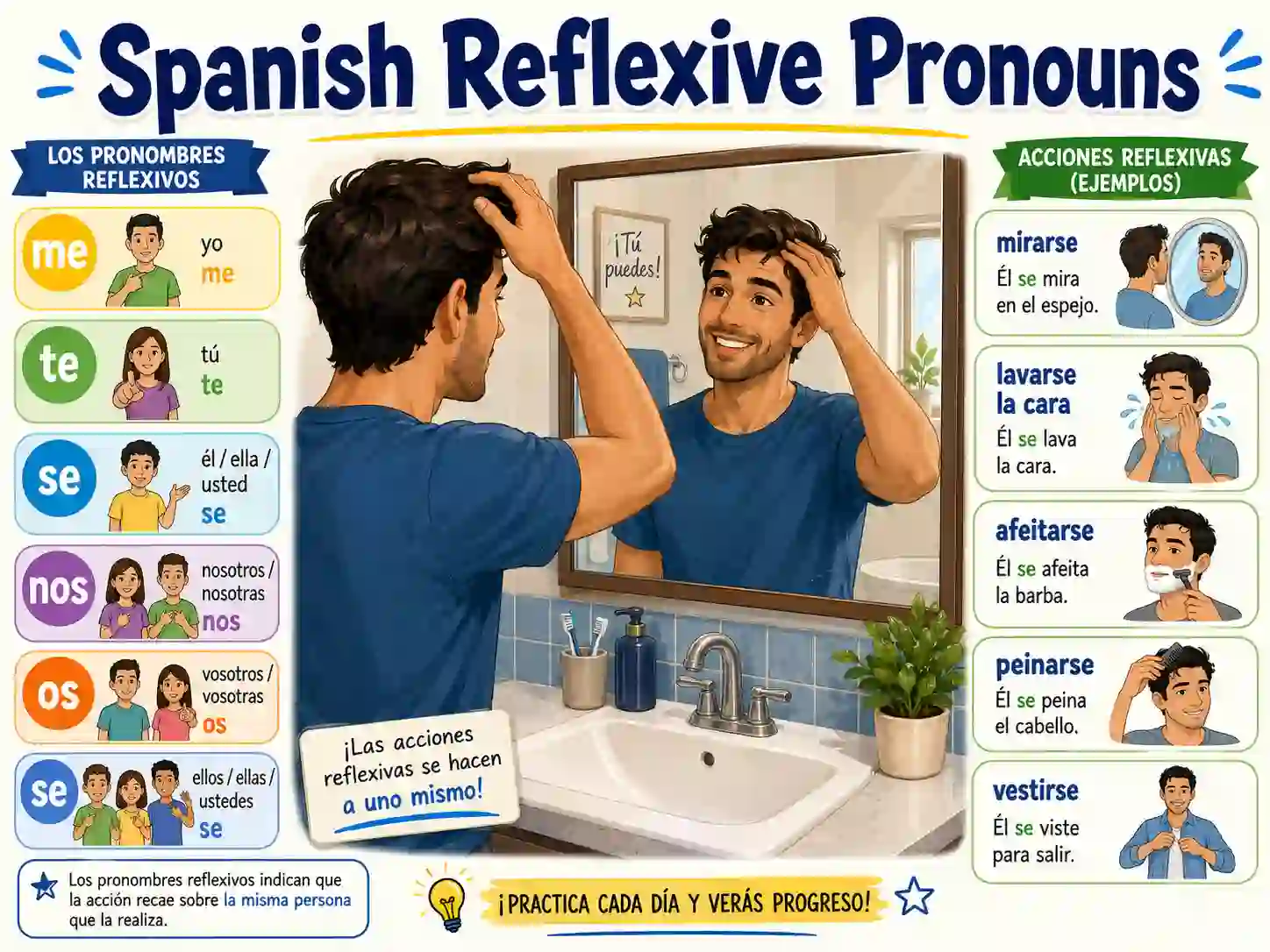
Spanish Reflexive Pronouns
Connect reflexive se with prepositional sí and consigo.
Open lesson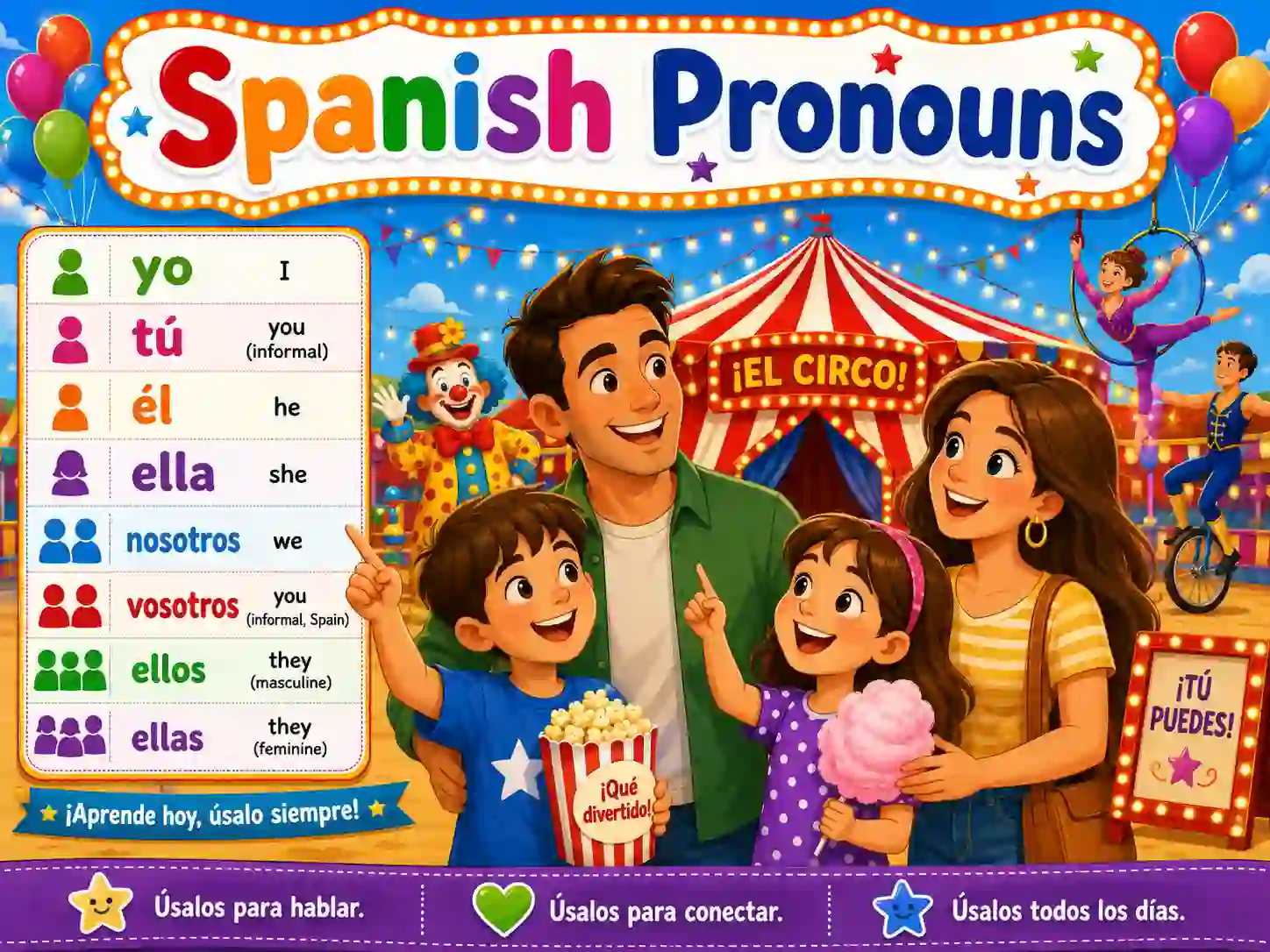
Spanish Pronouns
Return to the complete overview of subject, object, reflexive, possessive and relative pronouns.
Open overviewCommon errors
Common mistakes with prepositional pronouns
- Using yo after a preposition: say para mí, not para yo.
- Using tú after most prepositions: say de ti, not de tú.
- Writing mi instead of mí: mí is the pronoun; mi means “my”.
- Adding an accent to ti: ti never has a written accent.
- Saying con mí or con ti: use conmigo and contigo.
- Using consigo for any third person: consigo must refer back to the subject. Otherwise use con él, con ella or con ellos.
- Forgetting the special coordinated pattern: use entre tú y yo.
Frequently asked questions
Questions about Spanish prepositional pronouns
What are Spanish prepositional pronouns?
They are the forms used after prepositions. The main forms include mí, ti, él, ella, nosotros, ellos and ustedes.
What is the difference between yo and mí?
Yo is a subject pronoun: Yo estudio. Mí follows most prepositions: para mí, sin mí, de mí.
What is the difference between tú and ti?
Tú is a subject pronoun: Tú estudias. Ti follows most prepositions: para ti, por ti, de ti.
Why do we say conmigo and contigo?
Spanish combines con with mí and ti. The correct forms are conmigo and contigo.
Does ti have an accent?
No. Ti never has a written accent. Mí has an accent to distinguish it from possessive mi.
Is entre tú y yo correct?
Yes. Entre tú y yo is the standard common expression meaning “between you and me”.
Practice and support
Practise Spanish prepositional pronouns in context
These forms become easier when you practise para mí, de ti, con ella, sin nosotros, conmigo, contigo and consigo in complete sentences.
Spanish Tutoring
Work on pronoun forms, prepositions, sentence correction and individual grammar problems.
Private Spanish Lessons
Practise pronoun contrasts and natural prepositional phrases in spoken Spanish.
Spanish Grammar
Continue with pronouns, prepositions, verbs and sentence structures.

About MundoDele
Spanish learning connected with culture and real life
MundoDele combines clear Spanish grammar explanations with private lessons, tutoring, DELE and SIELE preparation, Business Spanish, cultural context and travel experiences from the Spanish-speaking world.
The grammar guides use practical examples, connected lessons and clear sentence logic to help international learners move from individual rules to confident Spanish use.