
MundoDele Spanish Grammar
Passive Voice in Spanish: Ser, Se and Past Participles
Learn how the passive voice works in Spanish sentence structure. This guide explains the formal passive with ser + past participle, the more common passive se, the difference between ser and estar, how to use por for the agent, and why Spanish often prefers active or se constructions.
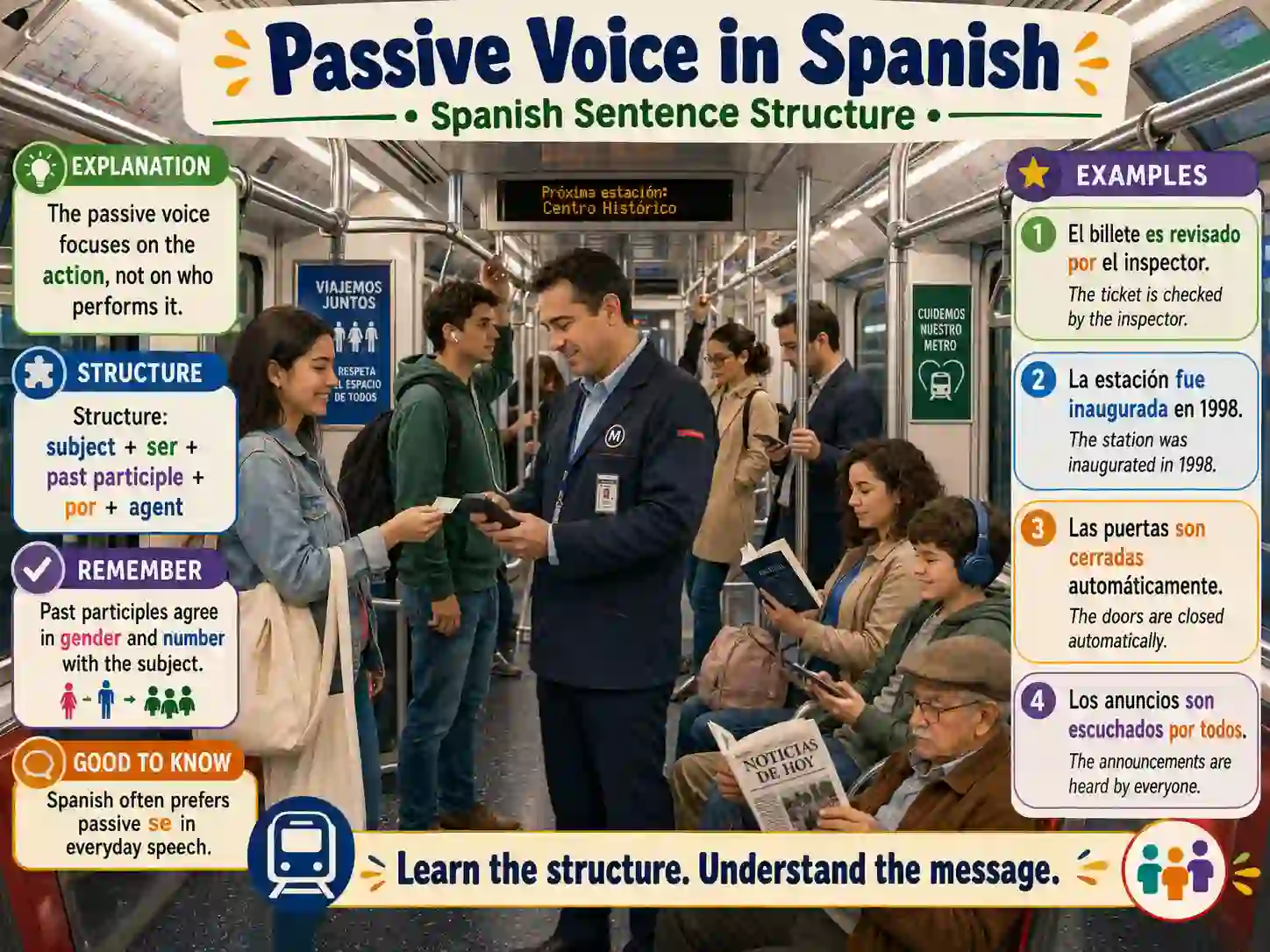
Why passive voice matters
The passive voice changes the focus of a Spanish sentence
The passive voice is not only a verb form. It changes the structure of the sentence: the receiver of the action becomes more important than the person or thing doing the action.
Spanish can use the formal passive with ser + past participle, but it often sounds more natural with passive se or with an active sentence. The useful skill is knowing which structure fits the situation.
El libro fue escrito. The action is presented formally.
Se venden casas. Common in signs and announcements.
La puerta está cerrada. The result or state matters.
Learning sequence
How to use this Spanish passive voice guide
Use this page to understand passive voice as part of Spanish sentence structure. First learn the formal passive with ser. Then compare it with passive se, which is often more natural in Spanish. Finally, study estar + participle for states and results.
Formal passive
Use ser + past participle when the action and agent matter.
Passive se
Use se + verb for common passive-like structures.
Resulting state
Use estar + participle when the result is more important than the action.
Core idea
What is the passive voice in Spanish?
The passive voice presents the receiver of an action as the main focus of the sentence. In an active sentence, the subject performs the action. In a passive sentence, the subject receives the action.
| Active sentence | Passive sentence | Focus | English meaning |
|---|---|---|---|
| Cervantes escribió el libro. | El libro fue escrito por Cervantes. | The book becomes the subject. | The book was written by Cervantes. |
| La empresa publicó el informe. | El informe fue publicado por la empresa. | The report becomes the subject. | The report was published by the company. |
| El gobierno aprobó la ley. | La ley fue aprobada por el gobierno. | The law becomes the subject. | The law was approved by the government. |
Formal passive
Formal passive: ser + past participle
The formal passive in Spanish uses a form of ser plus a past participle. The past participle agrees in gender and number with the passive subject.
| Passive subject | Ser form | Past participle | Complete sentence |
|---|---|---|---|
| El libro | fue | escrito | El libro fue escrito por Cervantes. |
| La carta | fue | escrita | La carta fue escrita ayer. |
| Los informes | fueron | publicados | Los informes fueron publicados por la empresa. |
| Las reglas | fueron | aprobadas | Las reglas fueron aprobadas oficialmente. |
Agent
The agent with por
When Spanish names the person or thing that performs the action in a passive sentence, it usually introduces that agent with por.
| Spanish passive sentence | Agent | English meaning | Comment |
|---|---|---|---|
| El libro fue escrito por Cervantes. | por Cervantes | The book was written by Cervantes. | The author is named. |
| La ley fue aprobada por el Congreso. | por el Congreso | The law was approved by Congress. | The institution is named. |
| El informe fue preparado por el equipo. | por el equipo | The report was prepared by the team. | The performing group is named. |
| La decisión fue tomada por la dirección. | por la dirección | The decision was made by management. | The decision-maker is named. |
Tense
Passive voice with ser in different tenses
The tense of the passive sentence is carried by ser. The past participle still agrees with the passive subject.
| Tense | Spanish example | English meaning | Ser form |
|---|---|---|---|
| Present | El informe es revisado. | The report is reviewed. | es |
| Preterite | El informe fue revisado ayer. | The report was reviewed yesterday. | fue |
| Imperfect | El informe era revisado cada mes. | The report was reviewed every month. | era |
| Future | El informe será revisado mañana. | The report will be reviewed tomorrow. | será |
| Conditional | El informe sería revisado si hubiera tiempo. | The report would be reviewed if there were time. | sería |
| Present perfect | El informe ha sido revisado. | The report has been reviewed. | ha sido |
Passive se
Passive se: the common Spanish alternative
Spanish often prefers passive se instead of the formal passive with ser. This structure is especially common in signs, announcements, instructions and general statements.
| Passive se sentence | English meaning | Agreement | Use |
|---|---|---|---|
| Se vende una casa. | A house is for sale. | Singular: vende | Announcement or sign. |
| Se venden casas. | Houses are for sale. | Plural: venden | Plural passive subject. |
| Se publicaron los resultados. | The results were published. | Plural: publicaron | Focus on result, not agent. |
| Se aprobó la ley. | The law was approved. | Singular: aprobó | Institutional or news style. |
| Se construyeron dos puentes. | Two bridges were built. | Plural: construyeron | Completed passive action. |
Se contrast
Passive se vs impersonal se
Passive se and impersonal se look similar, but they do not work in exactly the same way. Passive se often has a noun that functions like the passive subject. Impersonal se speaks generally without a specific subject.
| Type | Spanish example | English meaning | Structure clue |
|---|---|---|---|
| Passive se | Se vende una casa. | A house is for sale. | Singular noun: una casa. |
| Passive se | Se venden casas. | Houses are for sale. | Plural noun and plural verb. |
| Impersonal se | Se vive bien aquí. | People live well here. | No passive subject after the verb. |
| Impersonal se | Se trabaja mucho. | People work a lot. | General action, no specific subject. |
Related page: Impersonal Sentences in Spanish.
Ser or estar
Ser + participle vs estar + participle
Ser + past participle describes the passive action. Estar + past participle usually describes the state or result after an action.
| Ser + participle | Estar + participle | Difference |
|---|---|---|
| La puerta fue cerrada por el guardia. The door was closed by the guard. |
La puerta está cerrada. The door is closed. |
Action vs resulting state. |
| El documento fue firmado ayer. The document was signed yesterday. |
El documento está firmado. The document is signed. |
Signing event vs signed status. |
| La ventana fue abierta por Ana. The window was opened by Ana. |
La ventana está abierta. The window is open. |
Opening action vs open state. |
| El trabajo fue terminado a tiempo. The work was finished on time. |
El trabajo está terminado. The work is finished. |
Completed action vs current result. |
Related page: Ser and Estar in Spanish.
Style choice
Spanish often prefers active sentences
English uses passive voice very often, especially in formal writing. Spanish can use the passive, but many Spanish sentences sound more natural in active voice or with se.
| English passive idea | Possible formal passive | More natural Spanish alternative | Comment |
|---|---|---|---|
| The results were published. | Los resultados fueron publicados. | Se publicaron los resultados. | Se often sounds natural in news or reports. |
| Spanish is spoken here. | El español es hablado aquí. | Se habla español aquí. | Se habla is the normal phrase. |
| The law was approved. | La ley fue aprobada. | Se aprobó la ley. | Common in institutional language. |
| The company was founded in 1998. | La empresa fue fundada en 1998. | La empresa se fundó en 1998. | Both can work; se fundó is common. |
Agreement
Past participle agreement in passive voice
In passive constructions with ser and estar, the past participle behaves like an adjective. It agrees with the subject in gender and number.
| Subject | Participle form | Spanish example | English meaning |
|---|---|---|---|
| El contrato | firmado | El contrato fue firmado. | The contract was signed. |
| La carta | firmada | La carta fue firmada. | The letter was signed. |
| Los contratos | firmados | Los contratos fueron firmados. | The contracts were signed. |
| Las cartas | firmadas | Las cartas fueron firmadas. | The letters were signed. |
Related page: Past Participle in Spanish.
Irregular participles
Common irregular past participles in passive voice
Many common Spanish passive sentences use irregular past participles. These participles still agree with the passive subject when they are used with ser or estar.
| Infinitive | Past participle | Passive example | English meaning |
|---|---|---|---|
| hacer | hecho | El trabajo fue hecho ayer. | The work was done yesterday. |
| decir | dicho | La frase fue dicha por el profesor. | The sentence was said by the teacher. |
| escribir | escrito | La carta fue escrita a mano. | The letter was written by hand. |
| abrir | abierto | Las puertas están abiertas. | The doors are open. |
| poner | puesto | La mesa está puesta. | The table is set. |
| ver | visto | La película fue vista por millones de personas. | The film was seen by millions of people. |
| romper | roto | La ventana está rota. | The window is broken. |
| volver | vuelto | El dinero fue devuelto. | The money was returned. |
Use cases
When should you use the passive voice in Spanish?
The passive voice is useful when the action or result is more important than the person doing the action. It is common in formal writing, reports, news, history, academic texts and institutional language.
| Context | Spanish example | Why passive? |
|---|---|---|
| History | La ciudad fue fundada en 1536. | The focus is on the city and the founding event. |
| News | La ley fue aprobada ayer. | The law is the main topic. |
| Academic writing | Los datos fueron analizados cuidadosamente. | The process is more important than the analyst. |
| Formal reports | El informe fue preparado por el equipo técnico. | The report and responsible group are emphasised. |
| Signs and notices | Se prohíbe fumar. | The rule matters, not who prohibits it. |
Recommended order
Recommended learning order for passive voice
Active vs passive
Learn how the focus changes from the actor to the receiver of the action.
Ser + participle
Use the formal passive in reports, history, news and written Spanish.
Passive se
Learn the common Spanish alternative in signs, notices and general statements.
Se contrast
Compare se venden casas with se vive bien aquí.
Ser vs estar
Separate passive action from resulting state.
Participle agreement
Practise escrito, escrita, escritos and escritas.
Practice
Practice exercises: passive voice in Spanish
Try to answer before opening the solutions. These exercises focus on ser + participle, passive se, agreement and the difference between action and state.
Exercise 1: form the passive with ser
- El libro ___ escrito por Cervantes. ser
- La carta ___ escrita ayer. ser
- Los informes ___ publicados. ser
- Las reglas ___ aprobadas. ser
Show answers
1. fue
2. fue
3. fueron
4. fueron
Exercise 2: passive se agreement
- Se ___ una casa. vender
- Se ___ casas. vender
- Se ___ la ley. aprobar
- Se ___ los resultados. publicar
Show answers
1. vende
2. venden
3. aprobó
4. publicaron
Exercise 3: ser or estar?
- La puerta ___ cerrada por el guardia.
- La puerta ___ cerrada.
- El documento ___ firmado ayer.
- El documento ___ firmado.
Show answers
1. fue
2. está
3. fue
4. está
Typical mistakes
Typical mistakes with the passive voice in Spanish
- Translating every English passive with ser + participle: Spanish often prefers se or active voice.
- Forgetting participle agreement: la carta fue escrita, los informes fueron publicados.
- Confusing ser and estar: fue cerrado describes the action; está cerrado describes the state.
- Forgetting agreement in passive se: se vende una casa, but se venden casas.
- Using por when the agent is not needed: many passive sentences sound more natural without naming the agent.
- Confusing passive se with impersonal se: se venden casas is passive; se vive bien is impersonal.
Where to go next
Where to go next
After learning the passive voice, continue with impersonal sentences, ser and estar, and the past participle. These topics help you separate fue escrito, se escribió and está escrito.
Impersonal Sentences
Compare passive se with impersonal se.
Ser and Estar
Learn action vs state contrasts in Spanish.
Past Participle
Practise participles used in passive and perfect structures.
Related guides
Continue with related Spanish grammar topics
These guides connect directly with passive voice: the difference between passive and impersonal se, the contrast between ser and estar, and the past participle forms used in passive structures.
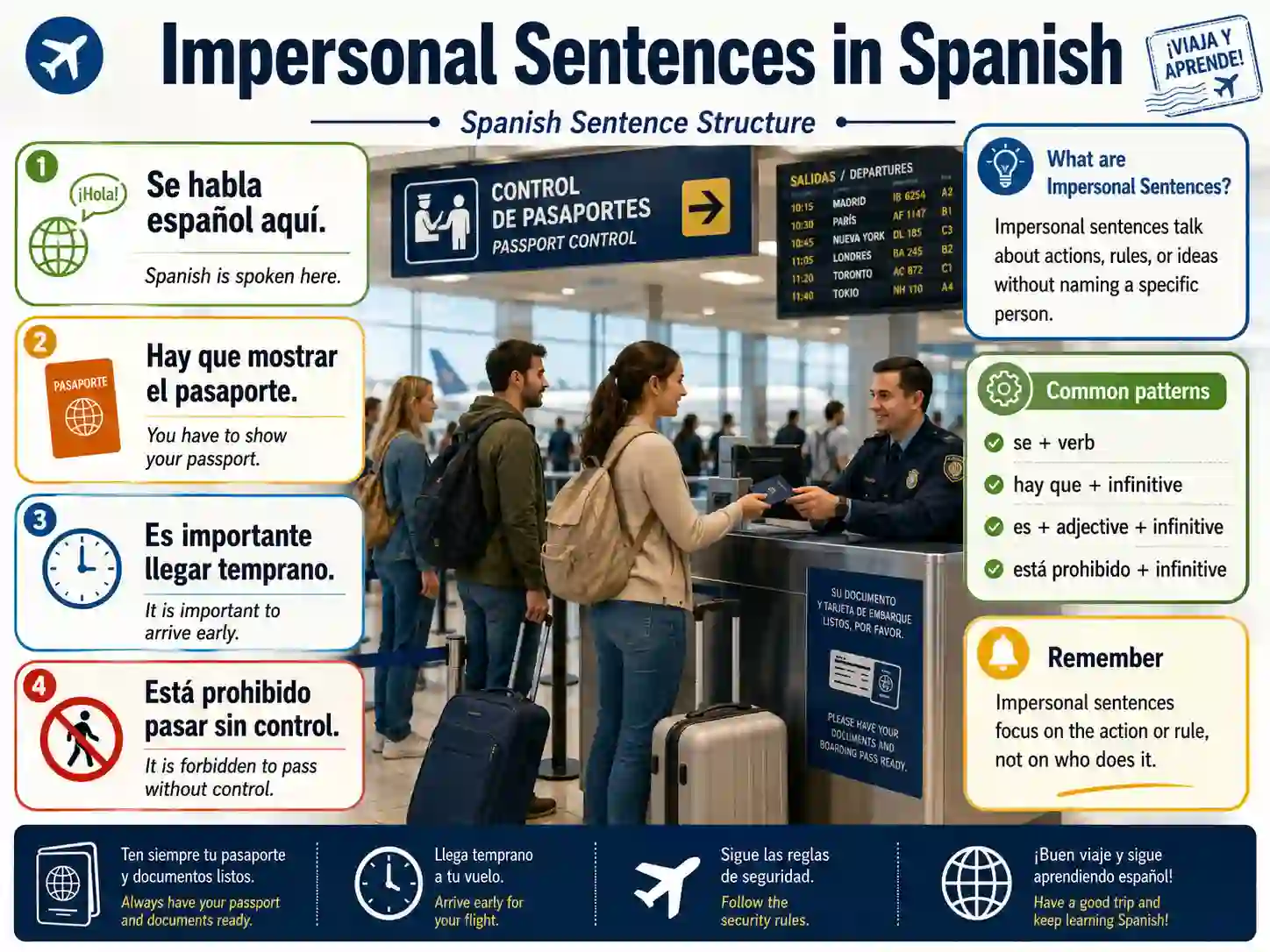
Impersonal Sentences
Compare se venden casas with se vive bien aquí and learn how Spanish speaks generally.
Open guide →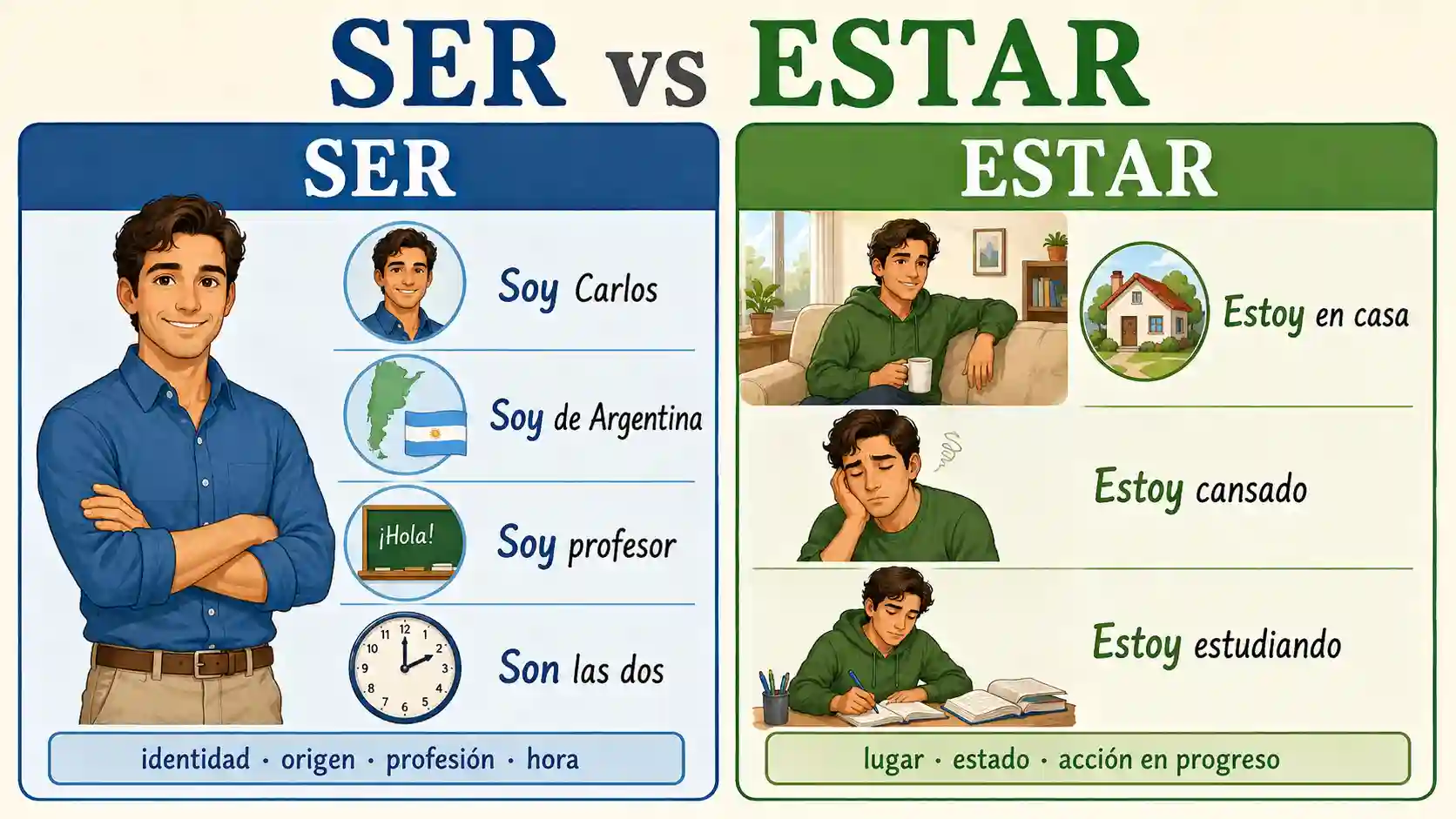
Ser and Estar
Separate passive action from resulting state: fue cerrado vs está cerrado.
Open guide →
Past Participle
Learn forms such as escrito, hecho, abierto and participle agreement.
Open guide →When you need help
Practise passive voice in real Spanish
Passive voice helps you understand formal Spanish, news, academic texts, reports and signs. With MundoDele, you can learn when to use ser + participle, when to use passive se, and when an active sentence sounds more natural.
Spanish Tutoring
Useful if you need help with sentence structure, homework or weak points.
Private Spanish Lessons
Use passive structures in conversation, writing and personal practice.
Intensive Spanish Course
Work through grammar, speaking and sentence structure in a focused format.
FAQ
FAQ: passive voice in Spanish
How do you form the passive voice in Spanish?
The formal passive is formed with ser + past participle: el libro fue escrito, la carta fue escrita, los informes fueron publicados.
What is passive se in Spanish?
Passive se is a common Spanish structure that expresses a passive-like meaning: se vende una casa, se venden casas, se publicaron los resultados.
What is the difference between ser passive and passive se?
Ser + participle is more formal and often names or implies an agent. Passive se is often more natural for general statements, signs, announcements and news-style sentences.
What is the difference between fue cerrado and está cerrado?
Fue cerrado describes the action of being closed. Está cerrado describes the resulting state: it is closed.
Does the past participle agree in Spanish passive voice?
Yes. With ser and estar, the past participle agrees with the subject: el contrato fue firmado, la carta fue firmada, los contratos fueron firmados.
Is the passive voice common in Spanish?
The passive voice exists in Spanish, but Spanish often prefers active voice or passive se, especially in everyday language.

About
About MundoDele
MundoDele connects online Spanish lessons, tutoring, intensive Spanish courses, DELE and SIELE preparation, Business Spanish, grammar resources and cultural context into one personal Spanish learning platform.
Grammar pages are designed to explain Spanish clearly, with practical examples, sentence logic and useful links to related learning support.