
MundoDele Spanish Grammar
Impersonal Sentences in Spanish: Hay, Se and Weather Expressions
Learn how Spanish speaks generally, describes situations and gives evaluations without naming a specific subject. This guide explains hay, weather expressions, impersonal se, passive se, es + adjective + infinitive and es + adjective + que + subjunctive.
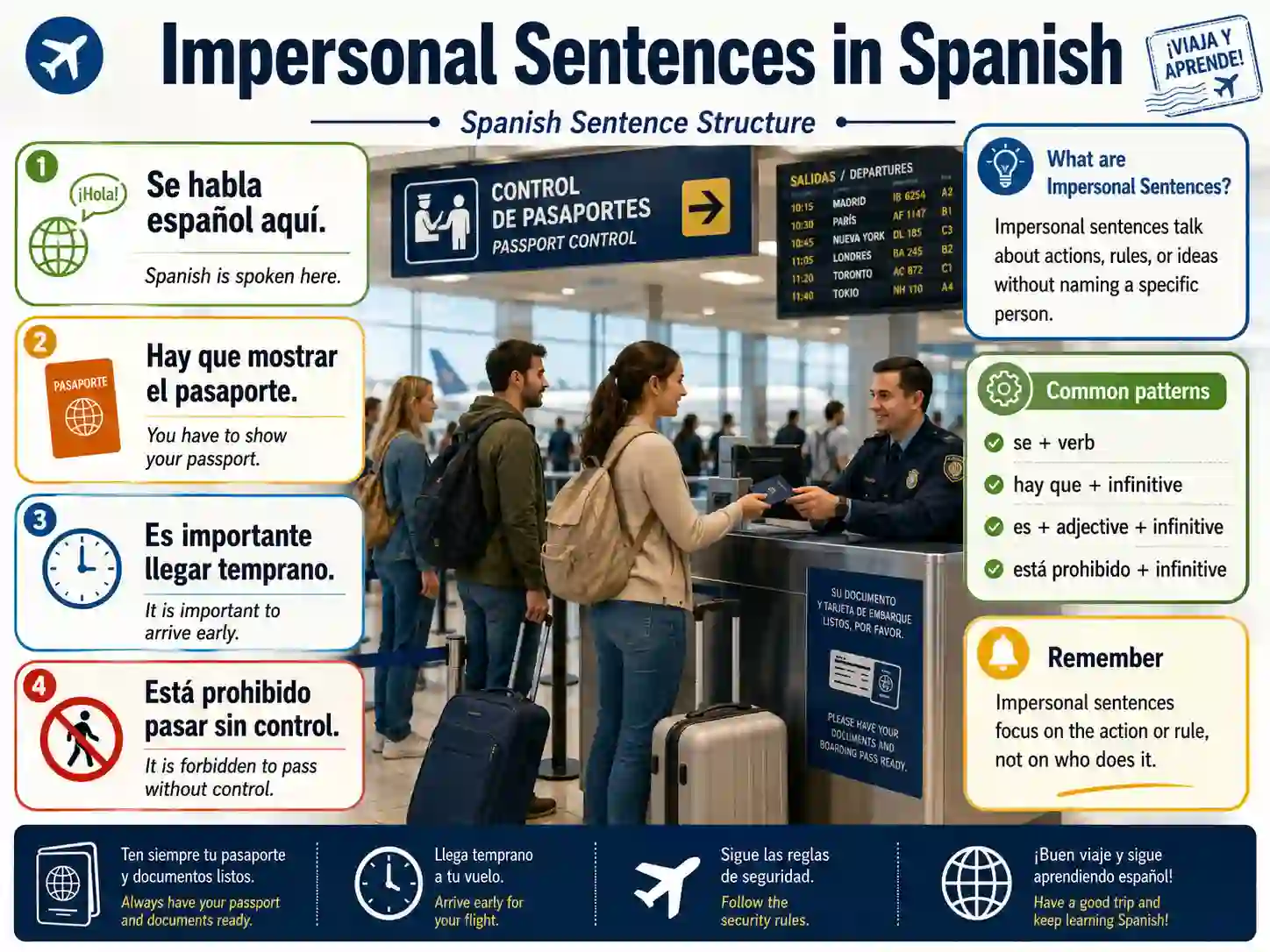
Why impersonal sentences matter
Spanish often describes situations without naming a person
Impersonal sentences are common in everyday Spanish, public signs, weather reports, instructions and formal language. Spanish uses them when the person is unknown, unimportant, general or not part of the message.
The central idea is simple: not every Spanish sentence needs a specific subject like yo, tú or ellos. Sentences such as hay problemas, se vive bien aquí and es necesario practicar describe situations rather than specific people.
Hay una farmacia cerca. Something exists or is present.
Se vive bien aquí. People in general live well here.
Es importante estudiar. The sentence gives a general judgement.
Learning sequence
How to use this Spanish impersonal sentences guide
Use this page to understand impersonal sentences as part of Spanish sentence structure. First learn the main types. Then compare hay, weather expressions, impersonal se, passive se and es + adjective + que patterns.
Hay
Use hay to say that something exists or is present.
Impersonal se
Use se to speak generally without naming a person.
Es + adjective + que
Use this pattern with the subjunctive when a specific subject is introduced.
Core idea
What is an impersonal sentence in Spanish?
An impersonal sentence is a sentence where the subject is not a specific person, thing or group. Spanish uses impersonal structures to speak generally, describe weather, express existence, give rules, make evaluations or avoid naming who performs the action.
Structure table
Impersonal sentences in Spanish at a glance
| Type | Spanish example | English meaning | Structure |
|---|---|---|---|
| Existence | Hay mucha gente. | There are many people. | hay + noun |
| Weather | Llueve mucho. | It rains a lot. | Weather verb in third person singular. |
| Impersonal se | Se vive bien aquí. | People live well here. | se + third-person singular verb |
| General evaluation | Es importante estudiar. | It is important to study. | es + adjective + infinitive |
| Evaluation with que | Es necesario que estudies. | It is necessary that you study. | es + adjective + que + subjunctive |
| Unspecified they | Dicen que va a llover. | They say it is going to rain. | Third-person plural without named subject. |
Hay
Hay: impersonal existence
Hay is one of the most common impersonal structures in Spanish. It means “there is” or “there are” and does not change between singular and plural in the present tense.
| Spanish example | English meaning | Structure | Note |
|---|---|---|---|
| Hay una mesa en la cocina. | There is a table in the kitchen. | hay + singular noun | Hay expresses existence. |
| Hay tres estudiantes en la clase. | There are three students in the class. | hay + plural noun | Hay stays the same. |
| Hay mucho tráfico. | There is a lot of traffic. | hay + quantity | Useful for general situations. |
| No hay problema. | There is no problem. | no hay + noun | Negative existence. |
Related page: Haber in Spanish.
Weather
Weather expressions: llueve, nieva, hace frío
Weather expressions are often impersonal because there is no real person or thing performing the action. Spanish commonly uses third-person singular verbs or expressions with hacer, hay and estar.
| Spanish expression | English meaning | Structure | Example sentence |
|---|---|---|---|
| llueve | it rains / it is raining | Third-person singular verb | Llueve mucho en abril. |
| nieva | it snows / it is snowing | Third-person singular verb | Nieva en la montaña. |
| hace frío | it is cold | hacer + noun/adjective expression | Hace frío por la noche. |
| hace calor | it is hot | hacer + noun | Hace calor en verano. |
| hay viento | it is windy / there is wind | hay + noun | Hay mucho viento hoy. |
| está nublado | it is cloudy | estar + adjective | Está nublado esta mañana. |
Impersonal se
Impersonal se: se vive, se come, se dice
Impersonal se is used to speak generally without naming a specific subject. It often corresponds to “one”, “people”, “you” in a general sense or “they” when the subject is not important.
| Spanish example | English meaning | Structure | Use |
|---|---|---|---|
| Se vive bien aquí. | People live well here. | se + third-person singular | General statement. |
| Se come tarde en España. | People eat late in Spain. | se + verb | Custom or habit. |
| Se dice que va a llover. | They say it is going to rain. | se dice que | General report. |
| Se trabaja mucho en esta empresa. | People work a lot in this company. | se + third-person singular | General activity. |
| No se puede fumar aquí. | You cannot smoke here. | no se puede + infinitive | Rule or prohibition. |
Se contrast
Impersonal se vs passive se
Impersonal se and passive se look similar, but their sentence structure is different. Impersonal se usually has a singular verb and no clear grammatical subject. Passive se often agrees with the noun that follows.
| Type | Spanish example | English meaning | Structure clue |
|---|---|---|---|
| Impersonal se | Se vive bien aquí. | People live well here. | No specific subject; verb stays singular. |
| Impersonal se | Se trabaja mucho. | People work a lot. | General statement. |
| Passive se | Se vende una casa. | A house is for sale. | Singular noun: una casa. |
| Passive se | Se venden casas. | Houses are for sale. | Plural noun, plural verb: venden casas. |
Related page: Passive Voice in Spanish.
General evaluation
Es + adjective + infinitive
Spanish often uses impersonal expressions with es + adjective + infinitive to make a general statement or evaluation. The infinitive is used when there is no specific person as the subject of the second action.
| Spanish example | English meaning | Structure | Use |
|---|---|---|---|
| Es importante estudiar. | It is important to study. | es + adjective + infinitive | General evaluation. |
| Es difícil aprender una lengua. | It is difficult to learn a language. | es + adjective + infinitive | General statement. |
| Es mejor esperar. | It is better to wait. | es mejor + infinitive | General advice. |
| Es necesario practicar. | It is necessary to practise. | es necesario + infinitive | General necessity. |
Que + subjunctive
Es + adjective + que + subjunctive
When the expression refers to a specific person or subject, Spanish often uses es + adjective + que + subjunctive. This pattern is common after expressions of necessity, importance, possibility and evaluation.
| Impersonal expression | Spanish example | English meaning | Verb mood |
|---|---|---|---|
| es necesario que | Es necesario que estudies. | It is necessary that you study. | Subjunctive: estudies. |
| es importante que | Es importante que vengas. | It is important that you come. | Subjunctive: vengas. |
| es posible que | Es posible que llueva. | It is possible that it will rain. | Subjunctive: llueva. |
| es mejor que | Es mejor que esperemos. | It is better that we wait. | Subjunctive: esperemos. |
| es raro que | Es raro que no conteste. | It is strange that he/she does not answer. | Subjunctive: conteste. |
Related page: Present Subjunctive in Spanish.
Structure choice
Infinitive or que + subjunctive?
Use the infinitive when the statement is general. Use que + subjunctive when the sentence points to a specific person or subject.
| General structure | Specific structure | Difference |
|---|---|---|
| Es importante estudiar. It is important to study. |
Es importante que estudies. It is important that you study. |
General action vs specific person. |
| Es necesario practicar. It is necessary to practise. |
Es necesario que practiquemos. It is necessary that we practise. |
General necessity vs specific subject. |
| Es mejor esperar. It is better to wait. |
Es mejor que esperes. It is better that you wait. |
General advice vs advice to someone. |
| Es difícil entenderlo. It is difficult to understand it. |
Es raro que no lo entiendas. It is strange that you do not understand it. |
General difficulty vs specific evaluation. |
Unspecified they
General third-person plural: dicen, llaman, venden
Spanish can also use the third-person plural to express an unspecified “they”. This is common when the speaker does not know or does not mention who performs the action.
| Spanish example | English meaning | Use | Comment |
|---|---|---|---|
| Dicen que va a llover. | They say it is going to rain. | Unspecified source. | The speaker does not name who says it. |
| Llaman a la puerta. | Someone is knocking at the door. | Unknown person. | Literal: they are calling/knocking. |
| Venden pan en esa tienda. | They sell bread in that shop. | General business activity. | The seller is not named. |
| Me dijeron que no era posible. | They told me it was not possible. | Unspecified people. | Common in everyday speech. |
Uno
Uno as an impersonal subject
Spanish can use uno to mean “one”, “you” in a general sense or “a person”. It is more personal than se, but it still speaks generally.
| Spanish example | English meaning | Use |
|---|---|---|
| Uno nunca sabe. | You never know. | General human experience. |
| Uno aprende con la práctica. | One learns through practice. | General statement. |
| Cuando uno viaja, aprende mucho. | When one travels, one learns a lot. | General reflection. |
| A veces uno necesita descansar. | Sometimes you need to rest. | General but personal tone. |
Recommended order
Recommended learning order for impersonal sentences
Hay
Learn how Spanish expresses existence with one stable form in the present tense.
Weather expressions
Learn llueve, nieva, hace frío, hace calor and hay viento.
Impersonal se
Understand general statements such as se vive bien and no se puede fumar.
Passive se contrast
Compare se vive bien with se venden casas.
Que + subjunctive
Learn es necesario que, es importante que and es posible que.
Unspecified they
Recognise forms such as dicen, llaman and venden without a named subject.
Practice
Practice exercises: impersonal sentences in Spanish
Try to answer before opening the solutions. These exercises focus on hay, impersonal se, weather expressions and es + adjective + que.
Exercise 1: choose the impersonal form
- ___ mucha gente en la plaza. haber
- ___ frío por la mañana. hacer
- ___ bien en esta ciudad. se / vivir
- No ___ problema. haber
Show answers
1. Hay
2. Hace
3. Se vive
4. hay
Exercise 2: infinitive or subjunctive?
- Es importante ___. estudiar
- Es importante que tú ___. estudiar
- Es necesario ___ más. practicar
- Es necesario que nosotros ___ más. practicar
Show answers
1. estudiar
2. estudies
3. practicar
4. practiquemos
Exercise 3: translate the structure
- There are two cafés nearby.
- People eat late here.
- It is possible that it will rain.
- You never know.
Show answers
1. Hay dos cafés cerca.
2. Se come tarde aquí.
3. Es posible que llueva.
4. Uno nunca sabe.
Typical mistakes
Typical mistakes with Spanish impersonal sentences
- Changing hay for plural nouns: say hay tres libros, not han tres libros.
- Translating “it” literally in weather expressions: Spanish says llueve, not a separate subject plus verb.
- Confusing impersonal se and passive se: se vive bien is impersonal; se venden casas agrees with the plural noun.
- Using the infinitive when a specific subject is introduced: say es necesario que estudies when speaking directly about “you”.
- Forgetting the subjunctive after many impersonal evaluations: es importante que vengas, es posible que llueva.
- Overusing uno: in many neutral statements, impersonal se sounds more natural.
Where to go next
Where to go next
After learning impersonal sentences, continue with haber, present subjunctive and broader sentence structures. This helps you separate hay, se vive, es importante estudiar and es importante que estudies.
Haber
Learn hay, había, hubo and existence structures.
Present Subjunctive
Learn forms used after es necesario que and es posible que.
Spanish Sentence Structures
Return to the sentence structure overview and continue with passive voice or reported speech.
Related guides
Continue with related Spanish grammar topics
These guides connect directly with impersonal sentences: sentence structure, passive se and the present subjunctive after expressions such as es necesario que.
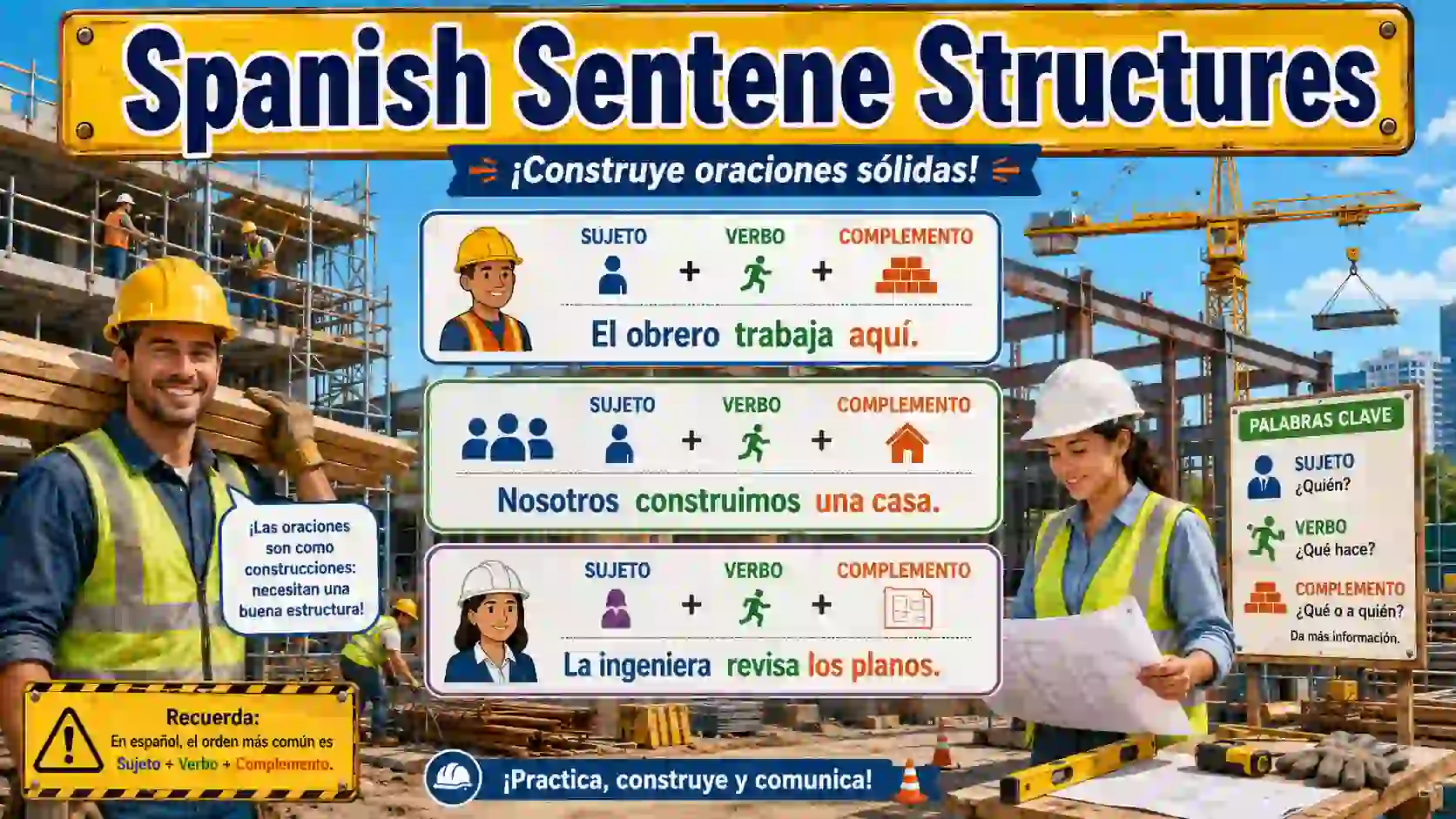
Spanish Sentence Structures
Review how Spanish builds complete sentences with word order, clauses, que, si and se.
Open guide →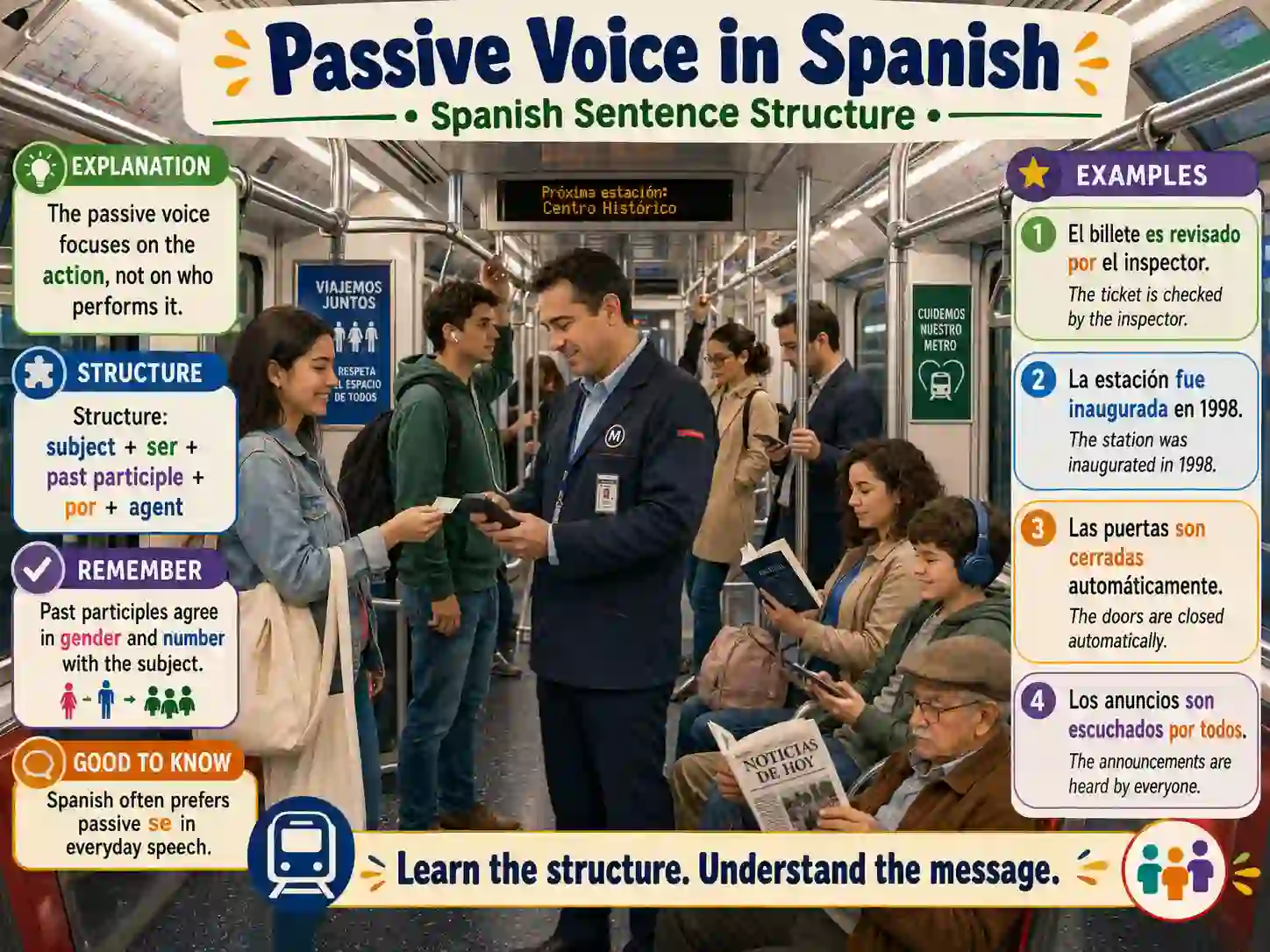
Passive Voice in Spanish
Compare se vive bien with passive forms such as se venden casas and fue escrito.
Open guide →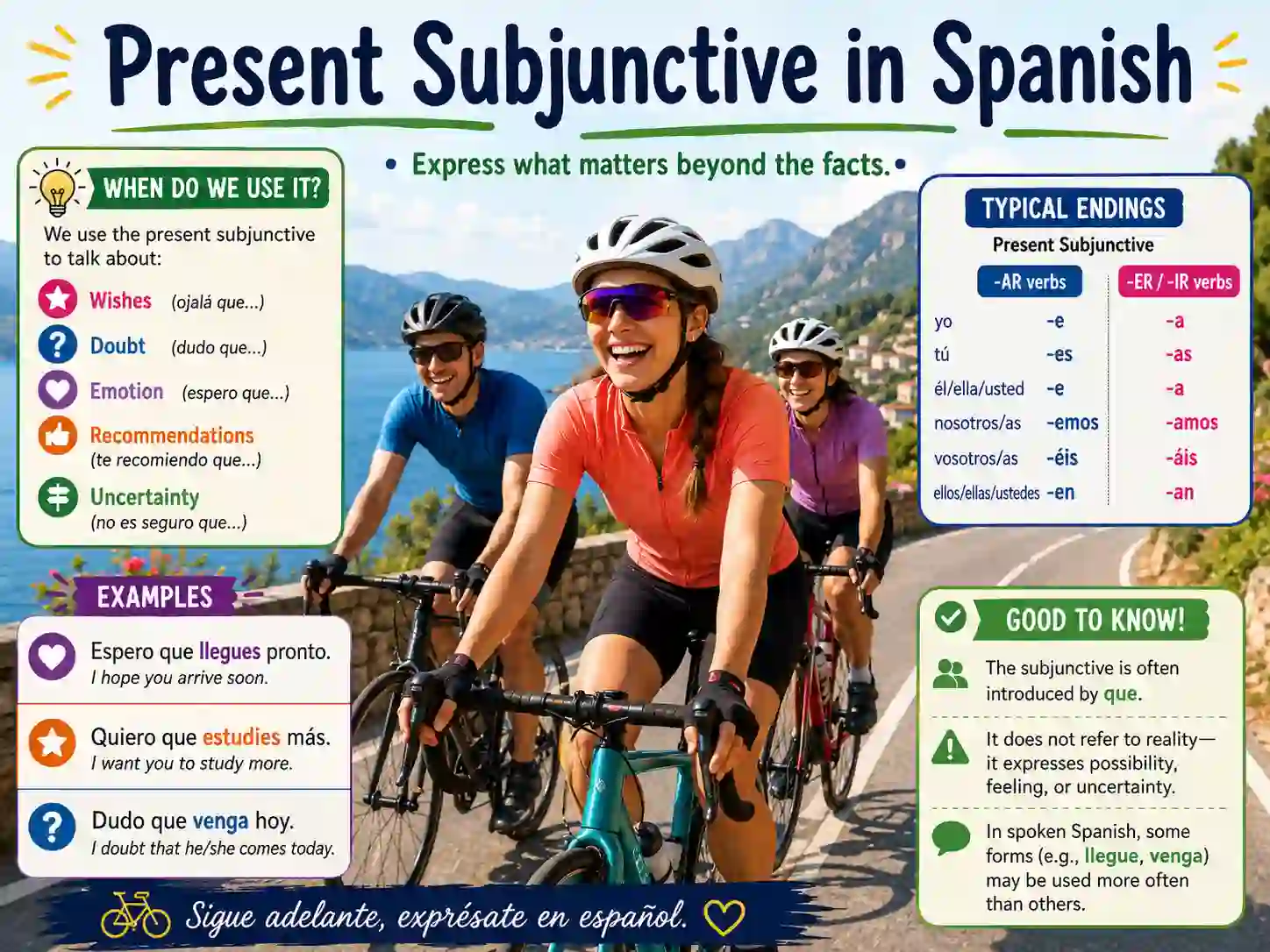
Present Subjunctive
Learn forms used after expressions such as es necesario que, es importante que and es posible que.
Open guide →When you need help
Practise impersonal sentences in real Spanish
Impersonal sentences help you speak more naturally about rules, weather, existence, general truths and evaluations. With MundoDele, you can practise these structures through clear patterns and real Spanish examples.
Spanish Tutoring
Useful if you need help with sentence structure, homework or weak points.
Private Spanish Lessons
Use impersonal structures in conversation, writing and personal practice.
Intensive Spanish Course
Work through grammar, speaking and sentence structure in a focused format.
FAQ
FAQ: impersonal sentences in Spanish
What is an impersonal sentence in Spanish?
An impersonal sentence in Spanish does not refer to a specific person as the subject. Examples include hay problemas, llueve, se vive bien and es importante estudiar.
Is hay impersonal in Spanish?
Yes. Hay is an impersonal form used to express existence: hay una mesa, hay tres libros, no hay problema.
What is impersonal se in Spanish?
Impersonal se speaks generally without naming a specific subject: se vive bien aquí, se come tarde, no se puede fumar.
What is the difference between impersonal se and passive se?
Impersonal se usually has no clear grammatical subject, as in se vive bien. Passive se often agrees with the noun that follows, as in se venden casas.
When do impersonal expressions use the subjunctive?
Many impersonal expressions use the subjunctive after que: es necesario que estudies, es importante que vengas, es posible que llueva.
What is the difference between es importante estudiar and es importante que estudies?
Es importante estudiar is general. Es importante que estudies refers to a specific subject and uses the subjunctive.

About
About MundoDele
MundoDele connects online Spanish lessons, tutoring, intensive Spanish courses, DELE and SIELE preparation, Business Spanish, grammar resources and cultural context into one personal Spanish learning platform.
Grammar pages are designed to explain Spanish clearly, with practical examples, sentence logic and useful links to related learning support.