Roman Zaragoza · Archaeological museum circuit
Roman Caesaraugusta Zaragoza: Four Museums and the €7 Ticket
Roman Zaragoza is not concentrated in one archaeological park. Its Forum, River Port, Baths and Theatre are preserved in four small museums beneath or between the modern streets. The €7 municipal pass makes sense if you want to understand how the Roman city actually functioned.
Visitor informationGuides and tickets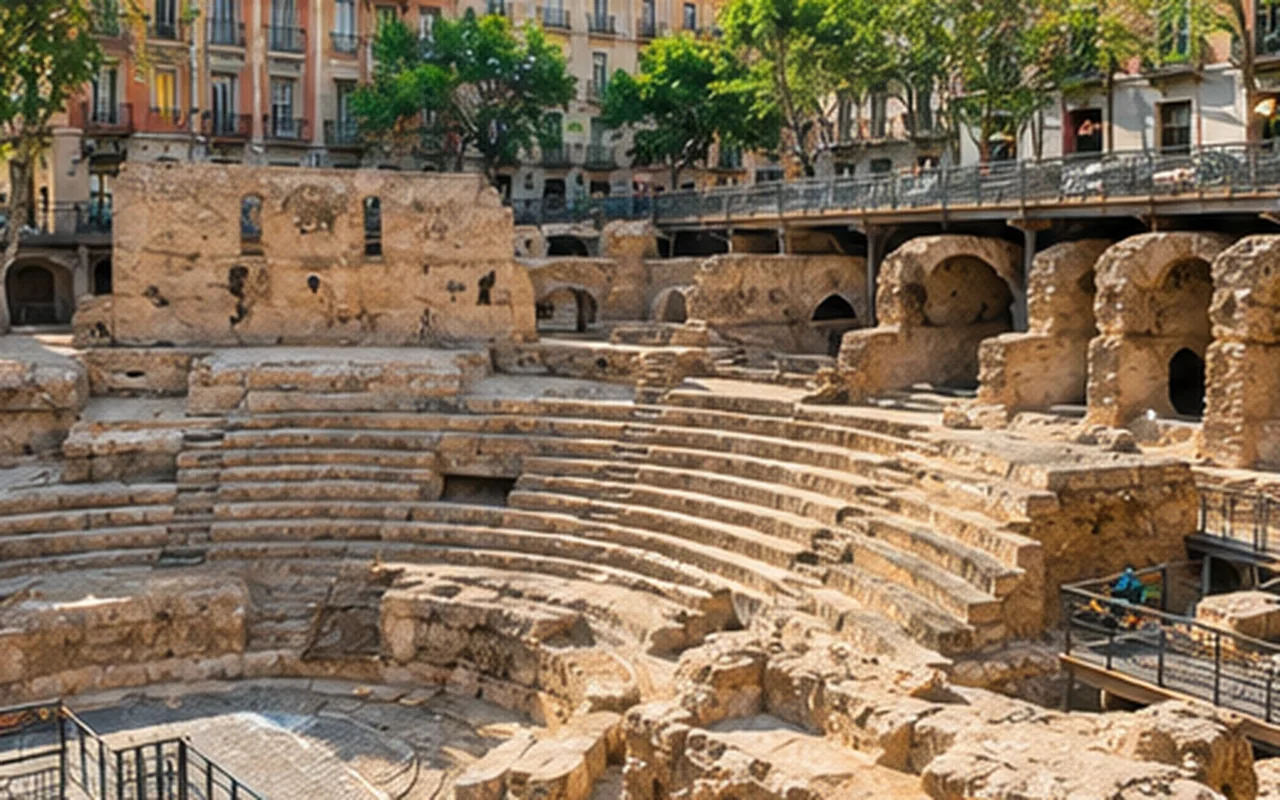
The history behind the visit
The Roman colony Caesaraugusta was founded under Augustus, probably in 14 BC. Its location in the middle Ebro valley gave it administrative, commercial and transport importance. Zaragoza's municipal archaeology route presents the functions of the ancient city through four separate buildings: the political forum, river transport facilities, public baths and a large theatre.
The sites are linked by geography and interpretation, not by a continuous above-ground ruin. A visitor can move between them on foot while recognizing how the modern city occupies the same core.
What to know before visiting
Facts checked November 2026; official opening and special-event schedules may change.
Forum: where political and civic life converged
The Forum Museum lies beneath today's Plaza de la Seo, where Roman civic, commercial and religious life was concentrated. The archaeological remains allow you to understand the scale and organization of the ancient center even though most of the original upper architecture no longer survives.
Visit the Forum before La Seo Cathedral if the aim is historical continuity. The relationship between a Roman civic space and later religious buildings in the same area is one of Zaragoza's most instructive urban transformations.
River Port: the Ebro as infrastructure
The ancient river port controlled part of the river trade system that linked Caesaraugusta with other settlements. The Museum of the River Port includes evidence for storage, waterfront administration and the management of goods. It helps explain why Zaragoza's location on the Ebro mattered economically as well as militarily.
Think of the river as a logistics route rather than just scenery. This is a useful contrast to the modern viewpoint from the Puente de Piedra near the Basilica del Pilar.
Public Baths: the social life of a Roman city
The preserved remains at the Baths Museum are evidence of a public institution that organized washing, sociability and urban routine. A Roman bath was not equivalent to a present-day spa; its use depended on a sequence of spaces, heating and water management.
Because the surviving foundations are fragmentary, the museum's explanatory models and reconstructions are particularly valuable. Read the plans rather than expecting a complete standing bathhouse.
Theatre: a major investment in public entertainment
The Theatre Museum presents the city's most visually recognizable Roman remains. Its large seating area reveals the importance of public performance and civic prestige under the early Roman Empire.
From the museum edge, compare the arc of seats and underlying structures with the apartment buildings surrounding them. Roman public architecture has become embedded in a working modern neighborhood, which is precisely why this circuit is more than a collection of isolated relics.
How the €7 and €9 passes differ
The municipality's Ruta Caesaraugusta pass costs €7 and covers the Forum, River Port, Public Baths and Theatre. Individual tickets currently listed are €4 each for Forum and Theatre, and €3 each for River Port and Baths. The combined four-museum ticket therefore costs much less than four individual entries.
The €9 five-museum pass adds the Pablo Gargallo Museum. However, city tourism has published a temporary-closure notice for the Gargallo Museum, so check whether the extra museum is open before choosing that pass.
The municipal information also lists free admission on the first Sunday of each month, plus several local or museum commemorative dates. The usual visiting schedule has Monday closures and different Sunday hours; check the operator's current calendar, especially around festivals.
Roman history vocabulary
El foro is the forum, el puerto fluvial is the river port, las termas are baths and el teatro is theatre. Ask ¿La entrada sirve para los cuatro museos? — Does the ticket work for all four museums?
The use of para is explained in the prepositions guide.
Guided tour or independent visit?
For independent visitors who plan all four Roman sites, the official €7 ticket is the clearest value proposition. Guided tours are worthwhile when they connect ruins to ancient city planning rather than simply walking between entrances. Check whether archaeology museum admission is included in the tour price.
Compare Zaragoza toursAffiliate link. MundoDELE may earn a commission. Confirm inclusions, language and availability at the operator before payment.
Available GetYourGuide experiences
Old-town walking tour for general city context; it does not substitute for admission to the four Roman archaeological museums.