Zaragoza · Basilica, Goya and the Ebro
Basilica del Pilar in Zaragoza: Goya Frescoes and Visitor Guide
The Basilica del Pilar is best understood as both a place of pilgrimage and a major work of monumental architecture. Its Holy Chapel sits within an enormous Baroque building, while two stages of Francisco de Goya's career can be read in the ceiling paintings.
Visitor informationGuides and tickets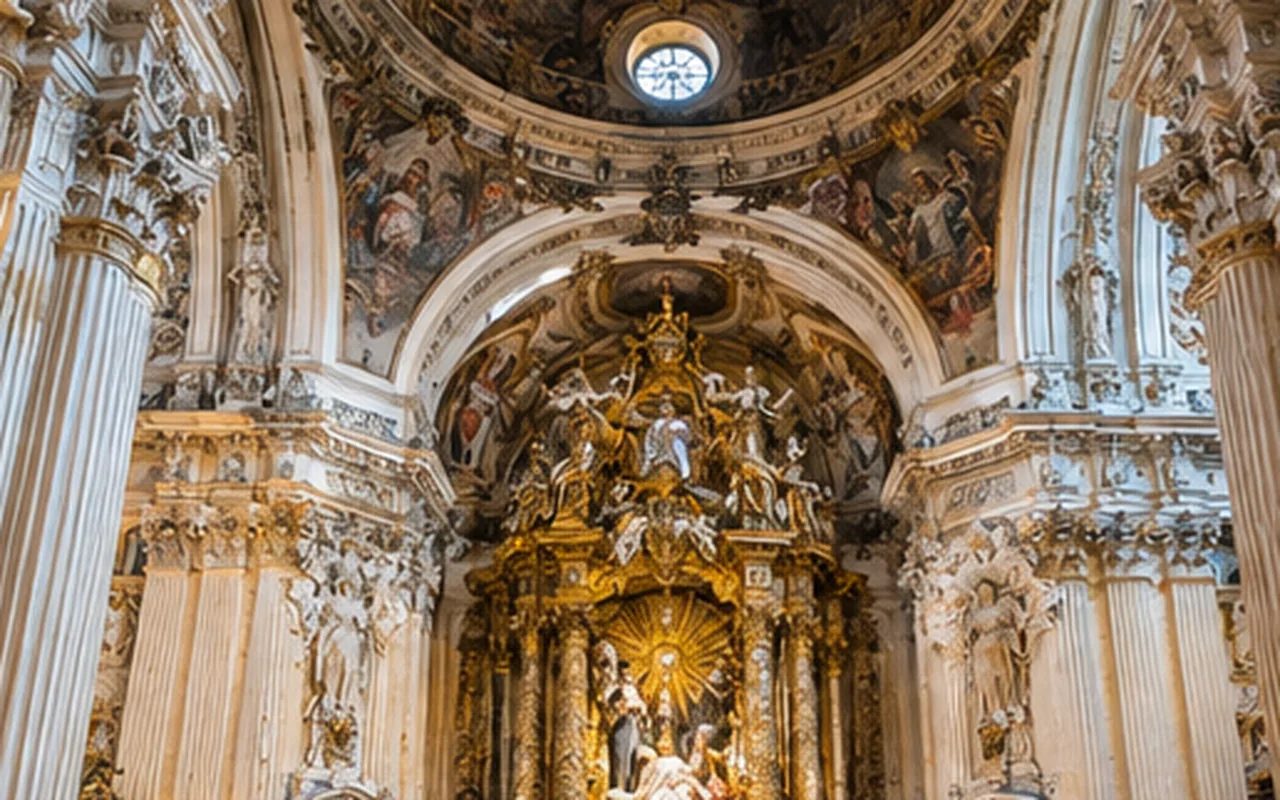
The history behind the visit
The tradition of the Virgin of the Pillar gives the basilica its religious meaning, while the vast form on Plaza del Pilar defines Zaragoza's skyline. The building stands close to the Ebro and is best approached from the city square, then viewed again from the Puente de Piedra across the river. Its domes and towers are elements of a planned monumental composition, not just a convenient photographic backdrop.
For visitors chiefly interested in art, the important distinction is between the Holy Chapel, the surrounding basilica and Goya's frescoes. These are different parts of the same building. Tourist viewpoint access and worship also operate under different conditions.
What to know before visiting
Facts checked November 2026; official opening and special-event schedules may change.
Goya's first major Zaragoza fresco: 1772
Goya was commissioned in 1772 to paint the vault of the small choir facing the Holy Chapel. The subject, The Adoration of the Name of God, predates the dark imagery for which he later became famous. Its upward composition and open sky ask the viewer to look through the architecture rather than at a picture hung on a wall.
Stand where you can see the vault in relation to the Holy Chapel. It is easier to understand Goya's design when you follow the ceiling's spatial rhythm instead of searching for a single familiar figure.
The Regina Martyrum dome shows a different Goya
Goya returned to Zaragoza for Regina Martyrum in the early 1780s. The subject honors the Virgin as Queen of Martyrs. The challenge was architectural as well as pictorial: he had to construct a convincing figural composition across a curved dome surface.
Zaragoza's tourism authority explains the artistic context and records preparatory sketches associated with the commission. Compare this work with the earlier vault: they show a painter negotiating ambitious religious patronage, expectations and scale, not simply producing decorative church ceilings.
These frescoes are especially relevant while the city's separate Goya museums have closure notices. The city tourism portal currently flags Museo Goya-Ibercaja and Museo de Zaragoza as temporarily closed; do not assume an old museum-hours listing is valid.
The Holy Chapel and pilgrimage are not a museum exhibit
The Santa Capilla is the focus of Marian devotion within the wider basilica. Religious visitors have a different purpose from tourists following an architectural route; the church remains in active use for liturgy and prayer.
Dress and conduct should reflect that function. A guided art-history visit should not interrupt worship, and tourist photography may be limited in particular spaces or services. Consult current on-site instructions before planning an interior photo session.
Tower views and riverbank perspectives
The official tourist route highlights views from one of the basilica's towers across the urban center and Ebro. This is a viewpoint activity, not a necessary component of entering the basilica itself. Confirm the tower's separate access arrangements, operating hours and whether lifts or steps are involved before buying an advertised “Pilar ticket.”
Outside, cross Puente de Piedra to the opposite bank or look back from the Balcón de San Lázaro. The riverfront viewpoint helps explain how the basilica dominates the city's principal public space. It is a good final stop after a cultural visit to La Seo, just east of the square.
A useful route for Goya and architectural history
Begin with the basilica ceiling paintings, then walk through the square to La Seo and its Mudéjar wall. The two cathedral complexes reflect very different stages of Zaragoza's religious and political history.
If you are following Goya's work in Aragon, check whether temporary exhibitions in the Aljafería are still open for your visit. A temporary display has been announced there during the renovation of other museum premises, but its schedule and visitor inclusions should be verified independently.
Useful words inside a basilica
La bóveda means vault, la cúpula means dome, la capilla means chapel and el fresco means fresco. Ask ¿Se puede subir a la torre? to find out whether the tower is accessible.
This structure uses se puede to ask about general permission. Explore the construction in Spanish grammar.
Guided tour or independent visit?
For architecture or Goya, look for a specialist guide who identifies the two fresco commissions. Do not assume a church walking tour includes a tower viewpoint or any museum admission. Check timing around religious services.
View Basilica guided tour in SpanishAffiliate link. MundoDELE may earn a commission. Confirm inclusions, language and availability at the operator before payment.
Available GetYourGuide experiences
Interior tour of the Basilica del Pilar offered in Spanish; confirm the language before booking.