
MundoDele Spanish Grammar
Spanish Relative Pronouns: Que, Quien, El Que and Lo Que
Learn how Spanish relative pronouns connect clauses and refer back to people, things, places, ideas or complete situations. This guide explains que, quien, el que, el cual, lo que, lo cual and the possession-based relative form cuyo.
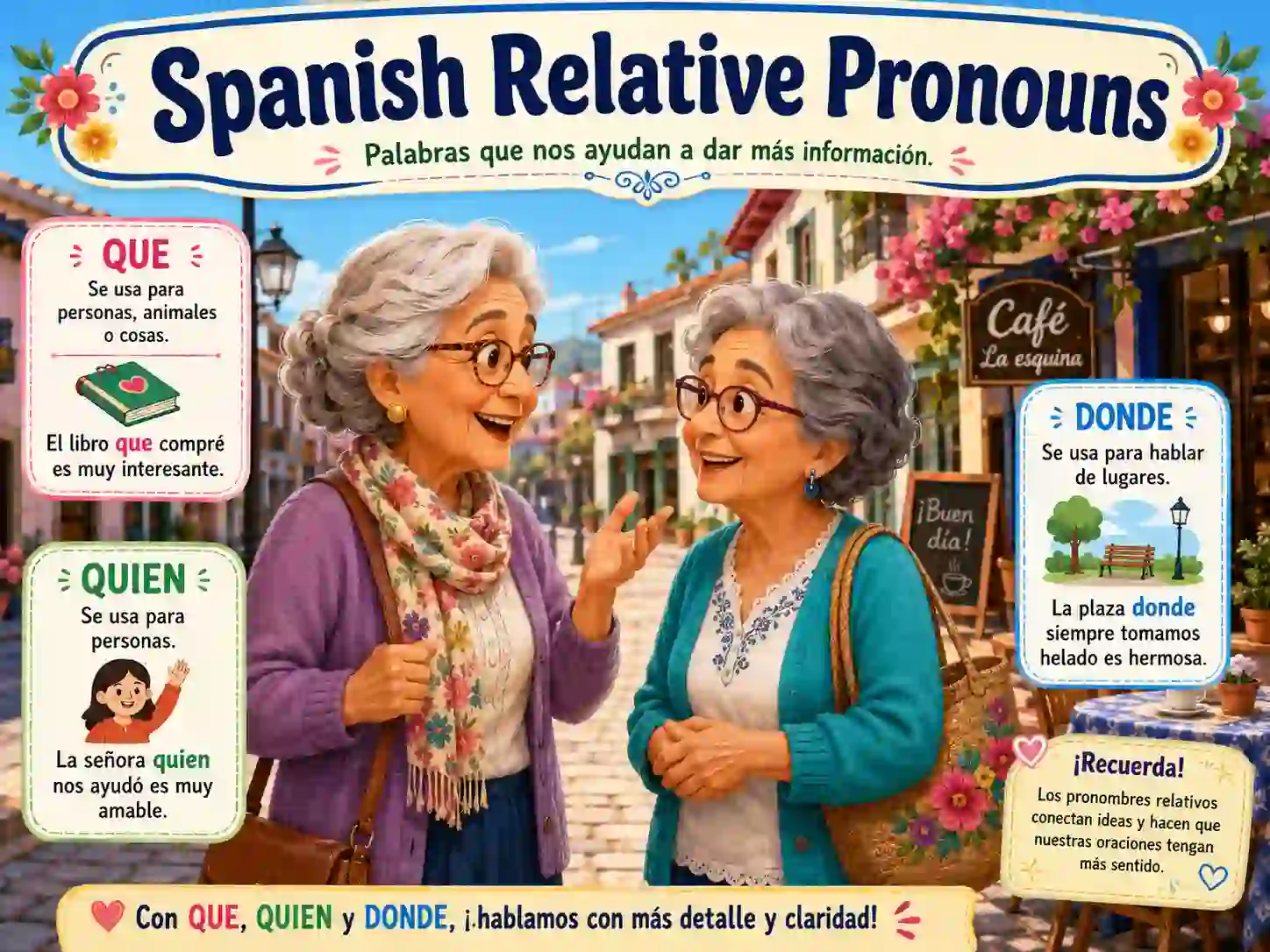
Definition
What are Spanish relative pronouns?
Relative pronouns connect a noun, person, thing or idea with a clause that describes or identifies it. The noun or idea referred to is called the antecedent.
La mujer que llama es Ana.
The woman who is calling is Ana.
El libro que leo es interesante.
The book that I am reading is interesting.
No entiendo lo que dices.
I do not understand what you are saying.
One relative clause: Conozco a una profesora que vive en Madrid.
Pronoun table
Spanish relative pronouns at a glance
| Relative form | Main reference | Spanish example | English meaning | Usage note |
|---|---|---|---|---|
| que | People, animals, things and ideas | El libro que leo. | The book that I read. | The most common relative pronoun. |
| quien / quienes | People | La persona con quien hablé. | The person with whom I spoke. | Common after prepositions and in non-defining clauses. |
| el que / la que | A known person or thing | La que vive aquí es Ana. | The one who lives here is Ana. | Agrees in gender and number. |
| los que / las que | Several people or things | Los que llegaron esperan fuera. | The ones who arrived are waiting outside. | Plural article forms. |
| el cual / la cual | A stated antecedent | La ciudad, la cual conozco bien. | The city, which I know well. | More formal or clarifying. |
| los cuales / las cuales | Plural antecedent | Los informes, los cuales revisamos ayer. | The reports, which we reviewed yesterday. | Formal plural forms. |
| lo que | Unknown thing, idea or situation | No sé lo que quiere. | I do not know what he or she wants. | No stated gendered antecedent. |
| lo cual | A complete previous statement | Llegó tarde, lo cual me sorprendió. | He arrived late, which surprised me. | Refers back to the whole preceding idea. |
The basic connector
Que
Que is the most frequent Spanish relative pronoun. It can refer to people, animals, things and ideas. It does not change for gender or number.
| Antecedent | Spanish example | English meaning |
|---|---|---|
| Person | La mujer que vive aquí es profesora. | The woman who lives here is a teacher. |
| Thing | El coche que compró es nuevo. | The car that he or she bought is new. |
| Animal | El perro que ves es mío. | The dog that you see is mine. |
| Idea | La idea que propones es buena. | The idea that you propose is good. |
El libro que leo uses relative
que.
¿Qué libro lees? uses interrogative
qué.
People
Quien and quienes
Quien refers to one person. Quienes refers to several people. These forms are especially common after prepositions and in non-defining relative clauses.
| Structure | Spanish example | English meaning | Usage note |
|---|---|---|---|
| con quien | La mujer con quien hablé. | The woman with whom I spoke. | One person after a preposition. |
| con quienes | Los colegas con quienes trabajo. | The colleagues with whom I work. | Several people after a preposition. |
| quien between commas | Mi hermana, quien vive en Madrid, viene mañana. | My sister, who lives in Madrid, is coming tomorrow. | Adds extra information. |
| quienes between commas | Mis amigos, quienes estudian español, viajan mucho. | My friends, who study Spanish, travel a lot. | Plural non-defining clause. |
The normal sentence is
La mujer que vive aquí es profesora.
Without a preposition or commas, que is usually
more natural than quien.
Article-based forms
El que, la que, los que and las que
These forms agree with the person or thing they refer to. They can mean “the one who”, “the one that”, “the ones who” or “the ones that”.
| Form | Gender and number | Spanish example | English meaning |
|---|---|---|---|
| el que | Masculine singular | El que llegó tarde es mi hermano. | The one who arrived late is my brother. |
| la que | Feminine singular | La que vive aquí es mi amiga. | The one who lives here is my friend. |
| los que | Masculine or mixed plural | Los que estudian aprenden más. | The ones who study learn more. |
| las que | Feminine plural | Las que llegaron esperan fuera. | The ones who arrived are waiting outside. |
The same article-based forms are also common after prepositions: con el que, en la que, por los que and de las que.
Formal and clarifying forms
El cual, la cual, los cuales and las cuales
The cual forms agree with the antecedent and are generally more formal than que. They are useful after prepositions, in non-defining clauses and when a longer sentence could otherwise be ambiguous.
| Form | Spanish example | Typical use |
|---|---|---|
| el cual | El proyecto, el cual empezó ayer, es importante. | Masculine singular, formal clarification. |
| la cual | La ciudad, la cual conozco bien, es hermosa. | Feminine singular. |
| los cuales | Los documentos, los cuales revisamos ayer, están listos. | Masculine or mixed plural. |
| las cuales | Las normas, las cuales cambiaron, son importantes. | Feminine plural. |
| en el cual | El contexto en el cual ocurrió. | Formal structure after a preposition. |
In ordinary everyday clauses, que is normally simpler and more natural: El libro que leo.
Neutral reference
Lo que and lo cual
Lo que and lo cual are neutral relative expressions. They do not agree with a masculine or feminine noun.
| Form | Reference | Spanish example | English meaning |
|---|---|---|---|
| lo que | An unknown thing | No sé lo que quiere. | I do not know what he or she wants. |
| lo que | An idea or action | Lo que necesito es tiempo. | What I need is time. |
| lo que | A complete situation | Lo que pasó fue extraño. | What happened was strange. |
| lo cual | A complete previous statement | Llegó tarde, lo cual me sorprendió. | He arrived late, which surprised me. |
| lo cual | Previous event or conclusion | Cancelaron la reunión, por lo cual volvimos a casa. | They cancelled the meeting, so we returned home. |
lo que introduces “what” or “the thing that”
lo cual normally refers back to a complete previous statement
Prepositional structures
Relative pronouns after prepositions
When the verb or expression requires a preposition, the preposition must remain in the relative clause. Spanish then commonly uses quien, article-based que forms or cual forms.
| Pattern | Spanish example | English meaning | Style note |
|---|---|---|---|
| con quien | La persona con quien hablé. | The person with whom I spoke. | Person after a preposition. |
| con la que | La persona con la que hablé. | The person I spoke with. | Common alternative. |
| en el que | El país en el que vivo. | The country in which I live. | Common for things and places. |
| por la que | La razón por la que vine. | The reason why I came. | Common fixed pattern. |
| de la cual | La propuesta de la cual hablamos. | The proposal about which we spoke. | More formal. |
| para quienes | Las personas para quienes trabajo. | The people for whom I work. | Plural people reference. |
Say la persona con quien hablé, because the verb structure is hablar con alguien.
Essential vs additional information
Defining and non-defining relative clauses
A defining clause identifies exactly which person or thing is meant. A non-defining clause adds extra information about an already identified person or thing.
| Clause type | Spanish example | Function | Punctuation |
|---|---|---|---|
| Defining | El estudiante que llegó tarde perdió la clase. | Identifies which student. | No commas. |
| Non-defining | Mi hermano, que vive en Madrid, viene mañana. | Adds extra information about an identified brother. | Separated by commas. |
| Non-defining with quien | Mi profesora, quien conoce el tema, explicó todo. | Adds information about a person. | Separated by commas. |
| Formal non-defining | El informe, el cual revisamos ayer, está listo. | Adds formal clarification. | Separated by commas. |
Commas: additional information about an already identified noun
Relative possession
Cuyo, cuya, cuyos and cuyas
These forms express possession and correspond to English “whose”. They are best treated as relative determiners because they introduce a noun.
| Form | Possessed noun | Spanish example | English meaning |
|---|---|---|---|
| cuyo | Masculine singular | El autor cuyo libro leí vive en Chile. | The author whose book I read lives in Chile. |
| cuya | Feminine singular | La profesora cuya clase tomé es excelente. | The teacher whose class I took is excellent. |
| cuyos | Masculine plural | Los alumnos cuyos exámenes corregí aprobaron. | The students whose exams I corrected passed. |
| cuyas | Feminine plural | La empresa cuyas oficinas visitamos. | The company whose offices we visited. |
In la profesora cuya clase tomé, cuya is feminine singular because clase is feminine singular.
Continue with: Spanish Relative Determiners .
Accent contrast
Que vs qué, quien vs quién and cual vs cuál
Relative words normally appear without accents. Interrogative and exclamatory forms carry written accents.
| Relative form | Interrogative form | Difference |
|---|---|---|
| El libro que leo. | ¿Qué lees? | Que connects; qué asks. |
| La persona con quien hablé. | ¿Con quién hablaste? | Quien refers back; quién asks. |
| El tema del cual hablamos. | ¿Cuál prefieres? | Cual is relative; cuál asks for a choice. |
| La ciudad donde vivo. | ¿Dónde vives? | Donde connects a place; dónde asks for one. |
Continue with: Spanish Interrogative Pronouns .
Mini practice
Practice Spanish relative pronouns
Complete each exercise before opening the answer.
Exercise 1: choose que or quien
- La mujer ___ vive aquí es médica.
- La persona con ___ hablé es Ana.
- El libro ___ compré es interesante.
- Mis amigos, ___ viven en Chile, vienen mañana.
Show answers
1. La mujer que vive aquí es médica.
2. La persona con quien hablé es Ana.
3. El libro que compré es interesante.
4. Mis amigos, quienes viven en Chile, vienen mañana.
Exercise 2: choose the article form
- ___ llegó tarde es mi hermano. — masculine singular
- ___ vive aquí es mi amiga. — feminine singular
- ___ estudian mucho aprenden más. — masculine plural
- ___ llegaron primero esperan fuera. — feminine plural
Show answers
1. El que llegó tarde es mi hermano.
2. La que vive aquí es mi amiga.
3. Los que estudian mucho aprenden más.
4. Las que llegaron primero esperan fuera.
Exercise 3: choose lo que or lo cual
- No entiendo ___ dices.
- ___ necesito es tiempo.
- Llegó dos horas tarde, ___ me sorprendió.
- Cancelaron el vuelo, por ___ volvimos al hotel.
Show answers
1. No entiendo lo que dices.
2. Lo que necesito es tiempo.
3. Llegó dos horas tarde, lo cual me sorprendió.
4. Cancelaron el vuelo, por lo cual volvimos al hotel.
Connected lessons
Continue with these Spanish pronoun pages
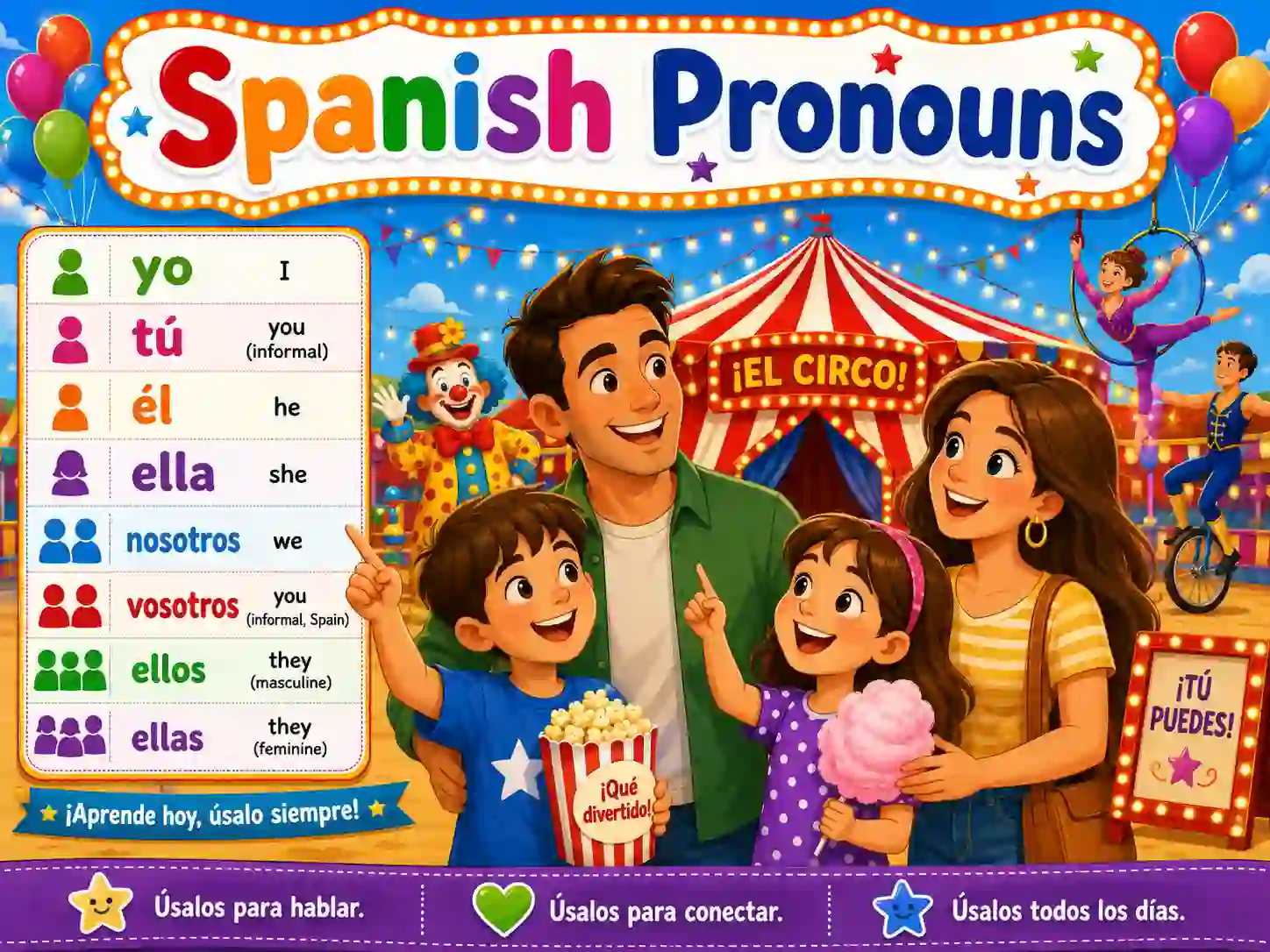
Spanish Pronouns
Return to the complete overview of personal, object, reflexive, possessive and relative pronouns.
Open overview
Spanish Interrogative Pronouns
Compare que with qué, quien with quién and cual with cuál.
Open lesson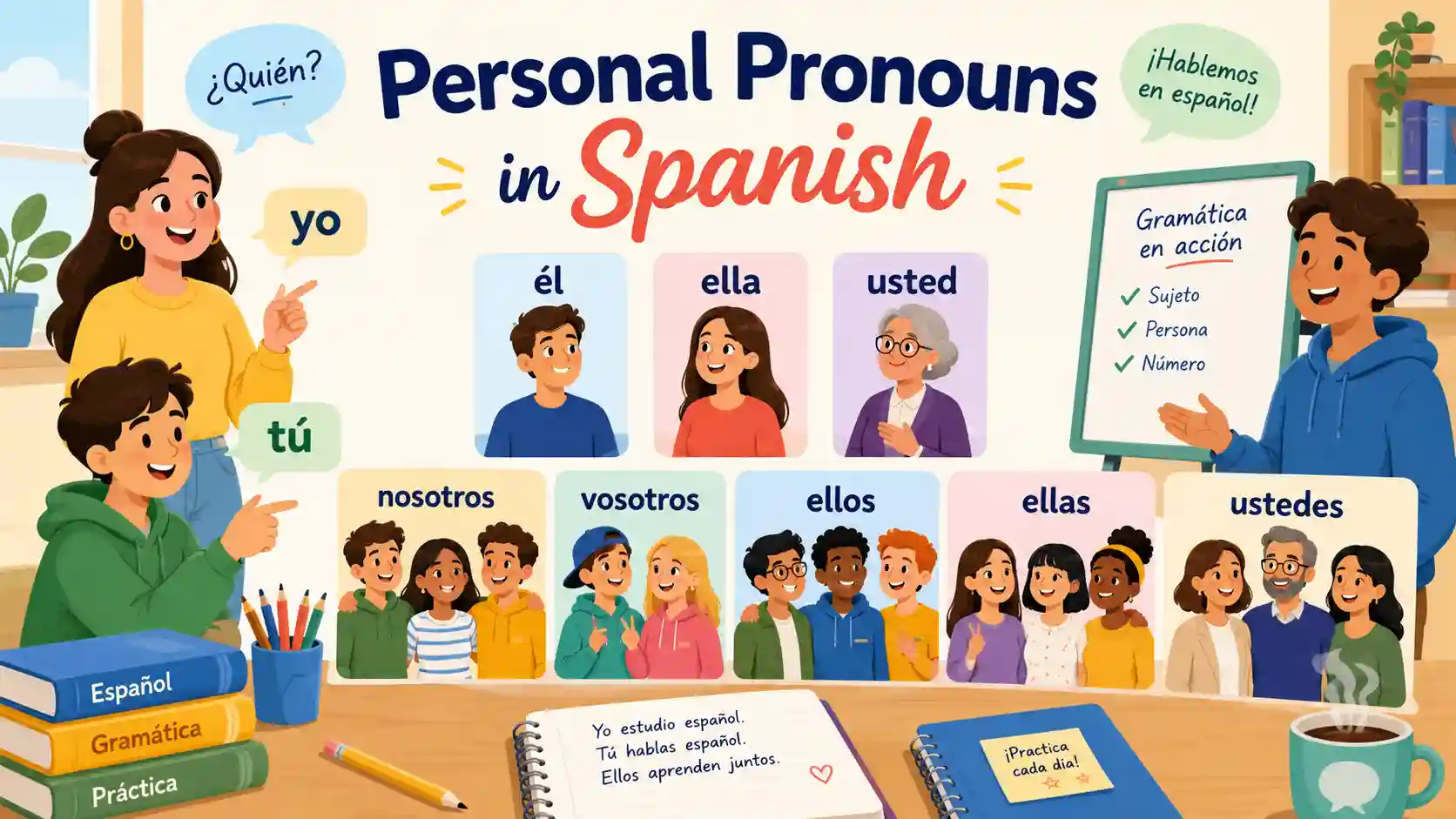
Spanish Personal Pronouns
Review the personal-pronoun system before building longer clauses about people.
Open lessonCommon errors
Common mistakes with Spanish relative pronouns
- Confusing que and qué: relative que has no accent; interrogative qué has one.
- Using quien for things: quien and quienes refer only to people.
- Using quien in every clause about a person: ordinary defining clauses normally use que: la mujer que vive aquí.
- Forgetting the preposition: say la persona con quien hablé.
- Confusing lo que and lo cual: lo que often introduces “what”; lo cual refers back to a complete previous idea.
- Overusing el cual: simple que is usually more natural in everyday Spanish.
- Forgetting commas: non-defining relative clauses are separated by commas.
- Agreeing cuyo with the owner: cuyo agrees with the possessed noun.
Frequently asked questions
Questions about Spanish relative pronouns
What are Spanish relative pronouns?
They connect a person, thing or idea with a clause that gives more information. Important forms include que, quien, el que, el cual and lo que.
What is the most common Spanish relative pronoun?
Que is the most common form. It can refer to people, animals, things and ideas.
What is the difference between que and quien?
Que can refer to people or things. Quien and quienes refer only to people and are especially common after prepositions and in non-defining clauses.
What does lo que mean?
Lo que means “what”, “the thing that” or “that which”. It refers to an unknown thing, idea or complete situation.
What is the difference between que and qué?
Relative que connects clauses and has no accent. Interrogative or exclamatory qué carries an accent.
Is cuyo a relative pronoun?
Cuyo, cuya, cuyos and cuyas function as relative determiners because they introduce a noun and agree with the thing possessed.
Practice and support
Practise relative clauses in complete Spanish sentences
Relative pronouns become easier when you practise antecedents, prepositions, commas, article agreement and the difference between que, quien, lo que and lo cual.
Spanish Tutoring
Work on relative clauses, prepositions, punctuation and individual grammar problems.
Private Spanish Lessons
Practise que, quien, el que, el cual, lo que and lo cual.
Intensive Spanish Course
Combine grammar with structured speaking, writing and sentence-building practice.

About MundoDele
Spanish learning for education, work and real communication
MundoDele combines clear Spanish grammar explanations with private lessons, tutoring, DELE preparation, Business Spanish and cultural context from the Spanish-speaking world.
The grammar guides use practical examples, connected lessons and clear sentence logic to help learners move from individual rules to confident Spanish use.