
Sevilla Setas Entry Ticket – Metropol Parasol Views, Architecture & Visitor Guide
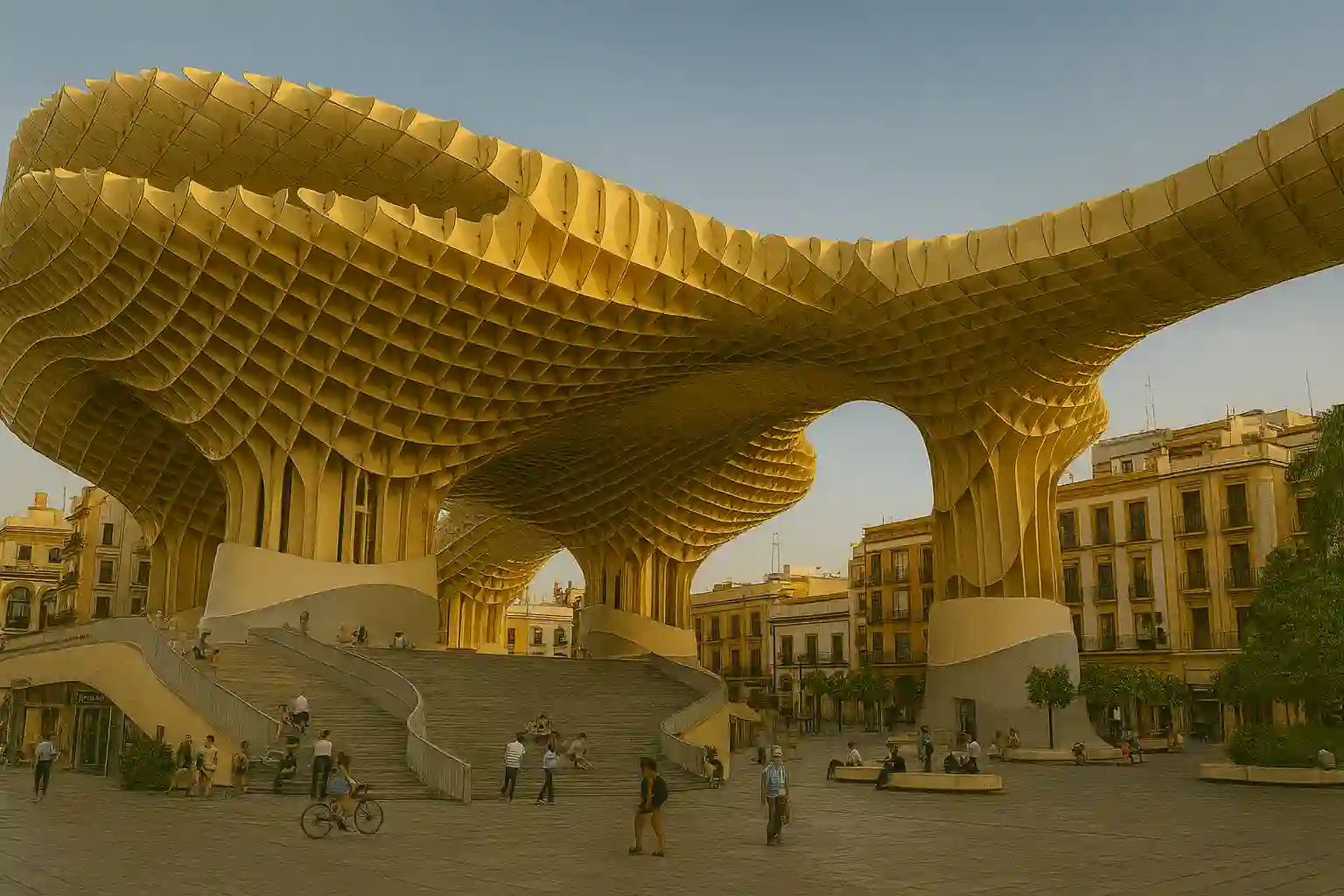
Quick answer: Visit Las Setas if you want an easy rooftop view, modern architecture and a quick orientation point in central Seville. Plan 45–60 minutes for the basic visit, 75–90 minutes if you include the immersive experience and photos, and go either early morning or around sunset.
What can you actually see at Las Setas?
Las Setas are a layered attraction. From the street, you see the large mushroom-like wooden canopy above Plaza de la Encarnación. From the top, you get one of Seville’s easiest panoramic views without climbing a historic tower. Below ground, the Antiquarium preserves Roman and later archaeological remains discovered during construction.
Included in the main visitor experience
- The elevator ride from the lower visitor level to the rooftop access area.
- The elevated walkway, a curving route across the wooden canopy.
- 360-degree views over the Cathedral, La Giralda, rooftops, church towers, La Campana, Alameda direction and parts of the Guadalquivir side.
- Feeling Sevilla, a short immersive multimedia experience that introduces Seville through light, sound and local atmosphere.
- Aurora, the evening LED light-and-sound experience on the structure after dark.
Also on or below the site
- Mercado de la Encarnación, the food market below the structure.
- Tapas bars and cafés around the plaza and in nearby streets.
- The Antiquarium, the archaeological museum under the plaza.
- The open public plaza, where you can look at the structure from below without buying a rooftop ticket.
- Photo angles from ground level, especially from the edges of Plaza de la Encarnación.
Tickets, discounts and free entry
- Standard rooftop ticket: This is the basic visitor ticket for the elevated walkways, viewpoint and the core Setas experience. It is the right choice for most first-time visitors.
- Online ticket / timed access: Useful if you want a specific sunset or evening slot, or if you visit on a weekend or during spring/autumn city-break season.
- Reduced tickets: Reduced categories can apply to students, seniors, people with disabilities, children or family-related categories depending on current official conditions. Bring documentation if you want to claim a reduced rate.
- Free entry: The plaza and the structure from below are free to see. Free rooftop entry is generally category-based, not a universal “free tourist day”. Children below a certain age, qualifying disability categories, official guides or local-resident categories may apply depending on current rules.
- Antiquarium: The archaeological museum below the plaza is a separate layer. Treat it as an add-on if you are interested in Roman Seville and the history beneath the modern square.
Is there a free day? For normal tourists, do not plan around a guaranteed weekly free day for the rooftop. If you are travelling on a budget, enjoy the structure from the plaza for free, then decide whether the rooftop view is worth the ticket.
What is special about the architecture?
Las Setas were designed by the Berlin architect Jürgen Mayer and opened in 2011 as part of the redevelopment of Plaza de la Encarnación. The structure is usually discussed as Metropol Parasol in architectural contexts and as Las Setas in everyday Sevillian speech.
The special point is the contrast: Seville is famous for Islamic, Gothic, Renaissance and Baroque architecture, but Las Setas are a contemporary wooden intervention in the middle of the old city. Visit Sevilla describes the design as six large mushroom-shaped parasols inspired by the vaults of Seville Cathedral and the ficus trees of nearby Plaza del Cristo de Burgos.
Architecture in simple terms
- Shape: Six large parasols, visually similar to mushrooms, which explains the nickname Las Setas.
- Material: Laminated timber, combined with concrete cores and structural reinforcement.
- Urban idea: Shade, market, events, archaeology and viewpoint are stacked into one public structure.
- Scale: About 150 metres long, 70 metres wide and around 26 metres high according to Seville tourism information.
- Effect: From below, it works as shade and urban furniture; from above, it becomes a slow rooftop path over the city.
Not everyone in Seville loved the project at first. It was expensive, modern and visually very different from the surrounding old streets. But that tension is part of its value: Las Setas show that Seville is not only a museum city. It is also a city where old, archaeological and contemporary layers coexist in the same square.
Best time of day and how long to plan
Best visiting times
- Early morning: Best for lower crowds, cooler temperatures and clearer photos of the structure itself.
- Late afternoon: Best compromise if you want warmer light without arriving in the densest sunset crowd.
- Sunset: Most atmospheric, but also the most popular time. Book ahead if the exact timing matters.
- After dark: Best for Aurora and city lights. Less useful if your main goal is detailed skyline orientation.
How much time?
- 30–45 minutes: Fast rooftop walk and quick photos.
- 45–60 minutes: Standard visit with unhurried viewing platform time.
- 75–90 minutes: Rooftop, Feeling Sevilla and night/light experience.
- 2–3 hours: Add the Antiquarium, market, coffee or tapas nearby.
Busy and quieter days
Las Setas are central and easy to add to almost any Seville walk, so crowding is less about one single season and more about time of day, weather and weekend rhythm.
- Busiest: Friday evening, Saturday, Sunday afternoon, public holidays, sunset slots and mild spring/autumn weekends.
- Usually quieter: Monday to Thursday mornings, very early opening time, late evening outside major holiday periods, and very hot summer afternoons.
- Best for photography without crowds: Morning shortly after opening or late afternoon before the sunset rush.
- Best for atmosphere: Sunset and after dark, especially if you want Aurora and illuminated city views.
Is it worth it in rain, wind or cold?
In light rain: It can still be worth it if you already have a ticket, but the rooftop is open-air and views may be grey or reduced. The market, cafés, Feeling Sevilla and Antiquarium make the visit less weather-dependent.
In heavy rain or strong wind: Do not make the rooftop your priority. The walkway can feel exposed, and the view is the main reason to pay for the ticket.
In cold weather: Yes, it can be worth it. Seville winters are usually mild, but the top can feel windy after dark. Bring a light jacket and use the visit as a short viewpoint stop rather than a long outdoor stay.
In summer heat: Avoid midday. The structure gives shade below, but the rooftop walkway is exposed. Morning, sunset and night are much better.
What to do nearby
Las Setas are well placed for a short city route. You can treat them as a 45-minute viewpoint stop or as the start of a wider walk through central Seville.
What to eat around Las Setas
The rooftop bar is convenient, but the better food logic is below and around the plaza. Use the Setas as a viewpoint, then eat nearby rather than treating the rooftop as the main food stop.
- For a quick stop: coffee, fresh juice, tostada or a simple tapa around Mercado de la Encarnación.
- For something local: try espinacas con garbanzos, salmorejo, montaditos or tortillitas if available nearby.
- For evening: combine sunset at Las Setas with a tapas walk toward Salvador, Alfalfa or Alameda.
- For families: the plaza area is easier than narrow tapas bars because you can pause, sit and move around with children.
Is Las Setas good with children, seniors or mobility needs?
With children
Yes, especially if they like elevators, views and unusual shapes. The visit is short enough for children, and the plaza below gives space to move. Keep small children close on the rooftop walkway and avoid the hottest part of the day.
With seniors
Usually yes. Compared with La Giralda, Las Setas are easier because there is elevator access. The rooftop path still involves walking and slight ramps, so plan slowly, avoid crowded sunset pressure and bring a jacket for evening wind.
Accessibility note: GetYourGuide’s product information describes the visit as mostly accessible, with elevators and ramps, but notes limitations on parts of the footbridge route. For wheelchairs, strollers or specific mobility concerns, check the current access conditions before booking.
Spanish for architecture learners
Las Setas are a useful place to learn Spanish architecture words because the building is visual and easy to describe. Listen for how locals say Las Setas rather than the formal Metropol Parasol.
the mushrooms; the local nickname
viewpoint
walkway / footbridge
laminated timber
structure
roof / canopy
sunshade / parasol
vault, as in cathedral vaults
square
shade
sunset
rooftop terrace
Local Spanish tip
A natural sentence in Seville would be: “Vamos a subir a las Setas al atardecer para ver la ciudad desde el mirador.” That means: “Let’s go up Las Setas at sunset to see the city from the viewpoint.”
You may also hear people say “quillo” in very local Andalusian speech, but for visitors it is better to understand it than to force it.
Suggested mini-itineraries
One-hour visit
Arrive in the morning, go straight to the viewpoint, walk the full rooftop circuit, take photos toward the Cathedral and Giralda, then continue to Salvador or the Cathedral area.
Half-day around Las Setas
Start at Palacio de las Dueñas, continue to Las Setas, visit the market or Antiquarium, then walk toward La Campana, Salvador and the Cathedral. Finish with tapas in Alfalfa or Alameda.
Evening plan
Book Setas around sunset, stay for Aurora after dark, then go for tapas nearby or combine the evening with a flamenco show around Las Setas or the old town.
Rainy-day plan
Do not rely only on the rooftop. Use the visit as a short stop: Feeling Sevilla, market, Antiquarium, then continue to indoor sights such as Palacio de las Dueñas, Salvador or a flamenco show.