
Spanish Intensifiers: Muy, Tan, Demasiado & More
Learn how Spanish intensifiers make adjectives stronger, softer or more expressive with words such as muy, tan, demasiado, bastante, un poco and súper.
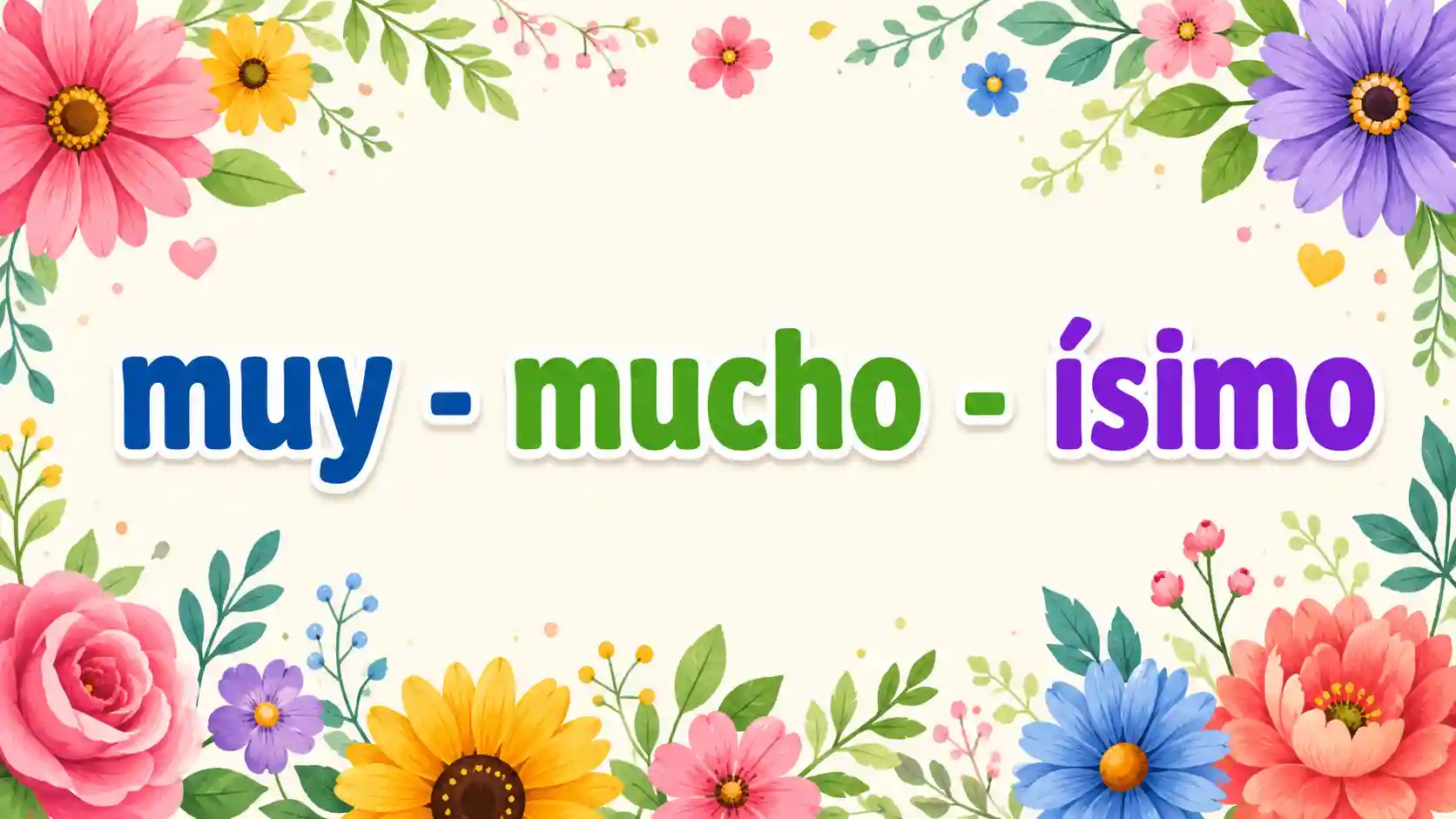
Why learn Spanish intensifiers with MundoDele?
MundoDele teaches intensifiers as tone tools, not just grammar words. You learn how to sound natural when you describe people, places, food, experiences and opinions — from neutral muy bueno to expressive buenísimo or casual súper interesante.
How do Spanish intensifiers work?
Intensifiers change the strength of an adjective or expression. Some are neutral, some sound emotional, and some can be informal or even excessive.
1. Muy + adjective or adverb
Use muy before adjectives and adverbs to say “very”. It does not change form.
Es muy interesante.
It is very interesting.
2. Tan + adjective/adverb + como
Use tan for “so” or in comparisons of equality with como.
Es tan fácil como parece.
It is as easy as it seems.
3. Demasiado means too much
Demasiado often has a negative or excessive meaning: “too”.
La comida está demasiado salada.
The food is too salty.
4. Bastante depends on context
Bastante can mean “quite”, “rather” or “enough”, depending on the sentence.
La película es bastante buena.
The movie is quite good.
5. Un poco softens meaning
Un poco makes an adjective softer or less direct.
Estoy un poco cansado.
I am a little tired.
6. Súper is common but informal
Súper is frequent in informal speech and writing, but it is less neutral than muy.
La clase fue súper útil.
The class was super useful.
Common mistakes with Spanish intensifiers
- Using muy with nouns: say mucho trabajo, not muy trabajo.
- Confusing muy and mucho: muy interesante, but trabajo mucho.
- Using demasiado as neutral “very”: demasiado often means “too much”.
- Overusing súper: it sounds informal and should not replace muy in all contexts.
- Forgetting agreement with demasiado before nouns: demasiadas preguntas, not demasiado preguntas.
Exercises: Spanish intensifiers
Try the tasks first. The answers are hidden so you can check yourself after practicing.
Exercise 1: Choose muy or mucho
Complete each sentence with muy or mucho. Remember: muy modifies adjectives/adverbs; mucho can modify verbs or nouns.
- La clase es ___ interesante.
- Trabajo ___ los lunes.
- Hay ___ ruido en la calle.
- Este ejercicio es ___ fácil.
Show answer key
- La clase es muy interesante.
- Trabajo mucho los lunes.
- Hay mucho ruido en la calle.
- Este ejercicio es muy fácil.
Exercise 2: Use demasiado correctly
Rewrite each idea with demasiado. Make it agree when it comes before a noun.
- The soup is too hot. → La sopa está ___ caliente.
- There are too many questions. → Hay ___ preguntas.
- The hotel is too expensive. → El hotel es ___ caro.
- There is too much noise. → Hay ___ ruido.
Show answer key
- La sopa está demasiado caliente.
- Hay demasiadas preguntas.
- El hotel es demasiado caro.
- Hay demasiado ruido.
Exercise 3: Soften the adjective
Use un poco to make each sentence softer or less direct.
- Estoy cansado.
- La explicación es difícil.
- El café está frío.
- La habitación es pequeña.
Show answer key
- Estoy un poco cansado.
- La explicación es un poco difícil.
- El café está un poco frío.
- La habitación es un poco pequeña.
Exercise 4: Choose the best intensifier
Choose a natural intensifier: muy, bastante, demasiado, tan or súper. More than one answer may be possible, but use the intended meaning.
- It is very clear. → Es ___ claro.
- It is too expensive. → Es ___ caro.
- It is as good as yesterday. → Es ___ bueno como ayer.
- The app is super useful. → La app es ___ útil.
Show answer key
- Es muy claro.
- Es demasiado caro.
- Es tan bueno como ayer.
- La app es súper útil.
Related Spanish grammar
Want personal guidance?
If Spanish adjectives, adverbs and intensity words feel confusing, individual guidance can help you use them naturally in real descriptions, opinions and conversations.
FAQ: Spanish intensifiers
What are intensifiers in Spanish?
Spanish intensifiers are words that increase, reduce or adjust the strength of adjectives, adverbs or expressions, such as muy, tan, demasiado and bastante.
What is the difference between muy and mucho?
Use muy before adjectives and adverbs, as in muy interesante. Use mucho with verbs or nouns, as in trabajo mucho or mucho tiempo.
Does demasiado mean very?
Not usually. Demasiado often means too much or excessive, so it can sound negative depending on context.
Is súper correct in Spanish?
Yes, súper is common in informal Spanish, especially in speech and casual writing, but muy is more neutral.
Can intensifiers change tone?
Yes. Muy is neutral, demasiado can sound excessive, un poco softens a statement and súper sounds more informal or expressive.

MundoDele – Spanish learning for education, work and intercultural understanding
MundoDele connects online Spanish courses, DELE preparation, Business Spanish and cultural context into a personal Spanish learning platform.
Travel and culture content help you understand Spanish not as abstract grammar, but as language used in real situations, conversations and written communication.