
Learn Spanish Nouns: Gender, Plural, Articles & Agreement
Learn how Spanish nouns work with masculine and feminine gender, singular and plural forms, articles, adjective agreement and full noun phrases.
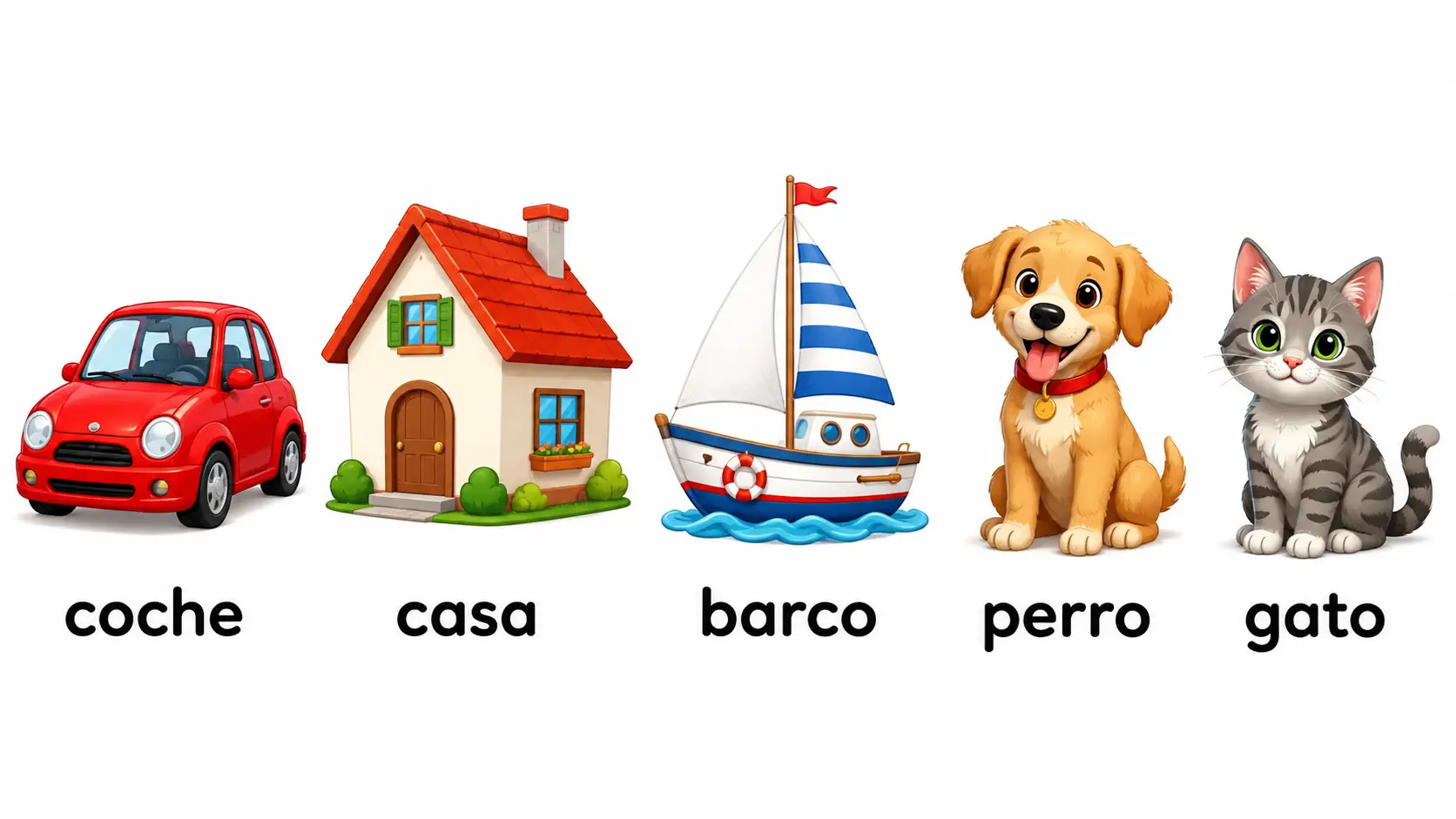
Why learn Spanish nouns with MundoDele?
MundoDele teaches nouns as complete building blocks, not isolated vocabulary. You learn each noun together with its article, plural form and adjective agreement, so Spanish phrases become easier to read, write and use in real communication.
How to use this Spanish nouns section
Start with gender, then plural forms, then articles and adjectives. This order helps you understand why Spanish noun phrases change in several places at the same time.
Learn masculine and feminine nouns with el and la.
Learn how nouns change with -s, -es and spelling changes.
Combine nouns with articles and adjectives: las ciudades grandes.
Core rules for Spanish nouns
Gender
Most nouns are masculine or feminine, and the article shows the gender.
el libro · la casa · el problema · la ciudad
Plural
Most nouns form the plural with -s after a vowel or -es after a consonant.
casa → casas · papel → papeles · luz → luces
Agreement
Articles and adjectives usually change to match noun gender and number.
el libro nuevo · las casas nuevas
Spanish nouns topics
Gender of Spanish Nouns
Learn masculine and feminine noun patterns, common endings, exceptions and agreement.
Spanish Plural Nouns
Learn plural endings, z → c changes, accent changes and full plural noun phrases.
Spanish Articles
Use el, la, los, las, un, una, unos and unas.
Spanish Adjectives
Connect nouns with adjectives and learn how agreement affects description.
Where to go next after Spanish nouns
After nouns, continue with articles, adjectives and determiners. These grammar areas all depend on noun gender and number.
Want personal guidance?
If noun gender, plural forms and agreement feel confusing, individual guidance can help you build Spanish noun phrases clearly from the beginning.
FAQ: Spanish nouns
What are Spanish nouns?
Spanish nouns name people, places, things, ideas and concepts. They usually have grammatical gender and number.
Do Spanish nouns have gender?
Yes. Spanish nouns are usually masculine or feminine, and their articles and adjectives must agree with that gender.
How do you make Spanish nouns plural?
Most nouns add -s after a vowel and -es after a consonant. Nouns ending in -z change z to c before -es.
Why should I learn nouns with articles?
Learning nouns with el or la helps you remember gender and use articles and adjectives correctly.
What should I learn after Spanish nouns?
After nouns, continue with articles, adjectives and determiners because they all depend on noun gender and number.

MundoDele – Spanish learning for education, work and intercultural understanding
MundoDele connects online Spanish courses, DELE preparation, Business Spanish and cultural context into a personal Spanish learning platform.
Travel and culture content help you understand Spanish not as abstract grammar, but as language used in real situations, conversations and written communication.