
Bilbao Walking Tour: 700 Years of the City in 2 Hours
From the medieval Siete Calles to the bourgeois Gran Vía to the Guggenheim riverbank — a small-group guided walk through the three historical layers that built Bilbao, led by a local who knows every building's story.
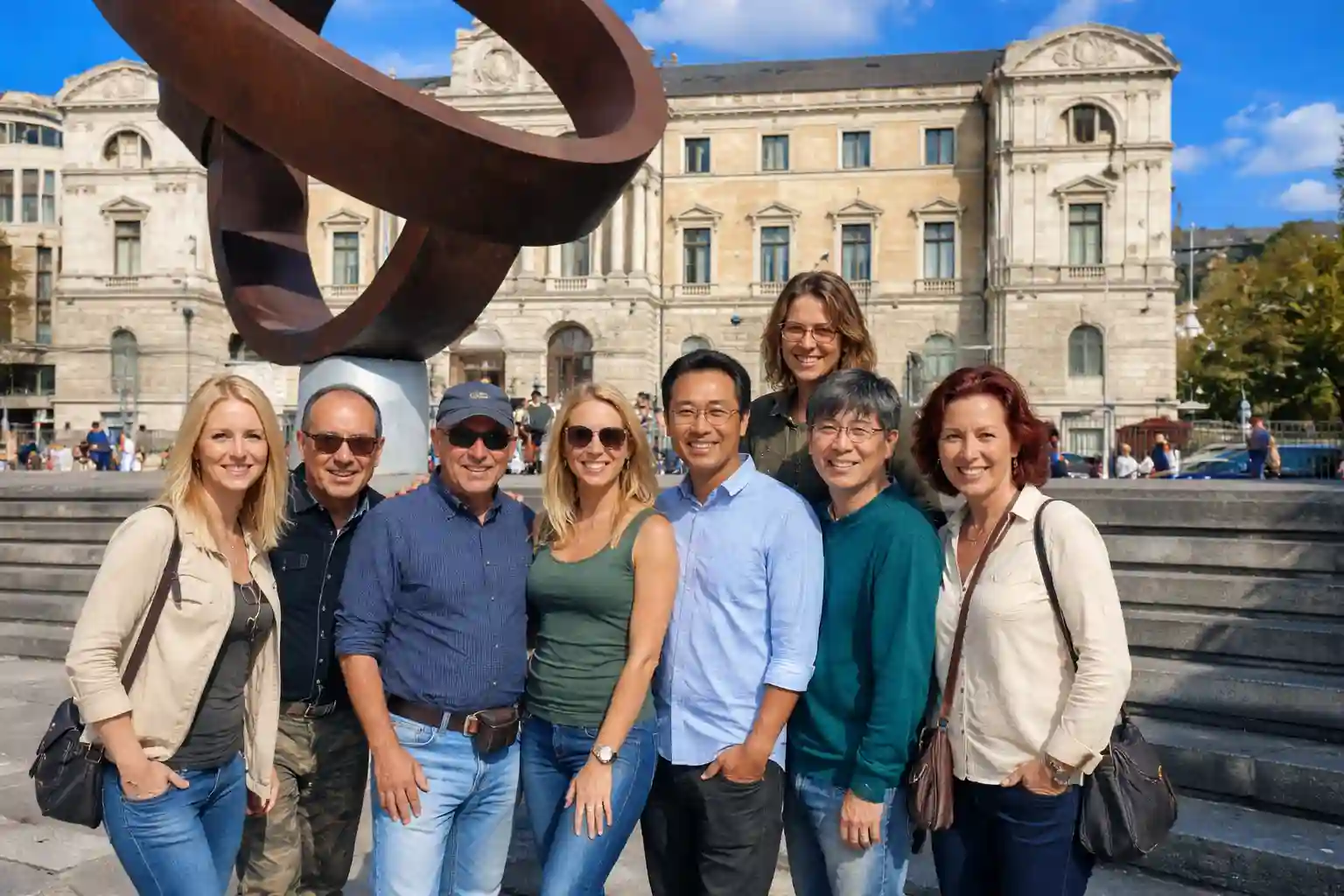
At a Glance
Bilbao's story unfolds in three distinct urban layers — each one visible from the street if you know what to look for. This 2-hour small-group walking tour reads all three: the medieval Casco Viejo and its Siete Calles (founded 1300), the 19th-century Ensanche built on industrial wealth, and contemporary Bilbao — Zubizuri bridge and the Guggenheim riverbank. Maximum 10 participants. Departs from the Arriaga Theater. Morning and afternoon slots available.
Bilbao's Three Historical Layers — Walking Tour Guide
Table of Contents
Why Start with a Walking Tour
Bilbao is a city that reveals itself in layers. Walk through the Casco Viejo and you are in a medieval street grid that has not fundamentally changed since 1300. Cross the bridge into the Ensanche and you step into a different century — wide boulevards, stone façades, the confident architecture of industrial wealth. Walk along the Nervión toward the Guggenheim and you are in a third city entirely: the post-industrial cultural reinvention that turned Bilbao from a declining port town into one of Europe's most discussed urban success stories.
A guided walk makes these transitions legible. The guide does not just name the buildings — they explain the economic forces, the historical events, and the social dynamics that produced each layer of the city. Two hours with a good guide saves you two days of trying to piece together the context on your own.
The small group format — capped at 10 participants — means the tour functions as a conversation rather than a lecture. Guides consistently receive reviews for their responsiveness, their willingness to answer questions, and their ability to adapt the commentary to what the group is actually interested in.
Three Eras, One City
The walking tour is structured around Bilbao's three distinct historical phases — each one a response to the economic and social conditions of its time, each one still physically present in the city today.
Founded 1300
Medieval Casco Viejo
The Siete Calles, the market, the churches. Commercial hub between Atlantic trade and the Castilian interior. The original city.
19th Century
The Ensanche
Industrial expansion across the river. Bourgeois boulevards, banking dynasties, Basque iron wealth made permanent in stone.
From 1997
Contemporary Bilbao
The Guggenheim, the Zubizuri, the riverbank transformation. A city that reinvented itself through culture after industrial decline.
Each era is physically distinct and spatially separated — cross a bridge and you move from one century to another. The walking tour traces this progression from the Arriaga Theater, a neoclassical opera house at the exact border between old and new, and moves through all three zones in a coherent arc.
Layer 1: The Casco Viejo — Medieval Bilbao
Founded in 1300, Still the Heart of the City
Don Diego López de Haro, Lord of Biscay, founded Bilbao in 1300 on the east bank of the Nervión estuary. The town was commercial from the start — a transshipment point for Castilian wool heading to Flanders and English cloth coming the other way. The original settlement was organized around three streets running parallel to the river; by the end of the 14th century there were seven: the Siete Calles that give the old town its defining structure.
More than 700 years later, the Siete Calles are still there. The street grid is medieval. Many of the building footprints are medieval. The market, the churches, and the social life of the Casco Viejo have operated continuously for seven centuries — a remarkable fact for a city that was almost entirely burned and rebuilt multiple times during that period.
Landmarks of the Old Town
Recommended City Tour
Bilbao: Historical Area Small-Group Walking Tour
2-hour guided walk through Bilbao's three historical layers — medieval Casco Viejo, 19th-century Ensanche, and contemporary Guggenheim riverbank. Maximum 10 participants. Local expert guide. Departs from the Arriaga Theater. Morning and afternoon time slots available. The essential orientation to Bilbao — book it on arrival day.
Book Walking Tour on GetYourGuide →Layer 2: The Ensanche — Industrial-Age Bilbao
When Iron Made Bilbao Rich
In the second half of the 19th century, Bilbao became one of the most important industrial cities in Spain. The Biscayan iron and steel industry — fed by the ore deposits of the surrounding hills — produced the raw materials for British railways, European infrastructure, and a rapidly industrializing world. The wealth this generated was extraordinary, and it had to go somewhere.
It went into the Ensanche: the planned expansion district built across the Nervión from the old town. Where the Casco Viejo was organic, cramped, and medieval, the Ensanche was rational, spacious, and bourgeois — a grid of wide boulevards lined with stone apartment buildings, designed to house the merchants, bankers, and industrialists who were making Bilbao one of the wealthiest cities in Spain.
What the Tour Shows You
The Gran Vía — the Ensanche's main boulevard — is the visual centrepiece of this section. The lime trees that shade it, the ornate façades of the banking institutions, the department stores and clubs that opened in the late 19th century — all of it reflects a city confident in its industrial future. The guide explains which buildings belong to which banking dynasties, how the Basque financial system that grew here went on to define modern Spanish banking, and why the Ensanche looks more like Brussels or Paris than like the rest of Spain.
The railway station — another 19th-century landmark — is a particular highlight: its interior contains tile murals depicting the history of Bilbao, making it one of the more unusual art installations in the city. The Chavarri Palace, the Provincial Council of Bizkaia, and the City Hall are further stops that complete the picture of how Basque industrial wealth translated into architectural confidence.
Layer 3: Contemporary Bilbao — The Guggenheim Effect
The Reinvention of a Post-Industrial City
By the 1980s, the steel and shipbuilding industries that had made Bilbao wealthy for a century were in collapse. Unemployment was high, the riverbanks were industrial wasteland, and the city was losing population. What happened next became a case study in urban regeneration studied in planning schools around the world.
The decision to commission Frank Gehry's Guggenheim Museum — which opened in 1997 — was the centrepiece of a comprehensive plan to transform the post-industrial waterfront into a cultural and commercial district. The Guggenheim effect, as it came to be called, describes the broader urban regeneration that a single landmark building can trigger: new hotels, new investment, new infrastructure, and a fundamental shift in how a city is perceived internationally.
What the Tour Covers
The final section of the walk traces the Nervión riverbank — the former industrial corridor now converted into a pedestrian promenade connecting the old city to the new cultural district. The Zubizuri bridge — Santiago Calatrava's white glass-and-steel pedestrian arch — is both a functional crossing and a sculptural statement about what contemporary architecture can do for public space. The walk reaches the Guggenheim area, where Gehry's titanium curves are visible from the riverbank in their full context — set against the industrial landscape they replaced and the mountains behind the city.
"Beatrice was absolutely brilliant. She was incredibly knowledgeable and gave us an excellent tour of Casco Viejo and of Basque culture in general. We were particularly interested in hearing the Basque language, which Beatrice spoke fluently. It was the highlight of our trip so far."
— Verified GetYourGuide review"Great tour with José — helped us really connect with Bilbao and the history. He pointed out things we would have missed on our own. Would highly recommend."
— Verified GetYourGuide reviewThe Guggenheim Museum itself is not included in the walking tour — but the guide's commentary on the building, its context, and the urban transformation it catalysed equips you to visit it independently with a much richer understanding of what you are looking at.
Tips for Booking & What to Expect
Who This Tour Is For
- First-time visitors to Bilbao — book the walking tour on your first morning or afternoon; it calibrates everything you see for the rest of your stay
- History and architecture travelers — the three-era structure gives the city's physical development a coherent narrative that is hard to reconstruct independently
- Anyone who feels lost in a new city — 2 hours with a local guide produces a spatial and cultural orientation that a day of independent exploration often does not
- Basque language enthusiasts — several guides speak Basque (Euskara) and are happy to address its history and current status as part of the tour
Morning vs Afternoon Slot
- Morning (10:00): Mercado de la Ribera is at its most active — vendors setting up, locals shopping, the full sensory experience of a working Basque market
- Afternoon (16:00): The Casco Viejo pintxos bars are beginning to set out their counters; the tour ends at a good time to continue into an early evening food crawl
- Either slot pairs well with the evening Basque Food Tour — the walking tour provides the context, the food tour provides the dinner
What to Bring
- Comfortable walking shoes: The Casco Viejo cobblestones are uneven — not suitable for heels or thin-soled shoes
- Camera: Plaza Nueva, San Antón Church from the river, and the Zubizuri bridge are all worth photographing
- Curiosity: The small group format means questions are welcomed and often become the most interesting moments of the tour
Building Your Bilbao Itinerary
The walking tour is the foundation of any Bilbao visit — it provides the framework into which everything else fits. Follow it with the Basque Food Tour for the evening pintxos experience, the Bilbao boat tour for the Nervión perspective, and the Gaztelugatxe, Mundaka & Guernica day trip or San Sebastián day trip for the surrounding Basque Country. Three days covers the essential experience; the walking tour makes the most of day one.
Book the Bilbao Walking Tour
★★★★★ Small group · Max 10 · Casco Viejo · Ensanche · Guggenheim riverbank · 2 hours
Understand Bilbao Before You Explore It.
700 years of history in 2 hours. The medieval Siete Calles, the bourgeois Gran Vía, the Guggenheim riverbank — a local guide who connects the layers. The best first morning in Bilbao.
Max 10 participants · Morning & afternoon slots · Local expert guide
Book Bilbao Walking Tour on GetYourGuide →