
Business Spanish · Institutions · International Organizations
Business Spanish Training for Institutions & International Organizations
Targeted Spanish training for chambers of commerce, government agencies, universities, NGOs, foundations and international organizations preparing for delegation visits, official meetings, formal correspondence and cooperation with Spanish-speaking partners.
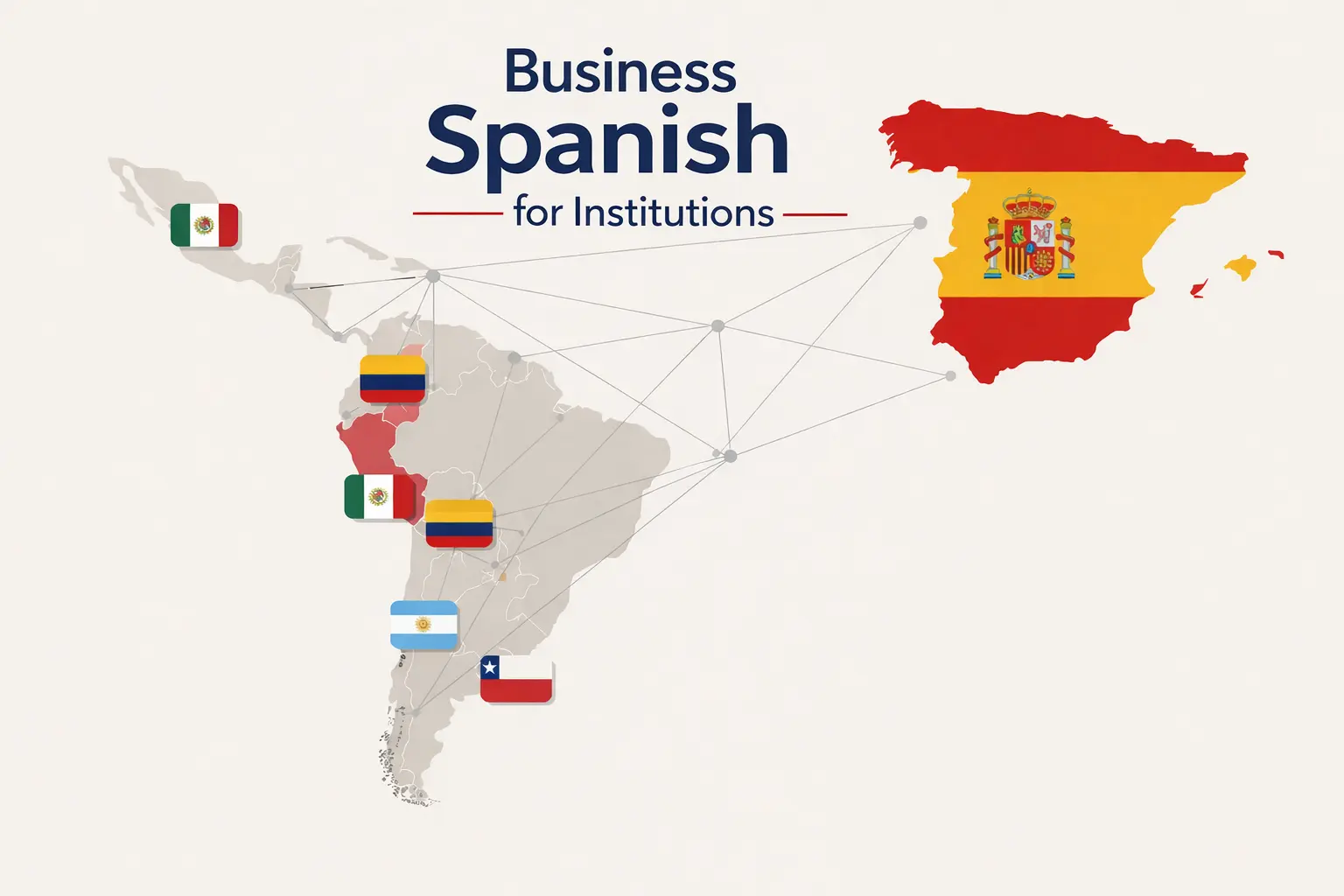
Institutional communication
Prepare the Spanish around the situation you actually face
Institutional communication often requires a different register from a sales call or everyday conversation. You may need to welcome a delegation, introduce an organization, chair a meeting, write to a public institution or discuss a cooperation project.
MundoDele training is built around these concrete situations. Language, forms of address, professional vocabulary and regional context can be adapted to the institution and the Spanish-speaking partners involved.
Who is this for?
Business Spanish for institutions with international contacts
Delegation visits, business missions, international meetings and cooperation with partner chambers.
Official meetings, international visits, formal communication and institutional presentations.
Academic cooperation, institutional partnerships, research projects and delegation programmes.
Project communication, international cooperation, meetings and partner coordination.
Events, institutional representation, cultural cooperation and international contacts.
Departments preparing for recurring communication with Spanish-speaking institutions or partners.
Real situations
What can the training prepare you for?
Receive and accompany international guests
Greetings, introductions, programme explanations, agenda coordination and professional small talk.
Participate confidently in formal discussions
Opening a meeting, making contributions, clarifying information, responding to questions and agreeing on next steps.
Present your organization in Spanish
Explain responsibilities, projects, services, figures and cooperation priorities.
Write professional institutional emails
Invitations, meeting requests, follow-up, cooperation enquiries and formal written communication.
Build professional contacts
Introduce yourself, explain your institution, discuss common interests and arrange follow-up.
Discuss international collaboration
Projects, responsibilities, timelines, agreements and future cooperation.
Training areas
Build the language around your institutional role
Practise professional forms of address, introductions, welcoming visitors and language for formal appointments.
Opening meetings, asking questions, clarifying information and confirming decisions.
Invitations, requests, confirmations, follow-up messages and professional tone.
See: Business Spanish Emails .
Present the institution, its role, projects, figures and cooperation priorities.
Start professional conversations, explain your organization, exchange contacts and arrange follow-up.
Build the terminology connected to your sector, organization, projects and target region.
See: Business Spanish Vocabulary .
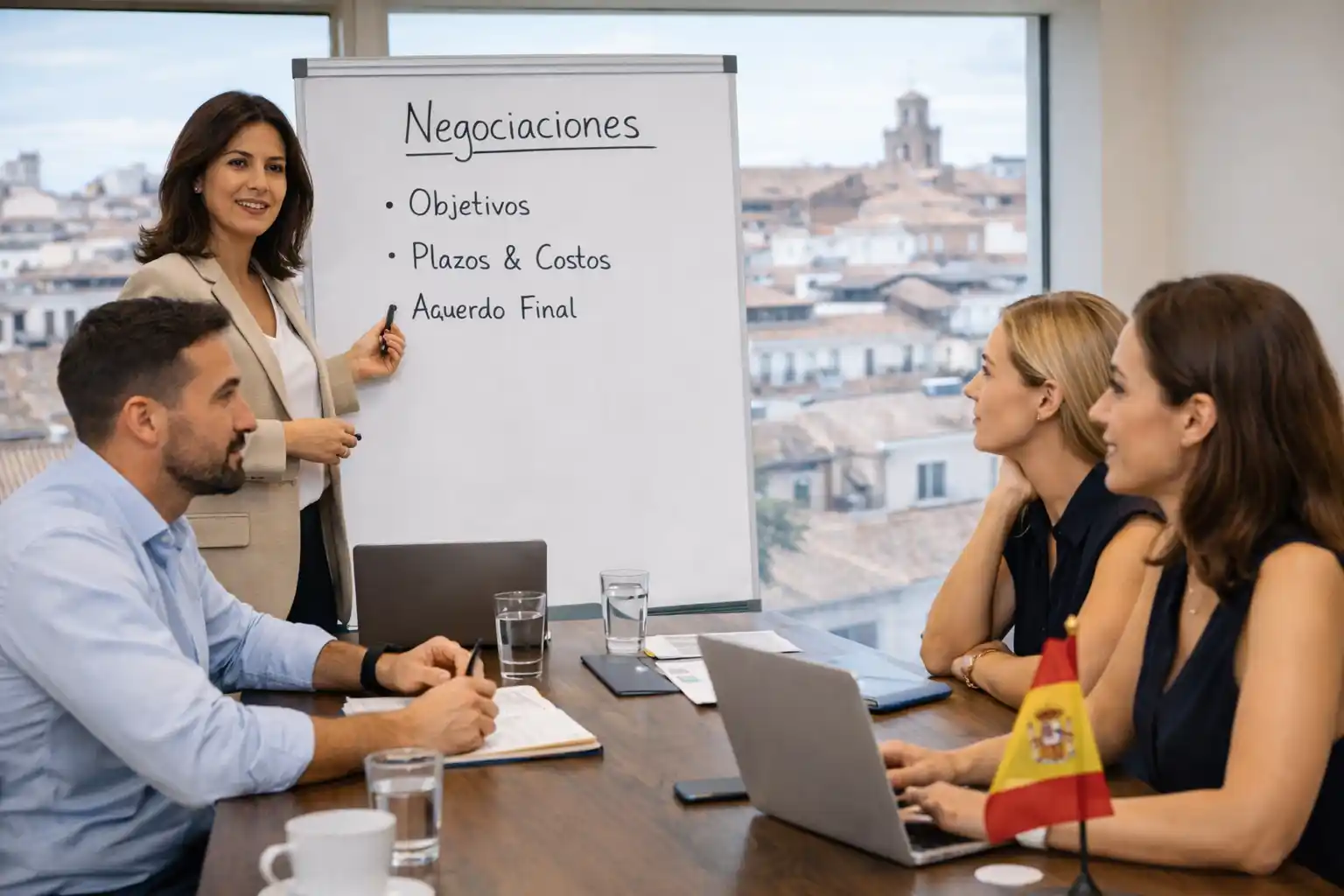
Before the training
Not sure where your team currently stands?
Start with the Business Spanish Level Check . It helps identify how confidently employees handle professional Spanish and where targeted training may be most useful.
Participants receive individual feedback, while the organization receives an overview of the team's current Business Spanish and development priorities.
The free Business Spanish Level Check is intended for internal training and development decisions. If you need a separate CEFR A1–C2 assessment with live speaking, human academic review and a personalised certificate, use the Spanish Proficiency Assessment for Companies & Employees .
Assessment & certification
Does your institution need training, a level check or a certificate?
These options serve different purposes. Use Business Spanish training to prepare real professional situations, the free Level Check to identify training priorities, and the proficiency assessment when a documented CEFR result and certificate are required.
Spanish Proficiency Assessment for Companies & Employees
A structured online assessment from CEFR A1 to C2 with live speaking, writing, human academic review and a personalised certificate for each participant.

Spanish Proficiency Assessment & Certificate
The main route for individuals who need a documented current Spanish level rather than Business Spanish training.
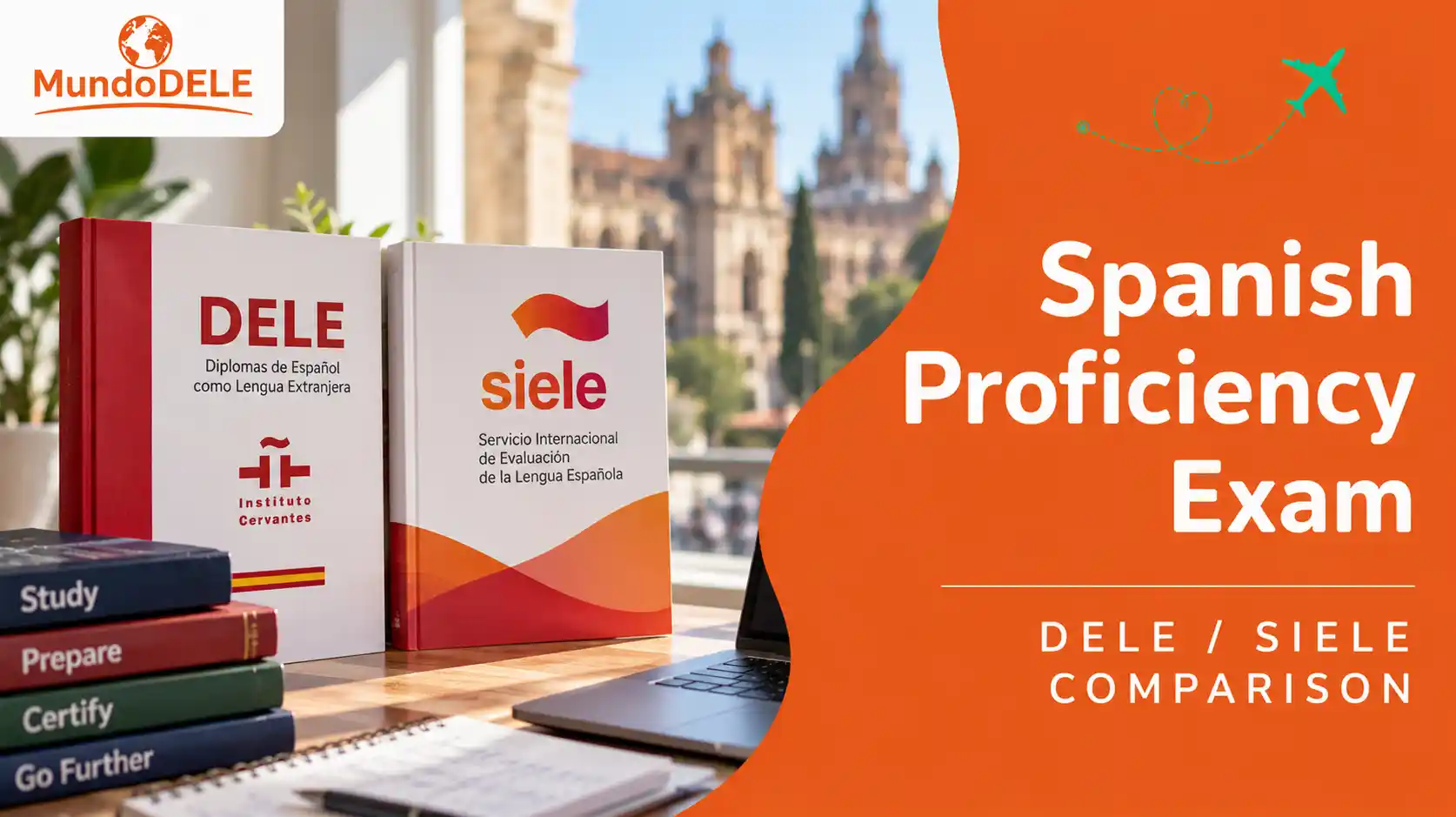
MundoDELE vs DELE vs SIELE
Compare certificate type, CEFR coverage, validity, exam format and typical use before deciding which route your institution needs.
Practical example
Sample dialogue: receiving a delegation
Training can use role plays based on the institutional situations your team expects to encounter. A delegation visit could begin like this:
Spain & Latin America
Institutional Spanish also depends on the people and market
Forms of address, regional vocabulary and the expected degree of formality can vary between countries and organizations. Titles may be important in some formal settings, while other institutions communicate in a more informal style.
A public authority, university, chamber of commerce and international NGO in the same country may also have different communication conventions. For that reason, training should focus on the actual counterpart and professional situation rather than rely on broad cultural assumptions.
For a practical overview, see Business Communication in Spain vs Latin America .
Formats & rates
Individual, group and tailored institutional training
1:1
Individual Training
Suitable for targeted preparation before a delegation visit, meeting, presentation, conference or business trip.
Teams
Group Training
Training for employees who share similar communication situations or work with the same Spanish-speaking partners.
Custom
Tailored Programmes
Programmes can be built around the institution, target countries, professional vocabulary and recurring communication scenarios.
Sessions are delivered online via Google Meet or Microsoft Teams with flexible scheduling.
How it works
From your situation to a focused training plan
Tell us the situation
Delegation, official meeting, conference, partnership, correspondence or recurring international communication.
Define the language needs
We focus on the vocabulary, communication tasks and target region relevant to the participants.
Practise the real scenario
Training uses dialogues, role plays, emails, presentations and other situations connected to the actual institutional context.
Institutional Business Spanish
Tell us what your team needs to prepare for
Delegation visit, official meeting, international partnership, conference or recurring communication with Spanish-speaking institutions: send us the situation and target region, and we can build the training around it.
Related resources
Prepare specific professional situations

Business Spanish for Meetings
Open discussions, give opinions, clarify information and agree on next steps.
View guide →
Business Spanish Emails
Formal greetings, requests, confirmations, follow-up and professional tone.
View guide →
Business Presentations in Spanish
Present an organization, projects, figures and priorities clearly.
View guide →
Networking & Trade Fairs
Introductions, institutional conversations, contacts and professional follow-up.
View guide →
Spain vs Latin America
Forms of address, regional vocabulary and professional communication differences.
View guide →
Business Spanish Level Check
Identify current professional Spanish skills and useful development priorities.
View level check →FAQ
FAQ: Business Spanish for Institutions
Which institutions is this Business Spanish training designed for?
The training is designed for chambers of commerce, government agencies, public administration, universities, research institutions, NGOs, international organizations, cultural institutes and foundations that communicate with Spanish-speaking partners.
What situations can the training prepare us for?
Training can focus on delegation visits, official meetings, institutional presentations, formal correspondence, conferences, networking and cooperation projects.
Can the Business Spanish training be tailored to our institution?
Yes. The training can be adapted to your institution, target region, professional vocabulary and the communication situations participants actually face.
Is the training available for groups?
Yes. MundoDele offers individual sessions and group training for teams or departments. Group training is priced on request.
How much does individual Business Spanish training cost?
A 60-minute individual online session costs £42, $56 or €49.
Can the training focus on Spain or a specific Latin American country?
Yes. Training can take the relevant target region into account, including forms of address, professional vocabulary and communication conventions.
What is the difference between the Business Spanish Level Check and the Proficiency Assessment?
The free Business Spanish Level Check is designed to identify workplace communication strengths and training priorities. The separate Spanish Proficiency Assessment for Companies & Employees assesses Spanish from CEFR A1 to C2 and includes a personalised certificate.
Can our team take a Business Spanish level check first?
Yes. The Business Spanish Level Check can help identify where employees currently stand and which professional situations may deserve additional practice.

The MundoDele view
Prepare the institutional situation before it becomes a language problem
A delegation visit, international meeting or cooperation project usually has predictable communication moments: welcome the participants, introduce the institution, explain the agenda, discuss the project and agree on what happens next.
Training these situations in advance gives participants language they can use directly when the real meeting begins.
Questions? info@mundodele.com