
Spanish Noun Gender: Masculine, Feminine & Agreement
Learn how Spanish noun gender works, how to recognize masculine and feminine nouns, and how gender affects articles and adjectives in real noun phrases.
Why learn Spanish noun gender with MundoDele?
MundoDele teaches gender through full phrases, not isolated word lists. You learn how masculine and feminine nouns control articles, adjectives and sentence clarity, so forms such as la ciudad bonita or el problema importante become easier to recognize and use.
How does noun gender work in Spanish?
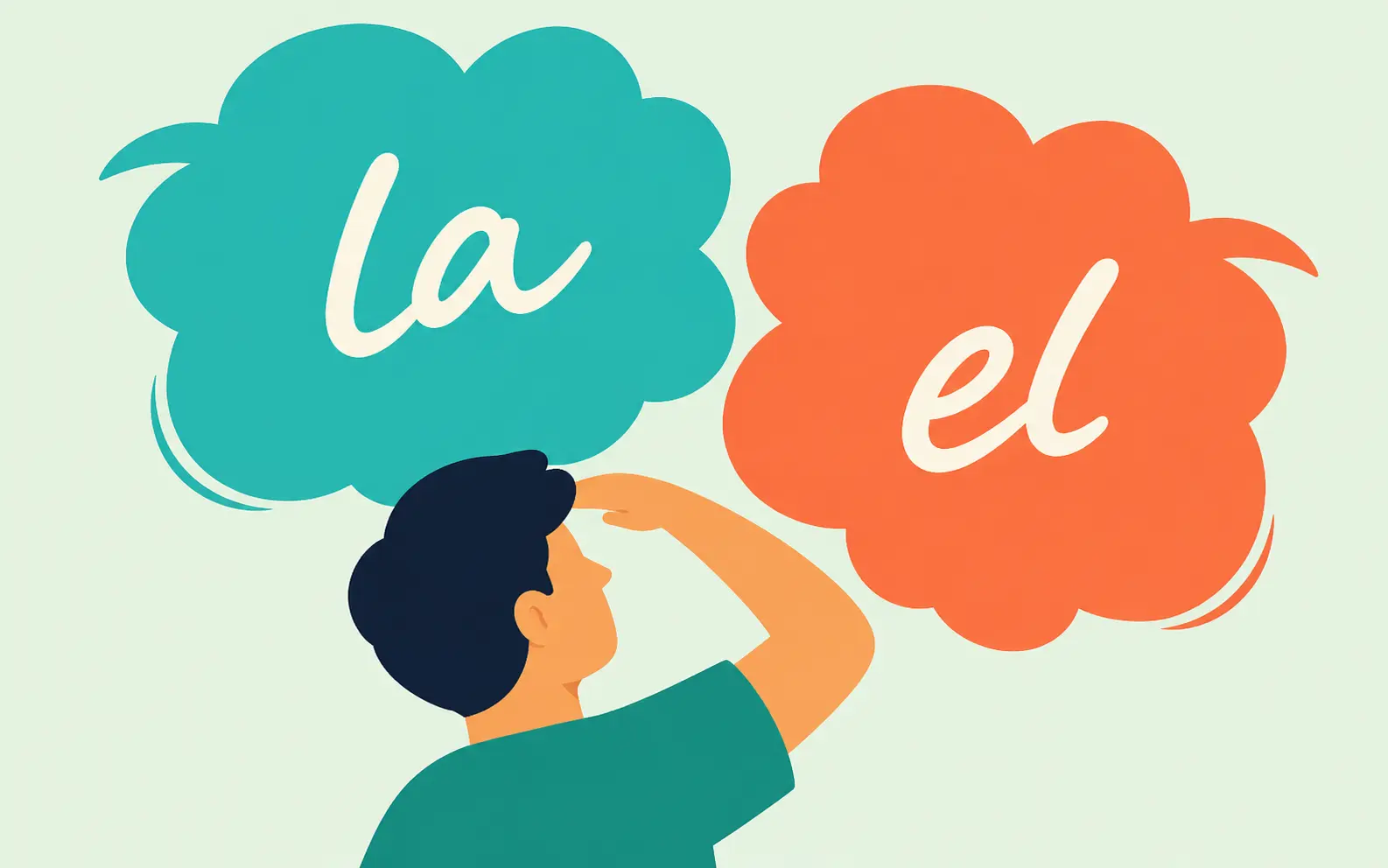
Gender is a grammatical feature of Spanish nouns. It does not always match biological gender or logic from English. The safest way to learn a noun is together with its article: el libro, la mesa.
1. Many -o nouns are masculine
Nouns ending in -o are often masculine and use el.
el libro · el coche · el teléfono
2. Many -a nouns are feminine
Nouns ending in -a are often feminine and use la.
la casa · la mesa · la palabra
3. There are important exceptions
Some nouns ending in -a are masculine, especially many words from Greek ending in -ma.
el problema · el tema · el sistema · el idioma
4. Some endings often signal feminine nouns
Many nouns ending in -ción, -sión, -dad and -tad are feminine.
la canción · la decisión · la ciudad · la libertad
5. Articles must agree with gender
The article changes according to masculine or feminine gender.
el libro · la casa · un problema · una ciudad
6. Adjectives often agree too
Many adjectives change form to match the noun.
el libro nuevo · la casa nueva · los libros nuevos · las casas nuevas
Common mistakes with Spanish noun gender
- Trusting only the final letter: el problema is masculine, although it ends in -a.
- Forgetting article agreement: say la ciudad, not el ciudad.
- Forgetting adjective agreement: say la casa blanca, not la casa blanco.
- Learning nouns without articles: memorize el libro, not only libro.
- Applying English logic: Spanish grammatical gender does not work like English natural gender.
Gender agreement in full noun phrases
Masculine singular
el libro nuevo
un problema importante
Feminine singular
la casa nueva
una ciudad importante
Masculine plural
los libros nuevos
unos problemas importantes
Feminine plural
las casas nuevas
unas ciudades importantes
Exercises: Spanish noun gender
Try the tasks first. The answers are hidden so you can check yourself after practicing.
Exercise 1: Choose el or la
Choose the correct definite article for each noun: el or la.
- ___ libro
- ___ casa
- ___ problema
- ___ ciudad
- ___ canción
Show answer key
- el libro
- la casa
- el problema
- la ciudad
- la canción
Exercise 2: Make the adjective agree
Choose the correct adjective form. Pay attention to masculine and feminine nouns.
- el coche (rojo / roja)
- la mesa (redondo / redonda)
- el sistema (importante / importantes)
- la palabra (nuevo / nueva)
Show answer key
- el coche rojo
- la mesa redonda
- el sistema importante
- la palabra nueva
Exercise 3: Correct the gender mistake
Rewrite each phrase with the correct article and adjective agreement.
- la problema importante
- el ciudad grande
- la libro nuevo
- el canción bonita
Show answer key
- el problema importante
- la ciudad grande
- el libro nuevo
- la canción bonita
Exercise 4: Build full noun phrases
Use the correct article and adjective form to build a natural Spanish noun phrase.
- book / new → ___ libro ___
- house / white → ___ casa ___
- cities / big → ___ ciudades ___
- problems / important → ___ problemas ___
Show answer key
- el libro nuevo
- la casa blanca
- las ciudades grandes
- los problemas importantes
Related Spanish grammar
Want personal guidance?
If noun gender and adjective agreement feel confusing, individual guidance can help you build correct Spanish noun phrases from the beginning.
FAQ: Spanish noun gender
How do you know if a Spanish noun is masculine or feminine?
Many nouns ending in -o are masculine and many nouns ending in -a are feminine, but there are important exceptions. It is best to learn nouns with their article.
Are all Spanish nouns ending in -a feminine?
No. Some nouns ending in -a are masculine, such as el problema, el tema, el sistema and el idioma.
Are nouns ending in -ción feminine?
Many nouns ending in -ción are feminine, for example la canción and la información.
Do adjectives change with noun gender?
Yes. Many adjectives change form to agree with masculine or feminine nouns, for example el libro nuevo and la casa nueva.
Should I learn Spanish nouns with articles?
Yes. Learning nouns together with el or la makes gender and agreement much easier.

MundoDele – Spanish learning for education, work and intercultural understanding
MundoDele connects online Spanish courses, DELE preparation, Business Spanish and cultural context into a personal Spanish learning platform.
Travel and culture content help you understand Spanish not as abstract grammar, but as language used in real situations, conversations and written communication.