
MundoDELE · Ibiza · Travel, language & culture
Formentera Day Trip from Ibiza: Ferry or Boat Tour?
Choose the day you actually want: time exploring Formentera on land, or swimming and lunch on a boat. These are different experiences, even when both listings say “Formentera day trip”.
By MundoDELE · Updated October 2026
Explore booking optionsPlan your day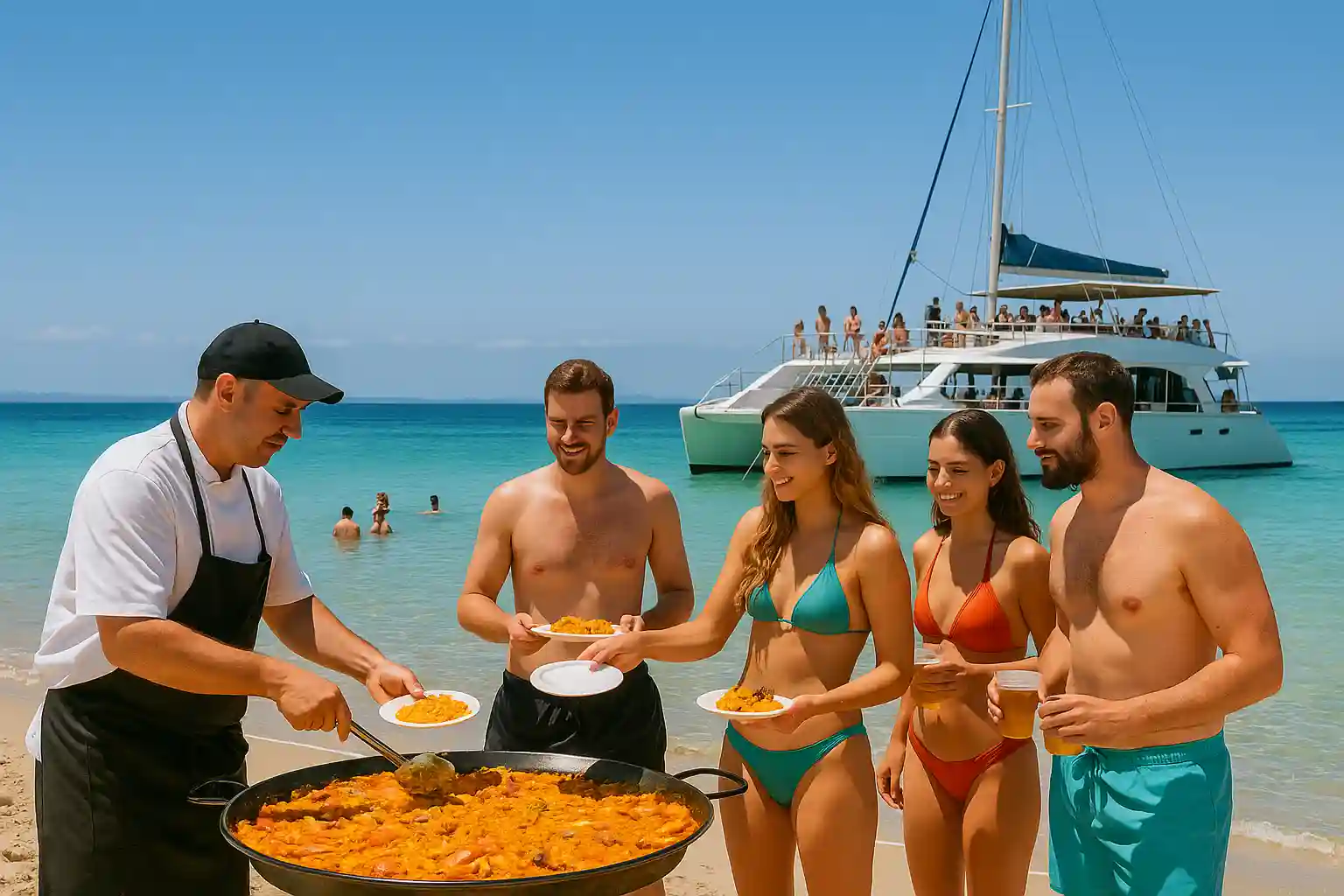
Ferry or excursion: make this decision first
For a beach, village and café day at your own pace, start with a return ferry ticket. Transport gets you to the island; it does not organise the hours between arrival and departure. Decide how you will reach your chosen beach or village from La Savina before you leave Ibiza.
Choose a boat excursion when swimming from the vessel, a shared itinerary and onboard food are the main attraction. Do not assume that a photograph of Ses Illetes means you will spend an afternoon sitting on its sand. Some excursions anchor offshore and provide swimming stops instead of beach landings.
A private charter is a third possibility, but “private”, “VIP” and “catamaran” are not interchangeable. Confirm the vessel, group arrangement, landing permissions and departure location in the actual offer. For an Ibiza-only swim day, compare the beach-hopping cruise before adding an inter-island journey.
Two relevant booking options
The linked Sea Experience excursion combines Ibiza transfers, a Formentera coastal cruise, offshore swimming, buffet lunch and an open bar. It also includes free time at La Savina. The swimming stops are offshore, not beach drop-offs; departure and return arrangements depend on the selected option. See the current listing below.
The separate Platja d’en Bossa return transfer is a transport option for an independent day. Confirm the actual boarding point and available return sailings for your date. A transfer ticket and an excursion with lunch solve different planning problems.
Compare the hours available on land rather than comparing only the advertised total duration. A long day can include transfers, boarding and a coastal circuit, leaving less village or beach time than expected.
A manageable independent day on Formentera
- Arrival: get your return plan straight. At La Savina, identify the operator and boarding point for the journey back. Save the return information where you can find it without searching through email on the beach.
- Choose one main outing. Pick a beach afternoon or a village-focused route. Combining several distant stops can turn a short visit into a transport exercise.
- Add one cultural pause. If your transport and time allow, Sant Francesc Xavier offers a different view of the island from a beach photograph. The official tourist-office information identifies the main square and the eighteenth-century fortified church.
- Return with a buffer. Leave time to get back to La Savina, find the correct boat and board. Your last beach moment should not depend on an immediately available taxi.
This is an independent MundoDELE planning suggestion, not the itinerary of the linked cruise. If you book the excursion, organise any free time around its stated schedule instead.
MundoDELE cultural stop: the island behind the beach
Formentera’s salt landscape adds context to the coast. Around Estany Pudent and Ses Salines, the official island guide describes a landscape shaped by salt production. The lagoon is not a swimming destination. Treat this as a separate landscape visit when you have time and suitable transport.
The sea also has a story. Posidonia is a seagrass, not simply “seaweed”; the official Posidonia information explains its role in the marine ecosystem. A good boat day includes respecting crew instructions and leaving underwater plants undisturbed.
For a short trip, one village or landscape stop is enough. You do not need to tick off every landmark to notice that the island has a life beyond summer excursions.
MundoDELE tip: ask about land time, not just duration
Before paying, ask where you can disembark and how much time you actually have on the island. “Stops at Illetas” may describe an offshore swim, while “free time in La Savina” does not automatically mean a transfer to Ses Illetes or Sant Francesc.
If exploring on land is your priority, reserve the transport that leaves a useful window for it. If you prefer staying on the boat, select an excursion whose swimming, shade and food arrangements fit your day. Keep a meal reservation flexible until the boat schedule is clear.
Spanish for the ferry desk and the return journey
| Spanish | English |
|---|---|
| ¿Dónde se embarca? | Where do we board? |
| ¿Cuánto tiempo tenemos en la isla? | How much time do we have on the island? |
| ¿Podemos bajar a tierra? | Can we go ashore? |
| ¿A qué hora sale el último barco de vuelta? | What time does the last return boat leave? |
| ¿Este billete sirve para la vuelta? | Is this ticket valid for the return journey? |
You may see the Catalan word platja on local names and signs; Spanish uses playa for “beach”. Keep the full place name when checking your departure point: Platja d’en Bossa is in Ibiza, while La Savina is in Formentera.
Practise one question before the trip and use it when the situation arises. Clear, simple Spanish is more useful here than memorising a long vocabulary list.
Departure, packing and the journey back
Do not treat Ibiza Town harbour, Figueretas and Platja d’en Bossa as the same departure point. Check the map attached to your selected ticket and plan the journey from your accommodation. Being near the sea does not mean you are near the correct boarding area.
Bring a towel, sun protection, drinking water for your independent time and a layer for the return crossing. If you plan a village walk as well as swimming, bring footwear suited to both. Check luggage limits before carrying a large bag.
For mobility needs, check both vessel access and the route beyond the port. A short sea journey does not guarantee step-free boarding or accessible access to the beach you have chosen. Before the return, confirm the operator and boarding point again if the outward and return boats differ.
Choose your booking option
Compare the Formentera cruise with lunch
For a boat-focused day with offshore swimming and free time at La Savina. Check the departure option and actual time ashore.
Check availability on GetYourGuide →Compare the return transfer from Platja d’en Bossa
For an independent visit on land. Arrange your onward island transport and confirm the return sailings.
Check availability on GetYourGuide →Confirm live availability, the meeting point, inclusions and cancellation conditions for the option and date you select. The provider determines the final itinerary.
Affiliate disclosure: MundoDELE may earn a commission from bookings through these GetYourGuide links, at no extra cost to you. Activities are operated by the providers listed on GetYourGuide.
Frequently asked questions
Does a Formentera cruise always stop on the beach?
No. The linked cruise describes offshore swimming stops, not beach landings. It also provides free time at La Savina; check the selected itinerary.
Which option gives me more freedom on the island?
A return transfer lets you plan your own time on land. You must arrange onward transport, activities and the return to the port yourself.
Can I combine Sant Francesc and a beach?
Potentially, with enough time and suitable island transport. Choose one main outing first and do not make a village visit depend on a very tight return sailing.
Is this a VIP catamaran package?
This guide compares ferry transport and a specific boat excursion. It does not promise a VIP vessel, private charter or catamaran unless your selected listing explicitly offers one.
Choose another Ibiza experience
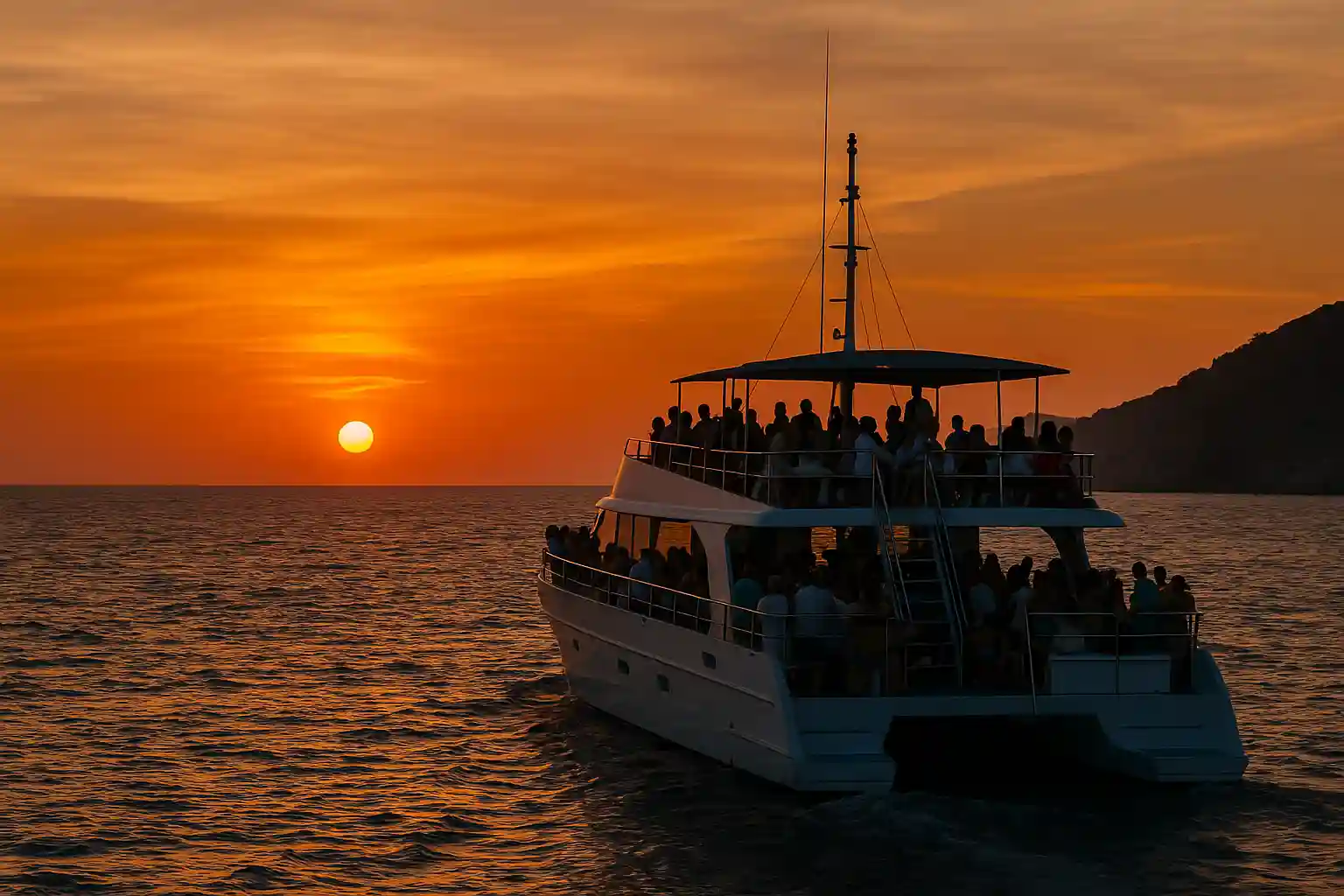
San Antonio Sunset Boat Tour in Ibiza
Make the sunset your evening’s main event. A boat from San Antonio gives you changing views of Ibiza’s west coast, with time to watch the light rather than chase another stop.
Read the guide →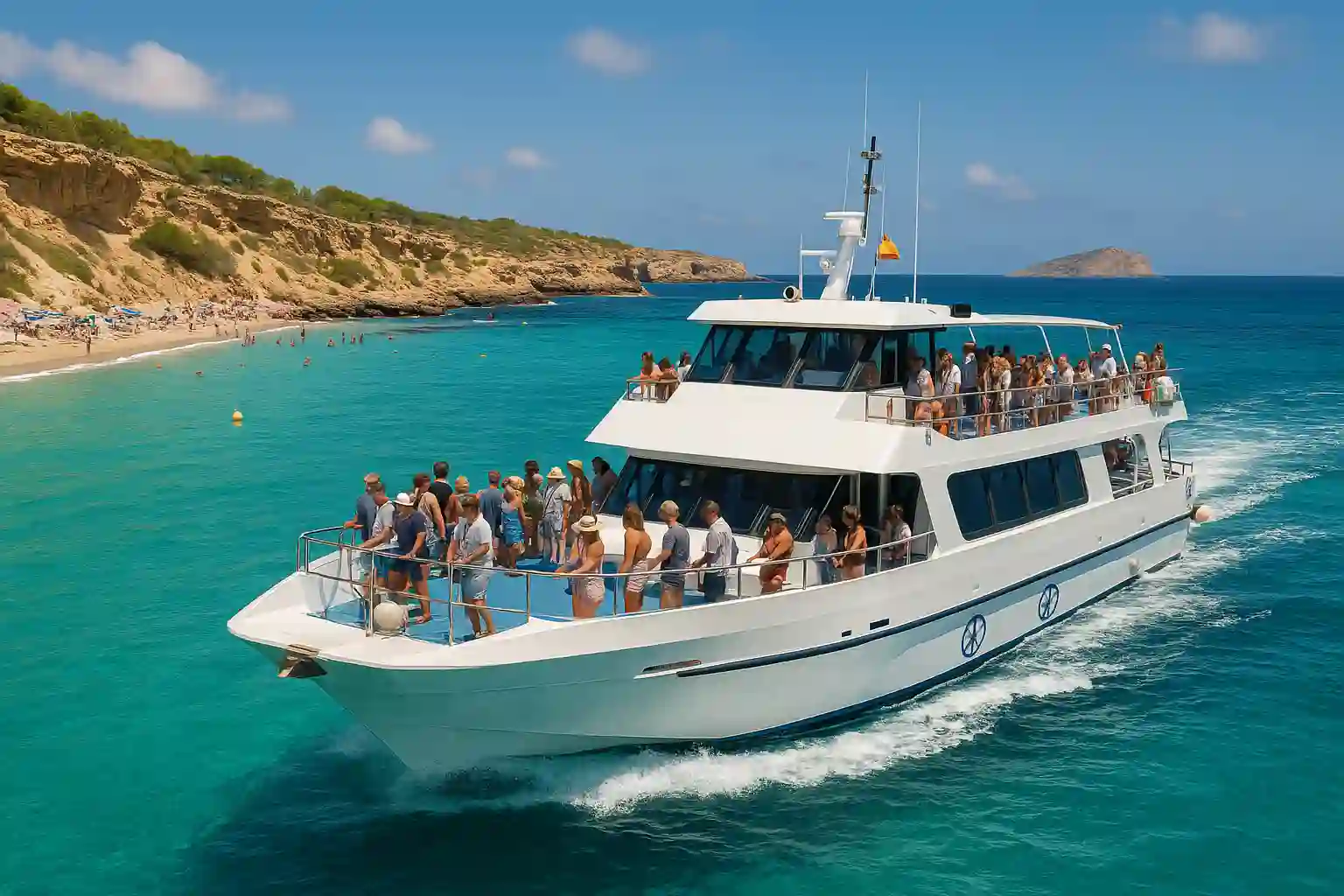
Ibiza Beach-Hopping Cruise: Cala Bassa & Cala Comte
Spend the day between Ibiza’s west-coast coves without planning a separate drive and parking stop for each beach. Choose the itinerary for its time ashore as well as its photographs.
Read the guide →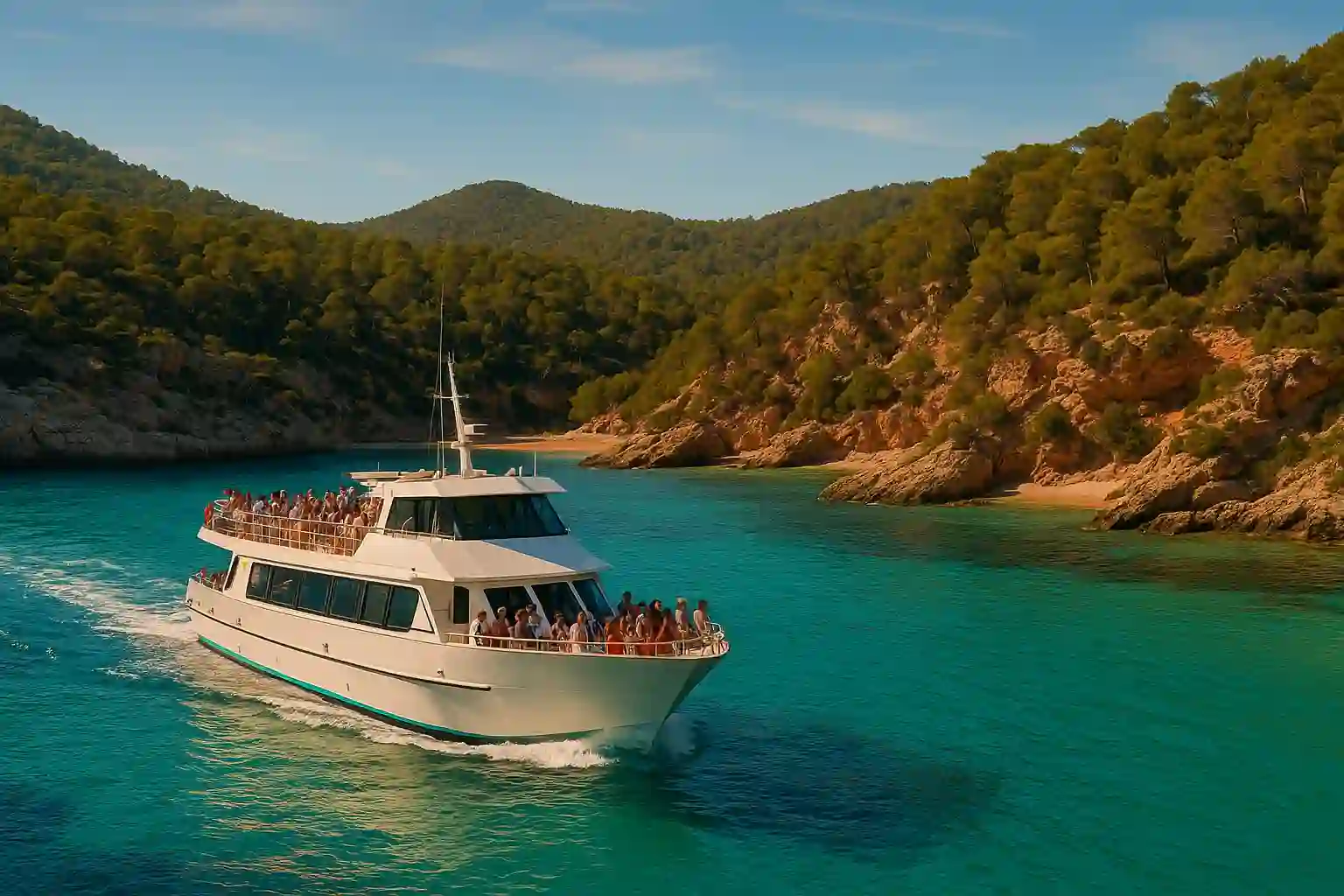
Cala Salada Cruise from San Antonio: Beach & Snorkeling
Follow the coastline northwards from San Antonio for swimming and the Cala Salada area. The key choice is whether to stay with the boat or use the offered beach time and a later return.
Read the guide →Return to the Ibiza travel guide for accommodation areas, trip length and more island activities.
Useful official information
- Formentera tourist office: Sant Francesc Xavier
- Formentera tourism: Estany Pudent and Ses Salines
- Formentera tourism: Posidonia
Local context is based on the official resources above. The planning suggestions are independent of the booked tour.