
A Coruña Travel Guide
The City of Glass on the Atlantic — Roman lighthouse, medieval old town, Galician food, and the gateway to the Costa da Morte
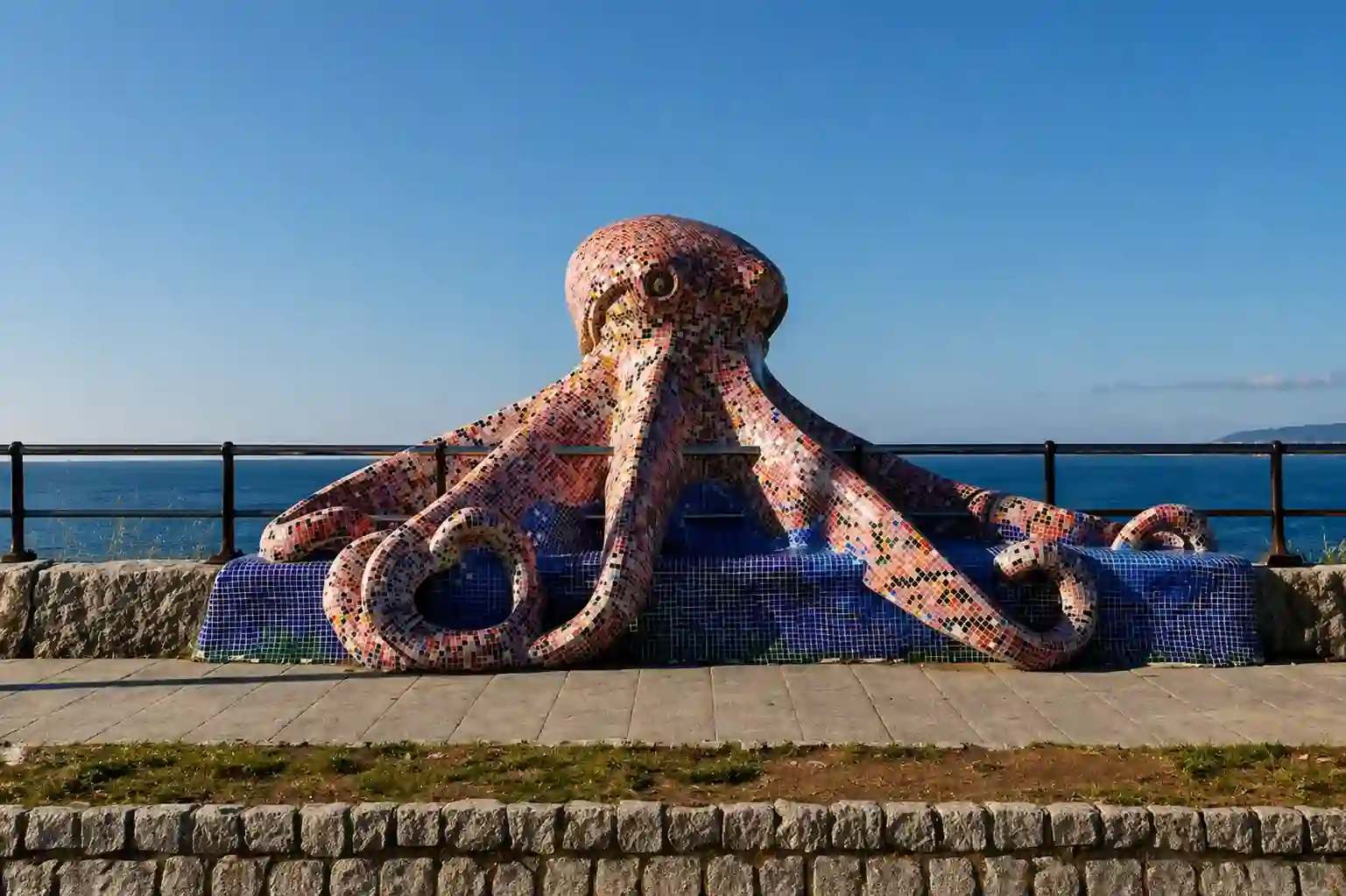
A Coruña sits at the tip of a narrow peninsula jutting into the Atlantic — a city that has been shaped by the sea for over two thousand years. The Romans built a port here called Brigantium and raised a lighthouse on the headland. That lighthouse, the Torre de Hércules, still stands and still operates. It is the world's only ancient Roman lighthouse in continuous use, designated a UNESCO World Heritage Site in 2009 and the oldest of its kind anywhere on earth.
The city's medieval old town — the Ciudad Vieja — rises on the highest ground of the peninsula, its narrow streets and Romanesque churches preserved within the trace of the old walls. The seafront promenade is lined with the Galerías de la Marina: the glass-enclosed balconies unique to A Coruña that gave the city its lasting nickname, La Ciudad de Cristal — the City of Glass.
Beyond the city itself, A Coruña is the natural base for exploring one of Spain's wildest coastlines. The Costa da Morte — the Coast of Death — stretches southwest from the city along 130 kilometers of cliff, lighthouse, fishing village, and Atlantic drama, ending at Cape Finisterre, where the Romans believed the earth ended and pilgrims still walk to see the horizon.
The city's food culture is rooted in the Atlantic and the market. Shellfish from the Galician rías, octopus prepared in the Galician way, empanadas from the local bakeries, and Albariño wine from the Rías Baixas. And since 1906, Estrella Galicia — the family-owned beer that is as much a part of A Coruña's identity as the lighthouse on the headland.
10 Things to Do in A Coruña
The Ciudad Vieja and the Pescadería neighborhood make far more sense with a guide who can read the layers — Roman foundations, medieval street patterns, baroque church façades, and modernist civic buildings side by side. The 1.5-hour historic walking tour is the single best introduction to the city.
Read the Old Town Tour guide →The world's only ancient Roman lighthouse in continuous use, 2,000 years old and still operational on the headland north of the city. Climb the 234 steps inside for panoramic Atlantic views, or walk the surrounding sculpture park and Iron Age rock carvings at the base. UNESCO World Heritage Site since 2009 — the defining sight of A Coruña.
The working food market at Plaza de Lugo is where the city's residents shop every morning — fishmongers with the day's Atlantic catch, Galician cheese, seasonal vegetables. The market and cooking workshop takes you there with a local guide, then cooks a seasonal Galician lunch in a small group (max 8) and eats it with local wine. Three hours, all ingredients included.
Read the Food Tour guide →Mundo Estrella Galicia (MEGA) opened in 2019 inside the active Estrella Galicia brewery — the only beer museum in Spain and one of the few in the world inside a working production facility. Eight themed sections, live production line viewing, beer-pouring masterclass, and a five-beer tasting. Estrella Galicia has been brewed in this city since 1906 under the same family.
Read the MEGA Brewery Tour guide →The Avenida da Mariña is lined with the glass-enclosed balconies that gave A Coruña its nickname. Built over the 18th and 19th centuries to give residents sea views while sheltering from the Atlantic wind, they are unique in Spain — hundreds of small glass panes in wooden frames catching the light above the harbor. Best seen from the waterside promenade looking back at the city.
The Coast of Death — so named for centuries of shipwrecks — stretches southwest from A Coruña along one of Spain's most dramatic coastlines. The day tour covers five stops: Cabo Vilán lighthouse and its shipwreck museum, the Sanctuary of Muxía, Cape Finisterre (the edge of the known world), free time for lunch in the town, and the Ézaro Waterfall — the only river in Europe that falls directly into the ocean.
Read the Costa da Morte day trip guide →A Coruña's main square is named for the local heroine who rallied the city's defense against Drake's English fleet in 1589 — her statue stands at the center, pike raised. The Municipal Palace on the north side is one of the finest modernist civic buildings in Galicia. From here, the Pescadería neighborhood extends south with its scattered modernist residential façades, tile-covered and ornate.
Two Atlantic surf beaches sit at the base of the peninsula — directly in the city center, walking distance from the old town. Riazor and Orzán face the open ocean and catch Atlantic swells, making them genuinely wild by the standards of urban beaches anywhere in Spain. In summer the water is cool and the waves consistent; in autumn the beach empties and the light turns extraordinary.
A Coruña's fine arts museum occupies a former Capuchin convent a few minutes' walk from the Plaza de María Pita. The collection includes works by Goya, a section on Picasso's early years in A Coruña (he lived and studied here as a teenager in the 1890s), and a strong survey of Galician painting and sculpture. Entry is free. Consistently underrated and uncrowded.
Just 35 minutes by train — and one of the most satisfying day trips from any city in Spain. Santiago de Compostela's cathedral, old town, and Camino atmosphere are unlike anything else in the country. The pilgrimage energy is real: thousands of people arrive on foot from across Europe, and the city has been receiving them for over a thousand years. A Coruña is also the starting point for the Camino Inglés — the English Way to Santiago, historically used by pilgrims arriving by sea from Britain and northern Europe.
Tours & Experiences in A Coruña
The endpoint of the Camino de Santiago and one of the great pilgrimage cities in Europe. The cathedral, the old town's cobblestone streets, the Baroque architecture and the constant presence of arriving pilgrims make Santiago unlike anything else in Spain. A Coruña is also the starting point of the Camino Inglés — the historic English Way to Santiago used by pilgrims arriving by sea from Britain and northern Europe. Explore the full Galicia guide for more destinations and routes.
Galicia has its own language — Galego — but Spanish is spoken everywhere. A few weeks of private lessons before you travel changes what you experience on the ground: at the market, at the restaurant, with the guide. MundoDele offers private Spanish lessons online, tailored to your level and pace.
About A Coruña
A Coruña (La Coruña in Spanish, A Coruña in Galician — both are official names) is the largest city in Galicia and the capital of the province of A Coruña. It occupies a rocky peninsula on the north Atlantic coast, connected to the mainland by a narrow isthmus. The city's position has defined its character across two thousand years: a port, a fortress, a trading hub, and the departure point for fleets that crossed the Atlantic.
The Spanish Armada of 1588 — the fleet sent by Philip II to invade England — departed partly from A Coruña. After the Armada's defeat, the English counter-expedition of 1589, commanded by Sir Francis Drake and Sir John Norris, attacked and partially sacked the lower town before being repelled. The hero of that defense was María Pita, whose name now marks the city's central square. The English general Sir John Moore, killed at the Battle of A Coruña in 1809 during the Peninsular War, is buried in the Gardens of San Carlos in the old town.
The city's population today is around 240,000 — the largest in Galicia. It functions as the region's commercial, administrative, and cultural center, with a university, a significant port, and an economy built on services, logistics, and — increasingly — tourism. The Camino Inglés, the English Way of St. James, begins at the port of A Coruña and runs south approximately 120 kilometers to Santiago de Compostela, making A Coruña one of the few starting points for pilgrims arriving historically by sea.
← Explore more of Galicia