
A Coruña Food Tour: Market Shopping & Galician Cooking Workshop
Shop the Plaza de Lugo market with a local foodie, cook a seasonal Galician menu together in a cozy kitchen, and sit down to eat everything you made — with a glass of Albariño. Three hours, maximum 8 people, 100% hands-on.
At a Glance
Galicia is one of Europe's great food regions — and A Coruña's Plaza de Lugo market is where that reputation is built every morning. This experience takes you there with a local guide, into the noise and color of fishmongers, cheese sellers, and vegetable producers. You shop for the day's menu together, return to a cozy kitchen a few minutes away, cook a proper Galician lunch as a small group, and eat it all at the table with local wine. Run by Pencil & Fork, hosted by David and Ana — consistently among the best-reviewed food experiences in Galicia.
Galician Food from the Market to the Table
Table of Contents
Why Galician Food Is Worth Learning to Cook
Galicia is the food region of Spain that food people talk about. Not Catalonia, not the Basque Country — though both have extraordinary cuisines. Galicia, because what it does is arguably harder: it produces ingredients so good that the cooking barely needs to intervene.
The Galician coast is washed by cold, nutrient-rich Atlantic currents that make its shellfish extraordinary. Percebes (goose-neck barnacles), harvested by hand from wave-battered cliffs, are sold at prices that reflect the danger of the harvest. Navajas (razor clams), vieiras (scallops), mejillones (mussels) from the rías — all of it passes through the markets of A Coruña every morning. Galicia produces more shellfish than any other region in Spain, much of it exported to the finest restaurants across the country.
The philosophy of Galician cooking is not complexity. It is quality and restraint — the fewest ingredients possible, cooked in the way that shows the produce at its best. A perfect pulpo á feira is boiled octopus, paprika, olive oil, and salt. A Galician empanada is pastry, filling, and time. Mussels in Godello wine are mussels and wine. The difficulty is not the technique — it is knowing what to buy and where to buy it. That is precisely what this workshop teaches.
How the Experience Works — Step by Step
The workshop runs from 10:30 to 13:30 and follows a simple, satisfying arc — from kitchen briefing to market to cooking to lunch:
The experience begins in Pencil & Fork's cozy kitchen in A Coruña. David or Ana introduces the plan for the day, explains what you will be cooking, and gives a brief overview of Galician food culture and the logic behind market-driven seasonal cooking. Coffee and tea are available from the start.
A short walk from the kitchen brings the group to the Mercado de la Plaza de Lugo — one of A Coruña's main working food markets. This is not a tourist food hall. It is where local residents shop, where fishmongers receive the morning's catch, and where the week's seasonal produce arrives. Your guide navigates it with fluency — explaining what is fresh, what is in season, what the fishmongers are proud of today, and what that means for the menu.
Shopping is part of the education. You learn to read a fish market — how to tell fresh from not-fresh, what the names of unfamiliar shellfish mean, how Galicians choose their produce and why relationships with the vendors matter. Pencil & Fork buys all ingredients for the cooking session; nothing extra is charged. The menu is confirmed here, based on what is best at the market that day.
Back in the kitchen, sleeves up. The group cooks together — not watching a demonstration, but actually preparing the dishes. Past sessions have included mussels steamed in Galician Godello wine, scallops dressed simply with local olive oil, seafood paella, and tarta de Santiago (the almond cake of Galicia). The atmosphere is relaxed, informal, and genuinely fun — the small group size makes it feel like cooking with friends rather than attending a class.
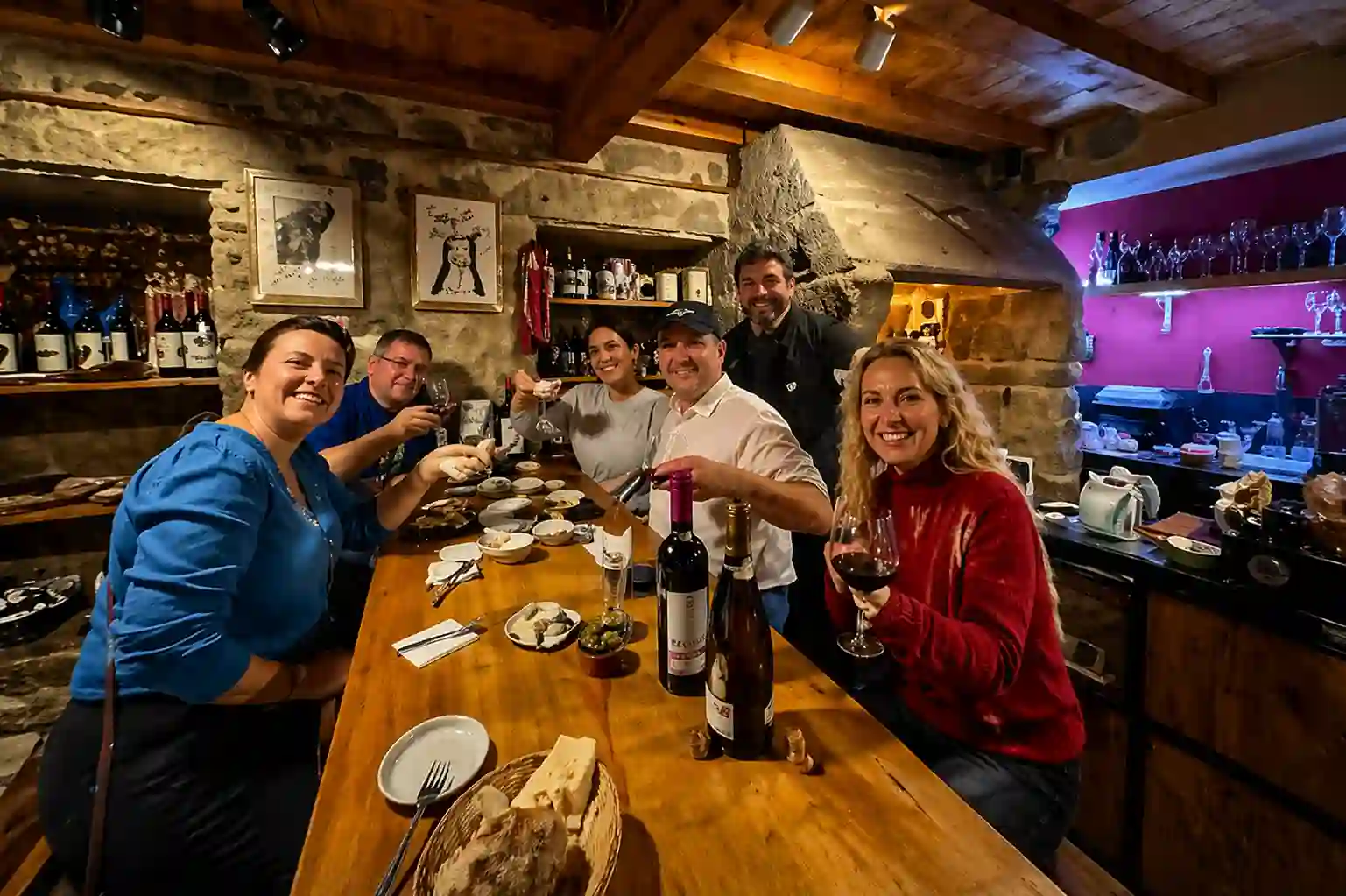
Everything prepared is served at the table. A glass of local Galician wine — red or white, your choice — accompanies the meal. This is the payoff: food you selected, cooked, and understand, eaten with people who were strangers two hours earlier. Tea and coffee close the session. The whole experience ends around 13:30.
Recommended Experience
A Coruña: Local Market Shopping and Cooking Workshop
3-hour Galician food experience: Plaza de Lugo market with a local guide, hands-on cooking of a seasonal Galician menu in a small group (max 8), shared lunch with local wine. All ingredients included. Hosted by David and Ana at Pencil & Fork — rated 5.0 on GetYourGuide.
Book A Coruña Food Tour on GetYourGuide →The Plaza de Lugo Market — A Coruña's Culinary Heart
The Mercado de la Plaza de Lugo is the kind of market that reminds you why food markets matter. Not a covered hall selling artisan soaps and tourist empanadas — a working market where the city's residents shop, where the produce is priced for locals, and where the fishmongers know their suppliers personally because the boats dock nearby.
A Coruña's Atlantic position means the market reflects the rhythms of the sea. What arrives in October — spider crabs, scallops just into season, the first of the winter mussels — is different from what arrives in May. The vendors know what was on the boats that morning, and the guide translates both the Galician names and the logic: why these barnacles, why this variety of fish, why now.
What the Market Sells
The seafood section is the reason to come, but the market covers the full range of Galician produce:
- Fish and shellfish: Mussels, scallops (vieiras), razor clams, barnacles (percebes), spider crab (centolla), octopus, fresh white fish from the Atlantic — all dependent on season and catch
- Cheese: Tetilla (the iconic teardrop-shaped Galician cheese), Arzúa-Ulloa, San Simón — cheeses shaped by the same wet, green landscape that makes Galician dairy exceptional
- Vegetables and herbs: Galician grelos (turnip tops), peppers, onions, potatoes — the vegetables that anchor the inland dishes
- Bread: The heavy, dark pan de Cea and local bakery loaves — Galician bread is among the best in Spain
- Cured meats: Lacón (cured pork shoulder), local chorizo, cecina — the counterpart to the seafood-dominant coast
What You Might Cook — Galicia's Key Dishes
The menu is decided at the market and changes with the season — which is the point. But the dishes you prepare will come from Galicia's core culinary repertoire. Here is what might appear on the table:
The Wine — Albariño and Beyond
The glass of wine included with the meal will be Galician — either white or red, your choice. Albariño from the Rías Baixas is the wine most associated with Galician seafood: bright, mineral, with enough acidity to cut through shellfish fat and enough fruit to complement rather than compete. If you prefer red, Galician reds from the Mencía grape — particularly from the Ribeira Sacra region — have a distinctive character: light-bodied, herbal, with a minerality that reflects the slate terraces where the vines grow.
The guide will talk through the wine with the meal — another layer of the Galician food education that the workshop delivers without it feeling like a lecture.
Tips for Booking & What to Know
Book Early — Seriously
This is a maximum 8-person experience run by two hosts with genuine reputations. It fills up. If your travel dates are fixed, book as early as possible — weekend sessions and high-season dates (July–September) sell out weeks in advance. Weekday morning sessions have more availability but still require advance booking. Free cancellation is available up to 24 hours before.
What to Wear and Bring
- Comfortable clothes: You will be cooking — nothing you would be worried about getting a splash on
- Appetite: You will eat a full lunch at the end. Arriving hungry is correct.
- Camera: The market and the cooking session are both photogenic — but ask before photographing market vendors
- Curiosity: The experience rewards people who ask questions — about the ingredients, the techniques, the vendors, and the culture
When to Do It
- Any season has something to offer — the menu changes, which means returning visitors genuinely get a different experience in October versus April
- Autumn (October–November): Spider crab season, the best scallops, and early-winter shellfish at peak quality
- Spring (April–May): Fresh vegetables alongside the year-round shellfish; lighter, brighter menus
- Summer (June–August): Peak tourist season — book very early; the market is at its most vibrant
Combining with A Coruña
The workshop runs in the morning and ends at 13:30 — leaving the afternoon free for A Coruña's historic old town walking tour, the MEGA Estrella Galicia brewery tour, or simply wandering the Galerías de la Marina seafront. A two-night stay in A Coruña fits both the food tour and a full-day Costa da Morte excursion comfortably.
Galician Food Vocabulary — a Head Start
The market operates in Galician and Spanish. Knowing a few words makes the experience richer — and the vendors visibly pleased. Mexillóns are mussels. Vieiras are scallops. Polbo is octopus. Percebes are barnacles. Pan is bread, and queixo is cheese. The guide will explain everything, but arriving with even a handful of words changes how the market feels. If you want to go deeper before your trip, private Spanish lessons give you the practical foundation to engage with Galicia on its own terms.
Book the A Coruña Food Tour
★★★★★ Market + Cooking + Lunch · 3 hours · Max 8 people · All ingredients included
The Best Meal of Your Trip — and You Cooked It
Three hours, a working market, a small group, and a table full of Galician food you made yourself. This is not a restaurant experience. It is the kind of morning that stays with you long after the trip ends.
Plaza de Lugo Market · Hands-on Cooking · Shared Lunch · Local Wine Included
Book A Coruña Food Tour on GetYourGuide →