
Girona Travel Guide: Cathedral Steps, Old Walls & Hidden Rivers
Girona feels both lived-in and cinematic. You can walk centuries in a few streets: Roman foundations, medieval towers, and riverside façades painted like a row of artists’ palettes. Climb to the walls for views across tiled roofs, then descend to cafés tucked under arches. It’s compact but deep, a place to read stone and water as much as guidebooks.
Cathedral & Steps
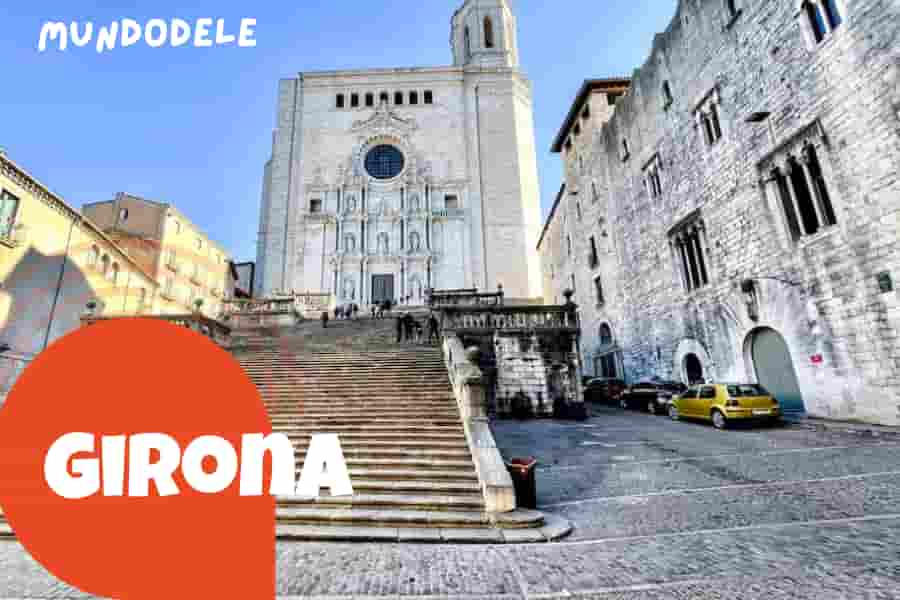
The cathedral dominates the skyline. Its staircase is famous—90 broad steps leading to a façade that shifts from Romanesque roots to Gothic vaults. Inside is one of the widest Gothic naves in the world, plus a treasury of textiles and reliquaries. Game of Thrones fans will recognize the approach; historians will see centuries layered in stone.
Old Walls & Towers
Girona’s medieval walls are still walkable. Paths and stairs lead to towers with city-wide views: tiled rooftops, the cathedral dome, and the Pyrenees on clear days. Early morning or evening gives the best light and quiet. Paths connect to gardens and give a sense of the city’s defensive spine.
Jewish Quarter: El Call
The Call is a labyrinth of narrow lanes, cool stones, and hidden courtyards. It was once one of the most important Jewish quarters in Europe. Today, museums and plaques mark its history, while cafés and small shops add life. Step slowly: this is a place for walking without a plan.
Riverside & Bridges
Four rivers meet in Girona, and the houses along the Onyar are its postcard face. Bridges cross with varied character—modern steel, medieval stone, and the red lattice by Gustave Eiffel. Walk both banks for shifting perspectives; sunrise and late afternoon give the best reflections.
Museums & Small Surprises
Beyond the cathedral and Call, Girona has intimate museums: archaeology in a former monastery, art from Romanesque to modern, cinema history that traces Catalonia’s screen culture. Together they add layers to the streets outside.
Food & Markets
Girona’s food scene balances tradition and innovation. Markets brim with local produce, while Michelin-starred restaurants (like El Celler de Can Roca) draw global attention. Even without big names, menus del día in small restaurants offer satisfying, seasonal plates. Try a xuixo, the city’s sugar-dusted pastry.
Pairings & Day Trips
Girona links easily with Costa Brava coves, Pyrenean valleys, and Dalí country in Figueres. You can combine the city with a walking tour in the morning and a Costa Brava drive in the afternoon. Or add a Cadaqués day for sea light and surreal landscapes.
When to Go
Girona is year-round. Spring brings blossoms to the walls; summer adds evening life; autumn has soft light for photography; winter pares back crowds and makes museums quiet. The Temps de Flors flower festival in May transforms the city with installations.
Getting There & Around
Trains connect Girona with Barcelona in under 40 minutes by high-speed line. The old town is compact—best explored on foot. Wear shoes for cobblestones and bring water for the walls. Parking is simpler in lots outside the center.