
El Escorial from Madrid – Entry Tickets, Highlights & Visitor Guide
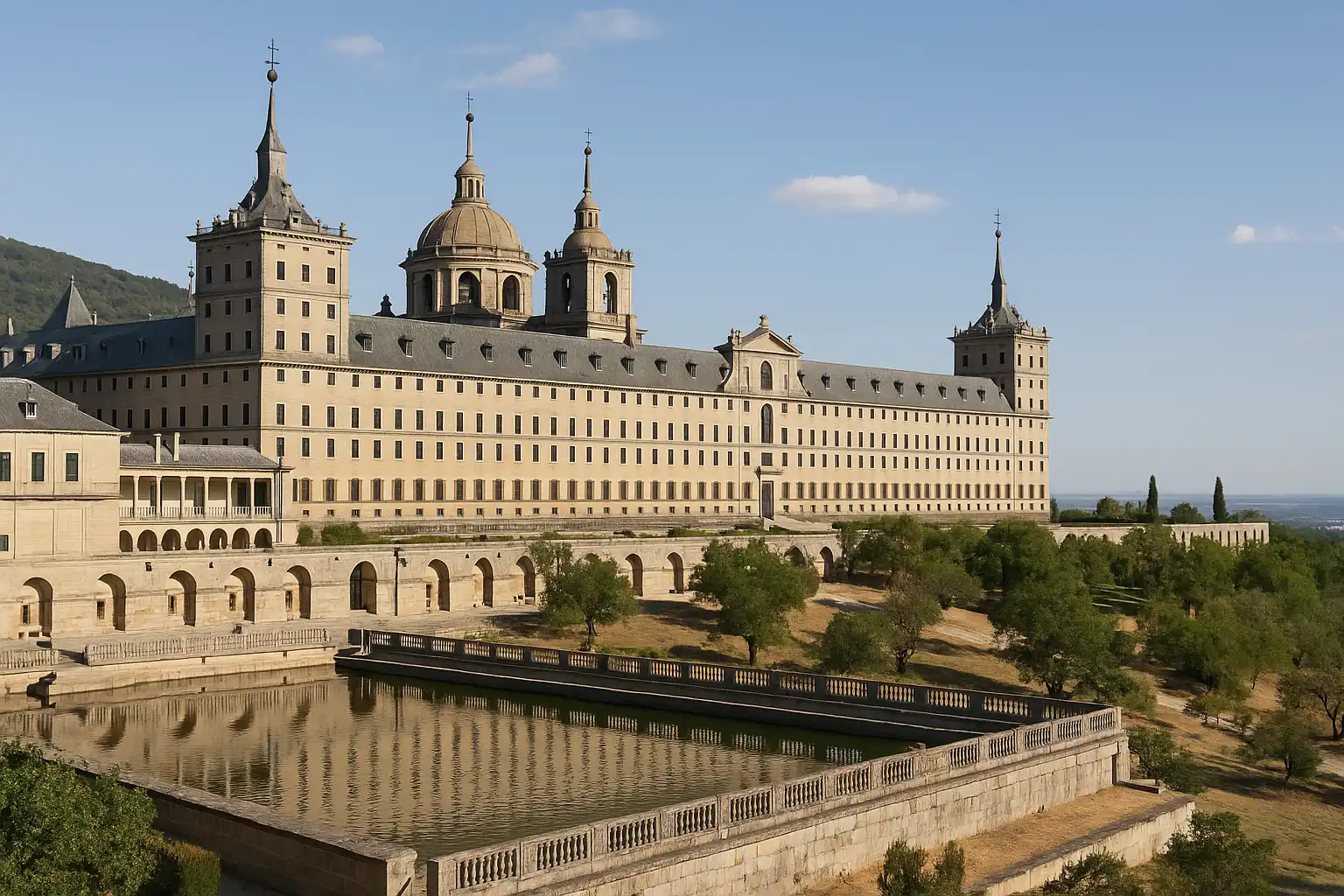
Commissioned in the 16th century, El Escorial served as royal palace, monastery, school, and mausoleum—an ambitious project that embodied Spain’s golden age. Its sober granite façades and orderly courtyards hide spaces of real drama: a library with celestial frescoes, royal pantheons in polished marble, and cloisters that open to mountain light.
Entry Tickets & How to Book
Booking El Escorial entry tickets in advance saves lining up at busy hours and lets you match your train/bus schedule. Choose between standard admission, combined tickets with nearby sights, or guided options that bring context to the art and architecture.
- San Lorenzo de El Escorial – entry ticket / guided visit (Tiqets)
- Study add-on: Spanish exam prep between trips (MundoDele)
- Free/discounted entry windows appear on select days—expect queues.
- Students, seniors, and families often qualify for reduced rates—carry ID.
- Arrive early for cooler courtyards and quieter basilica views.
What to See: Highlights
- Basilica: soaring nave, side chapels, and a monumental altarpiece.
- Royal Pantheons: marble rotundas holding the tombs of kings and princes.
- Library: one of Spain’s most beautiful rooms—wood, globes, manuscripts, and starry frescoes.
- Palace of the Habsburgs & Bourbons: sober chambers, tapestries, and court portraits.
- Cloisters & Courtyards: rhythm of arches, light, and granite geometry.
- Art Rooms: paintings and sculpture that trace devotion and power.
A Short History
El Escorial’s design follows strict classical order—rectangles, axes, measured façades—yet inside it reads as a sequence of experiences: quiet cloisters, resonant basilica, intimate royal rooms. Over centuries, rulers adapted spaces and collections, but the original intellectual program—faith, learning, memory—remains legible.
Plan Your Visit
Count on 2–3 hours for the essentials; half a day if you like to linger over details or enjoy the gardens and surrounding town. Photography rules vary by room—look for icons and follow staff guidance.
- Start in the Basilica to set the scale and mood.
- Continue to the Royal Pantheons (kings & princes).
- Walk the cloisters and upper galleries.
- Pause in the Library—look up!
- Finish in palace rooms and art galleries.
Reading the Architecture
The complex is a manifesto of clarity: repetition of bays, controlled ornament, and a plan that balances sacred and royal functions. Even small details—ironwork, floor patterns, inscriptions—reinforce the theme of ordered knowledge. If you enjoy architecture, take a few minutes to sketch the courtyards; the proportions reveal themselves quickly.
Visitor Tips
- Dress & comfort: comfortable shoes; interiors involve stairs and polished floors.
- Lockers: large bags may need to be stored; travel light.
- Silence: the basilica and pantheons are quiet spaces—keep voices low.
- Weather: the site sits in foothills—carry a light layer outside summer.
Getting There from Madrid
- By train: Cercanías to El Escorial + local bus or 20–25 minute uphill walk.
- By bus: frequent intercity buses from Moncloa.
- By car: straightforward drive; allow time for parking and approach.
- Guided day trips: useful if you prefer bundled transport + entry.
Make It a Day
Pair El Escorial with a stroll in the town, a coffee near the plaza, or a short hike toward the Abantos slopes for views. If you’re returning to Madrid, consider an evening flamenco show or a relaxed dinner to balance the day’s quiet intensity.
Best Times to Visit
- Early morning: soft light, fewer tour groups.
- Weekdays: calmer than weekends and holidays.
- Spring/Autumn: comfortable temperatures for courtyards and town walks.
- Winter: crisp air; pack a warm layer for outdoor areas.
Suggested Itineraries
- Basilica
- Royal Pantheons
- Library
- Efficient route
- Palace rooms + galleries
- Lunch & plaza stroll in San Lorenzo
- Morning: guided visit
- Afternoon: gardens + nearby viewpoints
- Evening: flamenco back in Madrid