
Empúries Travel Guide: Greece Meets Rome on the Costa Brava
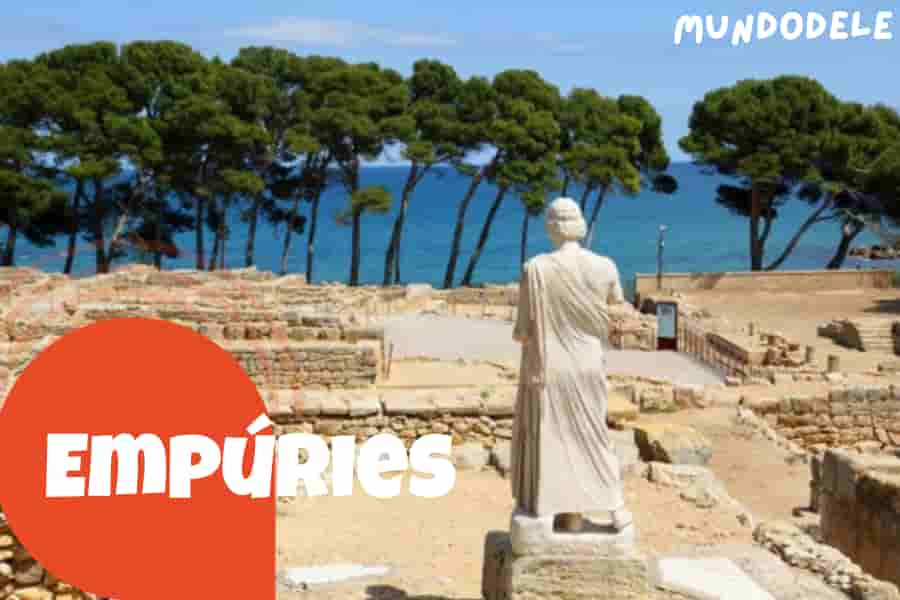
On a low rise above the Mediterranean, Empúries gathers three horizons: a Greek colony founded by traders, a Roman city laid out with power and order, and today’s Costa Brava with coves, pines, and long beaches. Few archaeological sites feel this open and coastal. Paths wind past mosaics and columns with the sea just beyond; gulls cut across the sky as you step from one civilization to another. It’s an easy day trip within the Costa Brava, yet deep enough to anchor a whole day.
A Short Story of a Long Place
The Greeks arrived first, setting up a trading post that grew into a town with walls, temples, workshops, and houses around paved streets. Centuries later, Rome absorbed the settlement, imposing its grid and public buildings: forum, basilica, baths, and houses with courtyards. Empúries became a hinge between cultures, a place where ships brought ideas alongside amphorae. When you walk here now, you move through time by meters.
- Greek: seafront setting, sacred precincts, artisan quarters, irregular street lines.
- Roman: orthogonal grid, forum complex, baths, mosaics, domestic courtyards.
- Continuity: trade, maritime outlook, mixed influences visible in everyday objects.
How to Walk the Site
Plan a calm loop: start with the Greek sector closest to the sea, then cross into the Roman city and end at the museum. Read the ground as you go—ruts in paving, drain lines, thresholds. Pause where walls open to the horizon: Empúries is as much about place as it is about stones.
- Layer 1 – Greek town: city walls, foundations of temples and stoas, workshops along narrow lanes.
- Layer 2 – Roman city: forum square, basilica outlines, bath complexes, townhouses with mosaic floors.
- Layer 3 – Museum: objects that turn foundations into lives—coins, ceramics, sculpture, and mosaic panels.
The Greek City: Sea Light & Sacred Space
In the Greek quarter, the sea feels close and everything faces it. Temples and stoas organized civic life; streets stepped down toward the shore. Domestic spaces reveal ovens, storage jars, and workshop traces—commerce and home under the same roof. Look for blocks with claw marks where stone was quarried and set, and for thresholds that still hold the swing of a door thousands of years after it closed.
The Roman City: Order and Everyday Life
The Roman layer introduces straight lines and civic ambition: a forum where politics and trade met, basilicas for public business, baths for health and sociability. Houses stretch around inner courtyards; mosaic fragments sketch borders and patterns across floors. Drainage channels still map the street edges, and you can trace the grid from intersection to intersection. Step back a pace and the town plan reveals itself.
Mosaics & Materials
Mosaics are the quiet stars here. Borders in black and white, occasional color, geometric fields that would have framed furniture and daily movement. You’ll also see terracotta in many roles: roof tiles, pipes, vessels. Stone varies with function—rough blocks for foundations, smoother for thresholds and public edges. The palette is restrained and beautiful: lime, ochre, charcoal, all tuned by the coastal light.
Museum: From Objects to Stories
The on-site museum gathers the portable past. A coin makes trade real; a lamp casts light on a room; amphorae suggest the weight of oil, wine, or garum carried by ship. Read the labels but also look for use-wear, repairs, and fingerprints in clay—traces of hands across centuries. Exhibits are compact enough to visit in under an hour, but dense if you linger.
Planning Your Visit
Empúries sits within a coastline that invites a long day. Aim for morning or late afternoon to avoid the brightest sun, wear comfortable shoes for uneven paths, and bring water and a hat. The site is open and breezy; weather by the sea can change more quickly than inland—layers help. Combine with a beach hour and a shaded lunch nearby to keep the pace easy.
- Comfortable footwear; some sections are stony or stepped.
- Sun protection and water; shade is limited among the ruins.
- Allow 2–3 hours for Greek + Roman sectors and the museum.
Pairing Empúries with the Coast
The beauty of Empúries is how gently it fits into a wider Costa Brava plan. Spend a morning among stones and a late afternoon on a nearby beach; add a cliff-path walk on another day. For the broader picture of coves, cliff paths and towns, use our regional chapter: Costa Brava Guide.
Food & Simple Pleasures
Eating well here is straightforward: follow the blackboard and the season. Grilled fish, rice dishes to share, vegetables with a punchy almond-and-pepper sauce, and a simple dessert to close. Lunch menus often package a starter, main, and drink at good value—ideal between a site visit and a swim. Keep afternoon plans light; evenings stretch long on this coast.
When to Go
Spring and autumn balance light and temperature; summer adds beach days but calls for earlier starts and midday shade. Winter pares the coast back to quiet walks, clear views, and atmospheric ruins. Whenever you visit, the sea is the constant—horizon and soundtrack in one.
- Mar–Apr: Bloom, cool evenings, calm paths.
- May–Jun: Long days, lively but not crowded—prime time.
- Jul–Aug: Peak season—arrive early; combine ruins with a late swim.
- Sep–Oct: Warm water, softer crowds; golden afternoons on site.
- Nov–Feb: Quiet coast; great for photography and slow travel.
Language & Micro-Learning
Spanish and Catalan live comfortably side by side. A few phrases change encounters—greetings, thanks, ordering, directions. If you want a structured push (before or during your trip), explore DELE & SIELE prep: targeted sessions make fast progress, even with a busy travel day.
- Build a 20-phrase kit for tickets, cafés, and directions.
- Practice numbers and times—useful across transport and dining.
- Note three new words per day; use them once and they stick.
Travel Ethos
Ruins are fragile; stay on paths, don’t climb, and give mosaics distance. Pack out what you bring in; keep noise low. Empúries rewards quiet attention—notice tool marks, drains, thresholds, and the way sunlight moves across stone. The human scale of the place is what makes it memorable.