
Tabarca Island from Alicante: Ferry to Spain's Only Inhabited Mediterranean Island
One hour by boat, a world apart — Spain's first marine reserve, crystal-clear water for snorkeling, a tiny walled village, and the island's famous caldero rice.
At a Glance
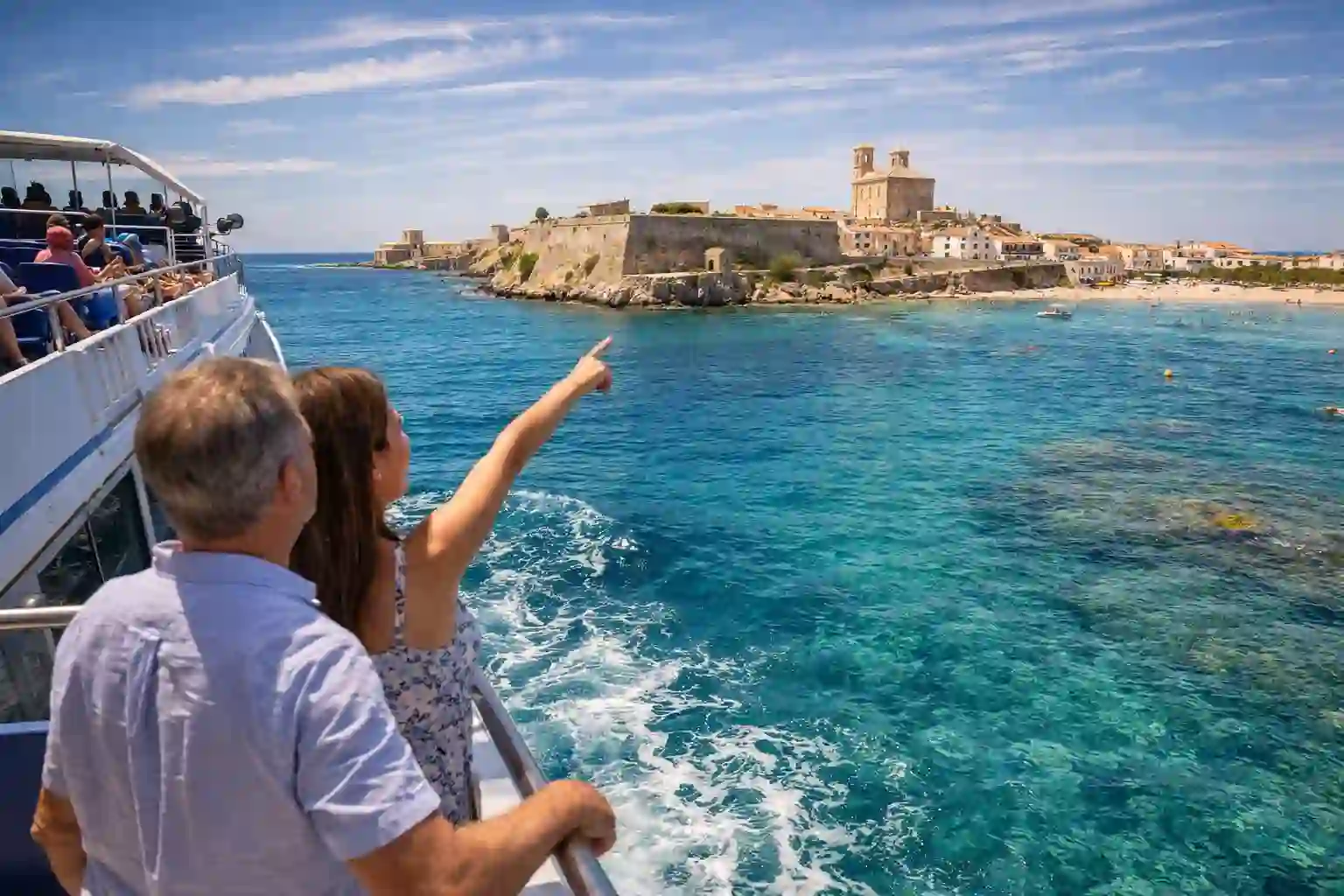
Tabarca is Spain's only inhabited Mediterranean island and its first officially declared marine reserve — a status that makes its water some of the clearest on the Costa Blanca. The roundtrip ferry from Alicante takes 1 hour each way, with panoramic sea views and a glass-bottom option on selected boats. On the island: swimming, snorkeling, the walled village, the lighthouse, seafood restaurants serving traditional caldero rice, and a pace of life that belongs to a different era. Flexible return — same day or another day.
Tabarca Island — The Complete Visitor Guide
Table of Contents
What Is Tabarca Island?
Tabarca sits in the Mediterranean approximately 22 kilometers south of Alicante — a flat limestone island that stretches 1,800 meters from end to end at its longest and barely 400 meters across at its widest. By any measure it is tiny. By any measure it is also extraordinary — the only inhabited island on Spain's Mediterranean coast, a UNESCO-recognized cultural heritage site, and the location of the country's first officially declared marine reserve.
The island has been settled and abandoned multiple times in its history — used by Genoese fishermen, captured by Barbary pirates, turned into a prison colony, and finally resettled under royal decree in the 18th century with families brought from Genoa. That layered history shows in the village architecture: street names still carry Genoese references, the church dates from the 1760s construction campaign, and the fortification walls that protect the settlement from the sea remain largely intact.
Spain's First Marine Reserve
In 1986, the waters surrounding Tabarca Island were declared Spain's first Reserva Marina — a protected maritime area covering 1,400 hectares of seabed and open water around the island. The declaration came specifically because the combination of Posidonia oceanica seagrass meadows, rocky reefs, and clean open water had produced an exceptional concentration of marine life that needed formal protection from overfishing and anchor damage.
What the Reserve Means for Visitors
For swimmers and snorkelers, marine reserve status translates directly into better water and more fish than anywhere else on the Costa Blanca. The Posidonia meadows — a slow-growing, ancient seagrass endemic to the Mediterranean — oxygenate the water and provide habitat for dozens of species. Even from the surface, snorkelers can see sea bream, wrasse, octopus, and schools of smaller fish moving through the seagrass in water clear enough to follow them to the bottom.
The best snorkeling spots are off the rocky coves on the island's southern and eastern sides, away from the main beach areas. No special equipment is required beyond mask and fins — and the water temperature from June through October is ideal for extended swimming.
The Glass-Bottom Crossing
Two of the three ferries operating the Alicante–Tabarca route are equipped with glass-bottom sections in the hull — transparent panels set into the floor of the lower deck that allow passengers to look directly into the water below during the crossing. Over the marine reserve, the visibility through these panels can be remarkable: the seagrass beds are visible at depth, and fish are often seen passing beneath the boat. Not all departures use a glass-bottom vessel — if this is a priority, check at the ticket point which boat is operating your departure.
The Walled Village
Tabarca's village — known as Nueva Tabarca — is one of the most complete examples of 18th-century Spanish colonial urban planning in existence, and unusual for being located on a Mediterranean island rather than in the Americas. The entire settlement was designed and built from scratch between 1768 and 1789 under Carlos III, following a precise grid plan enclosed within defensive walls.
Inside the Walls
The village is small enough to walk end to end in ten minutes. Its grid of narrow streets centers on the Plaza de la Iglesia and the church of San Pedro y San Pablo, a simple Baroque structure that doubles as the island's most visible landmark from the water. The castle at the western tip of the island — the Torre de San José — completes the defensive ensemble and offers views back toward Alicante on clear days.
The residential streets between the main square and the port are quiet, shaded, and genuinely unhurried. Cats are everywhere — Tabarca has a large, well-fed feral cat population that is considered part of the island's character and is documented in virtually every review. Beyond the village walls, a path leads around the uninhabited eastern end of the island through low scrub and rock — a 30-minute circuit that gives perspective on the island's full size and on the marine reserve coves below the cliff edge.
Honest Assessment
Tabarca is not a resort. The beaches are mostly pebbly, facilities are basic, and in peak summer the island can feel crowded relative to its size. Some reviews note this directly — "very little to do or see" if you expect conventional beach tourism. The island's value is precisely the opposite: it is a place to slow down, swim in protected water, eat well, and experience a Mediterranean pace of life that has largely disappeared from the Costa Blanca. Visitors who arrive expecting a busy resort will be disappointed. Those who come for the water, the village, and the food will leave wanting to return.
Caldero: The Island's Rice Dish
Every island with a serious culinary identity has a dish that belongs only to it. For Tabarca, that dish is caldero — a traditional rice preparation that shares DNA with the mainland's arroces but is fundamentally different in character and method.
What Caldero Is
The name refers to the wide iron cauldron in which the dish is prepared. Fresh fish — typically the day's catch, often including sea bream, mullet, or whatever the local fishermen brought in — is first cooked in heavily seasoned water with tomato, garlic, and ñora pepper to produce a deeply flavored fish broth. The rice is then cooked separately in this broth until it absorbs all the liquid. The dish is served in two courses: first the broth in cups or bowls, then the rice with the cooked fish alongside, dressed with alioli.
The result is intensely savory, sea-flavored, and impossible to replicate inland without the specific fish and water. Eating caldero on Tabarca is not a tourist activity — it is what people who live on or near the island eat when they want something that tastes definitively of this coast.
Where to Eat on the Island
Most of Tabarca's restaurants are concentrated along the port and the main street inside the village walls. In high season they fill quickly — arriving before 13:00 for lunch secures a table without a long wait. In winter, most restaurants are closed or have reduced hours; only two or three remain open on weekday evenings. The island has no supermarkets — food and drink brought from the mainland must comply with the marine reserve's no-glass policy at the beach areas.
Recommended Experience
From Alicante: Roundtrip Ferry to Tabarca Island
Roundtrip ferry from Alicante port to Spain's only inhabited Mediterranean island — 1 hour crossing each way, panoramic sea views, glass-bottom boat option. Free time on the island for swimming, snorkeling in the marine reserve, village exploration, and caldero lunch. Flexible return: same day or different day.
Book Ferry to Tabarca on GetYourGuide →Tips for Booking & What to Expect
When to Go
- Best months: May–June and September–October — warm water, manageable crowds, restaurants fully open
- July–August: The island is at its busiest; beach space is limited and ferry queues are long — arrive at the port at least 30 minutes before your return departure
- Winter: The island is quiet but most restaurants operate reduced schedules or close on weekdays
- Weather: The crossing can be choppy in strong wind — the return journey in particular is noted in reviews as more exposed. Those sensitive to wave motion should plan accordingly
Practical Notes
- Queue early for return: At the island's ferry point, queue at least 30 minutes before your intended departure — the boats fill in order of arrival, not by ticket time
- No glass at the beaches: The marine reserve rules prohibit glass containers in beach areas — transfer drinks to plastic before heading to the water
- Water shoes: The beaches are mostly pebble and rock — water shoes make entering and leaving the water significantly more comfortable
- Snorkeling gear: Bring your own if you have it — masks and fins are not provided on the basic ferry ticket but can sometimes be rented on the island
- Lunch reservation: If caldero is on the plan, arrive at the restaurants before 13:00 in summer or risk a long wait
- Cash: Some island businesses prefer or require cash — bring euros alongside your card
Combining with Alicante
Tabarca works best as a standalone full day from Alicante — leave in the morning, spend 3–4 hours on the island, return in the afternoon, and have the evening free for the city. Pair it over a multi-day stay with the Castillo de Santa Bárbara wine tasting, the day trip to Guadalest, Altea, and the Algar Waterfalls, and the flamenco show at El Mentidero to cover Alicante's full range: culture, nature, coast, and nightlife.
Book Alicante Experiences
★★★★★ Top-rated island trips & tours from Alicante · Verified reviews · Free cancellation on most tours
One Hour from Alicante, a World Apart
Spain's only inhabited Mediterranean island, its first marine reserve, and the best caldero rice on the coast — all reachable by ferry before lunch.
★★★★ 4.4 · 280+ reviews · Free cancellation on most tours
Book Ferry to Tabarca Island →