
Alicante Paella Cooking Class: Market Visit, Tapas & Local Drinks
Cook authentic Spanish paella with a local chef — starting at the Central Market, finishing at a communal table with homemade sangria and traditional tapas. Suitable for all skill levels.
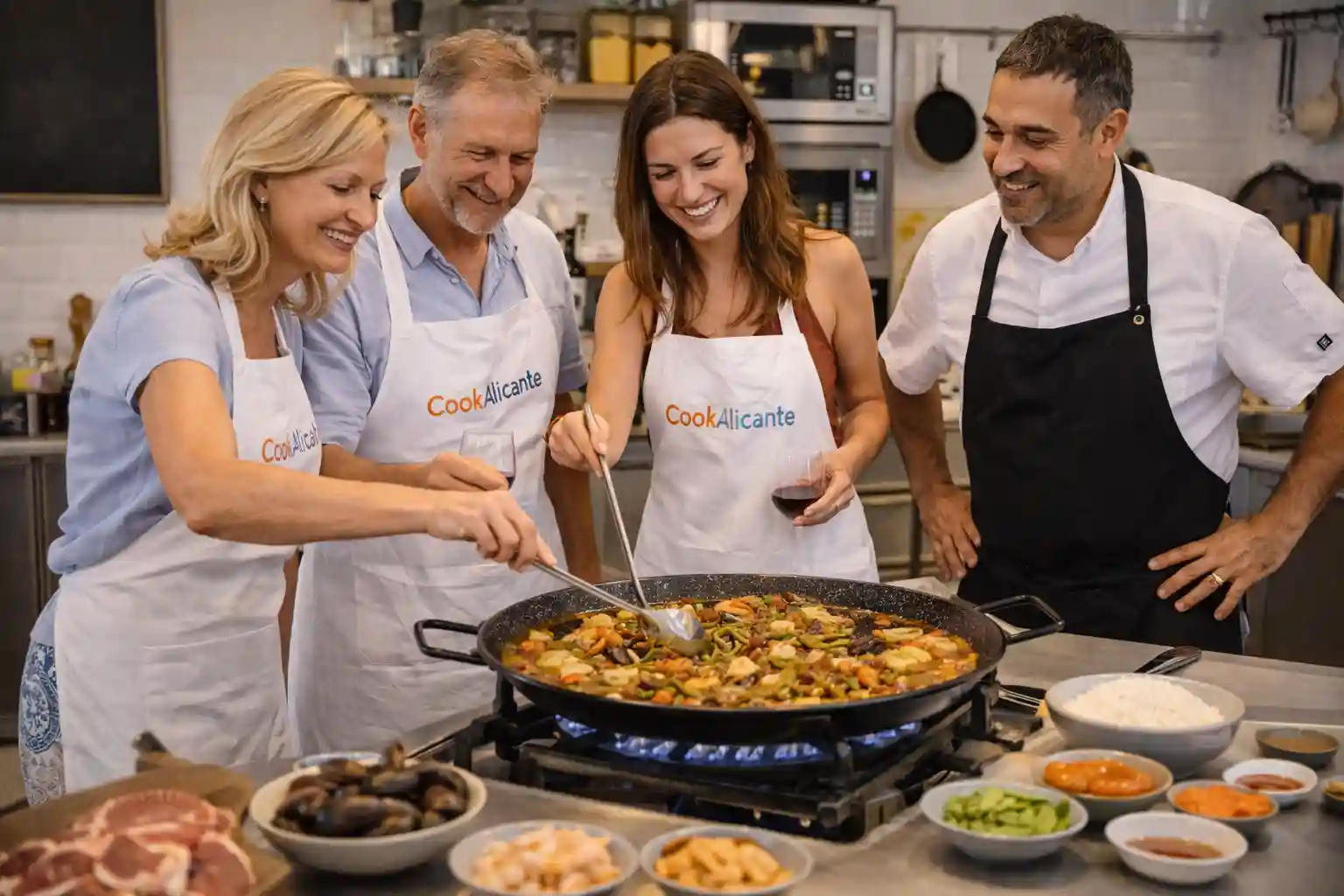
At a Glance
The Alicante Paella Cooking Class, Tapas, Drinks and Market is a 3.5-hour hands-on culinary experience that begins at Alicante's Central Market and ends with you eating the paella you cooked yourself. A local guide leads the market visit — selecting the freshest ingredients and learning the stories behind them. Then a professional chef walks you through authentic paella from scratch: sofrito, saffron, rice, and the perfect socarrat. Choose seafood, meat, or vegetarian. Paired throughout with traditional tapas, local wine, and sangria. Small groups only. Rated 4.9 stars from 301 GetYourGuide reviews.
Alicante Paella Cooking Class — The Complete Guide
Table of Contents
Why Learn Paella in Alicante
Paella did not come from a restaurant kitchen designed for tourists. It came from the agricultural plains outside Valencia — a field dish cooked over open fire by workers who had access to rice, whatever grew nearby, and whatever they could catch or raise. Alicante sits at the southern edge of this tradition, close enough to share the rice culture and Mediterranean ingredients, distinct enough to have developed its own techniques and recipes.
Learning to cook paella in Alicante is not the same as learning it from a cookbook or a YouTube video. The ingredients are different when you buy them at the source. The saffron is local. The rice — Denominación de Origen Valencia — absorbs the broth differently than any substitute. The sofrito, or salmorreta as Alicante's cooks call it, is built with ñora peppers that are dried in the regional sun. The knowledge of how these ingredients behave together comes from the people who cook with them every week, not from a recipe card.
The paella class is built around exactly this: a professional local chef who knows the dish from the inside, a market that supplies the real ingredients, and a small group format that allows genuine teaching rather than demonstration at a distance. The result — a 4.9-star rating from 301 GetYourGuide reviews — reflects what happens when food education is taken seriously.
What You Do: Market, Kitchen, Table
The experience unfolds in three distinct phases across 3.5 hours — each one building on the last in a way that makes the final meal genuinely meaningful rather than simply edible.
The Socarrat: Why It Matters
The socarrat — the caramelized, slightly crispy layer of rice that forms at the bottom of the pan during the final minutes of cooking — is the mark of a properly made paella. It is also the part most home cooks get wrong. Getting the socarrat right requires knowing exactly when to increase the heat, for how long, and when to stop. The chef teaches this technique directly, with the group gathered around the pan watching the transformation happen in real time. Reviewers specifically mention this moment as one of the memorable parts of the class.
The Paella: Alicante's Version of Spain's Most Famous Dish
Alicante's rice culture is extensive and specific. The province has its own rice traditions that differ meaningfully from the Valencian original — shaped by the Mediterranean coast, the local spice trade, and centuries of Moorish and Christian culinary influence. The cooking class focuses on Alicante's techniques rather than a generic Spanish paella recipe.
Salmorreta: Alicante's Signature Base
The salmorreta is the sofrito unique to Alicante's rice dishes — a cooked paste of tomato, garlic, ñora peppers (small dried sweet peppers native to the region), and parsley that forms the flavor base of the paella before any other ingredient is added. It is what gives Alicante paella its distinctive depth. The ñora pepper, almost impossible to find outside the region in fresh form, is one of the ingredients selected at the market and incorporated into the cooking demonstration. Understanding the salmorreta is understanding why Alicante paella tastes different from any paella made elsewhere.
The Rice
Paella rice is not risotto rice and is not long-grain. The Denominación de Origen Valencia rice used in class — varieties like Senia or Bomba — absorbs a specific ratio of broth and releases starch in a specific way that produces the characteristic paella texture: each grain distinct, saturated with flavor, with no creaminess. The chef explains the ratio, the timing, and why substitutions fail. Participants consistently report that this knowledge changes how they think about the dish.
The Drinks: Sangria and Local Wine
Sangria served during the tapas course is made in the class itself — another hands-on element that adds to the experience. The recipe is included with the take-home materials. Local wines from DO Alicante — the province's wine designation, covering reds from Monastrell grapes grown in the inland valleys — are served alongside. Non-alcoholic options are available throughout for those who prefer them.
The Guides and the Kitchen
The class is run by a small team of local guides and chefs — Andrea, Marina, Cristina, and Federico (Freddie) appear most often in reviews — each combining culinary expertise with the kind of personal knowledge of Alicante's food culture that comes from growing up in it. Reviews are unusually specific: "Cristina explained everything clearly." "Freddie was wonderful at explaining what and why we were collecting specific ingredients." "The chef is very knowledgeable, explains well, gives a lot of cooking tips and participates in the whole experience."
The format works because the group size is small — maximum 12 to 16 participants — which means the chef can attend to each person individually, adjust the pace when someone needs more time, and ensure every participant actually cooks rather than observes. Reviewers with no prior paella experience consistently report confidence by the end of the class.
A Real Kitchen, Not a Tourist Set-Up
The cooking takes place inside a real working kitchen in a local restaurant — a venue where Alicante residents actually eat, not a space purpose-built for tourist activities. This distinction matters. The equipment is professional. The kitchen smells like cooking. The atmosphere is that of a working food operation, which is exactly the context in which the techniques being taught were developed. Multiple reviewers specifically note the cleanliness of the space and the quality of the equipment as part of what made the experience feel authentic.
The Social Element
The communal table at the end — eating together the paella the group just cooked — is consistently described in reviews as the emotional center of the experience. People who arrived as strangers spend the final hour eating, drinking, and comparing notes. "We met interesting, fun people and none of us wanted to leave," wrote one participant. The class works as a culinary experience and as a social one — an outcome that reflects the fundamental nature of paella itself, which was never meant to be eaten alone.
Top Recommended Experience
Alicante: Paella Cooking Class, Tapas, Drinks and Market
3.5-hour hands-on paella cooking class starting at Alicante's Central Market — select fresh ingredients with a local guide, then cook authentic Spanish paella from scratch with a professional chef. Seafood, meat, or vegetarian options. Includes traditional tapas, local wine, and sangria. Recipes to take home. Small groups only.
Book Paella Class on GetYourGuide →Tips for Booking & What to Expect
When to Go
- Any time of year: The class runs year-round — seasonal variations in market produce are part of the experience, not a limitation
- Morning departures: The Central Market is most active in the morning — if morning slots are available, they offer the fullest market experience
- Book ahead: Small group format (max 12–16) means the class fills quickly, especially during peak travel months in summer and around Spanish public holidays
What to Expect
- Appetite: Arrive reasonably hungry — the tapas, sangria, and full paella constitute a genuine meal, not token tastings
- Comfortable clothes: You will be cooking in a working kitchen — comfortable, relaxed clothing is appropriate; closed-toe shoes are recommended
- Dietary requirements: Inform the operator when booking — seafood, meat, and vegetarian paella are all available, and guides have experience accommodating common allergies
- Language: Tours run in English and Spanish — confirm your preferred language when booking
- Group dynamics: The small group format means you will meet and cook alongside other travelers — reviews consistently describe the social element as one of the best parts of the experience
Combining with Alicante
The paella class works particularly well as a morning or midday activity — it gives you a full understanding of the local ingredients and cooking culture that enriches every other meal you eat in the city. Pair it with the Secret Flavors Food and Tapas Tour for a complete immersion in Alicante's food identity, or combine it with an afternoon at Castillo de Santa Bárbara and an evening catamaran cruise along the Costa Blanca. For a full day outside the city, the Guadalest, Altea, and Algar Waterfalls day trip pairs naturally with a cooking class the following morning.
Book Alicante Experiences
★★★★★ Top-rated cooking classes & experiences in Alicante · Verified reviews · Free cancellation on most tours
Cook Paella the Way Alicante Does It
From the Central Market to a real local kitchen — a professional chef, fresh ingredients, homemade sangria, and a paella you cooked yourself. Suitable for all skill levels.
★★★★★ 4.9 · 301 reviews · Free cancellation on most tours
Book Paella Cooking Class & See All Alicante Tours →