
Granada Flamenco Show — Tickets, Best Venues & Quiet-Seat Tips
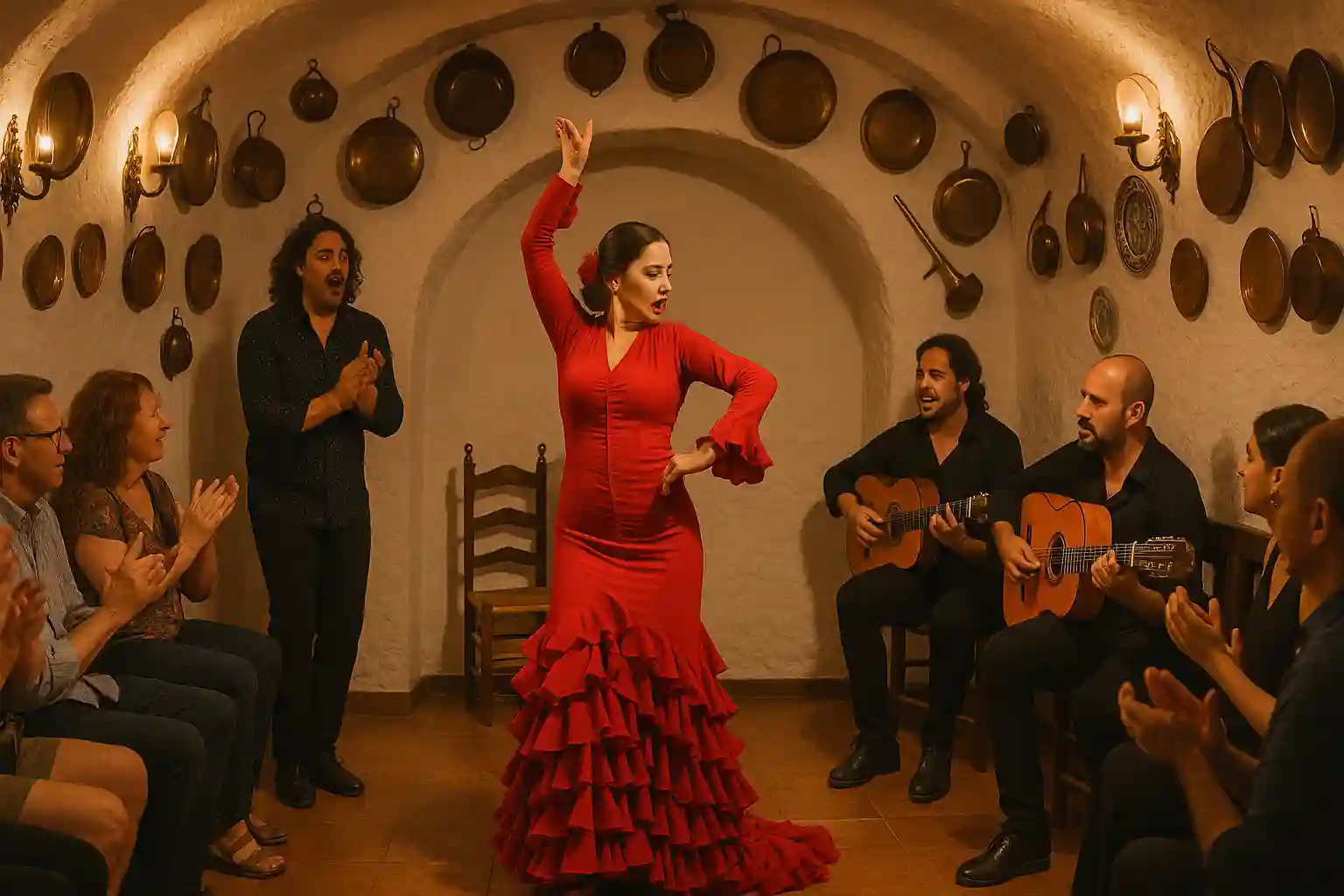
Flamenco in Granada is intimate and raw. In the Sacromonte caves and Albaicín tablaos, you sit meters from the stage — close enough to see breath and hear the soleá's final sigh.
At a Glance
Granada flamenco happens in intimate venues — Sacromonte cave zambras and Albaicín tablaos where 30-60 people sit close to performers. Shows last 60-75 minutes featuring cante (song), toque (guitar), and baile (dance). Experience soleá's melancholy, bulerías' energy, and tangos de Granada's local flavor. Book ahead for weekend shows (venues sell out). Choose Sacromonte for atmosphere, Albaicín for accessibility. Arrive 15-20 minutes early. Dress comfortably (caves warm up). This is flamenco as encounter, not spectacle.
Granada Flamenco Shows — Complete Guide
What to Expect at a Granada Flamenco Show
A classic show lasts 60–75 minutes and blends cante (song), toque (guitar), baile (dance) and rhythmic clapping (palmas). Granada favors proximity over spectacle: fewer seats, stronger emotion, no microphones needed.
Costumes shift from restrained black to bright polka dots; the choreography moves between explosive footwork and suspended stillness. Unlike the polished productions in larger cities, Granada's flamenco retains its raw, improvised quality — artists feed off audience energy and each other's cues.
The Granada Difference
While Seville offers grand tablaos and Málaga stages tourist-focused shows, Granada's flamenco maintains its gypsy roots. The Sacromonte caves where performances occur were homes to Roma families for generations — you're not watching a show in a venue, you're entering a living cultural space.
The acoustics of whitewashed cave walls create unique resonance. Guitar notes linger, heel strikes echo, and the cantaor's voice fills the curved space without amplification. This intimacy — 30-60 people in a room designed for family gatherings — makes Granada flamenco visceral and unforgettable.
Best Areas & Venues
Three Distinct Flamenco Zones
Sacromonte — Cave Venues (Zambras)
Atmospheric cave venues with arched white walls carved into the hillside. Most authentic setting, though requires uphill walk or taxi. Temperature: warm inside year-round. Acoustics: exceptional natural resonance. Best for: those seeking traditional atmosphere and willing to climb hills.
Albaicín — Historic House Tablaos
Small tablaos in restored Moorish houses with intimate performance spaces. Some offer terraces with Alhambra views before/after shows. Easier access than Sacromonte. Best for: balance of authenticity and convenience.
City Center — Accessible Locations
Central venues near Plaza Nueva and Cathedral. Multiple daily sessions, easy after-dinner plan. Less atmospheric but more convenient for families or mobility concerns. Best for: last-minute bookings and ease of access.
Recommended Venues
- Jardines de Zoraya (Albaicín): Beautiful garden setting, two shows nightly, optional dinner
- Cueva de la Rocío (Sacromonte): Authentic zambra cave, family-run for generations
- Tablao Flamenco Albayzín: Intimate space in historic Albaicín house
- Casa del Arte Flamenco: Central location, professional productions, accessible
- Peña La Platería: Members-only club (Spain's oldest flamenco peña) occasionally open to visitors
For the most authentic experience beyond structured shows, ask locals about peñas — flamenco associations where performances happen spontaneously. These require insider knowledge but offer unparalleled authenticity.
Schedule & Duration
Typical Show Times
- Early shows: 7:00-8:00pm start (families, pre-dinner crowds)
- Prime shows: 9:00-9:30pm start (most popular, book ahead)
- Late shows: 10:30-11:00pm start (weekends, more spontaneous energy)
Arrive 15–20 minutes early for relaxed seating. Some venues include a drink in the ticket price; others offer dinner packages. Consider separating dinner from the show if you prefer a quieter, more focused experience — eat beforehand at one of Granada's excellent tapas bars, then attend the show.
Show Structure
Most shows follow a loose structure:
- Opening (10 min): Guitar solo establishing mood, often tangos or fandangos
- Cante jondo (20 min): Deep song — soleá or seguiriya with minimal dance
- Baile showcase (25 min): Female and male dancers, alegrías or tangos
- Finale (15 min): Bulerías with full ensemble, audience clapping encouraged
- Encore (optional): Stay seated — spontaneous encores common
No intermission allows unbroken emotional arc. Performers read the room and adjust — what seems like rehearsed choreography contains improvised moments responding to energy and inspiration.
Tickets & Seating Strategy
Book online to secure front-row or side-aisle seats (great for seeing footwork). Small venues sell out on Fridays and Saturdays. If you need elbow room for photography, choose an aisle seat and keep flash off.
Seating Recommendations
- Front row center: Intensity of eye contact, see sweat and emotion, feel floor vibrations from footwork. Can be overwhelming for some.
- Second row center: Best overall view — see full body movement, better sound blend, still intimate without being intense.
- Side aisle (front rows): Great for photography (check venue policy), easier exit if needed, good footwork view angle.
- Back rows: More personal space, easier for children to move if needed, better temperature (caves cooler in back).
Ticket Prices & What's Included
- Show only: €18-25 (typically includes one drink)
- Show + dinner: €45-65 (varies by venue and menu)
- VIP/front row: €30-40 (guaranteed premium seating)
- Group discounts: Often available for 6+ people, book directly
Booking online through platforms like GetYourGuide offers flexibility — cancellation policies usually allow full refund up to 24 hours before. Direct venue bookings may be cheaper but less flexible.
Photography & Recording Policy
Policies vary by venue. Most allow silent photos without flash; video may be restricted. Always ask before recording and respect performers' wishes — flamenco artists consider their work intellectual property. Some venues charge extra for video rights.
Best practice: Watch the first 15 minutes without camera to absorb the experience, then take a few photos during less intense moments. Never use flash — it disrupts performers' concentration and other audience members' experience.
Music & Styles You Might Hear
Common Flamenco Styles (Palos)
Soleá
The mother of flamenco. Deep, melancholic pulse with long phrases and controlled intensity. Lyrics explore solitude, loss, death. Rhythmic cycle (compás) of 12 beats. Often performed mid-show when audience is settled and attentive.
Bulerías
Fast, playful, late-show energy with call-and-response clapping. Improvised verses, competitive energy between performers. Fastest compás in flamenco. Typically finale — audience clapping encouraged.
Tangos de Granada
Local flavor unique to Granada. Earthy and rhythmic, less polished than Seville tangos. Often references Sacromonte, Sierra Nevada, local characters. Showcases regional identity.
Alegrías
Lighter mood from Cádiz tradition. Bright melodies and graceful footwork. Often performed by female dancers in colorful bata de cola (tail dress). Provides emotional contrast in show.
Seguiriya
Among the deepest forms. Slow, profound, deals with tragedy and fate. Rarely performed in tourist shows due to intensity. If you witness seguiriya, consider yourself fortunate.
Understanding the Performance
You don't need to understand Spanish to feel flamenco's emotional core. Pay attention to:
- Compás (rhythm): Clap patterns that guide the music
- Duende: Untranslatable quality — raw emotion, soul possession
- Jaleo: Shouts of encouragement ("Olé!", "Eso es!", "Vamos!") — join in naturally
- Silences: The pauses between notes carry as much weight as sound
- Facial expressions: Watch the cantaor's face during deep song
Quiet-Visit Tips & Etiquette
- Timing: Pick weekday shows for fewer crowds; shoulder months (March–May, October–November) feel calmer
- Dress code: Smart casual works well. Dress light in caves — spaces can be warm; bring a layer in winter
- Arrive early: Get settled, order drink, absorb the space before performers emerge
- Silence phones: Even vibration disturbs in intimate venues
- Stay through finale: Don't leave during performance — wait for applause, then stay a few minutes for spontaneous encores
- Clapping: Follow the audience's lead on palmas; don't clap during solos unless others do
- Respect silence: Between songs, quiet is golden — no chatter
With Children
Families are welcome. Choose an earlier show (7-8pm) and aisle seating. Bring a light layer for cave venues. Granada's flamenco is less child-friendly than theatrical productions elsewhere — the intensity and length may challenge children under 8. Consider their temperament and ability to sit still for 70 minutes.
Best Nights for Authentic Experience
Thursday through Saturday nights feature top-tier performers. Sunday and Monday shows may have B-teams. For spontaneous energy and local audience presence, choose Friday or Saturday late shows (10:30pm). For calmer, focused performances, choose Tuesday or Wednesday evenings.
Combine Flamenco with Granada Experiences
Position flamenco strategically in your Granada itinerary:
Perfect Day + Evening Combination
- Morning: Alhambra visit (book weeks ahead)
- Afternoon: Siesta or explore Generalife Gardens
- Late afternoon: Walk through Albaicín to Mirador San Nicolás for sunset
- Early evening: Tapas dinner at Plaza Nueva area
- Night: 9:30pm flamenco show in nearby Albaicín tablao
Cultural Immersion Week
For visitors focused on Andalusian culture:
- Day 1: Arrival, evening traditional hammam
- Day 2: Alhambra morning, flamenco evening
- Day 3: Alpujarra day trip
- Day 4: Cathedral tour, afternoon cooking class, second flamenco show (different venue)
Consider combining your Granada cultural experience with intensive Spanish courses that include flamenco lessons as part of the cultural immersion program.
Granada's flamenco is less performance, more encounter. The city's hills hold the rhythm; the caves focus the sound. Go for the silence between palmas, the pause before the final heel strike — that's where the night breathes.
Written for MundoDele — calm travel, quiet learning, and the art of noticing.
Frequently Asked Questions
Do I need to book in advance?
How long is a typical flamenco show?
Which area should I choose — Sacromonte or Albaicín?
Are photos and videos allowed?
Can I attend with children?
Should I book show + dinner or separately?
Book Your Flamenco Experience
Experience Flamenco's Raw Soul
In Granada's intimate caves and historic tablaos, flamenco strips away pretense. Witness duende — that untranslatable moment when music becomes possession. Book your tickets for an encounter that transcends performance.