
Cádiz Medieval Tour – Walk through 3,000 Years of Legends & Fortifications
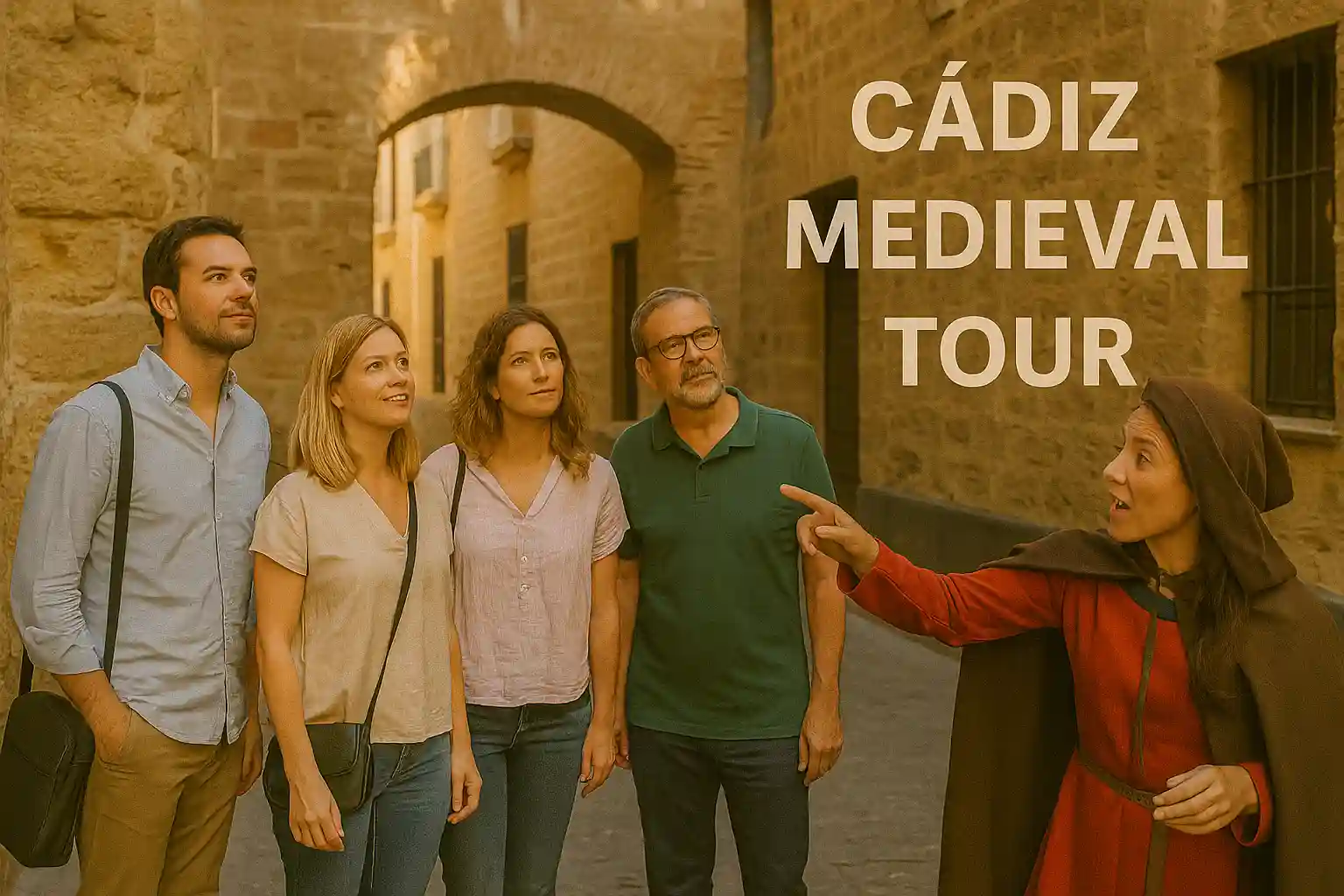
Why Take a Medieval Tour in Cádiz?
Cádiz isn't just old — it's ancient. Founded by Phoenicians in 1100 BC, this is Western Europe's oldest continuously inhabited city, predating Rome by 300 years. While most European "medieval" tours focus on 12th-15th century castles and churches, Cádiz's medieval period sits atop layers of Phoenician, Carthaginian, Roman, and Islamic civilizations, each leaving architectural and cultural traces visible today.
A medieval tour here means exploring the Barrio del Pópulo (oldest quarter) where narrow streets follow Roman and Moorish urban planning, climbing Torre Tavira — one of 126 watchtowers built by 18th-century merchants to spot returning treasure ships — and visiting the Cathedral that took 116 years to build (1722-1838) with wealth from New World colonies. You'll walk through medieval gates (Arco de los Blancos, Arco del Pópulo) marking ancient city boundaries and see remnants of defensive walls that protected Cádiz from Berber pirates, English privateers, and French invaders.
Unlike walking tours that skim historical highlights, a focused medieval tour dives deep into specific eras: the Islamic period (711-1262) when Qādis was a prosperous port under Moorish rule, the Christian reconquest that reshaped the city, the Golden Age (1500s-1700s) when Cádiz held monopoly on American trade, and the defensive strategies that kept the city unconquered for millennia. Your expert guide — often a historian or archaeologist — brings these layers to life with legends of sailors, saints, and smugglers.
Tour Highlights & Medieval Landmarks
Medieval tours typically last 2 hours and cover the most significant historical sites in Cádiz's Old Town. Here's what you'll experience:
Key Stops & Historical Sites
- Torre Tavira (Tavira Tower) – Climb Cádiz's highest watchtower (45 meters, 160 steps) for panoramic views of the entire peninsula and bay. Built in the 18th century when Cádiz had 126 towers used by merchants to spot returning ships laden with gold, silver, and spices from the Americas. Experience the camera obscura — a 19th-century optical device projecting live 360° views of Cádiz onto a large dish in a darkened room.
- Cádiz Cathedral (Santa Cruz sobre el Mar) – Enter the baroque and neoclassical masterpiece with its iconic golden-glazed dome visible across the city. Construction spanned 116 years (1722-1838), funded by wealth from American colonial trade. See the crypt containing composer Manuel de Falla's tomb, intricate choir stalls, and treasury with processional silver. Some tours include tower climb for rooftop views.
- Barrio del Pópulo (Medieval Quarter) – Walk through Cádiz's oldest neighborhood, entering via medieval stone gates: Arco de los Blancos and Arco del Pópulo (13th century). These arches marked the boundaries of Roman and Moorish Cádiz. Navigate labyrinthine streets following Islamic urban planning — narrow to provide shade and defense, with hidden plazas and whitewashed walls.
- Teatro Romano (Roman Theater) – See ruins of Spain's largest Roman theater (70 BC), built under Lucius Cornelius Balbus and seating 10,000 spectators. Rediscovered in 1980 after being buried beneath the medieval city for centuries. Your guide explains how this proves Gades (Roman Cádiz) was one of the empire's most important provincial cities.
- Castillo de Santa Catalina – Visit this star-shaped fortress built in 1598 after the English sacked Cádiz in 1596 (led by Earl of Essex). The pentagonal design was cutting-edge military architecture. Walk the ramparts overlooking La Caleta Beach and learn how this castle protected the city during centuries of naval conflicts.
- Ancient City Walls & Fortifications – Trace remnants of defensive walls built by Phoenicians, reinforced by Romans, expanded by Moors, and modernized by Spanish in the 16th-18th centuries. Your guide points out different construction techniques revealing archaeological layers: Phoenician ashlar blocks, Roman opus caementicium, Islamic masonry, and Renaissance bastions.
- Plaza de San Juan de Dios – The city's historic main square since Roman times, now flanked by elegant 18th-century Casa Consistorial (town hall). Learn how this plaza has been Cádiz's administrative and commercial heart for 2,000+ years — where Roman magistrates, Islamic qadis (judges), and Spanish governors all held court.
- Hidden Plazas & Courtyards – Your guide leads you to secluded spots tourists miss: Callejón del Duende (Goblin Alley) with its legends, Plaza de la Catedral's quieter corners, and Moorish-style patios with ornate tilework and fountains.
Historical Periods Explored
The tour weaves together multiple historical layers:
- Phoenician Gadir (1100 BC - 206 BC) – Origins as a trading post for tin from Britain and purple dye from murex shells, temple to Melqart (Phoenician Hercules), strategic location controlling Strait of Gibraltar access
- Carthaginian Period (237-206 BC) – Hannibal's use of Gades as a base during Punic Wars, connections to North African Carthage
- Roman Gades (206 BC - 711 AD) – Julius Caesar as quaestor here (68 BC), Teatro Romano construction, garum fish sauce production making Gades wealthy, Balbus family patronage
- Visigothic Interlude (5th-8th centuries) – Brief period after Rome's fall before Islamic conquest
- Islamic Qādis (711-1262) – 551 years under Moorish rule, urban planning creating labyrinthine street patterns for shade/defense, architectural innovations (horseshoe arches, courtyards), agricultural advances, coexistence of Muslim, Jewish, and Christian communities
- Christian Reconquest (1262) – Alfonso X "the Wise" captures Cádiz, construction of new fortifications, establishment of cathedral on site of mosque
- Golden Age (1500s-1700s) – Monopoly on American trade after Seville's river silted up, treasure fleets departing/arriving, merchant wealth building watchtowers and mansions, target of English (1596 sack) and Dutch raiders
- Age of Enlightenment & Constitution (1812) – Cádiz as seat of liberal government during Napoleonic invasion, birthplace of Spain's first democratic constitution, cultural flowering
What Makes This Tour "Medieval"?
The term "medieval" for Cádiz tours encompasses a broader historical scope than typical European medieval tours:
Architectural Focus
- Islamic architecture (8th-13th centuries) – Narrow streets, whitewashed buildings, interior courtyards, remnants of mosques
- Christian reconquest structures (13th-15th centuries) – Medieval gates, defensive towers, early churches built over mosques
- Renaissance/Baroque fortifications (16th-18th centuries) – Star-shaped fortresses, bastions, modern defensive walls incorporating medieval foundations
- Baroque cathedral (18th-19th centuries) – Built with New World wealth but incorporating earlier medieval chapel sites
Thematic Elements
Tours explore medieval themes through Cádiz's unique lens:
- Defense & fortification – How a peninsula city survived millennia of attacks
- Maritime trade & exploration – Cádiz as gateway to the New World
- Religious coexistence & conflict – Jewish, Muslim, and Christian communities
- Urban planning evolution – From Roman grid to Islamic maze to Renaissance orderly expansion
- Legends & folklore – Stories of saints, pirates, merchants, and mystics
What to Expect During Your Medieval Tour
Duration & Pace
Total time: 2 hours
Walking distance: Approximately 2 kilometers (very manageable)
Pace: Slow and contemplative with frequent stops
Stops: 6-8 major sites with detailed explanations (8-12 minutes each)
Tower climb: 160 steps at Torre Tavira (optional rest breaks)
Medieval tours prioritize depth over breadth. Rather than rushing past 20 landmarks, guides spend substantial time at each site explaining historical context, architectural details, and cultural significance. Expect:
- Detailed historical narratives about specific events, people, and eras
- Architectural analysis pointing out Phoenician vs Roman vs Islamic vs Christian construction techniques
- Archaeological insights about how sites were discovered and interpreted
- Legends and stories bringing history to life (pirates, smugglers, saints, explorers)
- Time for questions and discussion with your expert guide
Guide Expertise
Medieval tours typically feature specialized guides:
- Historians – University-trained in Andalusian or Spanish history
- Archaeologists – Involved in Cádiz excavations or research
- Art historians – Experts in Baroque, Islamic, or Medieval architecture
- Certified cultural guides – Deep knowledge of local history and legends
These aren't generic tour guides reading scripts — they're passionate experts who answer complex questions, debate historical interpretations, and share recent archaeological discoveries.
Cathedral & Tower Access
Cathedral interior: Most tours include entrance ticket (€7 value). See baroque nave, crypt, choir, treasury. Some tours add tower climb (additional 10 minutes, 78 more steps) for rooftop views.
Torre Tavira: Entrance usually included (€7 value). The 160-step climb is paced with breaks. Camera obscura demonstration lasts 15 minutes. Not wheelchair accessible.
Who Should Take a Medieval Tour?
Ideal For:
- History enthusiasts – Those who love deep historical context, archaeological details, and understanding how civilizations built upon each other
- Architecture lovers – Fans of Islamic, Baroque, Neoclassical, and military architecture spanning millennia
- Repeat visitors – Already saw highlights on a walking tour, now want specialized depth
- Families with older children – Kids 10+ who enjoy stories, legends, and climbing towers
- Cultural travelers – Those who prefer understanding a place deeply rather than checking off sights
Physical Requirements
- Fitness level: Moderate — must be comfortable walking 2km and climbing 160 steps
- Mobility: Not wheelchair accessible due to cobblestones, narrow streets, tower climbs
- Age: Suitable for ages 10+ (younger children may find 2-hour detailed historical tour challenging)
- Weather: Tours run rain or shine; bring umbrella in winter
What's Included
- Expert historian or archaeologist guide (2 hours)
- Cathedral entrance ticket (if included in tour package)
- Torre Tavira entrance with camera obscura demonstration (if included)
- Small group size (typically 8-15 participants for quality interaction)
What to Bring
- Comfortable walking shoes – Essential for cobblestones and tower stairs
- Water bottle – Stay hydrated during 2-hour walking/climbing
- Sun protection – Hat, sunglasses, sunscreen (much of route is in open sun)
- Camera – Cathedral interior, tower views, medieval gates all photo-worthy
- Light jacket – Cathedral interior is cool even in summer; tower can be windy
- Notebook – History enthusiasts may want to jot down dates, names, book recommendations
Best Time for Medieval Tours
Time of Day
Morning tours (10:00-11:00 AM): Cooler temperatures, fresh energy, good light for Cathedral interior photography, finish before lunch
Afternoon tours (3:00-4:00 PM): Warmer but less crowded at popular sites, beautiful golden hour light as tour ends
Evening tours (rare): Some operators offer 6:00 PM summer tours with sunset light on cathedral dome
Seasonal Recommendations
Spring (March-May): Ideal. Comfortable temperatures (18-24°C), wildflowers, clear skies for tower views. Peak season for photography.
Summer (June-August): Hot (28-35°C) but tower stairs are shaded. Book early morning (9:00-10:00 AM) tours. Bring extra water.
Fall (September-November): Excellent conditions, fewer tourists, dramatic light for photos. September/October perfect.
Winter (December-February): Mild (15-18°C), occasional rain. Cathedral interior especially atmospheric. Dress in layers.
Special Considerations
- Holy Week (Semana Santa, March/April): Cathedral may have restricted access due to religious ceremonies; streets crowded with processions
- Carnival (February): City extremely crowded; book well in advance or avoid this week
- Sundays: Cathedral has mass schedule; tours adjust timing accordingly
Combine Your Medieval Tour
Medieval tours work best as a deep dive after getting your bearings. Recommended sequence:
Day 1 - Orientation
- General Walking Tour or Bike Tour – Get geographic overview of entire city, see all major landmarks from outside
Day 2 - Medieval Deep Dive
- Medieval Tour – Focus on historical depth, cathedral interior, tower climbs, archaeological sites
- Afternoon: Visit Museo de Cádiz (archaeology museum) to see artifacts from Phoenician, Roman, and Islamic periods mentioned on tour
Complementary Activities
- Evening Tapas Tour – After medieval history, taste traditional Gaditano cuisine in historic taverns your guide may have pointed out
- Sunset Catamaran Cruise – See fortifications and cathedral from the sea perspective that attackers once had
- Self-guided exploration – Return to Barrio del Pópulo at night when lit up, find hidden details you now understand from tour
Beyond Cádiz
Interested in medieval Andalusian history? Also explore:
Medieval Tour vs. General Walking Tour
How does a medieval tour differ from Cádiz's standard walking tour?
Medieval Tour Advantages
- Depth over breadth – 6-8 sites explored thoroughly vs 15-20 sites seen briefly
- Interior access – Cathedral, tower, museum-quality explanations vs exterior views only
- Expert guides – Historians/archaeologists vs general tour guides
- Historical focus – Specific periods (Islamic, medieval, Golden Age) vs broad overview
- Architectural analysis – Learn to identify construction periods, styles, influences
- Archaeological context – Understand how sites were discovered, what they reveal
- Interactive discussion – Time for questions, debates, deeper exploration of topics
When to Choose General Walking Tour Instead
- First time in Cádiz and want broad overview
- Short visit (only one day) and want to see maximum landmarks
- Traveling with young children who need variety/shorter attention span
- Prefer lighter historical narrative without archaeological/architectural detail
- Want to cover beaches, parks, and modern neighborhoods beyond Old Town
Ideal Solution: Both Tours
Many visitors find the optimal approach is both:
- Day 1: General walking or bike tour (orientation, see everything briefly)
- Day 2: Medieval tour (deep dive into history, interiors, expert insights)
A walk through medieval Cádiz is not just a tour — it's a dialogue with the past, where stones, salt air, and stories weave a living tapestry of history. Every archway whispers of Moorish scholars, every tower remembers treasure fleets, every cobblestone has been trodden by Phoenician traders, Roman senators, and conquistadors sailing to worlds unknown.