
Guadalajara Culture, Architecture & Market Walking Tour
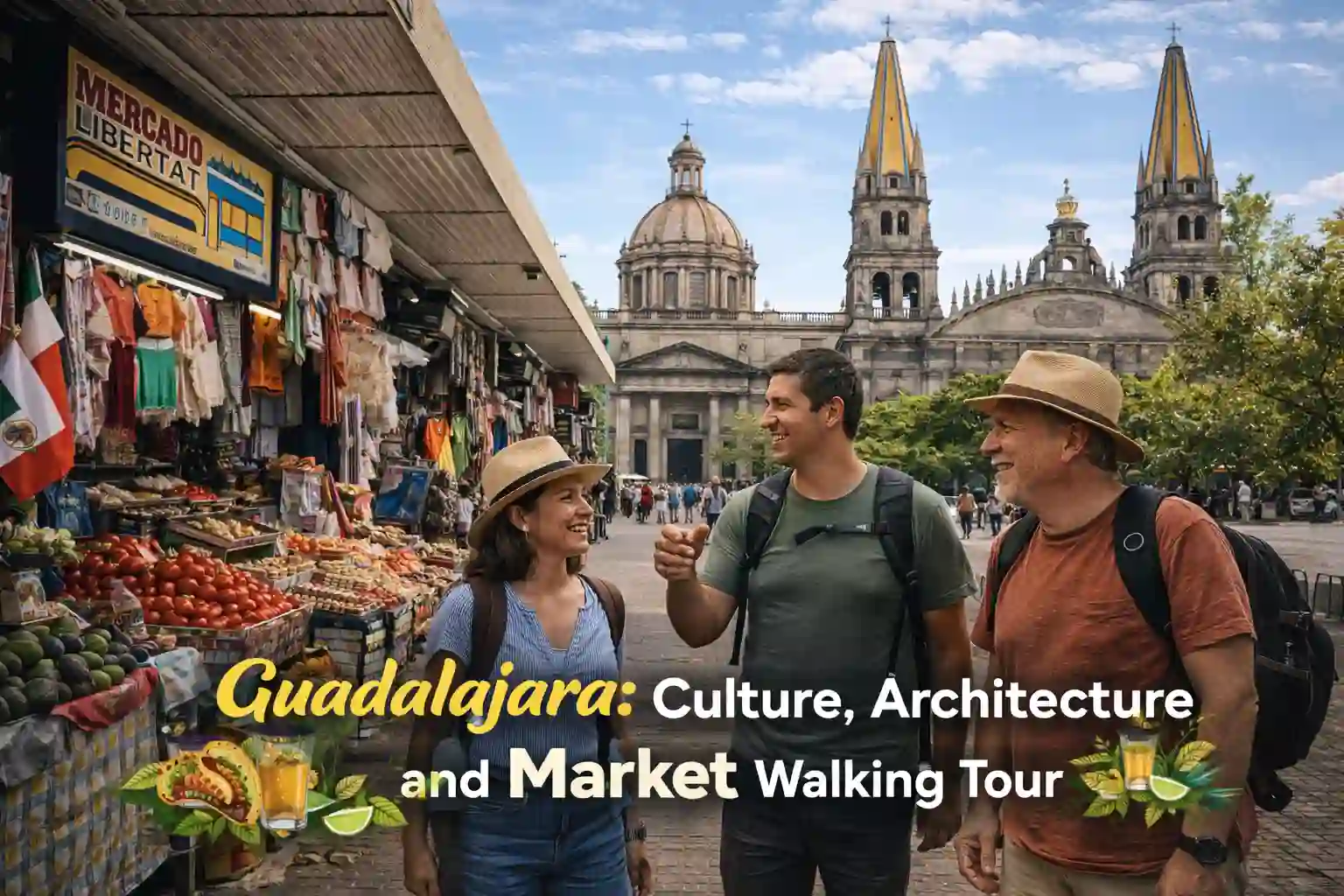
Why This Walking Tour Stands Out
- Authentic market immersion: Navigate Mercado San Juan de Dios (Latin America's largest indoor market); learn vendor dynamics, bargaining culture, ingredient identification.
- Architectural timeline: Colonial baroque churches, French neoclassical theaters, modernist murals; understand city's evolution through building styles.
- Local guide perspective: Native tapatíos explain cultural nuances invisible to outsiders; decode social customs, regional pride, Catholic conservatism vs progressive art.
- Food context not consumption: Learn about ingredients, regional dishes, market economics; optional tastings but focus on cultural understanding.
- Small group depth: Maximum 12 people; extensive Q&A about contemporary Guadalajara life, politics, traditions.
What's Included
- Professional local guide (tapatío native)
- 3-4 hour walking tour
- Mercado San Juan de Dios exploration
- Cathedral and Teatro Degollado visits
- Historic center architectural walk
- Cultural and historical context
- Optional market tastings (small additional cost)
- Bottled water
Walking Tour Experience
- Meeting point: Central downtown location; guide introduces Guadalajara's contradictions (conservative yet creative, Catholic yet rebellious).
- Plaza de Armas: Start at colonial-era square; see Art Nouveau kiosk, Palacio de Gobierno; guide explains Jalisco's role in Mexican independence and revolution.
- Cathedral entrance: Twin Gothic-revival towers dominate skyline; brief interior visit shows mix of architectural periods and earthquake damage history.
- Teatro Degollado: Neoclassical theater inspired by Milan's La Scala; if open, see interior with Gerardo Suárez mural depicting Dante's Divine Comedy.
- Plaza Tapatía walk: Pedestrian promenade connecting historic plazas; modernist sculptures, fountains, street vendors; understand 1980s urban renewal project.
- Hospicio Cabañas: UNESCO World Heritage site; José Clemente Orozco murals inside (exterior viewing on walking tour; full interior requires separate visit).
- Market approach: Guide explains tianguis (market) culture, vendor hierarchies, economic role in Mexican life before entering chaos.
- Mercado San Juan de Dios: Three-story labyrinth; ground floor produce/meat, upper floors clothing/household goods; navigate with guide's market literacy.
- Ingredient education: Identify chiles (guajillo, ancho, chipotle), tropical fruits, herbs; learn traditional medicine stalls (hierberos), religious articles.
- Vendor interactions: Guide facilitates conversations; learn pricing (turista vs local), bargaining etiquette, vendor family histories.
- Optional tastings: Try tejuino (fermented corn drink), birria sample, fresh fruit with chile-lime; small cost, guide facilitates ordering.
- Return through historic streets: Different route back; see everyday Guadalajara away from tourist zones; guide answers contemporary culture questions.
Understanding Guadalajara's Identity
Guadalajara paradoxically combines deep Catholic conservatism with creative rebellion. As Jalisco's capital and Mexico's second city, it maintains traditional values while birthing mariachi music, producing tequila, and fostering muralist movements. The city's European architectural imitation (theaters modeled on La Scala, boulevards copying Paris) reflects 19th-century elite aspirations toward European sophistication. Yet underneath colonial facades lies indigenous Nahuatl influence and mestizo fusion. Tapatíos pride themselves on being más mexicano — more authentically Mexican — than cosmopolitan Mexico City residents. This manifests in fierce regional loyalty, celebration of Jalisco traditions (charro culture, rodeo), and suspicion of central government. Understanding these tensions — tradition vs modernity, European aspiration vs indigenous roots, regional pride vs national identity — reveals Guadalajara's complex character beyond mariachi stereotypes.
Mercado San Juan de Dios Deep Dive
- Size and scale: Three floors, 2,800+ vendor stalls, covers entire city block; opened 1958 after fire destroyed original 1896 market.
- Ground floor: Fresh produce, meat, seafood; organized by product type; busiest mornings when housewives shop.
- Second floor: Clothing, textiles, shoes; mix of new manufactured goods and traditional embroidered items.
- Third floor: Electronics, household goods, toys, religious articles; less tourist-oriented, more local daily needs.
- Economics: Vendors pay daily rent to building authority; many families occupy same stalls for generations; informal credit systems.
- Social function: Not tourist attraction but essential urban infrastructure; millions of tapatíos depend on market for daily shopping.
Practical Details
3-4 hours · Morning departure: 9:00-10:00 AM (markets liveliest morning) · Walking pace moderate with frequent stops · Ends 12:00-2:00 PM
- Moderate walking totaling 3-4 km; mostly flat downtown terrain
- Standing during architectural explanations and market navigation
- Market can be crowded; requires comfort with dense crowds, sensory intensity
- Stairs to upper market floors; elevator exists but slow
- Comfortable walking shoes (market floors can be wet in produce sections)
- Sun protection (hat, sunglasses, sunscreen) for outdoor plaza walking
- Small daypack for potential purchases (leave valuables at hotel)
- Cash in small bills (100-200 pesos) for optional tastings or purchases
- Camera for architecture and colorful market scenes
- Open mind for sensory overload (smells, sounds, crowds are intense)
Who Is This Tour For?
- Cultural immersion seekers: Want authentic Mexican daily life beyond tourist presentations.
- Architecture enthusiasts: Appreciate colonial, neoclassical, modernist styles; understand urban evolution through buildings.
- Market lovers: Fascinated by traditional commerce, vendor culture, ingredient diversity.
- Photography enthusiasts: Capture colorful produce, architectural details, street life, market chaos.
- Food culture students: Learn about Mexican ingredients and regional cuisine (though not primarily a food tour).
- First-time Guadalajara visitors: Comprehensive introduction to city's history, culture, daily rhythms.
Best Times for Walking Tours
- Morning departures (9:00-10:00 AM): Markets most active; vendors restocking, housewives shopping; best energy and selection.
- Weekdays preferred: Tuesday-Friday ideal; Monday vendors restock, weekends crowded with suburban shoppers.
- October-April (dry season): Comfortable temperatures (18-28°C); minimal rain interruptions; clearer air quality.
- Avoid major holidays: Christmas week, Semana Santa; markets closed or operating reduced schedules.
- Skip extreme heat days: May-June pre-rainy season can reach 35°C+; morning tours still manageable but exhausting.
Architectural Highlights Explained
- Cathedral (1561-1618): Mix of Gothic, Baroque, Neoclassical due to 57-year construction; twin towers added 1854 after earthquake destroyed originals.
- Teatro Degollado (1866): Neoclassical facade with Corinthian columns; Apollo and nine muses in pediment; interior horseshoe auditorium modeled on European opera houses.
- Palacio de Gobierno (1643): Baroque colonial; contains José Clemente Orozco murals (1937) depicting Hidalgo abolishing slavery.
- Hospicio Cabañas (1810): Neoclassical orphanage by Manuel Tolsá; UNESCO site for Orozco's "Man of Fire" fresco cycle.
- Plaza Tapatía (1982): Modernist urban renewal; controversial demolition of colonial blocks to create pedestrian corridor.
Insider Tips
- Bring small bills: Vendors rarely have change for 500-peso notes; 20s and 50s ideal for purchases.
- Ask before photographing vendors: Most don't mind but requesting permission shows respect; often leads to conversations.
- Try tejuino: Traditional fermented corn drink unique to Jalisco; acquired taste but culturally significant.
- Bargain gently on artisan goods: Produce has fixed prices; clothing/crafts negotiable; start 20-30% below asking.
- Note favorite vendor stalls: Returning independently shows appreciation; vendors remember and offer better service/prices.
- Avoid wearing expensive jewelry: Market safe but crowded; pickpockets target obvious tourists.
- Ask guide about contemporary issues: Politics, social changes, drug violence context — get local perspective beyond news headlines.
What Makes This Tour Authentic
- Local guide expertise: Native tapatíos who shop these markets personally; insider knowledge of vendor relationships and neighborhood history.
- Working market focus: Not sanitized tourist market but essential urban infrastructure serving millions of residents.
- Architecture as history: Buildings decoded as documents revealing political, economic, cultural evolution.
- Contemporary context: Not frozen colonial nostalgia but understanding modern Guadalajara's challenges and identity.
- Small groups allow depth: Maximum 12 people enables personalized questions, vendor interactions, cultural discussions.
Market Ingredients & Products
- Chile varieties: Guajillo (mild, fruity), ancho (dried poblano, sweet), chipotle (smoked jalapeño), arbol (very hot); learn identification and uses.
- Tropical fruits: Guanabana, mamey, pitaya, sapote; most unknown to foreigners; vendors offer samples.
- Herbs and spices: Epazote, cilantro, hoja santa, Mexican oregano; essential to regional cuisine.
- Traditional medicine: Hierberos sell dried herbs for ailments; blend of indigenous knowledge and folk remedies.
- Religious articles: Virgin of Guadalupe images, milagros (votive offerings), candles, rosaries; reflect Catholic devotion.
- Household goods: Clay pots (cazuelas), molcajetes (grinding stones), comals (griddles); traditional kitchen tools still widely used.
Understanding Tapatío Culture
Tapatíos (Guadalajara natives) identify strongly with Jalisco over Mexico. Regional pride manifests in celebration of mariachi music (Guadalajara's creation), tequila production (Jalisco's monopoly), charro (horseman) culture, and conservative Catholic values. Unlike Mexico City's cosmopolitanism or northern Mexico's U.S. influence, Guadalajara maintains what residents consider "true" Mexican traditions. This conservatism coexists paradoxically with artistic rebellion — Orozco's revolutionary murals, literary movements, contemporary art scenes. Tapatíos speak Spanish with distinctive accent (softer than chilango Mexico City slang) and use regional vocabulary. Social hierarchies remain more pronounced than in modern Mexico City; class consciousness and European-descended elite maintain influence. Understanding these dynamics helps decode the city's architecture (European imitation), its artistic production (indigenous roots reassertion), and contemporary tensions (tradition vs globalization).
José Clemente Orozco Context
- Early life: Born 1883 in Jalisco; childhood industrial accident left him partially blind and without left hand.
- Artistic philosophy: Darker than Diego Rivera; focused on human suffering, war, social violence rather than romantic indigenism.
- Major works in Guadalajara: Hospicio Cabañas "Man of Fire" (1938-39); Palacio de Gobierno "Hidalgo" (1937); University murals.
- Political stance: Critical of both capitalism and communism; humanist rather than ideological; skeptical of revolution's promises.
- Legacy: Part of "Big Three" muralists with Rivera and Siqueiros; Guadalajara preserves his most important works.
Food Culture Beyond the Tour
- Birria: Jalisco's signature dish; goat or beef stew with spices; often served for breakfast in market fondas (food stalls).
- Tortas ahogadas: Guadalajara invention; pork sandwich "drowned" in spicy tomato sauce; controversial outside Jalisco.
- Tejuino: Fermented corn drink; slightly alcoholic, served cold with lime and salt; Pre-Hispanic origins.
- Carne en su jugo: "Meat in its juice"; beef, beans, bacon in broth; comfort food invented in Guadalajara.
- Jericallas: Custard dessert similar to crème brûlée; nuns created in colonial-era Guadalajara.
Market Economics & Vendor Life
Mercado San Juan de Dios operates on complex informal economics. Vendors pay daily rent (typically 100-300 pesos) to building authority. Prime locations (near entrances, high traffic) cost more and pass through families generationally. Many vendors wake at 3:00-4:00 AM to receive produce deliveries and set up displays. Income varies wildly — successful vendors earn middle-class wages, strugglers barely survive. Wholesale suppliers extend credit, creating debt relationships. Vendors form social networks sharing information about prices, quality suppliers, customer fraud. The rise of supermarkets and online shopping threatens traditional markets; younger generation often refuses to continue family stalls. Government debates market modernization vs preservation — improving hygiene, safety, infrastructure while maintaining character and vendor livelihoods. This tour reveals these tensions between tradition, economics, and modernity playing out daily in Mexico's markets.
Photography Opportunities & Etiquette
- Architectural gems: Cathedral towers against blue sky, Teatro Degollado facade, Plaza Tapatía fountains.
- Market colors: Chile pyramids (reds, browns, oranges), tropical fruit displays, flower stalls.
- Vendor portraits: Character-filled faces, weathered hands, traditional dress — always ask permission first.
- Street life: Shoe shiners, lottery ticket sellers, street food vendors, pedestrian flow.
- Architectural details: Ironwork balconies, carved stone, Art Nouveau decorations, colonial tiles.
- Respect boundaries: Don't photograph if vendor declines; never photograph without asking; offer to share/email photos.
- Technical notes: Market lighting challenging; high ISO necessary indoors; outdoor plazas bright contrast.
Contemporary Guadalajara Context
- Economic role: Mexico's tech and manufacturing hub; "Silicon Valley of Mexico"; global companies operate here.
- Cultural conservatism: Catholic Church maintains strong influence; traditional family values emphasized more than Mexico City.
- Cartel presence: Jalisco New Generation Cartel operates in state; tourist areas safe but violence exists in periphery.
- Migration patterns: Significant emigration to U.S. (remittances important); also internal migration from rural Jalisco.
- LGBTQ+ acceptance: Growing but slower than Mexico City; conservative culture creates tensions.
- Environmental issues: Air pollution, water scarcity, urban sprawl; rapid growth strains infrastructure.
Combine With
- Tequila Route: Morning market tour, afternoon tequila distillery visit; comprehensive Jalisco culture day.
- Lake Chapala excursion: Different day; market shows urban Guadalajara, lake shows natural escape.
- Hospicio Cabañas interior: After walking tour, return for full Orozco mural experience (separate admission).
- Evening mariachi performance: Understand music's origins through tour, experience it live at Plaza de los Mariachis.
Safety & Practical Considerations
- Market safety: Generally safe with guide; watch belongings in crowds; pickpockets target distracted tourists.
- Street crossing: Downtown traffic chaotic; follow guide closely at intersections.
- Sun exposure: Strong at 1,566m elevation; sunscreen essential even cloudy days.
- Food safety: If trying market foods, follow guide's vendor recommendations; their immune systems handle what yours might not initially.
- Hydration: Altitude and walking increase water needs; drink frequently.
- Bathroom access: Public restrooms in market (small fee); guide knows clean options.
After the Tour
- Return for purchases: Note favorite vendors; buy souvenirs or ingredients without time pressure.
- Lunch in market fondas: Upper floor food stalls serve authentic budget meals; guide recommends specific ones.
- Hospicio Cabañas visit: Walking tour shows exterior; return for full Orozco mural experience (50 pesos admission).
- Apply market knowledge: Cook with purchased ingredients or understand restaurant menus better.
- Explore independently: Walking tour provides orientation; comfortable navigating downtown neighborhoods afterward.