
Guachimontones Pyramids Tour – Circular Pre-Hispanic Temples
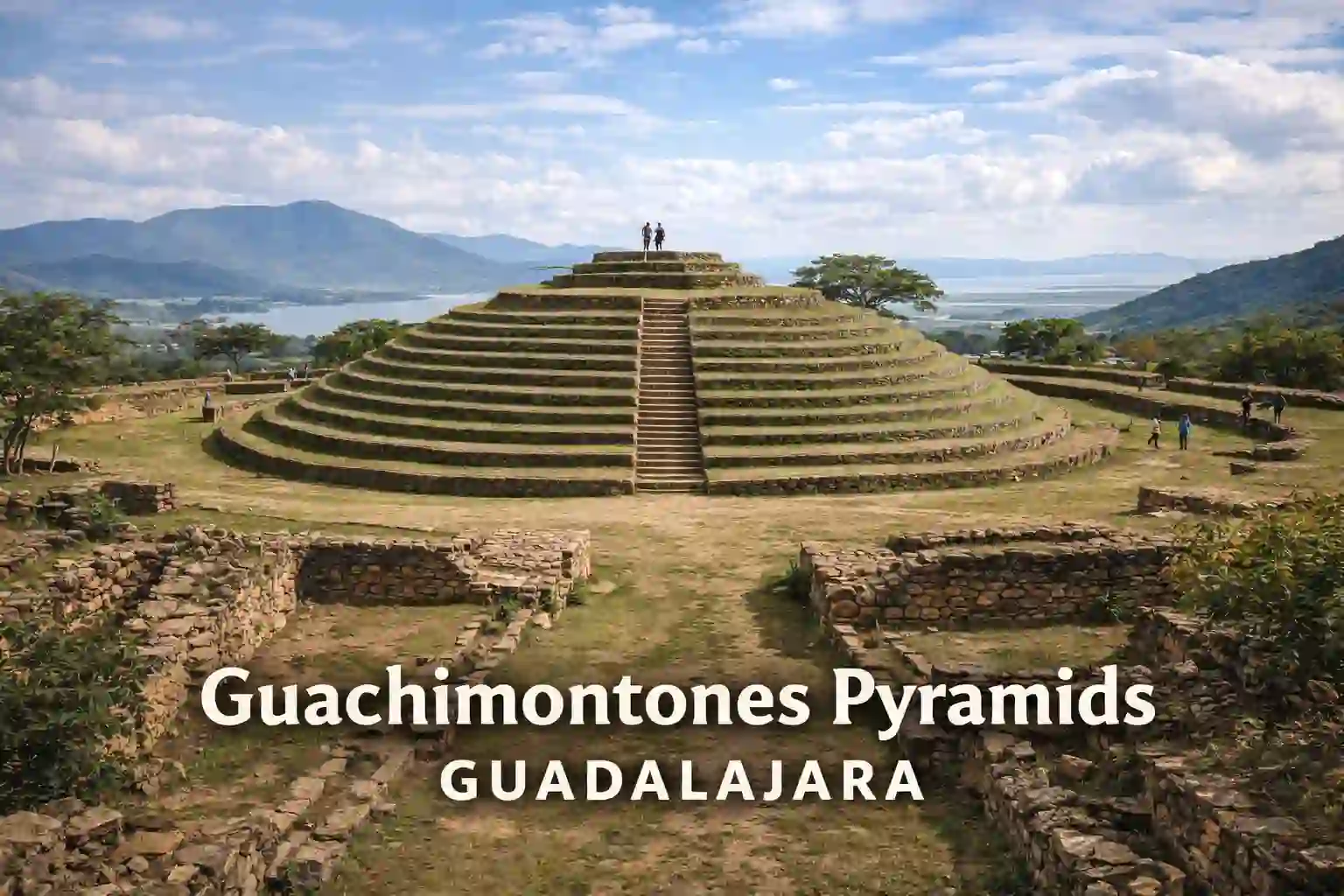
Why This Archaeological Site Stands Out
- Unique circular architecture: Only circular stepped pyramids in Mexico; concentric rings rather than rectangular bases found everywhere else.
- Teuchitlán Tradition mystery: Culture flourished 300 BCE-900 CE, created sophisticated society, then disappeared leaving minimal written records.
- Recent discovery: Site known to locals for centuries but only excavated systematically since 1990s; still revealing secrets.
- Intimate scale: Not massive tourist site like Teotihuacan; walk freely among ruins, climb structures, feel personal connection.
- Mountain & volcano backdrop: Tequila Volcano visible from site; understand ancient culture's relationship with sacred landscape.
What's Included
- Round-trip transport from Guadalajara
- Professional bilingual guide
- Guachimontones site entrance fee
- Interpretive museum visit
- Archaeological site walking tour
- Teuchitlán town visit (optional)
- Free time for photography
- Bottled water
Tour Experience
- Morning departure: Leave Guadalajara 9:00-10:00 AM; scenic 60 km drive west through Jalisco highlands toward tequila country.
- Tequila Volcano views: Approach site with extinct volcano dominating horizon; guide explains sacred mountain significance to ancient culture.
- Museum arrival: Modern interpretive center; 15-20 minute orientation showing Teuchitlán culture history, artifacts, reconstruction models.
- Site entrance: Walk through agave fields (ironic modern crop on ancient ceremonial grounds) toward pyramid complex.
- Main circular structure: "Guachimontón" (Casa Grande) — largest pyramid with concentric rings, central altar, and radiating platforms.
- Climb experience: Ascend restored sections; each tier offers different perspective on circular geometry and surrounding landscape.
- Ball court visit: I-shaped ball court similar to other Mesoamerican sites; understand ritual game's role in culture.
- Secondary circles: Explore smaller pyramids arranged around plaza; understand urban planning and ceremonial complex layout.
- Shaft tomb explanation: Guide describes unique burial chambers 5-16 meters deep; grave goods revealed sophisticated beliefs.
- Panoramic viewpoint: Top of main pyramid offers 360° views; see Tequila Volcano, valleys, understand site's strategic location.
- Archaeological context: Guide explains ongoing excavations, unanswered questions, theories about culture's disappearance.
- Free exploration time: 30-45 minutes to photograph, re-climb structures, absorb atmosphere without guide narration.
- Optional town visit: Brief stop in Teuchitlán village; colonial church, plaza, local restaurants if time permits.
- Return to Guadalajara: Afternoon drive back; Q&A about pre-Hispanic Mexico, Jalisco archaeology, contemporary indigenous issues.
Understanding the Teuchitlán Tradition
The Teuchitlán Tradition culture occupied western Jalisco from approximately 300 BCE to 900 CE. Unlike neighboring Mesoamerican cultures building rectangular pyramids (Teotihuacan, Maya sites, Aztec temples), Teuchitlán architects created circular stepped pyramids called "guachimontones." These concentric structures featured central patios surrounded by platforms, with shaft tombs beneath containing elaborate grave goods. The culture developed sophisticated agriculture using chinampas (raised fields), produced fine ceramics, and maintained long-distance trade networks. Their sudden disappearance around 900 CE remains mysterious — no evidence of conquest, epidemic, or environmental catastrophe. Possible theories include gradual migration, cultural transformation, or political collapse. Lack of written records means much remains speculative based on archaeological evidence alone.
Circular Architecture Explained
- Cosmological symbolism: Circles may represent cyclical time, celestial movements, or spiritual concepts lost to history.
- Ceremonial function: Central patios likely held rituals; surrounding platforms for observers; circular design allows radial viewing.
- Acoustic properties: Circular shapes create sound amplification; ceremonies with music, chanting enhanced by geometry.
- Social structure reflection: Concentric rings might mirror social hierarchy; elite near center, commoners on periphery.
- Astronomical alignment: Some structures align with solar or stellar events; circles facilitate 360° horizon observations.
- Unique regional identity: Architectural distinction from central Mexico cultures; assert independent tradition.
Practical Details
5-6 hours total · Departure: 9:00-10:00 AM · Drive time: 60-75 minutes each way · Site visit: 2-2.5 hours · Return: 3:00-4:00 PM
- Moderate walking and climbing; pyramid tiers have steep steps
- Uneven ancient surfaces; requires stable footing and balance
- Sun exposure (minimal shade at site); wear sun protection
- Elevation approximately 1,200 meters; comfortable for most visitors
- Suitable for ages 8+; younger children may struggle with climbs
- Sturdy walking shoes with good grip (pyramid surfaces irregular)
- Sun protection (hat, sunglasses, high SPF sunscreen)
- Camera with wide-angle lens for architecture and landscapes
- Light backpack for water, snacks, layers
- Cash for optional purchases in Teuchitlán village (100-200 pesos)
- Binoculars for distant volcano and valley views (optional)
Who Is This Tour For?
- Archaeological enthusiasts: Appreciate unique pre-Hispanic architecture; interested in lesser-known Mesoamerican cultures.
- History buffs: Fascinated by ancient mysteries; enjoy sites with unanswered questions and ongoing research.
- Photographers: Capture unique circular geometry, volcano backdrop, dramatic lighting on ancient stones.
- Alternative archaeology seekers: Want to experience ruins without Chichen Itza's tourist crowds.
- Cultural explorers: Understand indigenous Mexico beyond Aztec and Maya narratives.
Best Times for Site Visits
- October-April (dry season): Clear skies maximize volcano views; comfortable temperatures 20-28°C; minimal rain.
- Morning tours preferred: Cooler climbing conditions; better photography light; site less crowded than afternoons.
- Weekdays advantage: Tuesday-Friday quietest; weekends attract Mexican families from Guadalajara.
- Avoid major holidays: Christmas week, Semana Santa bring larger crowds; site loses intimate atmosphere.
- Spring equinox (March 20-21): Some visitors attend for astronomical alignments; speculative but atmospheric.
Archaeological Context & Significance
- Western Mexico distinction: Region developed independently from central Mexican cultures; different pottery, architecture, burial practices.
- Shaft tomb tradition: Deep vertical tombs unique to west Mexico; contained elaborate ceramics, figurines, jewelry.
- Obsidian trade networks: Archaeological evidence shows extensive trade; obsidian tools from distant sources found on site.
- Agricultural innovation: Developed irrigation systems and chinampas; supported population estimated 20,000+ at peak.
- Contemporary descendants: Modern Wixárika (Huichol) people may share cultural connections; claims debated by scholars.
- UNESCO potential: Site nominated for World Heritage status; recognition would increase protection and research funding.
Insider Tips
- Climb main pyramid early: First group has best light, fewest people in photos, fresh energy for stairs.
- Ask about ongoing excavations: Archaeological work continues; guide knows current projects and recent discoveries.
- Compare to rectangular pyramids: If you've visited Teotihuacan or Chichen Itza, discuss architectural differences with guide.
- Photograph from multiple angles: Circular geometry creates different compositions from each direction.
- Visit museum after site: Artifacts make more sense after seeing structures; reverse typical museum-first order.
- Request Teuchitlán village: If time allows, colonial church and plaza offer nice contrast to pre-Hispanic site.
- Bring binoculars: Tequila Volcano details, distant structures, valley topography enhance understanding.
What Makes Guachimontones Unique
- Architectural singularity: No other circular pyramids in Mexico; rectangular form dominates all other Mesoamerican sites.
- Cultural mystery: Unlike Aztec or Maya with extensive historical records, Teuchitlán culture left minimal documentation.
- Recent rediscovery: Serious excavation only since 1990s; many structures still buried; visiting during active research phase.
- Intimate accessibility: Can touch stones, climb freely, explore alone; contrast to roped-off tourist mega-sites.
- Landscape integration: Site positioning vis-à-vis Tequila Volcano reveals sophisticated landscape cosmology.
The Tequila Volcano Connection
The extinct Tequila Volcano (Volcán de Tequila) dominates the western horizon from Guachimontones. Rising 2,920 meters, this stratovolcano last erupted approximately 220,000 years ago. For Teuchitlán culture, the mountain held sacred significance — possible axis mundi connecting earthly and celestial realms. Archaeological evidence suggests rituals oriented toward the volcano. Obsidian from volcanic deposits appears throughout the site. Today, the volcano gives its name to the nearby town and tequila industry (blue agave thrives in volcanic soils). The visual relationship between circular pyramids and conical volcano creates powerful geometric dialogue — ancient architects clearly positioned their ceremonial center to emphasize this sacred mountain. Standing atop the main pyramid and viewing the volcano, you experience the same sightline that priests saw 1,500 years ago.
Shaft Tombs Explained
- Construction method: Vertical shafts dug 5-16 meters deep with lateral chambers at bottom; extremely labor-intensive.
- Grave goods: Elaborate ceramics (dog figurines, human effigies), shell jewelry, turquoise, obsidian tools.
- Social significance: Shaft complexity correlates with status; elite tombs deeper, more elaborate goods.
- Belief system: Tombs possibly represent underworld entrances; ceramics may depict afterlife journeys.
- Modern theft: Many tombs looted before systematic archaeology; priceless artifacts lost to black market.
- Museum displays: Site museum shows recovered shaft tomb artifacts; understand funerary practices visually.
Comparing Mesoamerican Pyramid Styles
- Teotihuacan (central Mexico): Massive rectangular pyramids; talud-tablero architecture; Avenue of the Dead urban planning.
- Maya (southern Mexico/Guatemala): Steep rectangular temples; intricate carvings; astronomical alignments; corbel arch technology.
- Aztec (central Mexico): Twin temples atop pyramids; Templo Mayor in Mexico City; human sacrifice emphasis.
- Guachimontones (west Mexico): Circular concentric tiers; central patios; shaft tombs beneath; volcanic landscape integration.
- Architectural isolation: Teuchitlán builders developed independently; minimal influence from/to other traditions.
The Site Museum Experience
- Interpretive Center: Modern building opened 2010; designed to contextualize site before exploring ruins.
- Ceramic displays: Teuchitlán pottery showing distinctive styles; compare to other western Mexico cultures.
- Reconstruction models: Scale models show pyramids at height of occupation; understand original appearance.
- Timeline exhibits: Chart culture development 300 BCE-900 CE; place in broader Mesoamerican chronology.
- Shaft tomb reproduction: Walk-through replica; visualize burial chamber experiences without endangering actual tombs.
- Ongoing research updates: Rotating exhibits on recent discoveries; site archaeology continues actively.
Photography & Composition Tips
- Wide-angle essential: Circular architecture requires wide lenses (16-35mm equivalent) to capture full geometry.
- Drone perspective ideal: Concentric circles photograph best from above (confirm drone permissions with site management).
- Golden hour magic: Afternoon light (tour times) creates shadows emphasizing tiers and texture.
- Include volcano: Frame pyramids with Tequila Volcano background; shows sacred landscape relationship.
- Human scale: Include people in shots to convey structure sizes; circles appear flat without scale reference.
- Detail shots: Ancient stone texture, agave plants, carved elements create variety beyond wide landscape views.
Contemporary Indigenous Connections
The relationship between ancient Teuchitlán culture and modern indigenous groups remains debated. Some scholars suggest connections to contemporary Wixárika (Huichol) people who inhabit Jalisco's mountains. Wixárika creation stories reference ancestral peoples from the west. However, linguistic and cultural evidence remains inconclusive. Náhuatl-speaking communities in Jalisco may also claim heritage, though Náhuatl arrived later through Aztec influence. Contemporary indigenous rights movements seek recognition of sacred sites including Guachimontones. Meanwhile, Mexico's mestizo majority views the ruins as national patrimony rather than specific indigenous property. These tensions reflect broader questions about who "owns" pre-Hispanic heritage and how modern Mexico relates to ancient indigenous civilizations.
Combine With
- Tequila Route: Same region; morning pyramids, afternoon tequila distillery visits logical pairing.
- Lake Chapala: Different day; archaeological vs natural beauty contrast; both 60 km from Guadalajara.
- Guadalajara market tour: Pre-Hispanic archaeology followed by contemporary urban culture; complete historical arc.
- Teuchitlán village exploration: If tour includes village, extend time independently; local restaurants serve regional cuisine.
Ongoing Archaeological Research
- Excavation continues: Estimated 70% of site remains unexcavated; buried structures await discovery.
- LiDAR surveys: Recent technology revealed hidden structures beneath vegetation; future excavations planned.
- Climate reconstruction: Studying ancient pollen, soil samples to understand environmental conditions during occupation.
- Trade network mapping: Analyzing obsidian sources, ceramic styles to reconstruct economic connections.
- Chronology refinement: Radiocarbon dating ongoing; establishing more precise occupation timeline.
- Comparative studies: Relating Guachimontones to other western Mexico sites; understanding regional cultural complex.
Safety & Practical Considerations
- Climbing safety: Ancient stairs irregular, steep; handrails limited; take your time, watch footing.
- Sun exposure: Minimal shade on site; strong sun even in winter; sunscreen and hat essential.
- Hydration critical: Physical exertion, altitude, sun increase water needs; drink frequently.
- Site preservation: Don't climb roped-off areas; touching causes erosion; help preserve for future generations.
- Insect consideration: Mosquitoes and flies present especially near agave fields; repellent helpful.
- Limited facilities: Basic restrooms at museum; no food vendors on site; plan accordingly.
After the Tour
- Research deeper: Read about Teuchitlán Tradition; many mysteries remain for curious minds.
- Compare experiences: If visiting other Mexican archaeological sites, notice architectural contrasts.
- Support site preservation: Entrance fees fund ongoing research; encourage friends to visit.
- Explore western Mexico archaeology: Other lesser-known sites in Jalisco, Colima, Nayarit offer similar mystique.
- Evening in Guadalajara: Return with afternoon free; process experience over dinner.